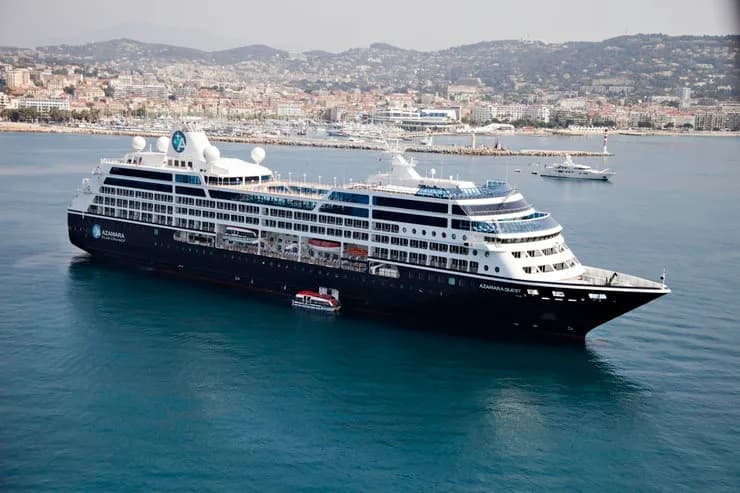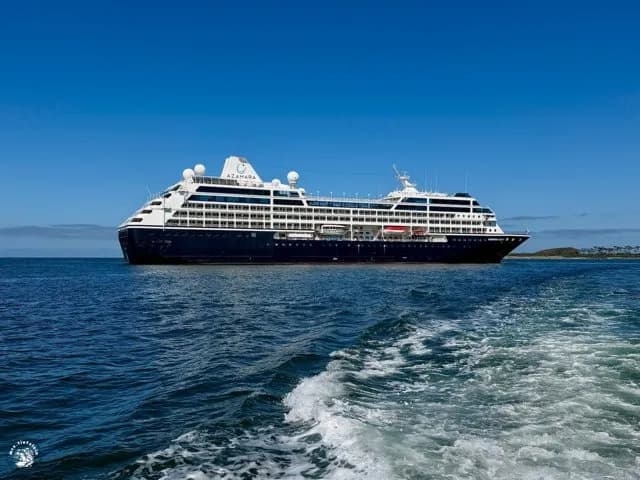
In February, I embarked on Azamara Quest for the 22-Night Southern Quest voyage from Buenos Aires to San Antonio. Setting a course for Antarctica, the journey would take my husband and me to remote corners of the world while visiting 10 ports of call across South America.
Originally built in 2000, the ship joined Azamara in 2007 and today forms part of the cruise line’s boutique fleet of four vessels. Designed for destination immersion, these ships can access smaller ports and often remain longer in port. Azamara Quest is scheduled to undergo a comprehensive refurbishment under the Azamara Forward program in late 2026.
Join me as I recount a voyage that promised destinations far beyond the usual routes, diverse wildlife and ever-changing scenery across South America and Antarctica.
Buenos Aires: Exploring the Capital of Argentina
On my birthday, we boarded a non-stop flight to Buenos Aires, where we would spend two nights before embarkation. Upon landing, we settled into the Hilton Buenos Aires, located in the modern Puerto Madero district. Surrounded by waterfront promenades, restaurants and contemporary architecture, the hotel provided an ideal base for exploring the city.
For sunset, we visited the popular Trade Sky Bar, located on the upper floors of the historic Comega Building in downtown. Due to its popularity, advance reservations are highly recommended. From the rooftop terrace, 360-degree views stretched across the city, including landmarks such as the Obelisk, Puerto Madero and the Río de la Plata. Watching the sun slowly disappear behind the skyline while the city lights began to illuminate the streets below only heightened our anticipation for the day of exploration ahead.
The following morning, we joined a guided walking tour led by a German-speaking expatriate. Buenos Aires is often called the “Paris of South America” and throughout the day it became easy to understand why. Elegant boulevards, historic cafés and impressive Belle Époque architecture reflected the strong European influences that continue to shape the city today. Our exploration began along Avenida de Mayo before continuing into the historic center. A visit to Palacio Barolo offered panoramic views across the city skyline. Inspired by Dante Alighieri’s Divine Comedy, the historic building was once the tallest skyscraper in South America. At Plaza de Mayo, surrounded by landmarks such as the Casa Rosada and the Metropolitan Cathedral, we learned more about the political and cultural history of Argentina. The cathedral is also known as the church where the late Pope Francis celebrated Mass before becoming head of the Catholic Church. To experience an authentic glimpse into the rhythm of daily life, we rode the Subte, the oldest underground railway system in Latin America. From there, we walked through the Microcentro district, along the famous Florida Street and Avenida Corrientes, often referred to as the Broadway of Buenos Aires. Elegant European-style buildings stand alongside vibrant urban life, while historic cafés, theatres and tango culture remain an important part of the city’s identity.
After the tour concluded in Retiro, we headed to Palermo Soho, named after the trendy New York neighborhood. Colorful street art, independent boutiques, cafés and restaurants create a completely different atmosphere from the historic city center. For dinner, we chose a traditional parrilla, where perfectly grilled Argentine beef provided an ideal introduction to the country’s culinary culture. Later that evening, we visited Plaza de la República with the Obelisk, surrounded by the Avenida 9 de Julio, which holds the official Guinness World Record as the widest avenue in the world. Locals gathered to sing, dance and enjoy the warm summer evening. With the illuminated BA sign and the nearby Teatro Colón completing the scene, the energy of Buenos Aires truly came alive after dark.
Buenos Aires: Embarking on Azamara Quest
After two days exploring Buenos Aires, it was time to head to the port. From the cruise terminal, shuttle buses transported guests through the Port of Buenos Aires to the ship. As anticipation continued to build, the silhouette of Azamara Quest came into view. Upon arrival, we were warmly welcomed by the crew, whose hospitality immediately set the tone for the sailing ahead. It didn’t take long to notice the attentive and highly personalized service that Azamara is known for.
Before boarding could be completed, all guests joining the Antarctic itinerary were required to submit a Medical Declaration Form and undergo a brief review by the ship’s medical team. The cruise takes travelers far from advanced medical facilities due to the isolated nature of Antarctica, making these precautions an important part of the embarkation process.
Once the formalities were completed, we were able to access our Veranda Stateroom on Deck 7. Conveniently located midship, the cabin would later prove to be an excellent choice during our crossing of the Drake Passage. Like all Veranda Staterooms aboard Azamara Quest, the cabin featured a private balcony, perfect for taking in the scenic views that lay ahead. The comfortable seating area, king-size bed, desk and ample storage space in warm wood tones created a welcoming atmosphere. Waiting inside was also a thoughtful gesture: the cabin had been decorated with birthday decorations and a warm welcome.
With some time remaining before departure, we set out to explore the ship. The first thing that struck us, was the ship’s elegant atmosphere. The boutique size was immediately apparent, the ship felt personal, inviting and so easy to navigate compared to many larger cruise ships. Carrying just around 700 guests, Azamara Quest offers a noticeably more intimate atmosphere allowing guests to quickly feel familiar with their surroundings.
As the evening approached, we made our way out on deck as we slowly sailed away from Buenos Aires. The setting sun painted the skyline in shades of orange and gold, creating a beautiful backdrop for the beginning of our Southern Quest voyage.
Following departure, we enjoyed our first of many dinners in Discoveries Restaurant, the Main Dining Room on Deck 5. With its open seating arrangement and a daily-changing menu featuring both international and regional dishes, it provided a relaxed introduction to Azamara’s culinary offerings. Afterwards we went to the Cabaret Lounge, where the Super Bowl LX was broadcast live. The venue had been specially decorated for the occasion, creating a lively atmosphere as guests gathered to watch one of the biggest sporting events of the year.
Montevideo: Discovering Uruguay’s Capital and AzAmazing Evening
As we approached the dock during the early morning hours, the golden hues of the sunrise illuminated the skyline of Montevideo along the shores of the Río de la Plata. To explore the capital of Uruguay, we opted for the Hop-on Hop-off bus, which conveniently departs directly from the port. Our first stop was Plaza Independencia, Montevideo’s symbolic heart of the city and the gateway between the historic Ciudad Vieja and the modern city center. Continuing the tour, we traveled along the famous Rambla, a waterfront promenade stretching for miles along the Río de la Plata. Naturally, we also stopped at the colorful Montevideo sign, one of the city’s most photographed landmarks. With two different routes, the Hop-on Hop-off bus also took us through a variety of neighborhoods and residential districts. For first-time visitors, it proved to be an excellent way to gain an overview of the city’s diverse character within a limited amount of time. In the afternoon we visited Mercado del Puerto near the harbor. Here we could sample traditional Uruguayan cuisine, particularly the country’s famous parrilla, featuring a variety of grilled meats prepared over open flames.
After a quick return to the ship to freshen up, it was time for one of Azamara’s signature AzAmazing Evenings. These complimentary cultural events are offered exclusively to Azamara guests and are designed to showcase authentic local traditions while the ship remains in port late into the evening. They perfectly reflect Azamara’s commitment to Destination Immersion, bringing guests closer to the culture and heritage of each destination.
The AzAmazing Evening took place at Solís Theatre, one of South America’s oldest continuously operating theaters. Dating back to 1856, the beautifully restored venue provided an impressive setting for an unforgettable night of entertainment. Upon arrival, we were welcomed by lively street performers, immediately immersing us in the festive atmosphere. Inside the theatre, the production brought the story and traditions of Uruguay’s famous Carnival to life through music, singing, colorful costumes and dance performances. The energy of the performance perfectly captured the spirit of Uruguay’s Carnival, a tradition that has shaped the country’s cultural identity for generations. Just when it seemed the evening had reached its finale, the rhythmic sounds of Candombe, Uruguay’s traditional Afro-Uruguayan drumming, led everyone back outside beneath the night sky. As the celebration continued, we were presented with our own Carnival masks as a keepsake of the evening.
After returning to the ship, we took a late-night stroll on Deck 10 and enjoyed the cool night air. We watched Azamara Quest cast off her lines and the city lights slowly disappearing into the distance.
Punta del Este: Beach Day and Azamara’s White Night
The following morning, we arrived in Punta del Este, located on the southeastern coast of Uruguay and often referred to as the “Monaco of South America”. Unlike in many larger ports, here guests were required to go ashore by tender boat.
We walked to Playa Brava on the Atlantic side of the peninsula. Famous for its powerful waves and rugged coastline, the beach is home to an iconic symbol of the city: “La Mano”. Created by Chilean artist Mario Irarrázabal in 1982, the giant sculpture contains of five human fingers partially emerging from the sand. From there, we continued to Playa Mansa on the opposite side of the peninsula. Facing the Río de la Plata and protected from the open Atlantic, the waters here are considerably calmer. With warm sunshine, soft sand and beautiful views across the bay, we spent several hours enjoying the laid-back coastal atmosphere. After a relaxing beach day with Azamara Quest anchored in the distance, we returned to the ship by tender boat.
Back on board, preparations were already underway for Azamara’s legendary tradition: White Night. The crew had elegantly set up chic, white tables across Decks 9 and 10, creating an inviting, stylish atmosphere. During Sail-Away, the transformation became increasingly visible. Guests dressed in white began gathering on deck while the culinary team prepared an impressive outdoor buffet at The Patio on Deck 9. As the sun slowly started to set, a feast of freshly grilled specialties and a lavish buffet of culinary delights awaited. One particularly memorable highlight was the dessert station, where Crêpes Suzette were prepared live by the Hotel Director and Food & Beverage Manager. The combination of delicious food, live entertainment and warm evening temperatures created a festive atmosphere as we dined under the open sky.
Three Days at Sea: Sailing Through the South Atlantic Ocean
Following our departure from Uruguay, Azamara Quest began her crossing south toward the Falkland Islands. With three consecutive Days at Sea ahead, life onboard quickly settled into a enjoyable rhythm with enough time to indulge in the amenities and services the ship has to offer. The boutique size of Azamara Quest became particularly noticeable during these sea days. Even in the most popular areas, the ship never felt crowded and it was easy to find a quiet place to relax.
Our mornings started at Mosaic Café on Deck 5 with an iced coffee in hand while watching the South Atlantic pass by through the large windows. Whenever the weather allowed, many guests gathered around the pool area on Deck 9. For lunch, we often headed to The Patio, the ship’s casual poolside restaurant. Meals are freshly prepared to order and served at the table, creating a noticeably different experience from a typical pool grill. Of course, no afternoon by the pool was complete without a visit to Swirl & Top. Located right next to The Patio, it offers frozen yogurt with a wide selection of toppings.
One Day at Sea, all guests attended the mandatory Antarctic briefing conducted in accordance with IAATO regulations. During the presentation, we received important information regarding environmental protection guidelines, safety procedures and operational aspects of visiting one of the world’s most far-flung and carefully protected regions.
Another afternoon brought a Food & Wine Tasting hosted by the ship’s sommelier. The interactive session explored how different wines influence the perception of flavors, highlighting both traditional pairings and some surprising combinations.
One evening, Captain Divo and his senior officers welcomed guests to the traditional Captain’s Welcome Reception, raising a toast to the Southern Quest voyage and the adventures still awaiting us.
Two evenings were spent in Discoveries Restaurant, while another evening we opted for Windows Café, Azamara Quest’s buffet restaurant on Deck 9. The nightly themes change regularly and on this particular evening the “Taste of Asia” buffet featured freshly prepared sushi alongside a variety of Asian-inspired dishes.
As the days passed, sunsets became a daily ritual. From the Sunset Bar at the aft of the ship, we watched the sun slowly sink toward the horizon, painting the South Atlantic Ocean in brilliant shades of orange. Somehow, sunsets just hit different at sea.
Falkland Islands: A Day at the Beach with Royalty
We approached the Falkland Islands during a spectacular sunrise. We took full advantage of the serene morning by enjoying room service breakfast on our very own balcony. Pre-ordering breakfast the night before was the best decision, as it allowed us to soak in the view of the rugged coastline while savoring a relaxed breakfast in the privacy of our veranda cabin. Room service on Azamara Quest is available 24/7 and included in the cruise fare, making it an incredibly convenient option to start the day. Shortly after arrival, we tendered ashore to Port Stanley, the capital of the Falkland Islands with a population of about 3000.
Today we joined Azamara’s shore excursion to Volunteer Point, home to the largest colony of King Penguins in the Falkland Islands. The adventure began with an off-road journey across the island’s rugged interior. Traveling by 4×4 vehicle, we crossed peaty moorlands, rolling grasslands and historic battlefields associated with the 1982 Falklands War. Along the way, our guide shared insights into the islands’ history, wildlife and unique geology. The landscape felt incredibly untouched, emphasizing its profound sense of isolation.
After a bumpy but scenic ride, we arrived at Volunteer Point, which stretches along a pristine white-sand beach bordered by a blue lagoon. Almost immediately, hundreds of King Penguins came into view. Standing nearly one meter tall, King Penguins are the second-largest penguin species in the world. During our visit we observed both adults and their fluffy chicks. Watching them interact, waddle across the beach, jumping into the water and care for their young was fascinating. Thanks to carefully managed visitor regulations, we were able to observe the colony from a respectful distance while still enjoying exceptional views and photography opportunities. Spending time among the King Penguins in their protected breeding ground was undoubtedly unforgettable. Experiences like this highlight one of Azamara’s strengths: creating access to off-the-beaten-path destinations and meaningful wildlife encounters that would be difficult to arrange independently. After approximately two hours at Volunteer Point, we boarded the 4×4 vehicle for the return journey. Back in Port Stanley, we strolled through the main street before returning by tender boat to Azamara Quest.
After Sail-Away, we had the pleasure of attending a hosted dinner with the Staff Captain and the Safety Officer. Sharing a meal while learning more about life behind-the-scenes, daily operations and navigation in hard-to-reach regions, added another dimension to the voyage.
Day at Sea: Southbound Through the Drake Lake
Following our departure from the Falkland Islands, Azamara Quest set course for Antarctica. Ahead of us lay one of the most famous stretches of water in the world: the Drake Passage.
Located between Cape Horn and the Antarctic Peninsula, the Drake Passage is known for its unpredictable weather and often challenging sea conditions. Many travelers approach the crossing with a mixture of excitement and apprehension, as rough seas and large swells are common in this area.
The day began with Azamara’s Quest Brunch at the Discoveries Restaurant. This brunch, not quite breakfast and not quite lunch, featured the best of both worlds and offered a variety of classic breakfast options alongside more hearty lunch dishes. Accompanied by the live sounds of the Quest Orchestra, it provided a wonderful opportunity to ease into the day with a combination of excellent food and attentive service.
Throughout the day, we gathered in the ship’s public spaces, watching the endless expanse of the Drake Passage pass by. With only gentle movement from the ship, our crossing turned out to be remarkably calm and anticipation for Antarctica grew with every passing hour.
First Icebergs and the White Continent
Around noon, the western tip of King George Island came into view, marking our first sighting of the White Continent. Located in the South Shetland Islands, it is one of the gateways to Antarctica and home to several international research stations. Until the day after tomorrow, Azamara Quest would explore Antarctica through scenic cruising rather than landings. This approach allows guests to experience the region’s extraordinary landscapes and wildlife while minimizing environmental impact. As we entered designated whale protection areas, the ship reduced speed in accordance with Antarctic regulations designed to protect marine life.
During the afternoon, we sailed south of King George Island, passing by Penguin Island. Afterwards Azamara Quest entered Admiralty Bay, one of the most important scientific research areas in Antarctica. Surrounded by mountain peaks, glaciers and unspoiled wilderness, the bay serves as a base for several international research stations studying climate change, wildlife and the Antarctic environment. We cruised within Admiralty Bay at 6 knots for approximately two hours, before we set a southwesterly course through the Bransfield Strait.
Sailing Through the Icy Wonders of Antarctica
During the night we had entered the Gerlache Strait, which stretches between the Antarctic Peninsula and the offshore islands of the Palmer Archipelago, so opening the curtain that morning felt almost surreal. Beyond the balcony, the Antarctic landscape stretched as far as the eye could see, while the rising sun cast a soft golden glow over the snow-covered mountains.
In the morning, I was invited for an exclusive visit to the bridge by Captain Divo while Azamara Quest continued southbound through the Gerlache Strait. From this unique vantage point, I was able to observe firsthand the careful navigation required in these uncharted waters. Named after Belgian explorer Adrien de Gerlache, the strait is surrounded by towering glaciers and ice formations. As we cruised through the icy landscape, Gentoo Penguins frequently appeared alongside the ship. Recognizable by the distinctive white stripe above their eyes and their bright orange beaks, these curious birds are among the fastest-swimming penguin species. We watched them launch themselves from the water and porpoise across the surface with remarkable speed. Thanks to the crystal-clear Antarctic waters, it was often possible to follow their movements beneath the surface as well.
After a quick lunch, we approached the narrow entrance to the Neumayer Channel. This 26-kilometer-long waterway winds its way through the Palmer Archipelago, separating Anvers Island from Wiencke and Doumer Islands. The channel’s distinctive S-shaped course requires careful navigation and is often regarded as one of the most spectacular passages in Antarctica. As we slowly cruised the channel, the surrounding ice seemed to draw ever closer and ice floes drifted past on both sides. We spotted seals resting peacefully on these ice floes. But the most entertaining sights were Gentoo Penguins waddling across ice floes, shuffle toward the edge and diving headfirst into the water. Humpback whales regularly surfaced, exhaling powerful blows before gracefully arching their backs and raising their flukes above the water. Throughout our time in Antarctica, expert guides were onboard, helping guests spot wildlife and understand the fragile Antarctic ecosystem, all without ever setting foot ashore. Their commentary added valuable context as wildlife sightings continued against the stunning Antarctic backdrop.
Soon after leaving the Neumayer Channel, we had reached the southernmost point of the itinerary at 65 degrees south latitude. The ship then turned around and continued along the opposite side of Wiencke Island toward Paradise Bay. Stretching roughly 26 kilometers in length and largely covered by glaciers and snowfields, Wiencke Island is named after Carl August Wiencke, a Norwegian sailor lost during Adrien de Gerlache’s Belgian Antarctic Expedition in 1898.
Arriving in the early evening, the ship slowly entered Paradise Bay before coming to a complete stop. Sheltered by the surrounding mountains and glaciers, the bay creates an ideal environment for wildlife observation and offered us the best whale sightings of the entire voyage. For more than an hour, we remained stationary and the wildlife activity was extraordinary. Humpback whales surfaced repeatedly and we could see their fins and flukes before they disappearead under the water again. At one point, even a pod of Orcas appeared. Eventually, Azamara Quest gently moved on, leaving Paradise Bay behind as the evening light slowly faded.
Deception Island and Farewell to Antarctica
As I opened the curtain at sunrise, humpback whales were already visible on the horizon. Several adults surfaced and among them was even a calf. During the Antarctic summer, humpback whales migrate to these nutrient-rich waters to feed, taking advantage of the abundance of krill.
Today, Azamara Quest approached Deception Island, which is part of the South Shetland Islands located off the northwest tip of the Antarctic Peninsula. The island is the flooded caldera of an active volcano, created when the volcano collapsed inward following a major eruption thousands of years ago. Today, the sea enters the unique natural harbor of the island through a narrow opening known as Neptune’s Bellows. Due to the size of Azamara Quest, entering the caldera was not possible. Instead, the ship carefully approached Neptune’s Bellows and performed a full 360-degree turn, allowing everyone onboard to take in the scenery from every angle. The island is home to one of the largest Chinstrap penguin colonies in Antarctica. It was fascinating to observe the penguins both along the shoreline and in the water. Seabirds soared overhead, taking advantage of the strong Antarctic winds. Deception Island also provides important nesting grounds for species such as skuas, giant petrels, cormorants and kelp gulls.
Then it was time to leave Antarctica behind. As Azamara Quest slowly turned northward toward the Drake Passage, many guests gathered on deck for one final look at the White Continent. With no permanent native population and strict international environmental regulations, Antarctica remains one of the most carefully protected regions on Earth and offers a rare glimpse of nature on a scale that has largely disappeared elsewhere.
That evening, Aqualina, Azamara’s Specialty Restaurant, had been transformed for “An Intimate Evening”, a dining experience combining fine cuisine with live musical performances. Throughout the evening, each course was introduced by the Executive Chef, who shared insights into the menu and preparation of the dishes and the accompanying wine pairings were presented by the ship’s sommelier. Additionally, live musicians performed selections that complemented the atmosphere perfectly. Through the floor-to-ceiling windows on Deck 10, we could watch the Drake Passage. The wind had begun to increase, but under a cloudless sky, the sun slowly sank directly into the sea.
Day at Sea: Northbound Through the Drake Shake
The following morning, the Drake Passage revealed the conditions for which it is famous. Gone were the calm seas of our southbound crossing. Instead, we woke to rolling waves, strong winds, rain and low clouds stretching across the horizon. Named after the English explorer Sir Francis Drake, who was blown south of Cape Horn in 1578, the Drake Passage forms the natural connection between the Atlantic and Pacific Oceans. With no major landmass to interrupt the flow, powerful winds and ocean currents can create some of the most challenging sea conditions found anywhere in the world.
Captain Divo informed that wind speeds of up to 60 mph and waves reaching approximately five meters were expected over the following hours. Announcements throughout the ship encouraged guests to use elevators rather than stairs and to move carefully while walking around the vessel. As a reminder, Captain Divo repeated one of the most common seafaring safety rules: “One hand for yourself and one for the ship”. We settled into our veranda cabin, watching the waves roll past through the balcony door. The movement of the ship was certainly noticeable, but Azamara Quest handled the conditions remarkably well. Having a mid-ship cabin now proved to be a real advantage, as this area generally experiences less motion than cabins located further forward or aft
As the evening arrived, the sky cleared up before darkness fell over the Drake Passage, while we continued steadily northward toward South America.
Ushuaia: The End of the World
During sunrise, we arrived in Ushuaia. Snow-capped mountains surrounded the city, while the first rays of sunlight illuminated the peaks beyond the harbor. Located on the shores of the Beagle Channel, Ushuaia is widely regarded as the southernmost city in the world and serves as the gateway to Antarctica. This morning also marked a turnaround day for Azamara Quest. The Southern Quest voyage could be booked either as two shorter segments or as one continuous cruise. We stayed onboard for the full 22-Night sailing from Buenos Aires to San Antonio.
Today we went into Tierra del Fuego National Park, a protected wilderness area at the southern tip of South America. Covering more than 63000 hectares, the park is known for its landscapes, dense forests, mountains and coastline shaped by glaciers over thousands of years. Our first stop was Ensenada Zaratiegui, a scenic bay overlooking the Beagle Channel. The site was once home to Argentina’s southernmost post office, where visitors could send postcards from the “End of the World”. Although the post office is no longer operating, the location remains a picturesque spot in the national park. From there, we continued to Lapataia Bay, home to the famous “End of the World” sign, which marks the southern end of Route 3, part of the vast Pan-American Highway system that connects the Americas from Alaska all the way to Tierra del Fuego. Surrounded by mountains, forests and crystal-clear waters, it was easy to understand why so many visitors choose to capture a photo at this symbolic location. Nearby, a Chimango Caracara, a bird of prey native to southern South America, provided a welcome wildlife sighting. Our next stop was the Alakush Visitor Center, where exhibits provide insight into the region’s unique ecosystem and indigenous history. We then continued to Lake Roca, a glacial lake located near the border between Argentina and Chile. Then the highlight of the day followed shortly afterwards: a ride aboard the famous Tren del Fin del Mundo or “End of the World Train”. Recognized as the southernmost railway on the planet, the historic train follows part of the route once used by prisoners from Ushuaia’s former penal colony. Today, the railway offers visitors a scenic adventure through forests, peat bogs and river valleys while providing a glimpse into the region’s history. As the train rode through the rugged landscape, passing the Pipo River and Macarena Waterfall, it felt like stepping back in time.
Back in Ushuaia, we walked along the waterfront to the Ushuaia sign and the Saint Christopher shipwreck before continuing along Avenida San Martín, the city’s main street lined with shops, restaurants and bars. As the day came to an end, the setting sun cast a warm glow across the surrounding mountains before fading into a gorgeous blue hour over the Beagle Channel. With Azamara Quest remaining in port overnight, there was no need to rush back to the ship. It was the perfect opportunity to enjoy the atmosphere of the world’s southernmost city a little longer.
Cruising Through the Beagle Channel
As Azamara Quest departed Ushuaia in the morning, we began the transit westward through the Beagle Channel. Named after HMS Beagle, the British survey ship that explored and charted these waters, the channel is forever associated with Charles Darwin, who sailed aboard the vessel during its renowned voyage of scientific discovery. Stretching for more than 240 kilometers, the Beagle Channel forms a natural passage between southern Argentina and Chile, while connecting the Atlantic and Pacific Oceans through the maze of waterways at the tip of South America. The narrow channel was carved by massive glaciers during the last Ice Age and throughout the day uninterrupted views of the scenery unfolded on both sides of the ship: Snow-covered mountain peaks rose above dense forests, glaciers clung to the slopes and countless waterfalls cascaded down into the waterway.
Overnight, the route would eventually take us into Chilean waters as we continued north toward Punta Arenas.
Punta Arenas: Gateway to the Strait of Magellan
After arriving in Punta Arenas in the morning, we had originally planned to go on a shore excursion to Magdalena Island, known for its large colony of Magellanic Penguins. Unfortunately, the tour was canceled last minute due to weather conditions in that area. So we decided to spend the day exploring Punta Arenas instead. Situated on the shores of the Strait of Magellan, Punta Arenas owes much of its history to its strategic location along one of the world’s most famous waterways.
The cruise port is conveniently located in the city center, making it easy to explore on foot. We walked along Bories Street, the city’s main thoroughfare, toward Plaza de Armas. At the center of the square stands the Monument to Ferdinand Magellan, the Portuguese explorer whose expedition completed the first circumnavigation of the globe and gave the strait its name. According to local tradition, kissing the foot of the statue ensures a future return to Punta Arenas. From there, we continued uphill to Mirador Cerro de la Cruz. The viewpoint offers the best panoramic perspective of the city, with colorful rooftops stretching toward the waters of the Strait of Magellan. Afterwards a walk along Bulnes Avenue brought us to another local landmark: El Ovejero, the Shepherd Monument. The sculpture pays tribute to the sheep farmers whose industry helped shape Patagonia’s economy and identity for generations. Even today, sheep farming remains an important part of life in southern Chile. Our final stop was the Cementerio Municipal. Often regarded as one of the most beautiful cemeteries in South America, its tree-lined avenues, elegant mausoleums and monuments create an atmosphere that feels more like a historic garden than a traditional cemetery. As evening approached, we returned to the ship and soon afterwards it was time to set sail from Punta Arenas.
Later in the evening, I couldn’t resist exploring the onboard shops – where, of course, I added an Azamara Quest model to my growing collection.
Cruising Through the Chilean Fjords
For the next two days, we sailed north through a maze of fjords, narrow channels, islands and inlets carved by glaciers over thousands of years. Much of this wilderness remains inaccessible by road, making a cruise one of the few ways to experience these landscapes. Throughout the day, the scenery constantly changed. Snow-capped mountains rose directly from the water, waterfalls tumbled down steep cliffs and dense forests covered the lower slopes. Wildlife remained a constant presence along the route, including dolphins that occasionally appeared alongside the ship.
One memorable moment came as we sailed from the Sarmiento Channel into Peel Fjord. As we approached Amalia Glacier at the head of the fjord, a rainbow appeared directly above the ice, creating a picture-perfect welcome. The ship slowly maneuvered closer before performing a full 360-degree turn, allowing guests the best possible views of the towering wall of blue ice stretched down toward the water. Flowing from the Southern Patagonian Ice Field, the glacier forms part of the world’s third-largest ice mass after Antarctica and Greenland.
Another highlight came as we sailed through the Fallos Channel along the secluded coastline of Kawésqar National Reserve. Named after the indigenous Kawésqar people, who navigated these waters by canoe for thousands of years. The water was remarkably calm, reflecting the surrounding landscape like a mirror, while blurring the line between water and sky.
Away from the scenic highlights, one of the pleasures of these two days was simply spending time outdoors. We often found ourselves on Deck 9 or 10, whether for a walk along the jogging track or relaxing on one of the comfortable loungers wrapped in a blanket. As temperatures gradually became milder, it was the perfect place to take in the ever-changing scenery. For some added relaxation, Azamara Quest offers a variety of wellness facilities. The Sanctum Spa on Deck 9 is a serene retreat, where guests can indulge in treatments designed to rejuvenate body and mind. It features a steam room and shower towers with multiple massaging jets as well as the Sanctum Terrace with comfortable lounge chairs and a Thalasso Therapy Pool.
In the late afternoon of the second day, we gradually left the sheltered fjords behind and entered the open waters of the South Pacific Ocean, while humpback whales appeared on the horizon. During the night, we continued north before re-entering the intricate network of Patagonian channels on our approach to our next port of call.
Puerto Chacabuco: Panoramic Simpson River Valley
As we arrived during sunrise the following morning at Puerto Chacabuco, patches of mist lingered between the mountains. Soon after breakfast, we boarded a tender boat for the short ride ashore to the small port, located in the Aysén Region and serving as a gateway to one of the least populated and most untouched areas of Chile.
Today, we joined Azamara’s shore excursion into the Simpson River Valley, following part of the Carretera Austral. Stretching for more than 1200 kilometers through southern Chile, this roadway transformed access to regions that had once been almost impossible to reach. Our route first took us through the town of Aysén, offering a glimpse into everyday life in this part of the country. Shortly afterwards, we stopped at the Presidente Ibáñez Bridge, Chile’s longest suspension bridge. Next we went toward Río Simpson National Reserve. There, we left the coach behind and explored the area on foot. While walking along the riverbank, our guide shared insights into the region’s flora, fauna and history, helping bring the landscape to life. The reserve protects a variety of endemic plant species and serves as an important habitat for local wildlife. We also visited the reserve’s information center, where exhibits provided additional background on this area of Patagonia. Exploring landscapes like these demonstrated how Azamara’s shore excursions often go beyond the main tourist sights, providing access to hidden corners of the world and a deeper connection to each place.
On the return journey to Puerto Chacabuco, we paused at Cascada La Virgen, a roadside waterfall, named after the nearby shrine dedicated to the Virgin Mary. Back at the pier, a tender boat transported us to Azamara Quest. Before Sail-Away, we both got invited by Captain Divo to the bridge, providing a rare behind-the-scenes experience to observe the skillful teamwork between the captain and his crew as we prepared to set sail. Soon afterwards, we entered Aysén Fjord, which stretches for approximately 70 kilometers and connects the Aysén Region with the intricate network of channels and waterways leading toward the Pacific Ocean.
That evening, we had dinner at Prime C, one of Azamara Quest’s Specialty Restaurants located on Deck 10. Specializing in premium steaks, seafood and classic steakhouse dishes, the restaurant offers a more intimate dining experience. Large panoramic windows overlook the surrounding scenery and provided uninterrupted views as the sun slowly set over the fjord. One of the signature menu items is the Chateaubriand for two, a thick center-cut beef tenderloin that is presented and carved tableside by the waitstaff before being served.
Castro: Discovering Chiloé Island
During the night, the ship had continued northward toward Chiloé Island, the second-largest island in South America after Tierra del Fuego. Here we anchored off Castro, requiring another tender ride ashore.
Today we explored independently and our first destination were the famous palafitos. A few of these iconic structures had already been visible during the tender boat ride. Built on wooden stilts along the Gamboa waterfront, these colorful houses were originally designed to accommodate the region’s significant tidal variations. From there, we continued into the center of Castro to visit the Church of San Francisco. Completed in 1912 and constructed primarily from native wood, it is part of the UNESCO World Heritage-listed Churches of Chiloé, a collection of unique wooden churches that blend European religious influences with local building traditions. While strolling through the streets of Castro, this aspect of Chiloé’s heritage became increasingly noticeable. Wooden sculptures could be found throughout the city, reflecting the island’s long tradition of woodcarving. After several hours exploring Castro, it was time to return to Azamara Quest by tender.
Back onboard, preparations were already underway for another of Azamara’s signature events: White Night. Since the Southern Quest voyage could also be booked as two separate cruises, guests had the opportunity to experience a second White Night. Shortly after sailing away from Castro, the festivities began on the pool deck. As guests gathered around the deck after dinner, crew members participated in the Crew Parade. Carrying the flags of their home countries, they made their way around the pool deck while guests applauded enthusiastically. Representing dozens of nationalities, the parade highlighted the international team whose dedication and hard work helped creating the exceptional onboard experience. As darkness fell, White Night evolved into the celebration it is famous for throughout the Azamara fleet. Live music filled the pool deck while guests danced under the stars and enjoyed the vibrant atmosphere late into the evening. Crew members joined the festivities, adding to the sense of community that makes Azamara’s White Night such a memorable experience.
Puerto Montt: Osorno Volcano, Petrohué Falls & Puerto Varas
Early in the morning we arrived off Puerto Montt, serving as the gateway to the country’s famous Lake District and a region known for its abundant rainfall. As if on cue, the weather delivered exactly what the region is famous for: rain.
After another tender ride ashore, we went on Azamara’s full-day excursion. Leaving Puerto Montt behind, the scenic drive led us through the countryside toward Osorno Volcano. Rising 2652 meters above sea level, Osorno is often compared to Japan’s Mount Fuji due to its nearly symmetrical cone shape. Although still classified as an active stratovolcano, its last eruption occurred in 1869. On clear days, the volcano dominates the landscape and can be seen from miles away. Unfortunately, the weather had other plans. As we arrived at La Burbuja viewpoint at around 1200 meters, clouds, rain and fog largely obscured the views. From there, we continued to Petrohué Falls, a series of cascades formed as the Petrohué River carved its way through volcanic lava deposited by historic eruptions of Osorno Volcano. The river’s turquoise color is created by fine volcanic sediments suspended in the glacial water. After exploring the falls, our excursion continued to nearby Puerto Varas, which reflects the strong influence of German immigrants who settled in the region during the nineteenth century. Even today, traces of this heritage can be found throughout the town, from traditional wooden houses to bakeries serving Kuchen and other familiar specialties. There, lunch was served at a restaurant overlooking Lake Llanquihue. The menu featured regional specialties including a traditional Pisco Sour, empanadas and locally farmed Atlantic salmon. The region has become one of the world’s leading producers of Atlantic salmon, a species originally native to the North Atlantic but now farmed in the cold Pacific waters of Patagonia. Of course, Kuchen as dessert was not missing either. Afterwards, we had time to explore Puerto Varas independently. We spent the hour browsing local shops before returning to the coach for the journey back to Puerto Montt.
After the tender ride back to Azamara Quest, we soon set sail and the landscapes of southern Chile slowly faded into the distance.
Final Day at Sea
Our final Day at Sea greeted us with grey skies, wind and rain. After leaving the Chilean fjords behind the previous evening, Azamara Quest was now making her way north through the South Pacific Ocean. It was a good opportunity to begin packing our suitcases before arriving in San Antonio the following day. In the afternoon, complimentary High Tea was served in Aqualina. We enjoyed a selection of sandwiches, pastries, cakes and freshly baked scones accompanied by tea.
It was also a reminder of the range of weather conditions we had experienced. During the past weeks, temperatures had ranged from more than 30°C in Buenos Aires, Montevideo and Punta del Este to the much cooler conditions of the Chilean fjords and near-freezing temperatures accompanied by icy Antarctic winds. As a result, our suitcases had contained everything from shorts and swimwear to insulated layers and ski clothing. Afterwards, we headed to The Living Room on Deck 10. The floor-to-ceiling panoramic windows offer ocean views, while comfortable seating areas, a bar and a card room make it an inviting retreat when outdoor decks are less appealing.
That evening, we returned to Aqualina for dinner. Located at the aft of Deck 10, it is one of Azamara’s Specialty Restaurants. The menu focuses on Italian-inspired cuisine, complemented by attentive service and carefully selected wines. We indulged in a multi-course menu of fresh seafood and handmade pasta, featuring dishes like Carpaccio di Manzo, Caprese Classico and Gamberetti con Ravioli all’aragosta. During dinner, the clouds gradually parted, revealing calm waters and as daylight faded, we were able to enjoy one final blue hour.
San Antonio: Exploring Santiago de Chile and AzAmazing Evening
Shortly after sunrise, the pilot boat approached Azamara Quest and soon we arrived in San Antonio for our overnight stay before disembarkation the following day.
Today, we joined Azamara’s full-day excursion to Santiago de Chile, which is nestled in a broad valley and framed by the Andes Mountains. The two-hour drive from San Antonio to Chile’s capital led us past vineyards, farmlands and expanding suburban communities. There, we walked from La Moneda Palace, the seat of Chile’s president, through the historic center and passed by the Santiago Stock Exchange. Then we continued along the busy pedestrian boulevard Paseo Ahumada, before arriving at Plaza de Armas. Founded together with the city in 1541, the square marks Chile’s “Kilómetro Cero”, the point from which distances throughout the country are traditionally measured. Overlooking the square is the Metropolitan Cathedral. The current building is the fifth church constructed on this site after previous structures were damaged by earthquakes, fires and other natural disasters. We also passed the Palace of Justice, home to Chile’s Supreme Court, before enjoying some free time to explore the surrounding area independently. Afterwards, lunch introduced us to more Chilean flavors, accompanied by local wine and a traditional Pisco Sour. In the afternoon, we visited Los Dominicos, a traditional artisan village located beside the historic San Vicente Ferrer Church. The site traces its history back to the earliest years of colonial Santiago and today hosts dozens of workshops where artisans continue to produce handcrafted textiles, ceramics, woodwork and jewelry made from lapis lazuli, a gemstone associated with Chile.
By evening, we returned to San Antonio and Azamara Quest. There was just enough time for an early dinner before the AzAmazing Evening began. Like on White Night, we were able to enjoy a second AzAmazing Evening during this sailing, because the Southern Quest voyage could also be booked in separate segments. This time, the event took place at Club Santa María del Mar in nearby Santo Domingo. Ceremonial riders on horseback carrying Chilean flags, provided a traditional welcome. Set against the backdrop of the Pacific coastline at sunset, the performance combined live music, traditional dance and cultural storytelling, offering insight into Chile’s heritage and identity. As the evening came to an end, we returned to the pier, where the Quest orchestra welcomed us back onboard with live music and a glass of sparkling wine.
Before turning in for the night, there was one final task to complete. Having packed our luggage the previous day, we simply placed our suitcases outside the stateroom door for collection. With an early departure scheduled for the following morning, it was time to get some rest after another full day ashore.
San Antonio: Disembarking Azamara Quest
After breakfast, we took in the last moments onboard before saying goodbye to Azamara Quest. We had prebooked the convenient transfer service from Azamara between San Antonio and Santiago de Chile Airport, which took approximately two hours. Our flight home began that afternoon with a first leg to São Paulo Airport. Shortly after departure, the aircraft climbed above the Andes Mountains, offering a sight of the seemingly endless chain of peaks that stretch for more than 7000 kilometers along the western edge of South America and form the longest continental mountain range in the world. We landed in São Paulo during sunset and spent several hours in transit before boarding our overnight flight.
Over the course of a single month, our travels had taken us across two continents, from the streets of Buenos Aires and the King Penguins of the Falkland Islands to the icy wonders of Antarctica and the Chilean fjords. As our final flight departed São Paulo, it was time to head home, carrying with us memories of the extraordinary amount of wildlife and natural beauty we had encountered. The Southern Quest voyage had taken us into remote regions that remain difficult to access, offering a perspective on some of the most isolated corners of the Southern Hemisphere.
Don’t miss more updates, news and reviews of Azamara Cruises on Cruising Journal.