
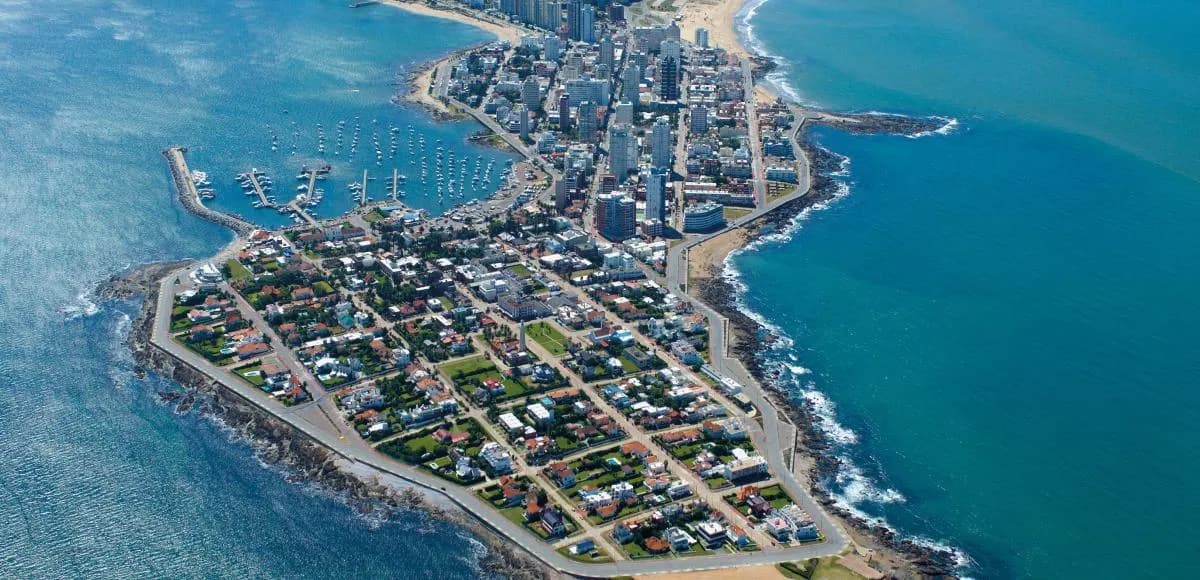
In recent years, Uruguay has emerged as one of South America’s most promising destinations. Small only in size but large in stability, quality of life, and openness to the world, the country has distinguished itself through a mature and sustainable approach to tourism development.
Montevideo, with its understated elegance and cosmopolitan spirit, stands today as a reference point in the Southern Cone, while destinations such as Punta del Este and Colonia del Sacramento combine charm, culture, and nature in a blend increasingly sought after by quality tourism.
In this scenario, the new Minister of Tourism faces a strategic task: consolidating the successes achieved and revitalizing a sector that, after the pandemic, has regained momentum but now requires a coordinated vision with an international scope. The priorities are clear — to attract new visitor flows, strengthen infrastructure, and enhance cooperation with key source markets, particularly in Europe and North America, while building on the momentum of regional tourism.
A central role in this strategy is played by cruise tourism. In recent years, Uruguay has re-established itself as a consistent stop on South American itineraries, thanks to ports such as Montevideo and Punta del Este, known for their modern facilities, safety, and a warm sense of hospitality. Yet the potential remains far from exhausted: the ability to coordinate between port authorities, local operators, and cruise companies will be key to achieving long-term, sustainable growth.
We met with the Minister of Tourism of Uruguay to discuss the country’s new development perspectives, the policies currently underway, and the future of the cruise sector — a segment that could become one of the pillars of Uruguay’s tourism strategy in the years to come. In recent years, Uruguay has strengthened its international image by promoting stability, quality of life, and an open approach to investment. Tourism is one of the sectors that benefits most from these elements, yet it also demands vision, planning, and adaptability.
Minister, what are your priorities at this early stage of your term, and what overall vision guides your Ministry’s strategy for the renewal and evolution of tourism in Uruguay?
At this initial stage, my priority is to consolidate the achievements Uruguay has made over recent decades while, at the same time, revitalizing a sector that underwent profound transformations after the pandemic. The global recovery of tourism has shown that it is no longer enough to return to previous practices: the world has changed, travelers have changed, and so have the ways in which destinations compete. Today, creativity, constant innovation, and a strong capacity for adaptation are essential.
Uruguay has a solid foundation on which to build: institutional stability, safety, quality of life, and an international positioning that has been steadily strengthened. On this basis, we are pursuing a strategy that combines a global vision with coordinated actions among the public sector, the private sector, tourism operators, and departmental authorities. Our approach is to work as an integrated ecosystem, capable of responding with agility and anticipating emerging trends.
Our aspiration is to develop tourism that generates sustainable value, distributes demand more evenly across the territory, and attracts visitors year-round, while consolidating its role as a driver of national development. This involves promoting quality employment, energizing local economies, fostering innovation, supporting balanced territorial development, and strengthening the sector’s value chains.
My overall vision is clear: we want a more diversified tourism offering, with proposals that combine nature, culture, gastronomy, wellness, events, heritage, and authentic experiences that differentiate us in the global market. At the same time, we want tourism that is sustainable—both environmentally and socially—aligned with the expectations of today’s traveler, who seeks reliable destinations, meaningful experiences, and a genuine connection with the places they visit.
Nowadays, tourism is one of the sectors with the greatest potential to generate future opportunities in Uruguay. For this reason, our strategy is designed to ensure that its development is not only competitive, but also inclusive, responsible, and deeply transformative for the country.
Global tourism has faced unprecedented challenges in recent years, yet in many countries recovery has sparked new creativity and adaptation. In Uruguay as well, indicators seem to show renewed confidence among both visitors and operators. How would you describe the current state of tourism in Uruguay? Are there particular trends or data points that confirm a steady and lasting recovery?
At the international level, Uruguay is frequently recognized as a country that strikes a strong balance between economic development and sustainability—two dimensions that are increasingly decisive for travelers, particularly in demanding markets such as Europe and North America.
Although tourism in Uruguay shows clear signs of recovery, the current pace of growth is beginning to plateau. If we continue to rely solely on this momentum, we will be unable to exceed the results of recent years. Our objective is to innovate decisively and challenge established approaches—to move beyond our comfort zone—in order to achieve sustained growth in inbound tourism over time.
Recent trends point to rising visitor arrivals and an increasing demand for experiences linked to nature, culture, and gastronomy. In Uruguay, these trends are reflected not only in statistical indicators, but also in the positive feedback from both operators and visitors, who consistently encounter a safe, welcoming destination that is continuously evolving.
Uruguay is often cited as a model for balancing economic development and sustainability — a combination increasingly valued by today’s travelers. But sustainability is not just a principle: it requires tangible actions, investments, and education. How does this vision translate into your Ministry’s tourism policies? And how do sustainability, quality, and innovation coexist within your national tourism strategy?
Our vision is reflected in policies designed to diversify target audiences, modernize and professionalize services, while safeguarding the natural and cultural assets that make Uruguay a distinctive destination. We are fully aware that the global tourism market is increasingly competitive, and therefore we must ensure an outstanding visitor experience from every perspective: accessibility, connectivity, hospitality, innovation, and environmental stewardship.
Sustainability and quality are no longer optional; they are the foundations of international competitiveness. Innovation, in turn, enables these two dimensions to coexist in a balanced and effective way. To this end, we are incorporating new technological tools, strengthening training across the sector, promoting responsible tourism practices, and supporting destinations that seek to differentiate themselves through authentic products and meaningful experiences.
We are also embracing a regenerative tourism approach as a proactive response in areas where the sector can generate a positive impact. At the same time, tourism has been identified as one of the priority verticals within the country’s institutional framework for Innovation and Development, as well as for sustainability—whether in protected areas, coastal policies, climate change, or territorial planning. In this context, we are introducing the National Tourism Strategy 4.0, which establishes a clear roadmap for the coming years, particularly in terms of digital transformation.
In an increasingly competitive global market, the ability to diversify and reach new audiences is essential. While some Southern Cone destinations focus on regional visitors, others are striking a balance between domestic tourism and long-haul markets. Which source markets are most relevant for Uruguay today, and which regions or traveler segments will you prioritize in your upcoming promotional efforts?
While our promotional efforts continue to focus primarily on traditional source markets in the Southern Cone—particularly Argentina and Brazil, which remain essential for the stability and volume of our inbound tourism, alongside domestic tourism—we are placing special emphasis on specific high-potential areas such as southern São Paulo, as well as the western regions of Rosario and Córdoba, where we see significant opportunities for growth.
At the same time, we are strengthening our presence in long-haul markets, especially Europe and North America, where we observe growing interest in safe, stable, and sustainable destinations with a strong cultural identity—attributes that Uruguay offers in a highly competitive manner. In parallel, we are expanding our outreach to the rest of Latin America, taking into account the increasingly complex and restrictive geopolitical context faced by many countries in the region when traveling to the Northern Hemisphere.
From a market segmentation perspective, beyond traditional offerings such as sun-and-beach tourism, we are prioritizing travelers seeking cultural experiences, close contact with nature, gastronomy, rural tourism, wellness, and proposals linked to sustainable development. Uruguay offers a diverse and adaptable portfolio that responds effectively to these segments, which are increasingly oriented toward authentic, high-quality experiences.
Cruise tourism represents a distinct and strategic chapter within this agenda. Globally, this segment has experienced one of the fastest and most solid recoveries following the pandemic, with sustained growth and increasingly diverse demand in terms of age groups, interests, and traveler profiles. In Uruguay, however, expanding this segment has proven challenging. Although Montevideo and Punta del Este have consolidated their position as reliable and attractive ports of call—strategically positioning us to continue investing in cruise tourism in the coming years—visits currently depend on itineraries that also include Buenos Aires. The costs associated with reaching Buenos Aires therefore represent a structural constraint on our growth.
Our objective is to support this trend through segmented promotion, agreements with international operators, and continuous improvement of the visitor experience from the very first contact with the country. We are committed to doing everything within our reach—just as we did last season, when, despite a decrease in the number of visitors, overall tourist spending increased.
The cruise sector has been one of the fastest to recover after the global crisis, with steady growth and increasingly diverse demand. Across South America, destinations that have invested in infrastructure and guest services are seeing tangible results. How does Uruguay position itself within this context? Could you provide an overview of the current scale of cruise tourism in the country — in terms of arrivals, seasonality, and economic impact?
Montevideo and Punta del Este have consolidated their positions as benchmark ports within Southern Cone cruise itineraries. Both destinations have strengthened their infrastructure and operational capacity, offering services that meet the standards required by the world’s leading cruise lines.
Although cruise activity remains seasonal, regional trends point to gradual and sustained growth. This segment generates a significant economic impact, stimulating local commerce, creating temporary employment, encouraging excursions, and energizing key sectors such as gastronomy, transportation, tour guiding, and handicrafts.
Uruguay is well positioned on the regional cruise tourism map and has the potential to further expand its role, provided that we continue to adapt to evolving demand and deliver memorable experiences to visitors disembarking at our ports. However, in recent years we have faced a contextual disadvantage—outlined previously—that has affected our growth capacity.
During the 2024–2025 season, Uruguay recorded more than 300,000 cruise passengers disembarking in its ports, generating spending in excess of USD 18 million. This figure does not include onboard tour sales, port services, or ship provisioning.
Montevideo accounted for 75% of arrivals (234,865 passengers) and 79% of total tourist spending (USD 14.6 million), while Punta del Este received 25% of visitors (78,403 passengers) and generated 21% of total spending (USD 3.9 million). In terms of origin, Argentine visitors represented the largest share (33.6%), followed by Brazilians (30%) and travelers from North America (22.9%).
Finally, I would like to highlight the high level of satisfaction expressed by cruise passengers during their stay in Uruguay. In Montevideo, visitors particularly value the friendliness of the population, as well as the city’s architecture and monuments, with 67% reporting no negative aspects. In Punta del Este, beaches, hospitality, and cleanliness stand out, and 78% of passengers reported no unfavorable elements.
Montevideo and Punta del Este are well-established ports of call in Southern Cone itineraries. Yet the regional competition is constantly evolving, and both passengers and cruise lines expect ports that are modern, efficient, and seamlessly connected with their surroundings. What infrastructure projects or service improvements are underway in Uruguay’s ports to enhance operational efficiency and the overall passenger experience?
The strengthening of Uruguay’s cruise ecosystem is based on a comprehensive strategy aimed at enhancing operational efficiency and delivering a higher-quality passenger experience, both at ports and across the country’s tourist destinations. In this context, ongoing dialogue between national and international authorities and cruise lines has become a fundamental pillar for attracting new itineraries and ensuring a sustained presence in global cruise programs.
The country’s competitive positioning depends not only on physical or technological improvements, but also on the existence of transparent regulatory frameworks, procedural predictability, and a spirit of collaboration among public and private stakeholders. This coordinated approach enables the implementation of initiatives designed to optimize operational flows, streamline services, and ensure that cruise arrivals translate into positive experiences for visitors.
Simultaneously, Uruguay continues to enhance the quality of complementary tourism services, consolidate accessible and sustainable destination circuits, and strengthen sector-wide training. These elements directly shape passenger perceptions from the moment they disembark. All of these efforts form part of a national strategy to maintain and expand Uruguay’s presence on regional cruise routes, positioning the country as a reliable, welcoming, and high-quality destination.
Dialogue between national authorities and cruise lines is a key factor in attracting new itineraries and ensuring long-term presence in global programs. Competitive positioning also depends on transparent regulations and a spirit of collaboration. How does the Ministry of Tourism work with international cruise operators to strengthen these ties? Are there current partnerships, joint initiatives, or development plans aimed at boosting Uruguay’s visibility in the global cruise market?
Ongoing dialogue is our most valuable tool. As one cruise company representative once remarked, in Uruguay it is possible to engage directly with all key decision-makers. We actively participate in international trade fairs, commercial events, business rounds, and meetings with cruise line executives to present opportunities, understand their needs, and build long-term relationships.
To further deepen these ties and expand engagement with cruise lines worldwide, Uruguay recently became a Gold member of CLIA in the Ports & Destinations category. Since then, we have taken part in numerous forums, promotional activities, and training initiatives organized by the association, both in Latin America and Europe.
In addition, Uruguay has participated continuously in Seatrade Cruise Global—the leading global trade fair for the cruise industry—for nearly 20 years. Complementing this, over the past four years we have also attended Seatrade Europe and Seatrade Med with the goal of strengthening connections with smaller European cruise companies that are particularly relevant to our market.
We recognize that the value of each port call extends beyond passenger numbers to the quality of relationships established with the local community. Accordingly, we promote programs that integrate tourism operators, craftsman, entrepreneurs, and cultural stakeholders, enhancing the range of authentic excursions that enrich the visitor experience and reinforce Uruguay’s positioning. This work is carried out in close coordination with the governments of Montevideo and Punta del Este, as well as with local destination operators.
Through these initiatives, Uruguay not only secures its place on cruise itineraries but is also perceived as a competitive, reliable destination offering distinctive experiences.
The value of each port call is measured not only in passenger numbers, but also in the authenticity of the experience and the benefits shared with the local community. Every traveler stepping ashore represents an opportunity for local businesses — from gastronomy to crafts, from excursions to culture. How is Uruguay fostering stronger integration between cruise tourism and local development? And what tools or programs does the Ministry provide to help local operators and communities benefit from this growing sector?
For over a decade, Uruguay has organized the Regional Cruise and River Nautical Tourism Meeting every October, in collaboration with national and departmental authorities. This event has become a key platform for regional integration and public–private coordination, contributing to the ongoing development and strengthening of both ocean and river cruise tourism.
The meeting addresses the main challenges and opportunities facing the sector in the region, presents the perspectives of shipowners, and highlights the importance of cooperation. It also facilitates the exchange of experiences related to port models and best practices for safer, more sustainable, and more competitive tourism. Participants include regional leaders, representatives from major cruise lines, port and tourism authorities from Argentina, Brazil, Chile, and Uruguay, as well as specialized associations and members of the press.
This year, the event was temporarily paused, with plans to resume in 2026 in a new format. At the same time, we continue to promote integration through local training programs, support for entrepreneurs, the development of thematic tourism circuits, and assistance for cultural initiatives that can be incorporated into the cruise offering.
We collaborate closely with departmental governments and community organizations to ensure that economic benefits are widely distributed throughout the value chain—including handicrafts, gastronomy, transportation, guides, performances, and small tourism businesses.
Each port call represents a real opportunity for local growth; our role is to create the conditions for that opportunity to translate into concrete income and sustainable development.
South America remains a region of great potential for cruise tourism, though not without challenges — from seasonality and long travel distances to the need for deeper regional cooperation. In your view, what are the main obstacles Uruguay still needs to overcome to consolidate its position as a key cruise destination in the region? And what actions are being taken to address them?
The main challenge lies in adapting to a global industry undergoing profound transformation. Cruise tourism is entering a new era characterized by sustainability, technological innovation, and the growing demand for authentic experiences.
For Uruguay, this entails continuing to modernize infrastructure, enhance connectivity, strengthen land-based tourism offerings, and further professionalize the sector. It also requires advancing joint strategies with neighboring countries, as regional itineraries depend on the complementary of destinations.
Current initiatives focus on sector training, service improvements, the design of innovative passenger experiences, and incentives for investments that enable the reception of vessels with higher environmental and technological standards. Reducing the dependence of our ports on other regional hubs requires international coordination—a goal we are actively pursuing.
The global cruise industry is entering a new era — one shaped by sustainability, technological innovation, and a focus on authentic experiences. For a country like Uruguay, known for its safety, culture, and natural beauty, the potential is significant. Looking ahead, how do you envision Uruguay’s role within the international cruise network? And what message would you like to send to the industry as an invitation to strengthen its presence in your ports?
We envision Uruguay as a strategic partner in the Southern Cone, offering attractive ports, high-quality services, and shore experiences distinguished by their authenticity. Our country’s natural and cultural assets set it apart, positioning Uruguay as a reliable and competitive destination for international cruise lines.
Our message to the industry is clear: Uruguay is ready to grow, to innovate, and to collaborate. We are an open and stable nation, prepared to welcome investment, develop joint projects, and provide travelers with memorable experiences.
The planning efforts of our state agency responsible for port administration (ANP – National Ports Administration), particularly in developing infrastructure for large-scale shore power supply, underscore our vision for the future: sustainable growth and continued expansion of the cruise industry.
We invite cruise lines to discover an authentic, welcoming, and fascinating country—a destination that, season after season, continues to earn a place in the hearts of visitors and on the world’s most renowned itineraries.
We thank the Minister for his openness and for sharing his vision of Uruguay’s tourism future.
Uruguay stands as a nation looking forward with both realism and ambition — ready to enhance its strengths and to build meaningful partnerships with global players in the cruise industry. It is not only an institutional invitation, but a personal one as well: to discover Uruguay is to encounter an authentic, welcoming, and fascinating land — a destination that, season after season, continues to win a place in the hearts of travelers and in the itineraries of the world’s most renowned cruise lines.
Don’t miss news, updates, and reviews from the world of cruising on Cruising Journal, with photos, videos, and special cruise offers.