
In the maritime sector, historically tied to established and often consolidated operational dynamics, innovation is now playing an increasingly central and transformative role, reshaping processes and redefining approaches across the entire industry.
The growing complexity of global logistics, together with the need to improve efficiency, sustainability, and service quality, is pushing companies to rethink their operating models in a profound and structured way. Supply chains are becoming more interconnected and dynamic, requiring faster decision-making, greater flexibility, and the ability to respond to external pressures such as regulatory changes, environmental constraints, and shifting market demands. In this evolving landscape, the coordination of extensive port networks and the integration of new technologies are no longer optional but represent fundamental strategic levers for maintaining competitiveness and ensuring long-term resilience. Digital tools, data analytics, and smarter operational frameworks are increasingly shaping how maritime and logistics players organize their activities and deliver value.
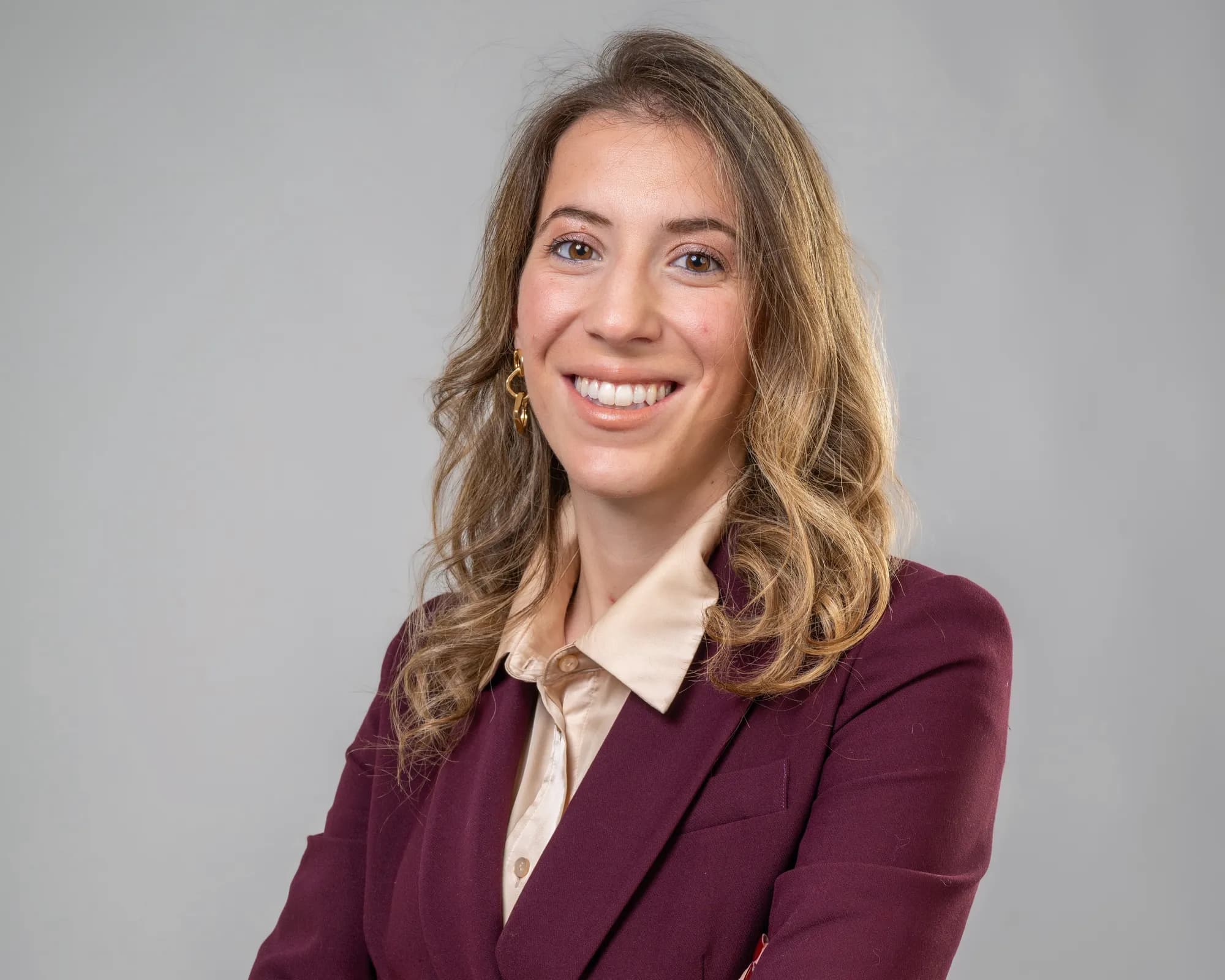
Within this context, the work of Lucrezia Senesi takes shape, as she is engaged in the Operations & Innovation area at Cemar Agency Network. Her role lies at the intersection of operational management and innovative development, with the objective of optimizing processes, enhancing coordination across a network that spans over 70 Italian ports, and contributing to the broader evolution of the maritime sector. This position involves not only managing complex day-to-day operations but also identifying opportunities for improvement, implementing new solutions, and supporting a more integrated and efficient system. Such responsibilities require a combination of strategic vision, adaptability, and a strong focus on continuous improvement, as well as the ability to navigate both operational challenges and long-term transformation.
In this interview, we take a closer look at the responsibilities, challenges, and perspectives of a role that is becoming increasingly relevant in a transforming industry. Through her experience, we gain insight into how innovation is being applied in practical terms, how operational efficiency can be enhanced across a wide network, and how the maritime sector is adapting to new demands. Her perspective offers a valuable contribution to understanding the direction in which the industry is moving and the skills required to support its ongoing transformation.
Lucrezia, first of all, thank you for your time. To begin, I would like to start from a more personal perspective. Your journey has led you to live and work in several international contexts, before choosing to return to Italy with the aim of leveraging what you have learned. What did this return mean to you, and how are your experiences abroad influencing your contribution within the company?
Returning to Italy was a very conscious choice for me, both on a personal and professional level. After working in highly structured international environments, I felt the desire to put what I had learned to use in a more local project, where I could have a direct and tangible impact: Cemar Agency Network, the family business. Cemar Agency Network is a maritime agency specialized exclusively in the cruise and yacht sector. We operate throughout Italy, with a presence in over 70 ports.
Having lived abroad for more than 14 years, across the United States, Germany, and Ireland, together with the professional experience I gained first in the financial world on Wall Street at Scotiabank, and later in the tech industry at companies such as Amazon and Google, has had a profound impact on the way I work. These experiences have given me a strong results-oriented mindset, a solid data-driven culture, and a very practical approach to problem solving. Today, I bring this mindset into the company, striving to combine structure and flexibility, innovation and operations, with the goal of continuously improving processes and ensuring a high-quality service.
Reaching a position of responsibility often requires a combination of conscious choices, strategic changes, and defining moments that shape a career. Which experiences do you consider to have been the most significant and decisive for your professional development?
Certainly, working in dynamic and international environments has been key. Engaging daily with diverse teams, complex projects, and challenging goals taught me how to manage pressure, make quick decisions, and think strategically. Another fundamental element has been the focus on continuous improvement: learning to question existing processes, analyze them, and optimize them systematically. Today, this is a cornerstone of my work. Finally, joining Cemar represented an equally important milestone, as it gave me the opportunity to apply these skills in an entrepreneurial context, where vision and operations must coexist on a daily basis.
The maritime and logistics sector represents a highly specialized and strategic field, with complex dynamics and daily operational challenges. Transitioning into a sector such as maritime and logistics is a significant and, in some ways, non-obvious choice. What led you, step by step, to pursue the path that brought you to your current role in Operations & Innovation, and specifically in this field?
The move into the maritime sector was partly natural and partly a conscious decision. Growing up in a family environment connected to this world, I was always somewhat familiar with the dynamics of the industry, even though I initially chose a different path. After my experiences abroad, I saw returning to the company as a concrete opportunity to contribute to the evolution of a highly operational sector with significant room for innovation. I was motivated by the idea of bringing a new, more structured and digitally oriented approach into a context where these elements are becoming increasingly crucial.
Today, operational efficiency and innovation are two fundamental levers for companies, especially in complex contexts such as port operations. Understanding the specific responsibilities and activities of those working in this field allows us to see how theory and practice intersect daily, and which tools or approaches are adopted to improve processes and performance. Could you explain concretely what your role involves and what your main responsibilities are?
My role sits at the intersection of operations and innovation. On one hand, I directly oversee shipowners and operational activities, coordinating processes related to port management and ship assistance. On the other hand, I work on optimizing internal workflows and the organizational evolution of the company. This means analyzing existing processes, identifying areas for improvement, and introducing tools or solutions that can increase efficiency and quality. An important part of my work also involves coordinating with our network across various Italian ports, ensuring operational consistency and high standards in all locations.
Cemar Agency’s network spans numerous Italian ports, each with its own characteristics, regulations, and operational dynamics. Coordinating such a wide network is not just about managing logistics; it also requires process uniformity, the ability to anticipate critical issues, and ensuring efficiency and safety in diverse contexts. What are the main operational challenges in coordinating such an extensive network?
The main challenge is certainly complexity. When I joined the company, I realized that it was not just about managing a network across 70 ports, but about dealing with realities that are often very different from one another: in many cases, this means effectively managing 70 different procedures. Ensuring consistency and high-quality standards in this context requires significant coordination and simplification efforts. One of my main objectives is precisely to make processes more fluid and uniform. Another crucial aspect is information management: it is essential that workflows are clear, timely, and structured to avoid inefficiencies. Finally, it is vital to maintain strong alignment among all involved parties, building solid relationships and a shared approach.
Many industries are undergoing profound transformation thanks to technological innovation. Understanding how these technologies are changing the sector provides insights into how companies can improve speed, safety, and sustainability, as well as the most relevant trends for the future. How is innovation transforming the maritime agency and port services sector?
Innovation is having an increasingly significant impact, particularly in terms of process digitalization and data management. Activities that were once highly manual can now be supported by digital tools, bringing substantial benefits in speed, accuracy, and traceability.
There is a clear move toward greater system integration and improved information sharing, also thanks to closer collaboration with cruise lines, whose software systems are often deeply integrated with ours. This requires careful attention and coordination, but at the same time allows our team to save time and work more efficiently.
Within Cemar, this process also translates into concrete updates to internal procedures: we have introduced new systems for accounting management, making it more structured and efficient, and we are evolving our statistics software to gain an increasingly clear and detailed view of operational data.
At the same time, it is important to emphasize that the digitalization process is not always linear: we are often constrained by complex Italian bureaucratic procedures, and not everyone is yet fully ready to share data or simplify administrative processes. This represents an obstacle to growth and digital transformation.
The integration of data and digital technologies has become essential for improving performance and processes, even in traditionally operational sectors. Based on your experience, how important is the use of data and digital technologies today in a traditionally operational field like this? How central is this aspect in your daily work?
Today, it is a fundamental element. Even in a highly operational sector like maritime, data represents a key tool for making more informed decisions and improving performance. This is something I learned very quickly during my experience in the tech industry: without data, progress is impossible; everything is built and guided based on data. At the same time, entering a different environment like Cemar, I realized that this approach is not always easy to implement. Data collection, structuring, and quality require time, processes, and the right tools. For this reason, today I consider data a fundamental pillar on which to build the company’s evolution.
A strategic role like Operations & Innovation requires a balanced mix of technical and transversal skills: from operational management to leadership, from data analysis to the ability to innovate. In your opinion, what are the essential skills for operating effectively in this field?
It is crucial to have a good balance between technical and transversal skills. On one hand, analytical abilities, familiarity with data, and understanding of operational processes are required. On the other hand, soft skills such as problem-solving, adaptability, and teamwork are essential. I would also add strategic vision: the ability to read the context, anticipate changes, and identify opportunities for improvement. Finally, the ability to communicate clearly and effectively is crucial, especially in a role that requires coordination across multiple areas.
The maritime sector today faces complex challenges, from sustainability to digitalization and global competitiveness. Analyzing future prospects and professional goals helps to understand how industry leaders prepare to drive change, anticipate trends, and develop new operational and innovative strategies. What are the future prospects for the sector, and what goals do you set for your professional journey?
The maritime sector will continue to evolve, with increasing focus on digitalization, sustainability, and efficiency. Companies that can effectively integrate innovation and operations will gain a significant competitive advantage.
On a personal level, my goal is to continue contributing to the company’s growth, supporting its evolution and strengthening its market position. I am particularly interested in further developing areas related to innovation and digitalization, while always keeping service quality and our relationship with clients at the center.
The maritime sector is therefore undergoing a significant transformation, driven by innovation, digitalization, and sustainability. Managing increasingly complex port networks, optimizing operational flows, and integrating advanced technologies are becoming essential strategic levers to enhance both efficiency and service quality. In parallel, the growing need for data-driven decision-making and smarter infrastructure is reshaping the way ports and maritime operators approach their daily activities, fostering more connected, responsive, and resilient systems across the entire logistics chain.
In this evolving scenario, roles related to Operations & Innovation are gaining unprecedented relevance. These positions require not only strong technical expertise but also transversal skills, a forward-looking strategic vision, and a high degree of adaptability to navigate the challenges of a constantly changing global market. Professionals are now expected to bridge operational excellence with innovation management, ensuring that new solutions are effectively implemented while maintaining reliability and performance. We thank Lucrezia Senesi for her willingness to share her experience, offering valuable insights into both the current dynamics and the future trajectory of the maritime sector, and contributing to a deeper understanding of the opportunities and challenges that lie ahead.
Don’t miss more updates, news and reviews of the world of cruises on Cruising Journal with photos, videos and special cruise offers.