
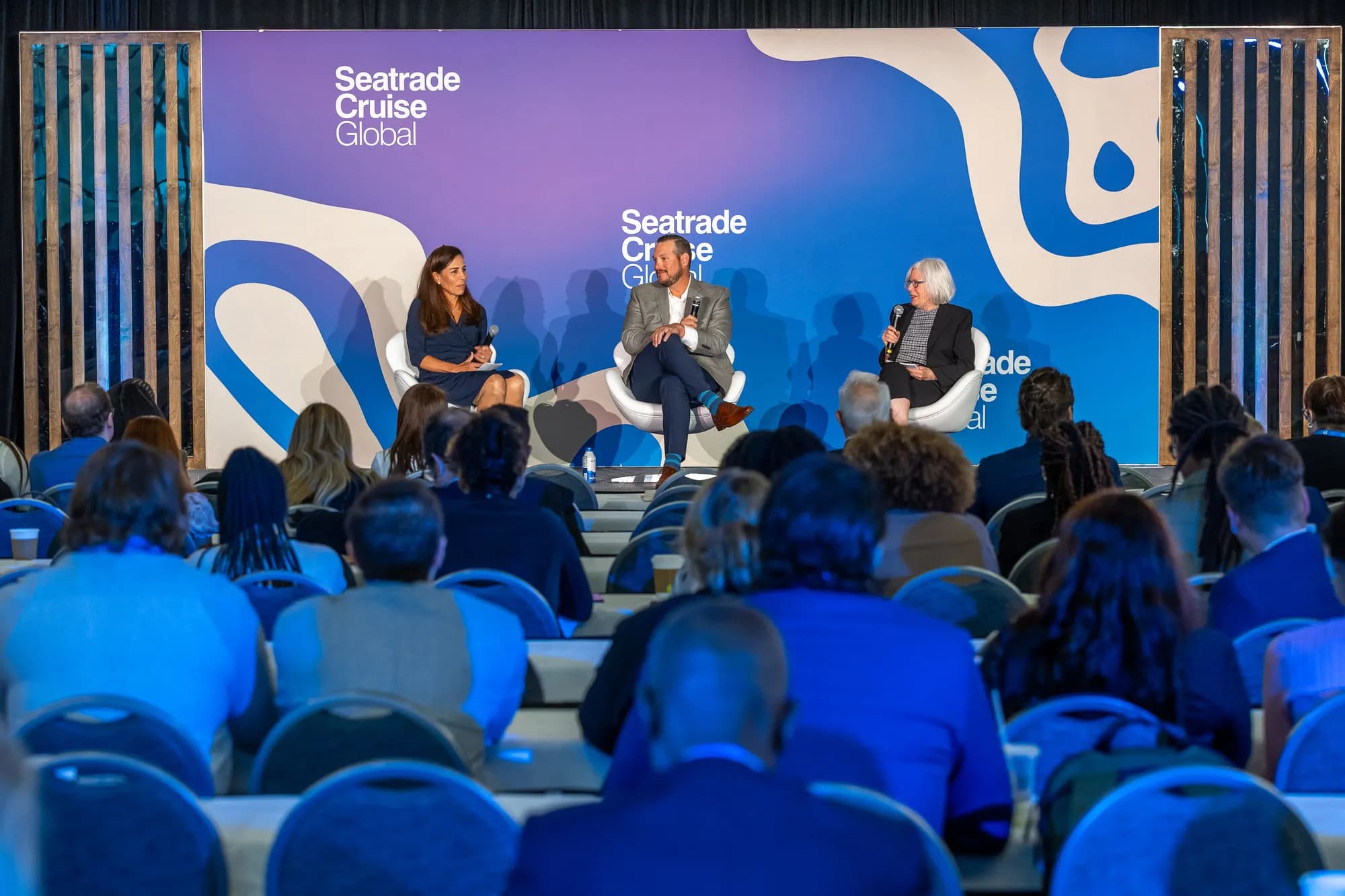
Seatrade Cruise Global 2026, held from April 13 to 16, concluded with great success, reaffirming its position as one of the leading events for the global cruise industry.
The 2026 edition marked the largest in the event’s 41-year history, highlighting the sector’s growing importance and dynamism. Through 92 conference sessions and the participation of 283 speakers, key topics such as digital transformation, sustainability, evolving guest expectations, and operational innovation were explored in depth. At the same time, the exhibition area, featuring more than 650 exhibiting companies, provided a comprehensive overview of the innovations reshaping the cruise experience, from ship design and advanced technology to hospitality and onboard services.
The event opened with the World Cruise Tourism Summit, which brought together cruise industry leaders, port authorities, and tourism stakeholders to explore how destinations are playing an increasingly important role in shaping the cruise experience.
Chiara Giorgi, Global Brand & Event Director of Seatrade Cruise Global 2026, emphasized that destinations are central to creating value across the entire cruise ecosystem. She also highlighted that the decision to dedicate the opening day to this topic reflects a broader shift within the industry, characterized by stronger collaboration with local communities, more conscious experience design, and the growing awareness that what happens ashore is just as important as what happens onboard.
The day’s keynote conversation highlighted the increasing importance of destination strategy as a key driver of demand and differentiation, while also reflecting a wider industry trend: as traveler expectations continue to evolve, destinations are increasingly being reimagined through carefully designed experiences, strategic partnerships, and deeper engagement with local communities, with a long-term growth approach that places equal value on both shoreside activities and the onboard experience.
Throughout the morning, the various panel discussions explored the increasingly central role of the time passengers spend in destinations, highlighting how it directly impacts economic value, guest satisfaction, and future demand. During a debate moderated by Roger Blum, industry representatives including Russell Benford, Karin Plettner, Marie-Andrée Blanchet, Juan Trescastro, and Dona Regis-Prosper underlined how closer collaboration with local communities is helping generate new value across the sector. At the same time, during a session led by Shannon McKee, speakers including Justin Poulsen, Leyla Oner, Maria Tauschke, Laura Vlad, and Virginia Quintairos analyzed how personalization, technology, and sustainability are reshaping the guest experience beyond the ship itself. Overall, the discussions delivered a clear message: the future of the cruise industry will depend not only on what happens onboard, but also on the ability to create seamless, authentic, and meaningful interactions between guests and destinations.
Another key theme that emerged throughout the day was the growing importance of authenticity in destination development. During a panel moderated by David Selby, representatives from Azamara, MedCruise, Port of Taranto, and Hurtigruten highlighted how destinations are moving beyond the concept of being merely a port of call, evolving instead into experiences deeply rooted in local culture, heritage, and regional identity. This perspective was further reinforced during the “Welcome Ashore” session, which featured testimonials from Alaska, Greece, and the Bahamas, offering concrete examples of how cruise tourism can support small businesses, generate employment opportunities, and contribute to the development of local communities. Completing the broader discussion, a forward-looking panel focused on infrastructure and the long-term development of destinations. Moderated by Tom Spina and featuring leaders from Carnival Corporation, Port Everglades, DOF Robotics, Royal Caribbean Group, and Alaska Railroad Corporation, the discussion explored how investments in ports, terminals, and shoreside infrastructure are enabling destinations to strike a balance between capacity, guest experience quality, and sustainability.
Seatrade Cruise Global 2026 continued on Tuesday with the “State of the Industry” keynote, a central moment of the event that brought together the industry’s leading executives to examine growth trends, evolving demand, and the key dynamics shaping the new era of the global cruise industry.
Moderated by CNBC correspondent Contessa Brewer, the keynote featured senior leaders from Carnival Corporation, Royal Caribbean Group, the cruise division of MSC Group, and Norwegian Cruise Line Holdings, alongside Charles “Bud” Darr, President and CEO of Cruise Lines International Association (CLIA), for a wide-ranging discussion on the outlook for the sector. Throughout the conversation, the executives highlighted strong global demand and the industry’s continued expansion, while also acknowledging the challenges associated with growth, including infrastructure, regulations, fleet development, and the evolving expectations of guests.
Josh Weinstein, CEO of Carnival Corporation, emphasized that cruising is fundamentally about reducing friction in order to allow guests to fully enjoy the hospitality experience. He highlighted the essential role played by crew members, dining experiences, entertainment, and destinations, as well as the importance of local partners, who represent an integral part of the overall value that inspires travelers to choose a cruise vacation.
Charles “Bud” Darr, President and CEO of Cruise Lines International Association, noted that the new generation of cruise travelers holds values that are, in some respects, different from those of previous generations and is willing to invest in different types of experiences than in the past. He emphasized how the industry is evolving to respond both to these emerging expectations and to the needs of its existing customer base. He also highlighted a significant trend: a surprisingly high number of people who have never taken a cruise express a desire to do so, a clear sign that the industry’s message is reaching entirely new audiences.
Among the main topics addressed were the industry’s orderbook, access to new markets, the development of private destinations, and the role of sustainability in long-term strategies. Overall, the discussions reinforced a key concept: the cruise industry is entering a new phase of growth that requires a balance between expansion and strategic investments in destinations, fleets, and guest experience. The panels explored these themes across different geographic regions and market segments.
Growth across the various cruise segments was also at the center of the debate. During the panel dedicated to river cruising, executives analyzed the increase in new ship orders and rising demand, raising questions regarding capacity, the development of new itineraries, and the future balance between supply and demand along the world’s major waterways. At the same time, discussions among leaders in the expedition segment highlighted how this market is entering a more mature phase, characterized by geographic expansion, evolving guest expectations, and growing attention toward responsible growth models and the adoption of low-impact technologies. In this context, Natalya Leahy, CEO of Lindblad Expeditions, recalled the pioneering origins of the sector, emphasizing how, sixty years ago, the first non-scientific expedition to Antarctica already represented an extraordinary achievement, while reaffirming that in experiential travel, it is not only the destination that matters, but also the way in which it is experienced.
The panel dedicated to newly appointed presidents brought together a new generation of cruise line leaders — ranging from luxury and expedition cruising to mainstream and emerging brands — offering insight into how companies are evolving to attract new audiences, adapt to changing consumer preferences, and navigate an increasingly competitive landscape. Among the topics discussed were the use of artificial intelligence, onboard innovation, deployment strategies, and the continuously evolving profile of the cruise guest.
The day was also marked by significant investment announcements from major brands, further confirming the strong momentum of the sector. Holland America Line introduced “Holland America Evolution,” a multi-year initiative involving the refurbishment of six ships across the fleet. The project was described as the most ambitious enhancement of the guest experience in the company’s 153-year history, featuring a comprehensive transformation of the vessels and the extension of the distinctive elements of the Pinnacle Class ships across a broader portion of the fleet. At the same time, American Cruise Lines presented an expansion plan within the United States, including the launch of the American Encore, the first riverboat christened in Idaho, highlighting the growing interest in domestic cruising and in emerging river destinations such as the Columbia and Snake Rivers.
As the event progressed, Seatrade Cruise Global 2026 turned its focus to the future of technology with Tech Day, highlighting how the cruise industry is emerging as one of the most advanced environments for testing and deploying innovation at scale. Bringing together cruise executives, technology leaders, and digital innovators, the sessions demonstrated how the industry is moving beyond simple technology adoption, instead leveraging its scale and operational complexity to actively shape how technologies are implemented in real-world environments, with ripple effects across the wider travel ecosystem.
The Tech Day opened with a forward-looking keynote by Technology Ambassador Ian Richardson, who outlined the key drivers of innovation in the cruise sector in 2026 — from artificial intelligence to digital platforms, connectivity, and guest experience systems — providing a framework for the discussions that followed.
Artificial intelligence emerged as one of the central themes: in a session moderated by Jacob Passy, representatives from MSC Cruises, Norwegian Cruise Line Holdings, Holland America Line, and Amazon Alexa examined the potential and limitations of AI applied to cruise operations. The discussion highlighted the importance of strong data foundations, system integration, and lessons learned from early pilot projects, emphasizing that real impact will depend on how effectively these technologies are embedded into existing processes. In this context, Emerson Sklar, Evangelist at Amazon Alexa, underlined how AI-powered assistants can anticipate preferences and suggest personalized experiences, also noting that recent studies indicate a very high potential for automating customer interactions in the cruise sector compared to traditional hospitality.
Significant attention was also given to connectivity and cloud infrastructure, as cruise companies continue to evolve toward increasingly connected, real-time operational environments enabled by next-generation satellite networks and hybrid IT architectures. The sessions highlighted how the shift from onboard systems to cloud-based platforms is transforming both operational resilience and guest experience, while also introducing new challenges related to latency, redundancy, and system design.
Throughout the day, speakers also examined the operational complexity of the cruise sector and the role of technology in simplifying and integrating it. From onboard management systems to digital supply chains, it became clear that integrated platforms and predictive tools are enabling operators to manage highly complex environments with greater efficiency and transparency. In particular, supply chain innovation was identified as a key area, with the use of real-time tracking, predictive analytics, and advanced systems integration helping to optimize procurement and logistics across global fleets.
The day also offered a retrospective look at the sector’s technological evolution, through a session featuring some of the pioneers of cruise technology. By retracing the journey from manual systems and limited connectivity to today’s advanced digital ecosystems, the discussion clearly highlighted the speed of change and the increasingly central role of innovation in shaping industry development.
Several companies also shared updates on their latest initiatives, including Explora Journeys, which announced a major partnership bridging the world of high-end ocean travel with high-speed competition by becoming the Title Partner of the Swiss SailGP team. This strategic move further strengthens the brand’s positioning within a context of excellence and international prestige, in line with other high-profile collaborations such as its partnership with world number one Jannik Sinner and its association with the Formula 1 Grand Prix de Monaco.
Among the most appreciated highlights of the 2026 edition, The Wellness Oasis represented an immersive space fully dedicated to well-being at sea, offering participants a multi-sensory and engaging experience. The area was divided into six thematic zones, each designed to explore a specific aspect of wellness: from mindfulness and mental clarity in the Reset Pod, to fitness and functional vitality in The Mat, and recovery and optimization in The Lab. Additional focuses included nutrition at the Sip Bar, innovation in treatments at Future of Beauty, and global wellness traditions at Culture Corner.
Alongside the conferences and exhibition area, the event also offered numerous networking opportunities, creating valuable occasions for meetings and exchanges among industry professionals. From the official Welcome Party to organized meetings and more informal gatherings, every activity was designed to encourage the formation of new collaborations and partnerships within the global cruise community.
An essential highlight of Seatrade Cruise Global 2026 is F&B@Sea, the leading event dedicated to the cruise industry’s food & beverage community, which concluded this year’s program with the F&B@Sea Awards 2026, presented by Rémy Cointreau. This year’s edition brought together cruise lines, suppliers, and hospitality leaders from around the world, offering a platform for exchange and celebration dedicated to innovation, creativity, and excellence in onboard food and beverage. The awards ceremony, held on the final day of F&B@Sea at the Mana Wynwood Convention Center in Miami, aimed to honor those redefining industry standards and contributing to elevating the quality of cruise dining experiences.
Among the winners in the 2026 Cruise Line category, Princess Cruises received the Best Restaurant award for Makoto Ocean, while National Geographic-Lindblad Expeditions was recognized for Best Sustainable F&B Program. The Ritz-Carlton Yacht Collection was awarded Best Beverage Program. The F&B Maverick Award was presented to Linken D’Souza, Senior Vice President Global Food & Beverage at Royal Caribbean, while the Rising Star Award went to Alex Palmeri, Senior Manager Beverage Operations at the same company. The Woman of Impact Award was ultimately conferred upon Marisa Christenson, AVP Food & Beverage Operations and Development at Holland America Line.
In the 2026 Supplier category, the Food Innovation Award was presented to Aussie Select for its lamb charcuterie products, while the Beverage Innovation Award went to BZ Consortium for the Wine of the Sea project, an underwater-aged wine. The Eco-Pioneer Award was granted to The Chef’s Garden for its regenerative agriculture practices, while the Innovative F&B Technology Award recognized The Butter Book for its training platform. Finally, the Best New Product title was awarded to Nektar Natura for its beverage dispensing solutions.
Mary Bond, Group Director di Seatrade Cruise, emphasized that this year’s winners represent excellence in cruise food and beverage, highlighting their ongoing commitment to quality, creativity, and the enhancement of the guest experience. She also stated that these contributions continue to redefine dining at sea and that recognizing their achievements within such a particularly significant edition of F&B@Sea was of great value to the organization. The F&B@Sea Awards thus reaffirm their position as a benchmark for excellence in the cruise food and beverage sector, celebrating both emerging talent and established figures who actively contribute to shaping the future of onboard dining and maritime hospitality.
Seatrade Cruise Global 2026 reaffirmed its position as a key event for the international cruise industry, bringing together the sector’s leading players in Miami to discuss the major transformations currently underway. From growth and technological innovation to sustainability and the evolution of destinations, the event painted a picture of a rapidly expanding industry, increasingly focused on integrating sea and shore experiences and enhancing the overall guest journey.
The next edition is already scheduled: Seatrade Cruise Global will return to Miami from April 5 to 8, 2027, continuing to serve as a global reference point for dialogue and growth within the cruise industry.
Stay tuned for news, updates, and cruise reviews on Cruising Journal, featuring photos, videos, and cruise deals.