
Egitto with its millennia-old history and extraordinary culture, stands as one of the most captivating destinations in the Mediterranean and the Middle East. From the Pyramids of Giza and the majestic Valley of the Kings along the Nile to modern cities such as Cairo and Alexandria, the country is a vibrant blend of tradition, innovation, and breathtaking landscapes.
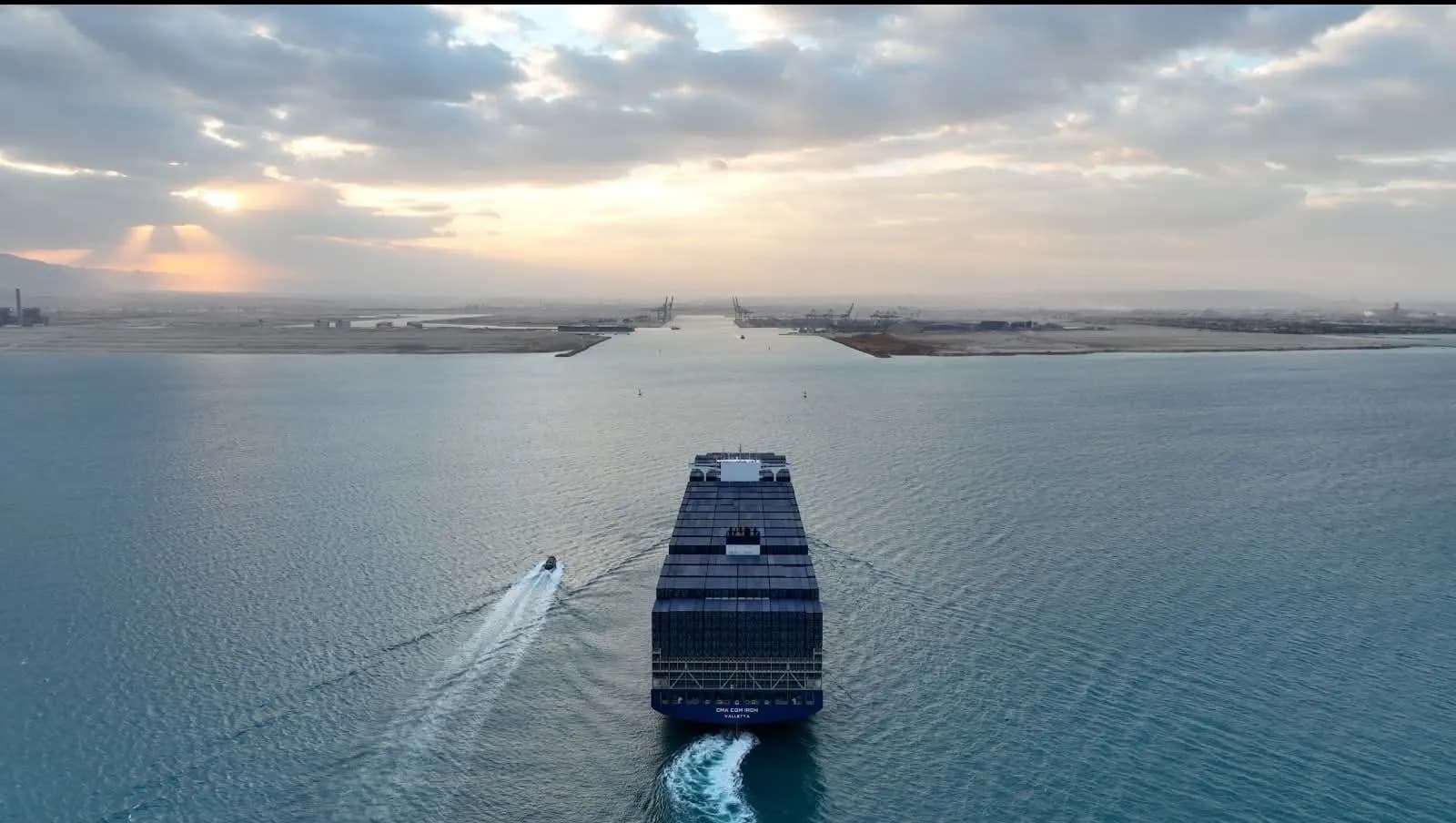
Yet Egypt is not only the land of ancient pharaohs. Its coastlines stretch along both the Mediterranean Sea and the Red Sea, hosting strategic ports that serve as hubs for international trade, logistics, and cruise tourism. Ports such as Alexandria, Port Said, Suez, Hurghada, and Marsa Alam not only facilitate maritime traffic, but also reflect the country’s economic dynamism and openness to the world.
Today, beyond being a major commercial gateway, Egypt is positioning itself at the forefront of sustainable port management. Growing attention to environmental protection and emissions reduction has led the Egyptian government to implement a range of measures aimed at safeguarding marine and coastal ecosystems, transforming its ports into true models of sustainability.
The environmental policy of the Government of the Arab Republic of Egypt seeks to ensure comprehensive environmental protection through the establishment of robust institutional, economic, legislative, and technical frameworks. Its primary objective is to guarantee that the country’s economic development proceeds in harmony with the environment and natural resources, preserving unique ecosystems while promoting sustainable growth.
To achieve this ambitious goal, Egypt has adopted a series of concrete measures, some of which represent international best practices for the maritime and port sectors. Key initiatives include climate change mitigation programs, the development of low-impact infrastructure, waste management regulations, and clean energy projects.
One of the most significant initiatives is the National Climate Change Strategy 2050, a multi-billion-dollar national plan designed to promote a resilient and green economy. The strategy integrates comprehensive mitigation and adaptation programs across key sectors such as energy, transportation, agriculture, and water resource management, with a long-term perspective extending to 2050. Egypt has committed to delivering its fair share of climate action within global efforts to combat climate change. Given the country’s high vulnerability to the adverse effects of climate change, adaptation is considered a strategic imperative.
Already in 2011, Egypt had prepared its First National Strategy for Climate Change Adaptation and Disaster Risk Reduction, followed by the Low Emission Development Strategy (LEDS) in 2018. Today, the National Climate Change Council (NCCC) has called for the development of a comprehensive national climate strategy up to 2050, which will serve as the guiding framework for Egypt’s climate policies in the coming decades. Egypt’s climate strategy aims to promote sustainable economic development, focusing on low-emission growth in key sectors of the national economy. This approach not only seeks to reduce environmental impact but also integrates sustainability into production processes, creating a balance between economic growth and the protection of natural resources.
Another key aspect of the strategy concerns the country’s resilience to climate change. Egypt aims to strengthen the adaptive capacity of communities, infrastructure, and natural systems, mitigating the negative effects of extreme weather events and adverse environmental phenomena. In parallel, the strategy seeks to consolidate climate governance by improving the management and coordination of climate-related actions, ensuring more effective and consistent planning at the national level.
As part of the national vision to transform Egyptian ports into green and sustainable infrastructure, the government has launched a series of initiatives aimed at reducing emissions and pollution in port areas. Among the most significant actions is the beginning of providing vessels with electricity via Off-shore power supply plants at the Port of Alexandria, which allows for the gradual replacement of fossil fuels with cleaner electricity, reducing direct emissions from cargo handling activities. Moreover, Waste Integrated Management System has been applied to follow-up wastes handling procedures, while ensuring that there are no adverse impacts on the port, being one of the steps towards ports’ transition into green ports.
To ensure constant monitoring of environmental conditions, air quality monitoring systems have been implemented, capable of detecting and promptly reporting any critical issues, allowing for rapid and targeted interventions. Moreover, the expansion of solar-powered energy grids represents an important step toward energy self-sufficiency and the reduction of indirect emissions linked to energy consumption in the ports. These integrated initiatives represent significant progress toward more sustainable and resilient ports, aligned with the most rigorous international standards and capable of effectively reducing the environmental impact of maritime and logistical activities.
Additionally, Egypt ratified the United Nations Framework Convention on Climate Change (UNFCCC) in 1994, becoming one of the first countries to formally commit to fighting climate change. The UNFCCC, closely linked to two other key conventions, the Convention on Desertification and Biological Diversity (Nairobi, Kenya, 1992) and the Ramsar Convention on Wetlands (Iran, 1971), plays a central role in international negotiations aimed at combating climate change.
The Convention has helped to recognize the issue of climate change and the negative effects of anthropogenic activities on the climate. Subsequent Conferences of the Parties (COP), particularly the third one in Kyoto in 1997, set concrete goals for reducing greenhouse gas emissions, imposing a greater burden on developed countries, identified in Annex I, which also includes the economies in transition of Eastern and Central Europe. The Convention also provides financial support tools for developing countries through the Global Environmental Facility (GEF) and a monitoring system based on annual reports from developed countries on their emissions. Egypt submitted its First, Second, and Third National Communications to the UNFCCC in 1999, 2010, and 2016, respectively, reaffirming its commitment to transparency and international cooperation in the field of climate change.
The Egyptian government has also launched a series of initiatives aimed at strengthening environmental sustainability and addressing climate change in a concrete way. Among these, the reform of the national energy policy is a central element: the goal is to promote efficiency and sustainable use of resources while simultaneously transitioning to cleaner energy sources. In this context, special attention has been given to the development of renewable energies, with significant investments in solar and wind infrastructure, aimed at increasing the country’s sustainable energy capacity and reducing dependence on fossil fuels.
At the same time, Egypt has promoted the development of low-emission transportation systems, adopting more sustainable naval and port fleets, which helps limit air pollution and emissions in the country’s main logistical hubs. The strategy also includes the implementation of green finance mechanisms designed to financially support ecological projects and encourage private investments in the sustainability sector. Alongside these, climate adaptation programs are targeted at the most vulnerable communities, aiming to enhance social and territorial resilience to the impacts of climate change.
From an international cooperation perspective, Egypt has joined the African Energy Interconnection Sustainable Development Alliance (AEISDA), an initiative aimed at strengthening regional collaboration and promoting the development of clean energy across the African continent. Through these integrated actions, the country not only consolidates its leadership in sustainability but also actively contributes to global mitigation and adaptation climate goals.
To protect natural and marine resources, Egypt has established the Integrated Coastal Zone Management (ICZM) framework, a strategic approach aimed at sustainably protecting and managing the country’s marine and coastal areas. This program is based on an integrated vision that takes into account the fragility of ecosystems, various human activities, and the complex interactions between marine and terrestrial components, laying the foundation for advanced and coordinated coastal governance.
Among the key instruments introduced by the ICZM framework is the creation of a national coastal conservation committee, tasked with overseeing the protection and sustainable management of coastal areas, ensuring effective coordination between government agencies, local communities, and sector stakeholders. In parallel, the Environmental Guidelines for Coastal Areas have been issued, providing practical guidance for the planning and sustainable development of marine-coastal zones, ensuring the protection of habitats and vulnerable species. To complete this framework, the National Environmental Action Plan has been developed, outlining priorities, objectives, and operational strategies for the conservation of marine and coastal resources.
The ICZM program has also overseen concrete projects, such as those in Alexandria and along the coastal stretch between Hurghada and Ras Ghareb, funded by the Regional Red Sea and Gulf of Aden Environment Program (PERSGA), and is involved in monitoring marine litter. Through this integrated management, Egypt promotes an environmental protection model that balances economic development with ecosystem conservation, laying the foundation for sustainable and resilient coastal management.
Law No. 202 of 2020 represents another crucial step in the regulation of waste management in Egypt, covering the entire cycle from wastes generation to final disposal. The law establishes a comprehensive framework aimed at ensuring sustainable and safe practices: among its key measures is the creation of a dedicated regulatory authority, tasked with coordinating and overseeing all phases of waste management, ensuring that operations comply with national and international environmental standards. At the same time, the law prohibits harmful practices such as open waste burning and promotes recycling and producer responsibility, encouraging a circular approach to material management. Enforcement tools and penalties are included to ensure compliance and deter violations and non-compliant practices.
In parallel, Egypt participates in international audits through the periodic checks required by the IMO Mandatory Audit Scheme, which assess the adherence of Egyptian ports to international conventions such as MARPOL, the Ballast Water Management Convention, the Basel Convention, the Barcelona Convention, and the Anti-Fouling Systems Convention. These audits ensure that port and maritime operations comply with global safety and environmental protection standards.
Additionally, to reduce the environmental impact of marine fuels, the Egyptian government has issued bunkering licenses to two international operators, Minerva Bunkering and Peninsula Petroleum, authorized to supply low-carbon fuels both at the Suez Canal entrances and in Egyptian ports upon request. This initiative represents a concrete step towards reducing emissions in the maritime sector, integrating sustainable waste management with environmentally low-impact operational practices in ports and along the country’s major shipping routes.
In accordance with Cabinet Resolution No. 3543/2025 on forming a national committee to study the possible impacts of the economic measures which IMO intends to approve to reduce GHG emissions, a Green Ports Working Group has been established, tasked with developing an integrated national framework for the transition of Egyptian ports to low-emission and environmentally sustainable infrastructure. This body represents the core of the national strategy to make Egypt an international model for green and sustainable ports.
Thus, Egypt shows how it is possible to combine economic development with environmental protection. Thanks to initiatives like these, the country is building a solid foundation for sustainable development. Today, Egyptian ports are not only strategic commercial hubs but also examples of innovation and environmental responsibility, demonstrating that the protection of natural resources, tourism, and economic growth can go hand in hand.
Don’t miss news, updates, and reviews from the world of cruising on Cruising Journal, featuring photos, videos, and special cruise offers.