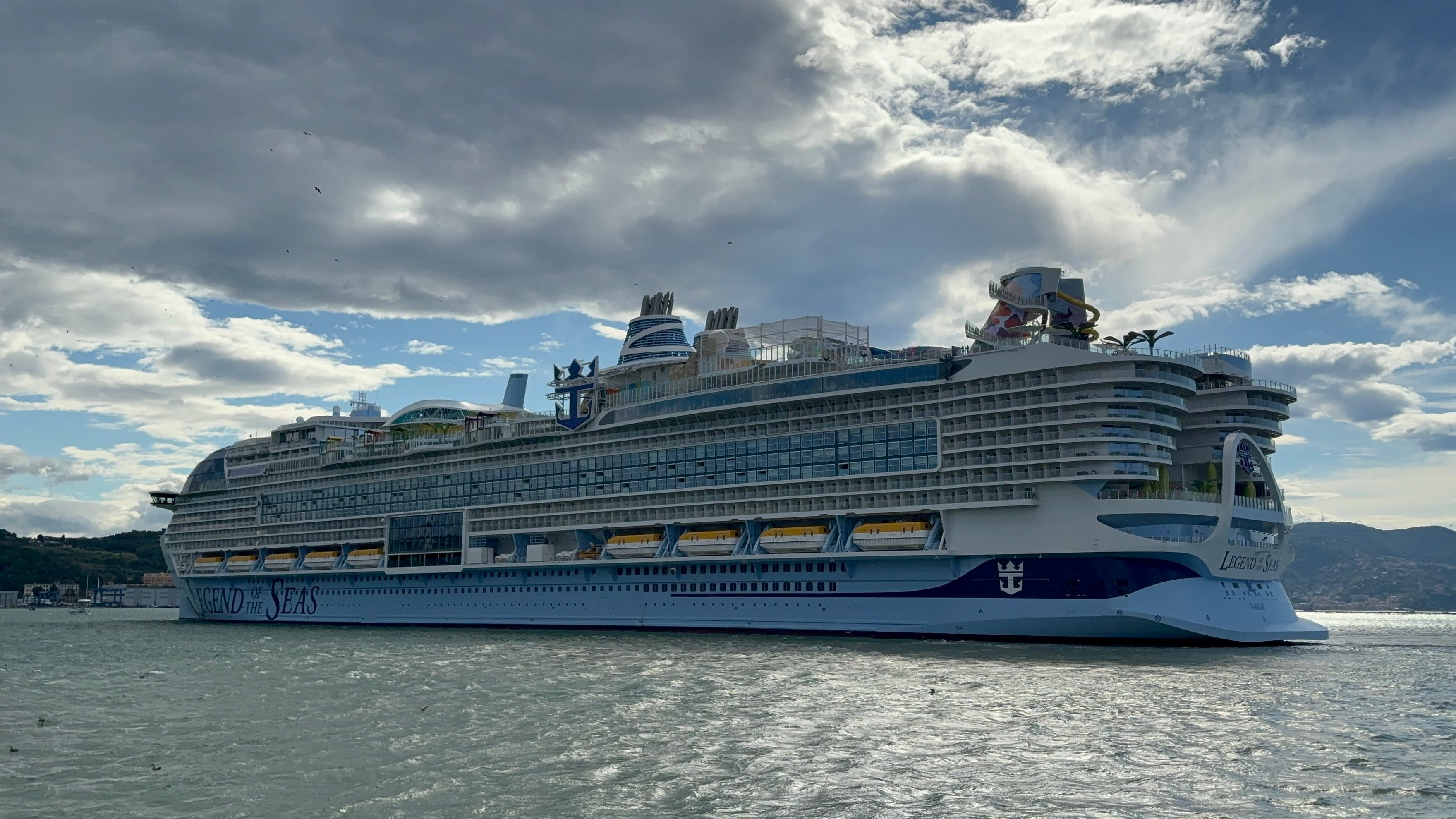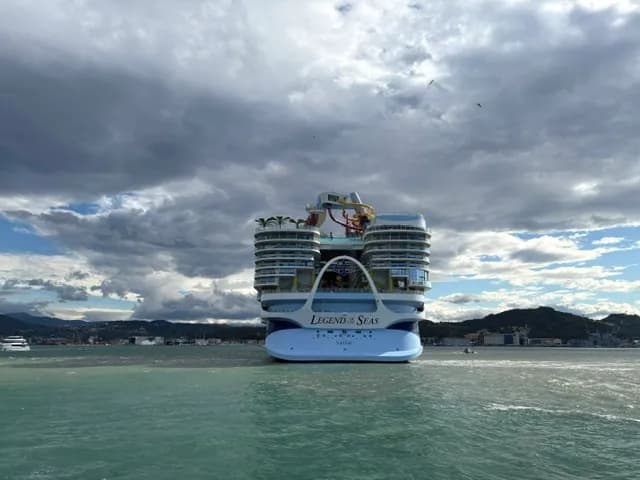
Royal Caribbean has officially unveiled Legend of the Seas, the third ship in the groundbreaking Icon Class, which set sail from Málaga on June 29 for an exclusive inaugural preview cruise. The celebration featured a spectacular fireworks display marking the arrival of the new flagship into the fleet and the beginning of its journey toward its official commercial debut.
During a meeting with the company’s leadership, Jason Liberty, President & CEO of Royal Caribbean Group, and Michael Bayley, President & CEO of Royal Caribbean International, shared the strategic vision that will shape the future of the group in the coming years, offering an exclusive behind-the-scenes look at the creation of a ship like Legend of the Seas and the challenges facing the cruise industry.
One of the central topics discussed was the long and complex process behind the creation of a new ship. As Michael Bayley explained, design and planning begin many years before a vessel enters service, while operational preparations start approximately one year before delivery. Particular attention is devoted to crew selection, the preparation of captains and onboard management teams, and every activity required to transform a newly built vessel into a fully operational floating destination.
Bayley also outlined the philosophy that guides the development of every new class of Royal Caribbean ships, based on three core principles: tradition, evolution, and revolution. Tradition means preserving the brand’s most iconic and beloved experiences; evolution focuses on refining and expanding those experiences that have already proven successful with guests; revolution represents the most innovative part of the creative process, introducing entirely new concepts, attractions, and venues capable of redefining the vacation experience. According to Bayley, it is the balance between these three pillars—continuously shaped by guest feedback—that drives the design of the company’s future ships.
The discussion then turned toward the future of the group. Royal Caribbean confirmed that work is already underway on the next generations of ships, with the creative process beginning as much as seven years before a vessel enters service. Alongside the continued expansion of the Icon Class, significant attention is being devoted to the new Discovery Class, scheduled to debut in 2029. These ships will be specifically designed for more destination-focused itineraries, operating in regions such as Alaska, Asia, and Europe while also being capable of transiting the Panama Canal, providing unprecedented operational flexibility.
Considerable attention was also given to the evolution of the onboard product and the company’s continued focus on multigenerational families, which remain at the heart of Royal Caribbean’s offering. The company continues to study emerging travel trends, particularly teenage behavior, developing experiences designed to encourage social interaction, entertainment, and shared moments, both onboard and at its private destinations.
Technology and artificial intelligence also featured prominently in the discussion. The executives explained that modern cruise ships are now equipped with thousands of sensors capable of optimizing energy consumption, operational management, maintenance, and sustainability. Artificial intelligence is viewed as a genuine “superpower,” helping improve both the guest experience and crew operations while simultaneously reducing waste and environmental impact.
Sustainability was another major topic. Royal Caribbean reaffirmed its commitment to LNG (Liquefied Natural Gas), which the company considers a key technology in the industry’s energy transition—not primarily for economic reasons, but for its contribution to reducing emissions and supporting the future development of increasingly sustainable synthetic fuels.
The story behind the name Legend of the Seas also attracted considerable interest. Strongly requested by Royal Caribbean’s most loyal guests, the name pays tribute to the original Legend of the Seas, launched in 1995, while fitting perfectly within the family of iconic ship names inaugurated by Icon of the Seas. It is a tribute to the company’s heritage while looking firmly toward the future.
The executives also discussed commercial strategies and international market development. Among the group’s priorities is addressing economic pressures without compromising product quality, instead focusing on operational efficiency and reinvesting savings into continuously enhancing the guest experience. At the same time, Royal Caribbean continues to expand its global presence, maintaining a strong focus on both established and emerging markets.
Another key topic was attracting first-time cruisers. One of the company’s primary objectives is to introduce new travelers to cruising through innovative products, shorter itineraries, and exclusive destinations. Future growth will increasingly depend on reaching new travel communities, moving beyond traditional geographic markets and engaging people who share common interests, passions, and lifestyles.
The overall impression from the meeting was that of a company firmly focused on the future, investing simultaneously in innovation, sustainability, new destinations, and entirely new vacation concepts. Legend of the Seas stands today as the clearest symbol of that vision.
Don’t miss the latest news, updates, reviews, photos, videos, and cruise deals from Royal Caribbean on Cruising Journal.