
The global cruise industry has become an increasingly interconnected system where ports, cruise lines, and destinations must operate in close coordination. As ships grow in size, technology, and sustainability requirements, ports are expected to deliver not only infrastructure, but also operational reliability and long-term partnership.
Global Ports Holding, the world’s largest cruise port operator, has spent the last two decades transforming from a traditional terminal operator into a global integrator, redefining what it means to operate a port. With a footprint spanning over 34 ports in 19 countries, the guiding philosophy is rooted in the “Network Effect.” This principle ensures that whether a ship docks in the heart of the Caribbean or a boutique port in the Adriatic, the operational standard, safety protocols, and guest experience remain identical. This consistency provides cruise lines with the “Confidence in Consistency” required to plan multi-year itineraries with total operational certainty.
Mehmet Kutman, Chairman and CEO of Global Ports Holding
“The global cruise industry has reached a point of technical and logistical maturity where the ship and the shore must operate as a single, synchronized heartbeat. Our vision at Global Ports Holding is to engineer the ‘Network Effect’—a global integration that replaces isolated port calls with a seamless, high-standard ecosystem across 19 countries.
Whether we are commissioning the flagship West Marina in Nassau, doubling capacity in Liverpool, or setting new technological benchmarks in Las Palmas, our mission is to provide cruise lines with ‘Confidence in Consistency.’ By 2035, as we move toward Carbon Neutrality, our ambition is not only to remain the world’s largest cruise port operator, but to operate a truly integrated global network that supports the next phase of growth in the cruise industry.”
The Caribbean: Modernizing the Beating Heart
The Caribbean remains the industry’s beating heart, but it is a region that requires constant modernization and community engagement to meet the expectations of the modern, digitally connected traveler. Nassau Cruise Port in the Bahamas stands as the flagship of this modernization effort. Following a redevelopment project exceeding 350 million dollars, Nassau has evolved from a transit stop into a leading destination in its own right. The 2026 season marks the project completion as the West Marina Pool and the Superyacht Marina are commissioned.
Mike Maura Jr, Regional Director of the Americas and CEO of Nassau Cruise Port, shares “The Bahamas & Caribbean welcome over 40% of total global cruise passengers annually. Cruising is all about gaining new experiences and meeting new cultures. The GPH philosophy includes not only the material investments in maritime infrastructure but the thoughtful development and curation of waterfront port communities which serve to bring visitors and foreign cultures together.”
This transformation is being mirrored in San Juan, Puerto Rico, where GPH is currently undertaking its most ambitious rehabilitation project to date. By focusing on the structural integrity of the wharves and piers, GPH is ensuring that San Juan remains the homeport and transit hub within the region for the next fifty years, providing a stable foundation for the entire Eastern Caribbean circuit. These projects represent more than just concrete and steel; they are the anchors of regional economic stability. Central to this Caribbean strategy is the strategic development of Saint Lucia, where GPH is executing a vision that balances high-capacity cruise logistics with local heritage. Under the regional leadership in the Eastern Caribbean, the Saint Lucia Cruise Port project is being treated as a cornerstone of the nation’s maritime future. The investment here is not limited to berth extensions; it encompasses the revitalization of the local Fishermen’s Village, ensuring that the economic benefits of cruising are shared directly with the local community.
The Northern European Tri-Anchor System
This commitment to infrastructure extends across the Atlantic to the British Isles and the Mediterranean. The entry of GPH into Liverpool marks a strategic shift for the UK cruise market. The fifty-year concession is a commitment to the city’s maritime heritage through the launch of a state-of-the-art terminal project at Princes Dock. To accommodate the newest generation of ships, GPH is introducing a sophisticated floating dock system that allows for the simultaneous berthing of two 300-meter vessels, effectively doubling the port’s daily capacity. The new terminal will also feature events and retail spaces that will integrate the port into the city itself, as well as create opportunities for the community in a world-class position on Liverpool’s iconic waterfront.
This major English gateway is balanced by the strategic inclusion of Greenock Cruise Port in Scotland and Bremerhaven in Germany, which is only a start in GPH’s journey in Northern Europe. As the principal deep-water gateway to the Scottish Highlands and the vibrant cultural landscape of Glasgow, Greenock represents a critical piece of the GPH Northern European puzzle. As the gateway to Scotland, Greenock is the perfect platform for the classic Scottish experiences. The focus here transcends mere logistics; it is about creating a dedicated, high-spec visitor experience that honors the region’s unique heritage. By modernizing the arrival infrastructure and streamlining terminal operations, GPH is ensuring that Greenock can seamlessly handle the increasing demand for Scottish itineraries.
Expanding this northern network further is Bremerhaven, a cornerstone of the German cruise market and an industrial powerhouse in terminal operations. As a key transit and turnaround hub, Bremerhaven’s integration into the GPH network brings the “Global Standard” to one of Europe’s most efficient maritime gateways. By optimizing turnaround times and investing in seamless passenger flow, GPH is positioning Bremerhaven as the essential German anchor for North Sea and Baltic rotations. Together, Liverpool, Greenock, and Bremerhaven form a powerful tri-anchor system, providing cruise lines with a reliable, high-standard network that spans from the heart of the Mersey to the gateway of the Clyde and the shores of the Weser. These ports are not just entry points; they are the logistical hubs that make complex, high-capacity Northern European rotations a viable reality for the global fleet.
The Central Mediterranean Corridor
The Central Mediterranean acts as a strategic corridor within the European cruise network, anchored by the award-winning Valletta Cruise Port in Malta and a strong presence across Italy’s key maritime corridors, including Cagliari and Catania. As high-traffic core ports, Cagliari and Catania provide essential continuity for West-to-East Mediterranean rotations, ensuring that cruise lines can maintain a high standard of service across the Italian coast.
This regional strength is further strengthened by La Goulette in Tunisia, a strategic gateway that offers a non-EU destination option, and the newest addition to the portfolio, Casablanca Cruise Port in Morocco. Casablanca marks GPH’s first entry into North Africa, where it serves as a regional hub for Atlantic and Mediterranean routes.
These ports are integrated into the Global Standard, which is currently expanding with the new €4.5 million terminal project in Taranto. Designed with modularity and eco-efficiency at its core, the Taranto terminal will serve as a cultural boutique gateway with dedicated spaces for local heritage. By applying this unified framework across such a diverse set of hubs, GPH provides cruise lines with the operational certainty and technical sophistication required to execute complex itineraries across multiple destinations.
The Western Mediterranean & Atlantic: The Golden Circuit
In Barcelona, the world’s leading cruise port, Global Ports Holding sets the global benchmark for high-capacity terminal management and guest flow. This expertise extends to Alicante, where the terminal serves as a beacon of eco-efficiency, and Tarragona, positioned as a sophisticated heritage alternative. The circuit’s reach has further expanded with the addition of Sevilla Cruise Port, a unique inland maritime gateway. Following a 25-year concession agreement, the port is undergoing a phased modernization that includes the adaptive reuse of a historic terminal at Delicias Quay and the development of the new terminal, designed to seamlessly integrate cruise and mega yacht operations into the city’s cultural heart.
In the northwest, Ferrol Cruise Port has joined the portfolio as GPH’s tenth Spanish port, serving as a strategic gateway to Galicia. Under a new 30-year concession, Ferrol is transitioning into a premier Atlantic destination with the construction of a modern, open-access terminal building. This facility is designed to support the projected growth from 23,000 to 80,000 passengers by 2034, providing the technical reliability required for the safe, sheltered berthing that defines this historic naval estuary.
In the strategic Mid-Atlantic, the Canary Islands serve as a vital year-round destination, recently reinforced by a massive €40 million investment across Las Palmas, Fuerteventura, and Lanzarote. This regional modernization is led by the new Las Palmas Cruise Port terminal, which officially opened in October 2025 and is getting ready to host Seatrade Cruise Med in September 2026. Spanning 14,000 square meters over two floors, it stands as one of the largest and most advanced cruise facilities in Europe, capable of accommodating five ships and 12,000 passengers simultaneously. The terminal integrates cutting-edge technology, including 50 square meters of immersive LED screens, and was built using recycled materials and solar power to minimize its carbon footprint.
This regional strength is complemented by the newly inaugurated facilities in Lanzarote and Fuerteventura. In Lanzarote, the delivery of the Naos and Los Mármoles terminals provides a modern, eco-efficient gateway designed for both transit and homeporting. Meanwhile, the new terminal in Fuerteventura features a unique modular design and an outdoor terrace that strengthens the connection between the port and the local environment. By standardizing operations across these islands, GPH ensures that the “Confidence in Consistency” found in the Mediterranean extends to the heart of the Atlantic, offering cruise lines total operational certainty in one of the world’s most popular winter cruising regions.
“From Barcelona’s regional leadership in high-capacity cruise operations to Alicante’s eco-efficient gateway and Tarragona’s refined heritage appeal; from Sevilla’s unique inland maritime charm to Ferrol’s sheltered Atlantic strength; and across the Canary Islands—where Las Palmas sets a new technological benchmark alongside Lanzarote’s modern versatility and Fuerteventura’s seamless island integration—the West Mediterranean GPH Ports under one standard of operational excellence, sustainability, and unwavering confidence for cruise lines year-round.” Francesc Grau, GPH Regional Director West Med.
Expansion in Asia
The expansion into the Pacific brings world-class operational standards to Asia’s most iconic waters, recently anchored by the successful $40 million upgrade of the Marina Bay Cruise Centre Singapore (MBCCS). Operated through SATS-Creuers Cruise Services, this milestone project has transformed the terminal into a benchmark for operational excellence in Asia. The facility is now engineered to efficiently manage simultaneous dual mega-ship calls through a reorganized passenger flow and a new dedicated check-in hall on Level 1, featuring 70 counters and expanded VIP lounges. Beyond the terminal walls, a new Ground Transport Area (GTA) and an innovative Advanced Carpark Reservation System have been deployed to streamline the “last mile” of the passenger journey, while the re-introduction of Cruise-Fly services allows international travellers to seamlessly transition from sea to air.
The Eastern Mediterranean: Established Excellence
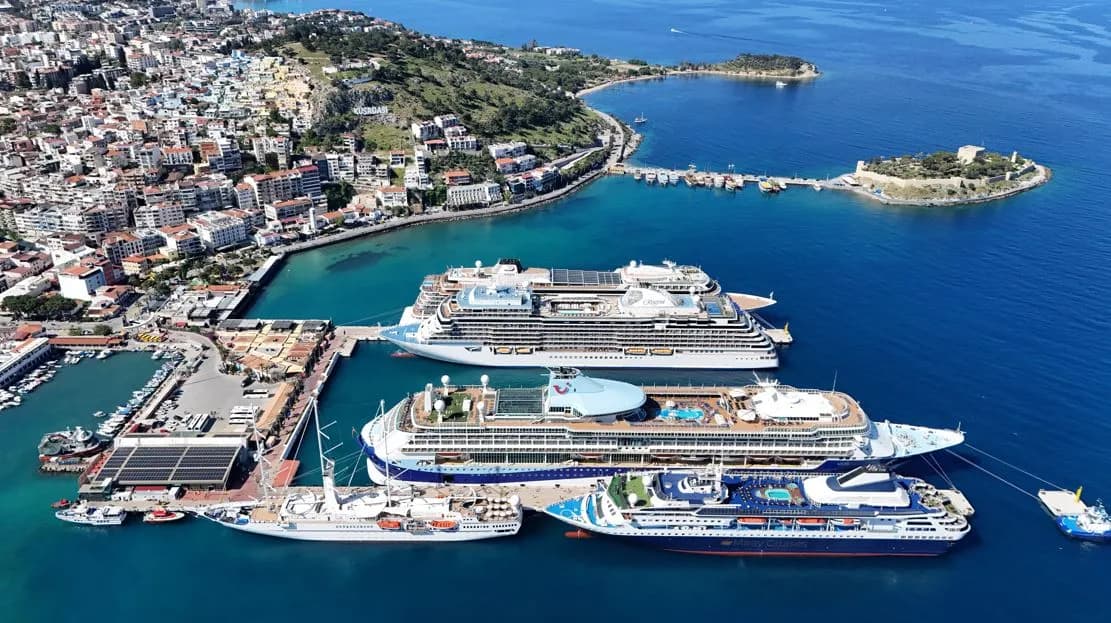
The Eastern Mediterranean holds particular significance for GPH, as the company’s journey as a cruise port operator began with Ege Port Kuşadası. Today, the port remains one of the region’s most prominent cruise gateways. Ege Port Kuşadası recently closed a landmark season with nearly one million passenger movements, supported by extensive solar investments that now meet the terminal’s entire energy demand.
Meanwhile, Bodrum Cruise Port in Türkiye has increasingly focused on the luxury segment, pioneering the “One Day. One Ship. One Future” initiative to connect local maritime students with the global industry. Zadar Cruise Port in Croatia represents GPH’s long-standing presence in the Adriatic and continues to serve as an important regional gateway. By implementing global operational standards over many years, Zadar has successfully balanced increasing passenger volumes with the preservation of its unique cultural character.
Together, these ports illustrate how GPH’s established presence in the Eastern Mediterranean combines high-capacity operations with environmental responsibility and meaningful community engagement.
“The Eastern Mediterranean demonstrates what a mature cruise ecosystem looks like. Zadar’s sustainable growth, Kuşadası’s high-capacity excellence powered by renewable energy, and Bodrum’s premium focus all reflect the same philosophy: integrating operational scale with social and environmental responsibility. This is how we transform individual ports into a resilient regional network.” Aziz Gungor, GPH Regional Director East Med.
Boutique Destinations, Global Standards
Beyond the major maritime hubs, Global Ports Holding’s network extends to a curated range of boutique cruise destinations, where well-developed port infrastructure meets authentic cultural experiences. These ports offer cruise lines valuable opportunities to diversify their itineraries with destinations that are distinctive yet professionally managed. By applying the same rigorous global operational standards to these hidden gems, GPH ensures that off-the-beaten-path experiences—from the ancient Ionian coast to the wild frontiers of the Pacific Northwest—are delivered with the technical reliability and safety protocols that modern operators require. This intentional focus on emerging and heritage-rich gateways allows the industry to expand sustainably, shifting passenger flow toward destinations that are prepared to translate their unique local DNA into world-class visitor experiences.
In Italy, Crotone and Taranto offer the “Untouched Ionian” experience. Crotone, a city steeped in history since 710 BC, acts as a gateway to the Sila National Park and the Capo Colonna Archaeological Park, where guests can stand before a 5th-century BC temple of Hera Lacinia. Unique excursions here range from organic wine tasting at the Ceraudo Winery to sunset beach walks with alpacas—experiences that cater to the modern passenger’s desire for local, gentle, and sustainable engagement.
In the Adriatic, as the main city of Northern Dalmatia, Zadar is the ultimate gateway for nature lovers, providing seamless access to an array of distinct National Parks and Nature Parks: cascading Krka Waterfalls, nautical labyrinth of Kornati Islands, breathtaking Plitivica Lakes, unique Paklenica Canyon, relaxing Vrana Lake, unforgettable Telašćica Nature Park and stunning Zrmanja River Canyon. The city itself remains a living museum where guests can explore Roman forums and medieval churches, or opt for a stroll through the maze of historic stone streets to discover local gastronomy and wine spots. Visiting the seaside walking promenade Riva, and enjoying sunset at unique Sea Organ and Salutation to the Sun installations is simply a must.
Further south, Bar in Montenegro has emerged as a captivating strategic alternative, acting as the primary link to the “Wild Beauty” of Skadar Lake National Park. This destination offers a deep dive into the authentic Adriatic, where guests can wander the ancient, maze-like ruins of Stari Bar or glide through untouched lily-pad-covered canals on traditional wooden boats. These journeys often lead to hidden gems like the medieval monastery of Kom and are rounded off with the rich flavors of local Vranac wine and Njeguški pršut, offering a sensory experience that defines the region’s rugged charm.
Further west, Tarragona is positioned as the sophisticated “Heritage Alternative” to Barcelona. Boasting the UNESCO-listed Roman remains of Tarraco, guests can explore a clifftop amphitheater overlooking the Mediterranean or walk the “Devil’s Bridge” aqueduct. For families, the proximity to PortAventura World and Ferrari Land provides a high-energy contrast to the city’s Roman and medieval lanes.
Deep in the south, Málaga has reinvented itself from a mere gateway to the Costa del Sol into a cultural destination. As the birthplace of Picasso, the city balances its ancient roots—seen in the formidable Alcazaba fortress and the Roman Theater—with a sleek, modern waterfront and the colorful Pompidou Centre. It offers a sun-drenched, Andalusian soul that rivals the larger hubs, trading frantic tourist crowds for tapas-filled alleys and world-class art galleries.
In the strategic Atlantic corridor, connecting Europe to the wider world, Mindelo on Cape Verde’s São Vicente island acts as the cultural and intellectual pulse of the archipelago. Known for its Carnival and vibrant music scene, it offers guests volcano adventures and visits to the remote Ribeira Grande Valley.
In North America, Prince Rupert represents a commitment to sustainable, low-impact tourism within the rugged landscape of British Columbia. Positioned as a “Wild Frontier,” the port serves as the essential gateway to the Great Bear Rainforest and focuses on shore excursions that respect and highlight First Nations heritage. By offering overnight stays that feature wilderness tours and night markets showcasing local artisans, the port provides a high-contrast experience to the urban hubs of the Pacific coast, proving that the most remote corners of the world can be managed with the same operational excellence found in the heart of the Mediterranean.
Finally, the network reaches the Pacific. Ha Long in Vietnam brings international operational standards to the gateway of a UNESCO World Natural Wonder. 2026 is set to be a blooming year for the bay, with new luxury lines offering exclusive itineraries through the Surprise Cave and the emerald peaks of Ha Long Bay. Whether exploring the majestic stalactites of the “Surprise Cave” or kayaking through hidden lagoons, Ha Long delivers a profound sense of discovery, now supported by the international operational standards that ensure a world-class experience in every corner of the bay.
White Glove Services: Elevating the Luxury Experience
In a strategic move to cater to the ultra-luxury segment of the market, GPH is launching “White Glove Services,” a premium operational tier designed for the industry’s most discerning cruise lines and their guests. Recognizing that the boutique and luxury cruise experience begins long before the first port of call, this service elevates standard terminal operations into a bespoke hospitality experience. The launch marks a shift toward highly personalized logistics, where every touchpoint, from private pier-side arrivals and accelerated, check-in to concierge-level luggage handling, is executed with meticulous attention to detail. By integrating this elevated service model across its global network, GPH is enabling luxury operators to maintain seamless brand continuity shoreside, ensuring that the on-land experience reflects the same standards of excellence their guests expect onboard.
Global Port Services: The Operational Nervous System
Global Ports Holding introduces Global Port Services (GPS), which acts as the operational nervous system for the company’s expansive network. Currently available across the European ports in the network, including major hubs in the Mediterranean and Northern Europe, GPS provides a single point of professional contact for cruise lines, managing everything from port agency and ground handling to crew logistics and retail support. A key component of this seamless delivery is Balearic Handling, which provides specialized baggage handling services at the ports where the service is available, ensuring that luggage management is as efficient and reliable as the rest of the passenger journey.
By centralizing these diverse services, the company has removed the friction of dealing with disparate local vendors, offering a “plug-and-play” experience for cruise line operators that maintains consistent global standards backed by deep local expertise. This model is not just about driving operational efficiency or cost optimization through scale; it is about building a data-driven understanding of passenger flow and port utilization. By maintaining consistent global standards backed by deep local expertise, GPS ensures that every port of call operates with the precision and reliability that modern cruise operators demand, while simultaneously laying the groundwork for a more sustainable and transparent future in port operations.
Sustainability: The Green Pulse
At Global Ports Holding, sustainability is increasingly integrated into the fabric of our port developments and operations across the network. The Group has set ambitious, publicly disclosed targets to achieve Carbon Neutrality by 2035 and Net Zero Scope 1 and 2 emissions by 2040.
As we expand our network and welcome growing cruise traffic, emissions may increase in the near term. However, our long-term strategy is clear: through continued investment in energy efficiency, electrification and solar generation, we are working to progressively reduce our overall emissions profile as our port network continues to grow.
Our carbon transition plans are led by targeted investment in solar energy across our ports. Our flagship installation at Ege Port Kuşadası sets an internal benchmark for what is possible, with the installation expected to help avoid over 120 tonnes of CO₂ annually (location-based) at typical full-year output, based on the port’s reported grid emissions factor. In Alicante and Tarragona, our new cruise terminals incorporate modular construction principles and a high proportion of recycled materials to reduce embodied carbon, alongside rooftop solar arrays designed to support terminal energy requirements.
These operational initiatives are supported by strengthened reporting and governance processes, including quarterly greenhouse gas monitoring and the completion of GPH’s first Double Materiality Assessment. Together, these measures position the Group to respond to evolving regulatory requirements and rising environmental expectations across the cruise sector. By embedding these ESG principles across the network, GPH continues to demonstrate that responsible growth and operational excellence can advance together.
The Final Word
As GPH looks toward the future at Seatrade Cruise Global 2026, the message is clear: The future of cruise port operations will depend on infrastructure, operational consistency, and readiness for the next generation of vessels and passenger expectations. Through its growing global network and long-term investments in sustainability and technology, GPH continues to position its ports to meet the evolving needs of the cruise industry.
Don’t miss more updates, news and reviews from the world of cruising on Cruising Journal.