At the southernmost extent of South America, geography begins to loosen its grip. Mountain ranges fracture into archipelagos, glaciers descend directly into the sea, and navigation routes follow channels carved by ancient ice.
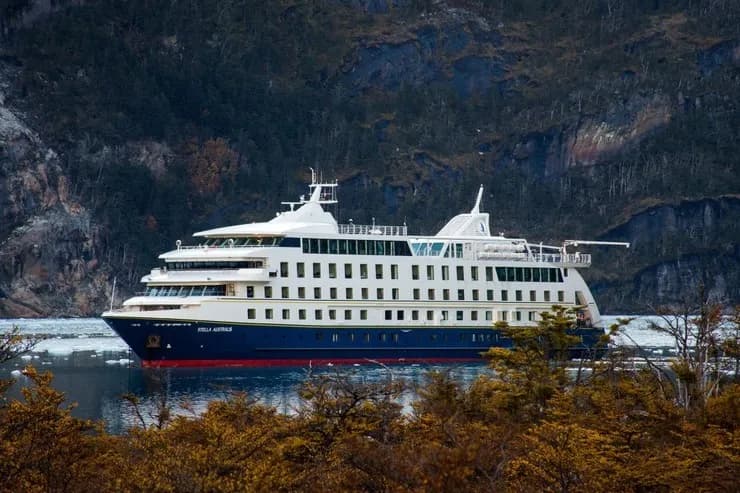
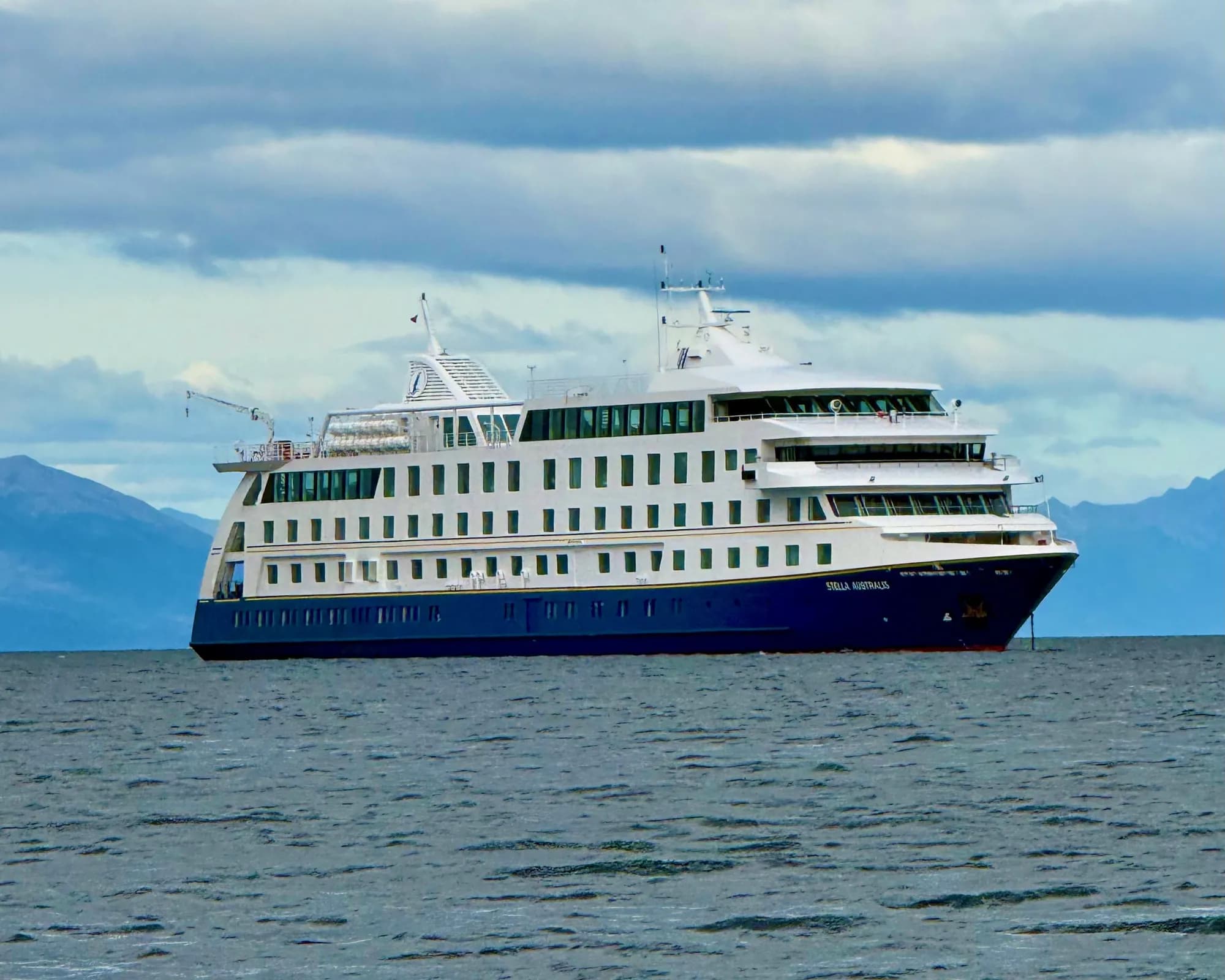
Chilean Patagonia remains one of the most remote maritime regions on Earth — a place where scale, silence, and weather shape every movement. It is within this environment that the expedition vessels Stella Australis and Ventus Australis operate.
Sailing between Punta Arenas, Chile, and Ushuaia, Argentina, these vessels navigate waterways once known primarily to explorers, survey ships, and scientific expeditions. Today, those same routes form the foundation of a carefully structured journey that balances raw wilderness with a remarkably composed life on board. The setting may feel elemental. The experience is thoughtfully refined.
Gateway Ports at the Southern Frontier
Australis itineraries operate in both directions between Punta Arenas and Ushuaia, two cities long tied to maritime exploration and life at the edge of navigable geography.
Punta Arenas, positioned on the Strait of Magellan, developed as a strategic resupply port for vessels traveling between oceans. Ushuaia, framed by the southern Andes along the Beagle Channel, now serves as one of the world’s principal gateways to Antarctica and southern Patagonia. From either departure point, the shift is immediate. Within hours of embarkation, developed shorelines recede and the landscape expands into open water, forested slopes, and glaciated ridgelines. Civilization gives way to scale — and then to silence.
A Two-Ship Fleet Designed for Expedition Navigation
Carrying just over 200 passengers each, Stella Australis and Ventus Australis are purpose-built for navigation through narrow fjords and protected channels inaccessible to larger cruise vessels. Their scale allows for precision, flexibility, and a sense of intimacy with the landscape that defines the Australis experience.
Stella Australis established the operational model that shaped these voyages. Ventus Australis, launched in 2018, represents its evolution — refined, modernized, and engineered specifically for Patagonia’s demanding maritime environment.
Each ship carries its own interior character, yet the experience remains intentionally consistent. Expedition structure, service philosophy, and daily programming are aligned across the fleet. Travelers step aboard either vessel with the same expectation: immersive access to Patagonia supported by quiet comfort and operational confidence.
Where the Landscape Is Always in View
Life aboard is designed around looking outward. Panoramic lounges stretch across the upper decks, creating uninterrupted sightlines that keep the landscape present at all times. Navigation itself becomes a form of viewing — mountains advancing slowly, glaciers emerging from distance, light shifting across water and stone.
These spaces change character throughout the day. Morning observation unfolds in near silence. Briefings prepare passengers for landings. Later, the same rooms host lectures, conversation, and reflection while the scenery continues to move beyond the glass.
Private Spaces in a Vast Environment
Cabins extend that same connection to the outside world. All are outward-facing, with large windows that maintain a sense of presence within the landscape even while at rest.
Interiors are contemporary and restrained, designed for warmth and recovery after long hours outdoors. Storage accommodates expedition gear. Beds encourage real rest. Bathrooms are practical and efficient — small but important comforts in a region where returning indoors is part of the rhythm of every day.
The Shape of a Day in Patagonia
Each day follows the environment rather than the clock. Morning briefings outline navigation routes and landing plans. Zodiac craft carry passengers ashore to remote beaches, glacial valleys, and forested terrain without permanent infrastructure.
Between excursions, the vessels continue their quiet passage through narrow channels bordered by steep cliffs and hanging valleys. Waterfalls appear without warning. Weather shifts quickly. Even when resting on board, movement through the landscape never truly stops. Evenings bring a gradual slowing — lectures, shared meals, and the long southern twilight stretching across mountain silhouettes.
Returning to Warmth and Conversation
After hours spent in wind, mist, and cold air, the dining room becomes a place of restoration. Meals provide rhythm to the day and a natural point of gathering.
Breakfast is served buffet-style to accommodate varying excursion schedules. Lunch and dinner unfold as plated, multi-course meals delivered with attentive yet relaxed service. Chilean wines reinforce a sense of place that extends from the surrounding fjords to the table. Over time, dining becomes more than nourishment — it becomes shared experience.
The People Who Interpret the Place
Two professional worlds operate in seamless coordination aboard both vessels. Expedition specialists — naturalists, historians, and regional experts — guide landings and provide context that transforms observation into understanding.
Alongside them, the hospitality team maintains the quiet structure of daily life aboard. Service remains attentive without formality, supportive without intrusion — a tone well suited to expedition travel.
A Community Formed in Transit
Shipboard communication reflects the international composition of each sailing. Announcements and lectures are routinely presented in Spanish and English, often followed by German depending on passenger demographics. Printed materials support the same multilingual accessibility.
Passengers arrive from across continents, but shared experience quickly replaces geography as the common bond — stepping ashore together, watching glacial movement, standing on deck as light lingers across the fjords.
The Living Geography of the Far South
Glacial presence defines the journey. Ice descending from the Darwin Ice Field shapes both horizon and passage. Fjords carve deep into mountain ranges. Waterfalls spill from elevated valleys. Wildlife moves within powerful coastal winds — sea lions, elephant seals, penguins, and seabirds adapted to this demanding environment.
The Season of Light and Passage
Australis voyages operate between September and April, when daylight is longest and navigation conditions are most stable. Even in peak summer, temperatures remain cool, generally ranging from the mid-40s to mid-50s Fahrenheit. Weather variability is constant and accepted — not as disruption, but as part of Patagonia itself.
A Structured Passage Through Wilderness
Sailing aboard Stella Australis or Ventus Australis offers rare access to one of the most remote maritime regions on Earth. Each day brings direct engagement with the landscape; each evening brings return to warmth, structure, and community.
At the southern edge of the continent — where land dissolves into sea and sky — the journey becomes something shared: a moving conversation between place, vessel, and the travelers carried through it.