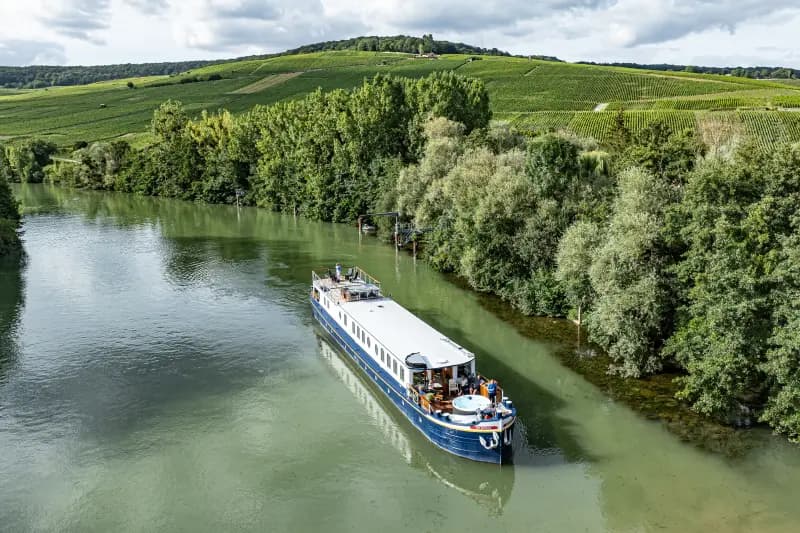
For decades, the European cruise industry has been largely associated with two distinct worlds: ocean cruising aboard ever-larger ships carrying thousands of passengers and river cruising along major waterways such as the Rhine, Danube and Seine. Between these two segments, however, exists a far smaller and more exclusive niche that continues to attract travelers looking for a slower, more intimate way of discovering Europe.
Luxury hotel barge cruising, once considered a well-kept secret among experienced travelers, is increasingly finding a wider audience thanks to the growing demand for authentic experiences, regional gastronomy and personalized service. Few companies have contributed to the development of this sector as significantly as European Waterways. Founded in 1974, the company pioneered the concept of converting traditional cargo barges into floating boutique hotels, transforming historic working vessels into luxury accommodations capable of navigating some of Europe's oldest canals. More than fifty years later, the concept remains remarkably relevant. While mainstream cruising continues to evolve through technological innovation and larger ships, hotel barges offer precisely the opposite experience: fewer guests, slower navigation, greater flexibility and access to destinations that are often inaccessible to conventional cruise vessels.
Today, European Waterways operates a fleet across France, Italy, Holland, England, Scotland and Ireland, with vessels typically accommodating between eight and twenty passengers. Every cruise includes gourmet cuisine, premium wines, guided excursions and a dedicated crew, creating an atmosphere closer to that of a private country house than a traditional cruise ship. The emphasis is not on covering long distances but on discovering the identity of a region through its landscapes, history, cuisine and local traditions.
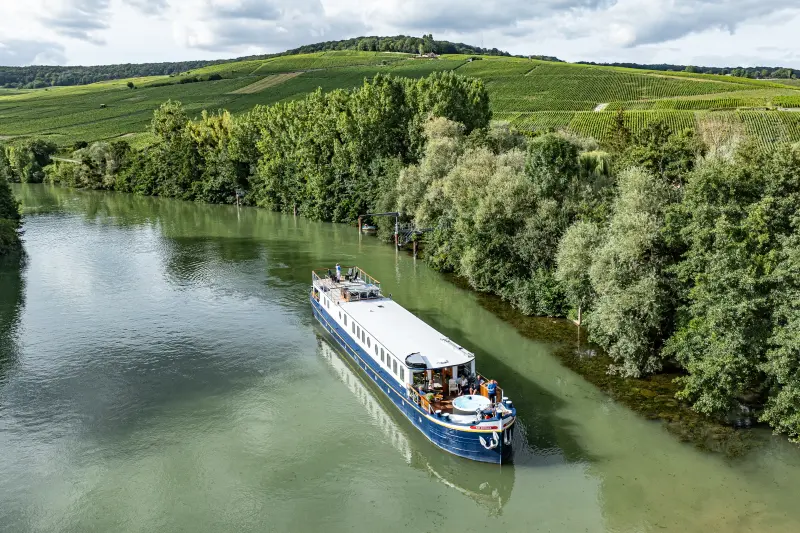
This philosophy aligns closely with one of the strongest trends currently shaping luxury tourism. Travelers increasingly value experiences over itineraries, preferring to spend more time in fewer destinations while developing a genuine understanding of local culture. Rather than rushing between famous landmarks, they seek opportunities to meet artisans, visit family-owned wineries, explore rural villages and enjoy meals prepared with locally sourced ingredients. Hotel barges naturally lend themselves to this style of travel, navigating quiet canals that often pass through landscapes untouched by mass tourism.
Unlike Europe's major rivers, where vessels carrying hundreds of passengers frequently share the same ports and excursions, canals provide a much more intimate setting. Navigation itself becomes part of the experience. Guests watch locks being operated by hand, cycle or walk alongside the towpaths, observe wildlife and interact with local communities encountered along the route. The slower pace allows destinations to reveal themselves gradually, encouraging exploration that feels both relaxed and deeply immersive.
European Waterways' latest collection of itineraries illustrates how the company continues to build upon this concept by combining seasonal events, culinary traditions and exclusive experiences. Rather than introducing entirely new destinations, it is enriching existing cruises with carefully selected activities that highlight the character of each region.
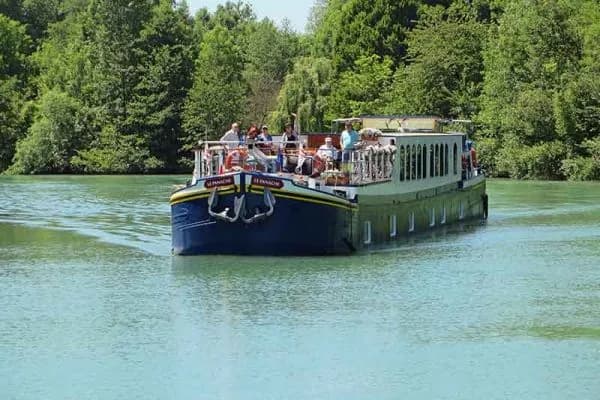
Among the most distinctive offerings for the coming season is the company's Thanksgiving and Christmas Markets cruise aboard Panache, operating through the canals of Alsace and Lorraine. The itinerary reflects a growing trend in experiential travel: combining local traditions with celebrations that resonate with international guests. Thanksgiving, traditionally associated with North America, is celebrated onboard with a specially prepared festive dinner before the voyage transitions into one of Europe's most atmospheric winter experiences.
Few regions embrace Christmas as enthusiastically as Alsace. Influenced by both French and German traditions, its medieval towns become illuminated by thousands of lights while historic squares fill with wooden chalets selling handcrafted decorations, regional delicacies and seasonal specialties. Strasbourg, Colmar and Riquewihr rank among Europe's most celebrated Christmas destinations, yet arriving by hotel barge offers an entirely different perspective from conventional land-based tours or larger river cruises.
Instead of spending limited hours ashore before moving on to the next destination, guests aboard Panache enjoy a more relaxed rhythm, returning each evening to the comfort of the barge after exploring festive streets lined with centuries-old half-timbered houses. The itinerary also extends beyond the markets themselves, introducing travelers to the artistic traditions that have helped shape Alsace's cultural identity.
Visits include the renowned Meisenthal Glass Bauble Factory, widely regarded as the birthplace of the modern Christmas ornament. Here, artisans continue centuries-old glassblowing techniques that transformed a local craft into an international Christmas tradition. Nearby, the Musée Lalique offers another perspective on regional craftsmanship through the extraordinary creations of René Lalique, whose Art Nouveau and Art Deco glassworks remain among France's greatest artistic achievements.
These excursions reflect one of European Waterways' defining characteristics. Rather than focusing exclusively on major tourist attractions, the company consistently incorporates visits that reveal the economic, artistic and cultural heritage of the regions through which it cruises. Every destination is presented not simply as a place to visit but as a living landscape shaped by generations of artisans, farmers, winemakers and local communities.
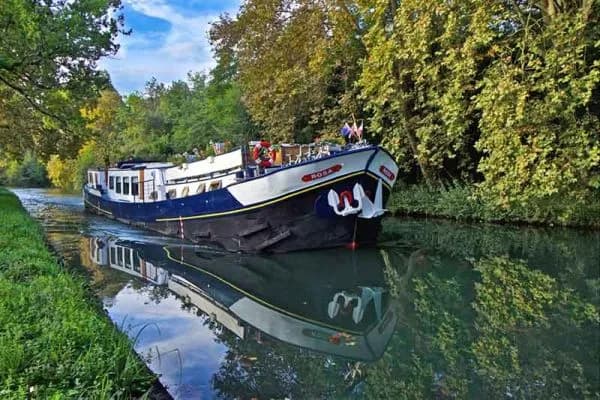
The importance of gastronomy becomes even more evident in another featured itinerary, this time aboard Rosa in the heart of Gascony. Although regions such as Burgundy, Bordeaux and Champagne dominate international wine tourism, Gascony remains comparatively overlooked despite its remarkable culinary heritage. Rolling vineyards, medieval villages and sunflower-covered countryside provide the backdrop to a journey that celebrates one of France's richest gastronomic traditions. Rather than concentrating on famous monuments, the cruise explores market towns, vineyards, family-run businesses and quiet villages where local traditions continue to define everyday life. The pace of canal navigation naturally complements this approach, encouraging guests to appreciate the landscape rather than simply pass through it.
Food forms an integral part of the experience. Gascony is internationally renowned for foie gras, duck specialties, Armagnac and artisan cheeses, while local vineyards produce wines that remain something of a hidden treasure outside France. Onboard dining reflects these regional influences, with chefs sourcing ingredients from local markets and producers visited during the cruise. Meals therefore become an extension of the destinations themselves rather than simply another onboard service.
Equally important is the flexibility afforded by the small scale of hotel barge operations. Unlike larger river cruise ships, which operate according to tightly structured schedules and fixed docking times, European Waterways' barges can adapt daily activities according to weather, local events and guest interests. Walks, bicycle rides, vineyard visits and informal stops along the canal often become some of the most memorable moments of the voyage precisely because they are not constrained by rigid timetables.
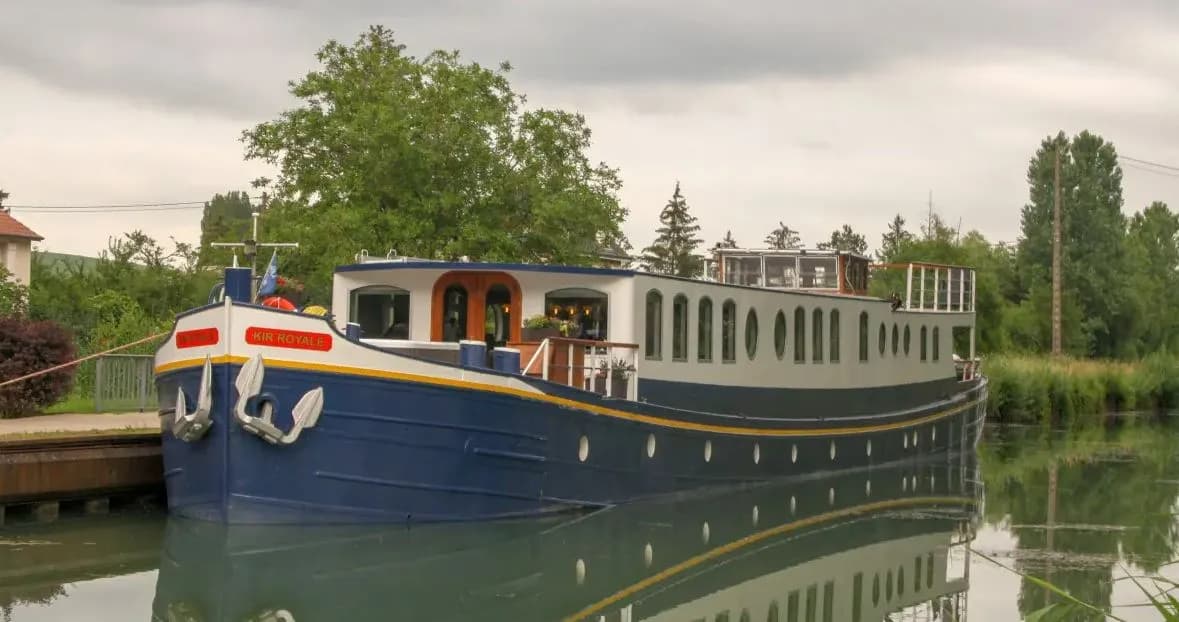
While regional gastronomy is a defining feature across the company's portfolio, nowhere is this more evident than aboard Kir Royale, the luxury hotel barge operating through France's celebrated Champagne region. Here, the emphasis shifts from vineyards in general to one of the world's most prestigious sparkling wines, offering guests an opportunity to experience Champagne through the eyes of a family producer rather than a large commercial brand.
A highlight of the itinerary is an exclusive visit to Frerejean Frères, a boutique Champagne house located in Avize, in the heart of the Côte des Blancs. Unlike many internationally recognized producers whose labels dominate supermarket shelves around the world, Frerejean Frères focuses on limited production and handcrafted cuvées that have earned recognition among sommeliers and Michelin-starred restaurants.
The visit offers considerably more than a traditional tasting. Guests are introduced to the family's history, learn about vineyard management, production techniques and the long aging process that characterizes premium Champagne before enjoying a private lunch accompanied by a selection of the estate's wines. Experiences such as these have become increasingly popular among affluent travelers seeking direct contact with producers rather than conventional sightseeing excursions.
This focus on local partnerships is one of European Waterways' greatest strengths. Throughout its itineraries the company collaborates with family-owned wineries, artisan workshops, cheese makers, truffle hunters and local guides, creating opportunities that would be difficult to replicate on larger cruise ships. Because groups are so small, visits can be tailored to individual interests while maintaining an atmosphere of exclusivity.
The onboard experience itself reflects the same philosophy. Every hotel barge functions as a boutique floating hotel with spacious cabins, elegant lounges and open decks designed for relaxation rather than entertainment. There are no theaters, casinos or shopping promenades. Instead, life revolves around leisurely breakfasts, conversations on deck while the barge glides through the countryside, gourmet lunches prepared with regional ingredients and carefully paired evening dinners accompanied by local wines.
The relationship between guests and crew also differs significantly from traditional cruising. On vessels carrying fewer than twenty passengers, the captain, chef and hospitality team quickly come to know individual preferences, allowing service to become highly personalized. Menus can often be adapted, excursions modified and special requests accommodated with a flexibility that is impossible aboard larger ships.
Another reason behind the growing popularity of hotel barges is the increasing demand for private charters. Families, groups of friends and corporate clients are increasingly choosing exclusive use of an entire vessel, transforming the cruise into a fully private vacation where every meal, excursion and activity is shared only with invited guests. Recognizing this trend, European Waterways has introduced a 10 percent discount on private charter bookings for the 2027 season, available for reservations confirmed before the end of September. The promotion applies across much of the company's fleet, including itineraries in Burgundy, Bordeaux, Holland and Italy, reinforcing the operator's strategy of encouraging early bookings while responding to growing interest in exclusive travel experiences.
The timing reflects broader developments across the luxury travel sector. Since the pandemic, private travel has become one of the fastest-growing segments of tourism, with many travelers placing greater value on privacy, flexibility and personalized service than on larger resort-style experiences. Hotel barges naturally meet these expectations, offering complete exclusivity in an environment where every aspect of the journey can be customized.
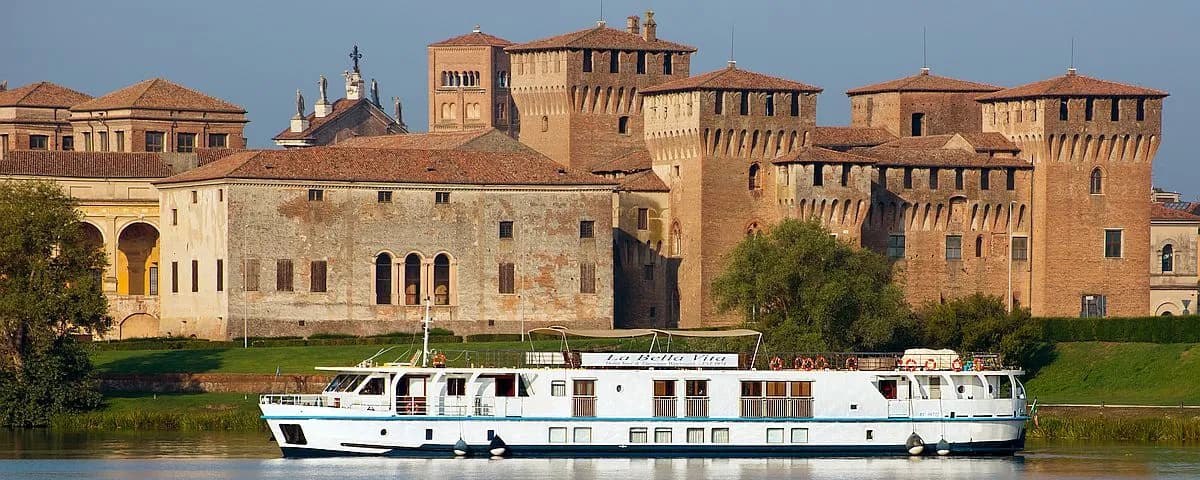
Italy also features prominently in European Waterways' current collection of experiences. Aboard La Bella Vita, guests navigate the lesser-known waterways of the Veneto, exploring a landscape that extends well beyond Venice itself. While millions of visitors focus exclusively on the city's famous canals, bridges and squares, the surrounding lagoon and the Po Valley reveal a quieter side of northern Italy that has long been shaped by waterborne trade and agriculture.
One departure, scheduled for 6 September 2026, coincides with one of Venice's most important annual celebrations, the Regata Storica. Dating back centuries, the event is both a historical pageant and a competitive rowing festival, beginning with an impressive procession of elaborately decorated boats carrying participants dressed in Renaissance costumes before the city's traditional rowing races take over the Grand Canal.
For guests aboard La Bella Vita, the Regata Storica provides an extraordinary introduction to the cruise. After witnessing one of Venice's oldest traditions, travelers continue through the lagoon and inland waterways toward elegant towns, rural landscapes and hidden villages that few international visitors ever experience. Along the way, excursions include historic villas, local restaurants, artisan producers and opportunities to appreciate the distinctive ecosystem of the Venetian Lagoon, one of the largest wetlands in the Mediterranean.
To coincide with this departure, European Waterways is offering a 25 percent discount on cabins, while solo travelers benefit from the waiver of the single supplement. The offer highlights another characteristic of the company's strategy: rather than relying solely on price reductions, promotions are linked to departures that coincide with exceptional regional events, enhancing the overall value of the experience.
Taken together, these itineraries reveal much about the direction in which experiential travel is evolving. Modern luxury is increasingly defined not by scale but by access. Travelers are looking for meaningful encounters, authentic regional cuisine, personal interactions with local communities and destinations that remain relatively untouched by mass tourism. Hotel barges, with their ability to navigate narrow canals and reach villages beyond the reach of conventional cruise ships, are particularly well positioned to satisfy these expectations.
For the cruise industry as a whole, this niche also represents an interesting complement to mainstream cruising rather than a competitor. Ocean cruises continue to offer extraordinary variety, entertainment and global itineraries, while river cruises provide efficient access to Europe's major capitals and cultural centers. Hotel barges occupy a different space entirely, emphasizing immersion over distance, intimacy over capacity and quality over quantity.
More than fifty years after introducing the concept, European Waterways continues to demonstrate that there is strong demand for slow travel when it is combined with exceptional hospitality, regional gastronomy and carefully curated cultural experiences. Whether celebrating Thanksgiving among the Christmas markets of Alsace, exploring the vineyards of Gascony, discovering boutique Champagne producers or witnessing Venice's historic Regata Storica from the water, the company's latest collection of itineraries reflects a philosophy that remains remarkably contemporary.
In an era when many travelers are deliberately seeking journeys that encourage them to disconnect from crowded destinations and reconnect with local culture, luxury hotel barges offer one of Europe's most distinctive travel experiences. Rather than simply transporting guests from one place to another, they transform the journey itself into the destination—one lock, one vineyard and one village at a time.
Gabriele Bassi