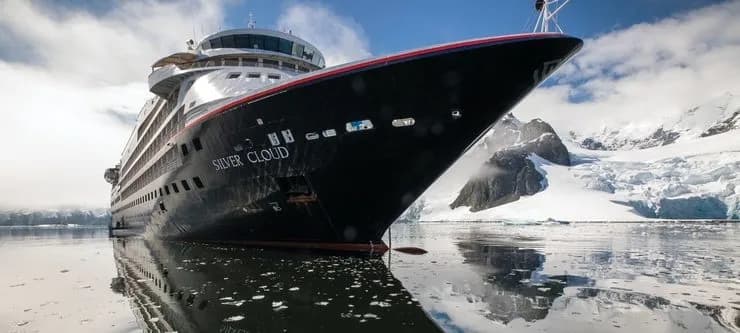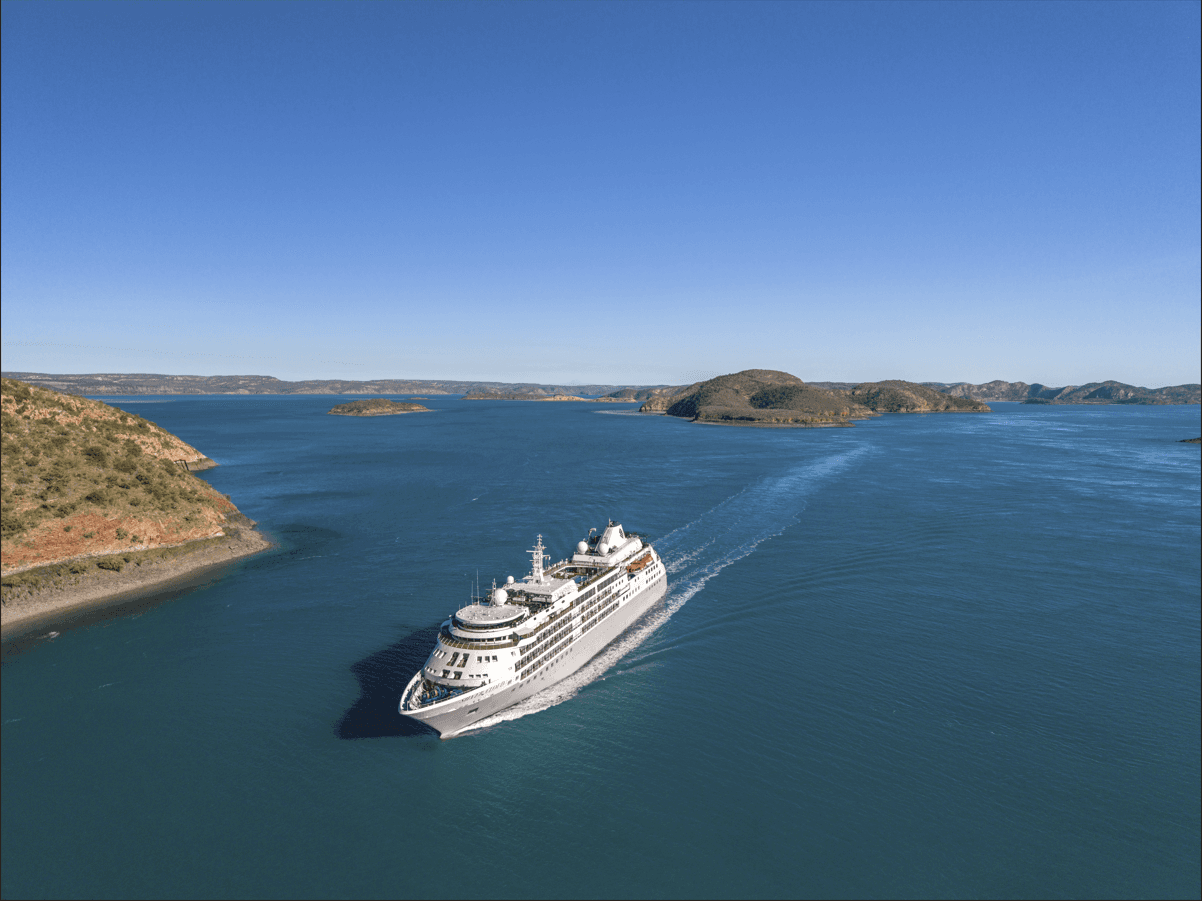
Silver Cloud departs Fremantle on a 77-day, 57-port voyage across the South Pacific, closing out Silversea's Kimberley season and threading the ocean's remotest corners — from Australia's crocodile-patrolled coast to Pitcairn and Easter Island — into a single unbroken passage.
Somewhere off the coast of the Kimberley, in the hours before dawn, the tide begins to drop over Montgomery Reef and the sea itself seems to change its mind. Water that had covered the reef overnight starts sheeting off the exposed coral in miniature waterfalls, turtles and rays stranded briefly in the shallows before the current sweeps them back out to open water. It is one of the odder, more theatrical sights in nature, and for the guests aboard Silversea's Silver Cloud this August, it was only the opening act. The ship had just departed Fremantle on August 21 at the start of a 77-day voyage that will not end until it reaches Valparaiso, Chile, on November 4 — 57 destinations, 11 countries, and very possibly the most ambitious single itinerary Silversea has ever assembled.
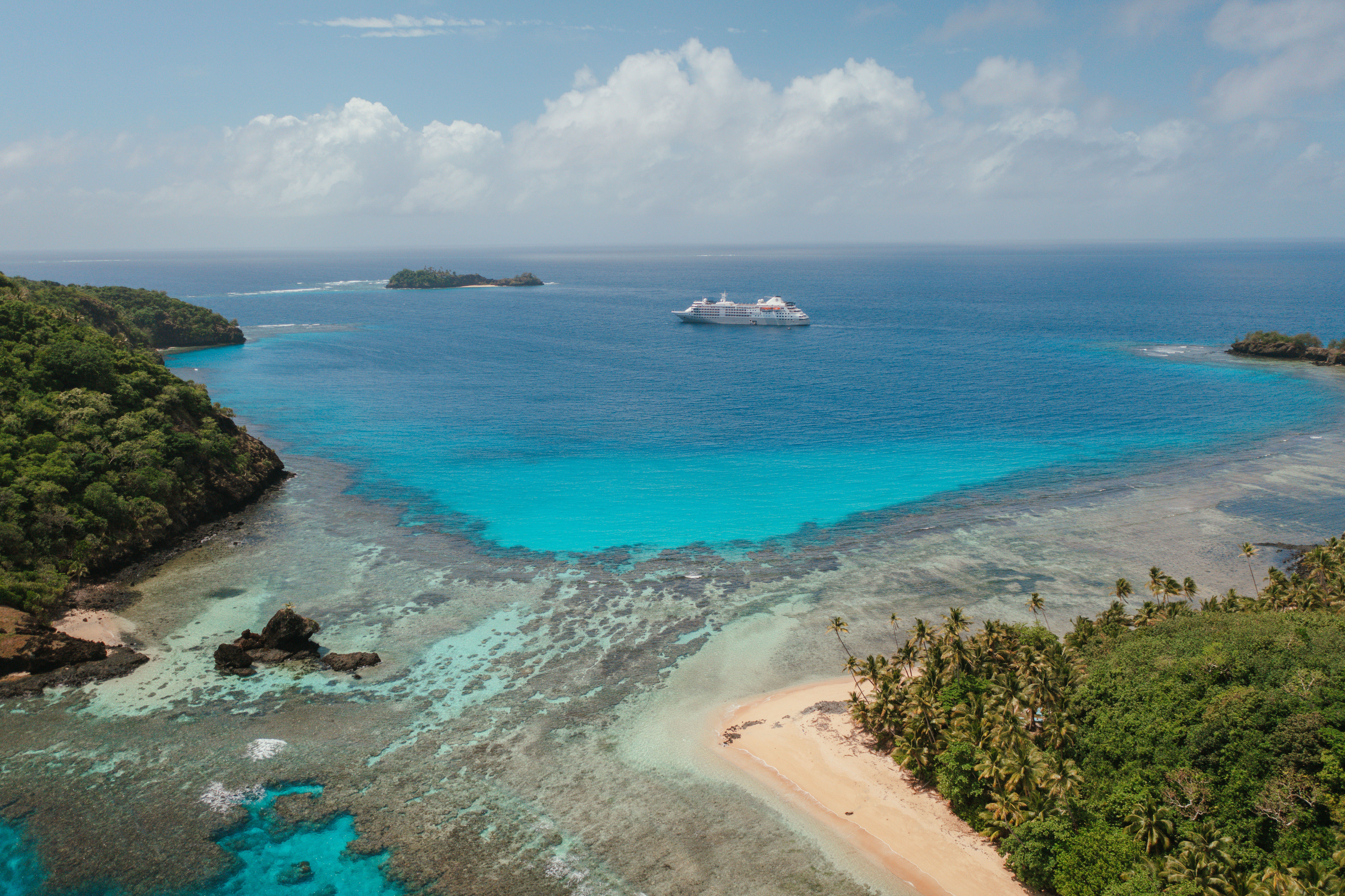
Call it the Grand South Pacific Expedition, though the name undersells the geography involved. The route begins along the coast of Western Australia, pushes deep into the tidal wilderness of the Kimberley, crosses into the scattered island nations of Melanesia, drifts through the postcard lagoons of Polynesia, and finishes in a run of some of the remotest inhabited and uninhabited territory on Earth — the Marquesas, Pitcairn, Easter Island. Bert Hernandez, Silversea's president, has described voyages of this scale as the fullest expression of what the brand considers its real competitive advantage: not luxury for its own sake, but unhurried time in places that punish anyone trying to rush through them, paired with a level of access shorter itineraries simply cannot buy. This one, in his words, threads the Kimberley coast, Pitcairn and Easter Island into a single continuous passage — closing out a season in northern Australia and carrying that same exploratory momentum straight into the deep Pacific.
It is worth sitting with what that continuity actually means, because it is the real story here, more than any individual port call. A traveller wanting to see the Kimberley normally books a Kimberley cruise. Someone drawn to French Polynesia books a Tahiti itinerary. Pitcairn and Easter Island barely register on conventional cruise itineraries at all — they are too isolated, too exposed, too far from anything else to justify the detour. Silversea's answer has been to stop treating the Pacific as a set of separate travel products and instead sail it as what it actually is: one ocean, stitched together by a ship small and tough enough to cross all of it. Silver Cloud, ice-classed and built for Zodiac-based landings in places larger vessels can't approach, is very much the right tool for that job — a ship designed less for spectacle than for access.
That access starts almost immediately. Before the Kimberley wilderness proper begins, Silver Cloud works her way along Western Australia's coastline, calling at the Abrolhos Islands with their coral reefs and shipwreck-strewn history, at Cape Peron in the Shark Bay World Heritage Area, at North Muiron Island, and at the Montebello Islands — once the site of British nuclear weapons testing, today reclaimed almost entirely by marine wildlife. The Dampier Archipelago follows, its rocks carrying one of the densest concentrations of ancient Aboriginal engravings anywhere in the country. Then the coastline changes character altogether. This is the Kimberley proper: a maze of sandstone gorges, crocodile-patrolled tidal rivers, and islands with no permanent population at all, where tides can rise more than ten metres in a single cycle and reshape the coastline twice a day. Silver Cloud threads through Adele Island, a haul-out site for turtles and seabirds; the Buccaneer Archipelago, more than 800 islands sculpted by some of the most extreme tides on the planet; the Hunter River region; the isolated marine reserve at Ashmore Reef; Swift Bay; and King George River, home to Australia's tallest twin waterfalls. At Swift Bay, Zodiac landings bring guests ashore to view Gwion Gwion rock art — slender, elongated human figures whose true age remains a subject of live archaeological debate, among the oldest and strangest rock-painting traditions anywhere on Earth. The leg ends in Darwin, tropical capital of Australia's Northern Territory, where most guests will have just seen more of this coastline in a matter of days than the vast majority of travellers, cruise passengers included, ever will in a lifetime.
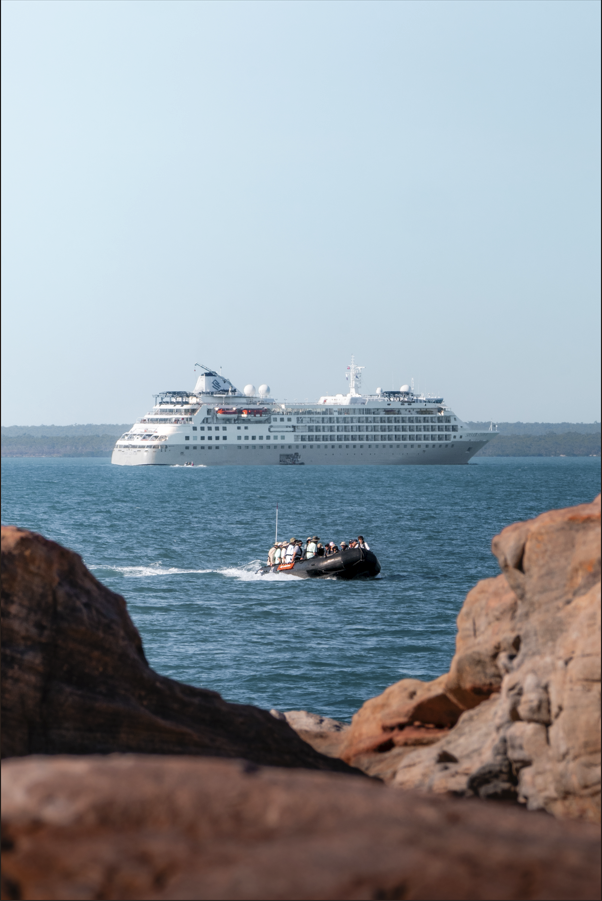
What follows is less a change of scenery than a change of subject. Over 21 stops across six countries, the ship works its way into Melanesia — Indonesia first, with calls at the Raja Ampat region and Cenderawasih Bay, waters marine biologists routinely rank among the most species-rich coral ecosystems on the planet. Around the limestone cliffs of Kokas, guests can go looking for further rock art sites, a theme that keeps resurfacing across this voyage's early stretches, a running reminder of just how long the Pacific has carried human stories. From there the route pushes on to Vanimo, Madang and Rabaul in Papua New Guinea — a nation whose linguistic diversity outstrips any other country on Earth — then to Santa Ana in the Solomon Islands and Ambrym Island in Vanuatu, where the masked Rom dance, tied to secret societies and handed down across generations, ranks among the most striking living ceremonial traditions travellers can witness anywhere in the region. Lautoka, Fiji's second city, closes out this stretch.
The character of the voyage softens from here, at least by expedition standards. Fourteen stops across four countries carry the ship from Fiji's Taveuni and the remote Ringgold Isles through Tonga's Vava'u Group — famous for humpback whale encounters and exceptionally clear water — and on through Rarotonga and Aitutaki in the Cook Islands before French Polynesia proper arrives at Bora Bora and Rangiroa, with Papeete as the closing port. This is the stretch built for the water itself: snorkelling among untouched coral gardens off Tonga's Euaiki Island, guided encounters with blacktip reef sharks and stingrays in Bora Bora's famously photographed lagoon. For guests whose mental picture of "the South Pacific" was shaped by film and photography long before they ever considered visiting, this is where that picture and the real thing finally line up.
Then the voyage turns toward genuine isolation. Twelve stops across three countries take Silver Cloud through the volcanic Marquesas Islands — Hiva Oa, Nuku Hiva, Fatu Hiva — territory forever linked to Paul Gauguin and Herman Melville, both of whom lived among these islands and wrote at length about them. At Fatu Hiva, Zodiacs bring guests into the Bay of Virgins, a natural harbour framed by near-vertical volcanic pinnacles and routinely ranked among the most dramatic coastal landscapes anywhere in Polynesia. From the Marquesas, the ship continues to Mangareva in the remote Gambier Islands, then to Adamstown, the only settlement on Pitcairn Island — home to fewer than 50 residents, most descended from the HMS Bounty mutineers and their Tahitian companions who settled there in 1790 after one of maritime history's most famous mutinies. A landing is never guaranteed, given the island's exposed anchorage, but when it happens it puts guests face to face with islanders whose surnames trace directly back to that 18th-century story. The voyage's final calls bring the ship to Easter Island and Robinson Crusoe Island in Chile before Silver Cloud completes her 77-day passage in Valparaiso. Easter Island's moai, carved by the Rapa Nui people roughly between the 13th and 16th centuries, need no introduction; what a voyage this long offers is simply the rare gift of time enough to actually take them in.
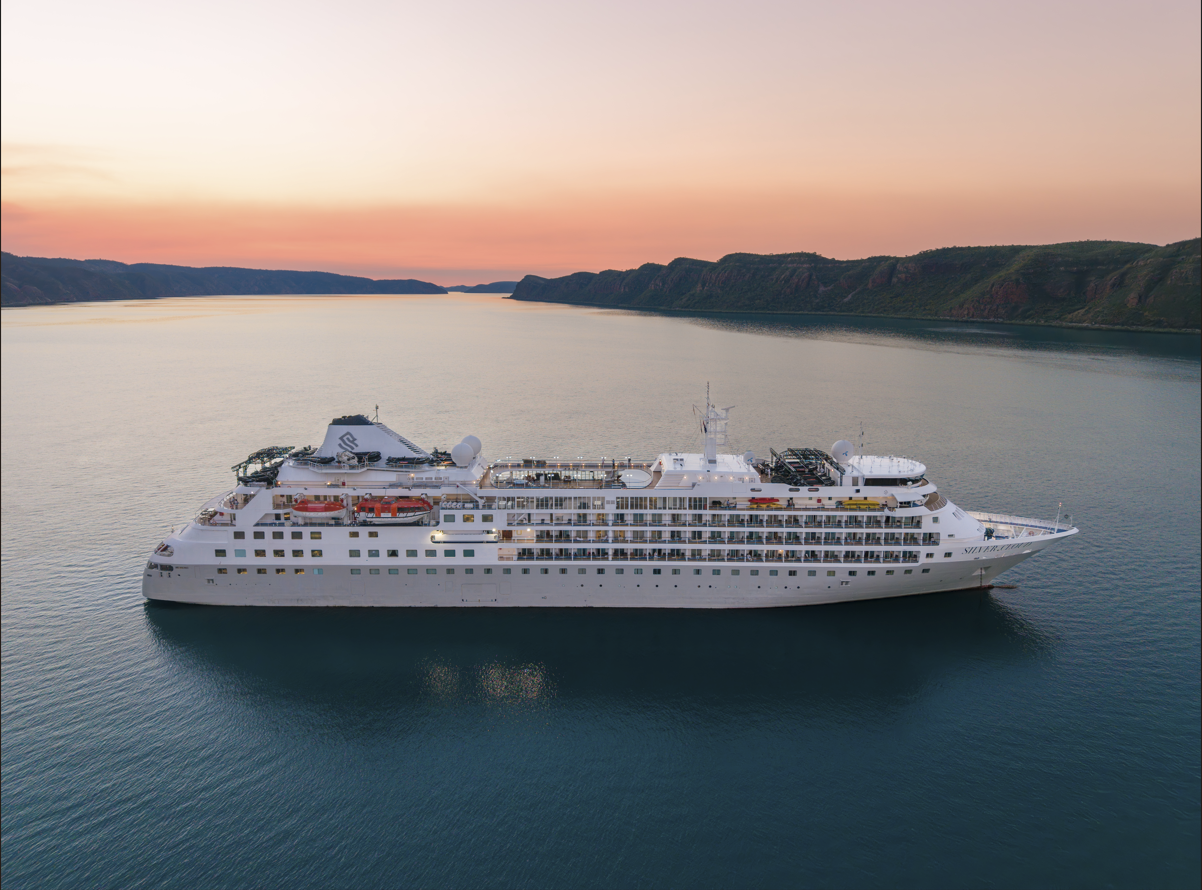
Two events, both exclusive to this sailing, punctuate the itinerary. On September 6, guests spend a day at Finniss River Lodge, a 50,000-acre working cattle station outside Darwin, combining an all-wheel-drive tour of its paperbark groves with a helicopter flight over the surrounding wetlands and escarpments and a lunch built around regional produce. On October 26, on Easter Island, guests gather at Toki Rapa Nui, a cultural centre founded to preserve Rapa Nui heritage, for an afternoon anchored by a concert from pianist Mahani Teave — founder of the centre's Toki Music School — a visit to the moai at Tahai, and a performance of a traditional hoko warrior dance. It is a striking pairing: classical piano and ancestral choreography, staged in view of some of the most enigmatic monuments on Earth.
None of this works without the people running it. Across 77 days and radically different environments, guests travel with a rotating team of Expedition Experts chosen for each leg's specific demands — language skills suited to the countries being visited, cultural familiarity, training tailored to conditions as different as Kimberley tides and open Pacific swell. These are certified Zodiac drivers, historians, naturalists and scientists, capable of reading a destination in real time and rewriting the day's plan as weather, wildlife or terrain require. Daily briefings and evening recaps run throughout, turning long stretches at sea — between Lautoka and the Vava'u Group, say, or between the Marquesas and Pitcairn — into some of the most substantive content of the whole trip, rather than simply gaps to be filled with pool time.
Silver Cloud's departure also closes out Silversea's 2026 Kimberley season on its own terms: ten voyages between May 8 and September 6, calling at 25 destinations along Australia's remote northwest coast. It appears, by the season's tally, to have been a strong one for wildlife. Saltwater crocodiles and the notably shy Australian snubfin dolphin — a species only formally distinguished from other snubfin populations in the early 2000s — turned up regularly along the Hunter River and Porosus Creek. Montgomery Reef delivered its usual abundance of turtles and birdlife with each tidal cycle, while Ashmore Reef, sitting at the outer edge of Australian waters, produced sightings of seabirds, tiger sharks and bottlenose dolphins throughout the season. Culturally, calls at Freshwater Cove, Swift Bay and Jar Island anchored a series of Welcome to Country ceremonies and Indigenous rock art experiences run in partnership with the region's Traditional Owners, while Raft Point — a dramatic sandstone headland and rock art site — returned to the itinerary after a long absence.
There is also a less visible story behind all of this: the sheer operational weight of keeping one ship supplied, staffed and seaworthy across 77 days, four ocean regions, and wildly different provisioning, fuel and regulatory demands. Clearing customs across eleven separate nations, several of them small island states with limited port infrastructure, takes a level of advance coordination that shorter, single-region cruises never require. Fresh provisioning becomes a rolling exercise rather than a single loading job at departure, with the culinary team coordinating resupply across Australia, Indonesia, Fiji and French Polynesia to keep menus varied across nearly eleven weeks at sea. None of that is visible to a guest with a drink in hand on the observation deck as another uninhabited atoll slides past — which is rather the point. A voyage like this depends on logistics sturdy enough to disappear completely into the background.
It is also worth asking who actually books 77 days at sea. Not, typically, the first-time cruiser or the traveller squeezing a holiday between work commitments — this is a voyage for guests with the flexibility and appetite to treat a single ship as home for the better part of a season. In practice that tends to mean two overlapping groups: expedition veterans, often graduates of Silversea's Antarctic and Arctic programs, looking for the next level of ambition beyond the line's shorter regional sailings; and guests newly retired or between major life chapters, for whom a voyage this long is less an indulgence than a deliberate way to spend a season of open time. Onboard programming reflects that — a rotating calendar of enrichment lectures, themed dinners and wellness activity built for the long haul rather than a simple repeat of a seven-day format stretched eleven times over.
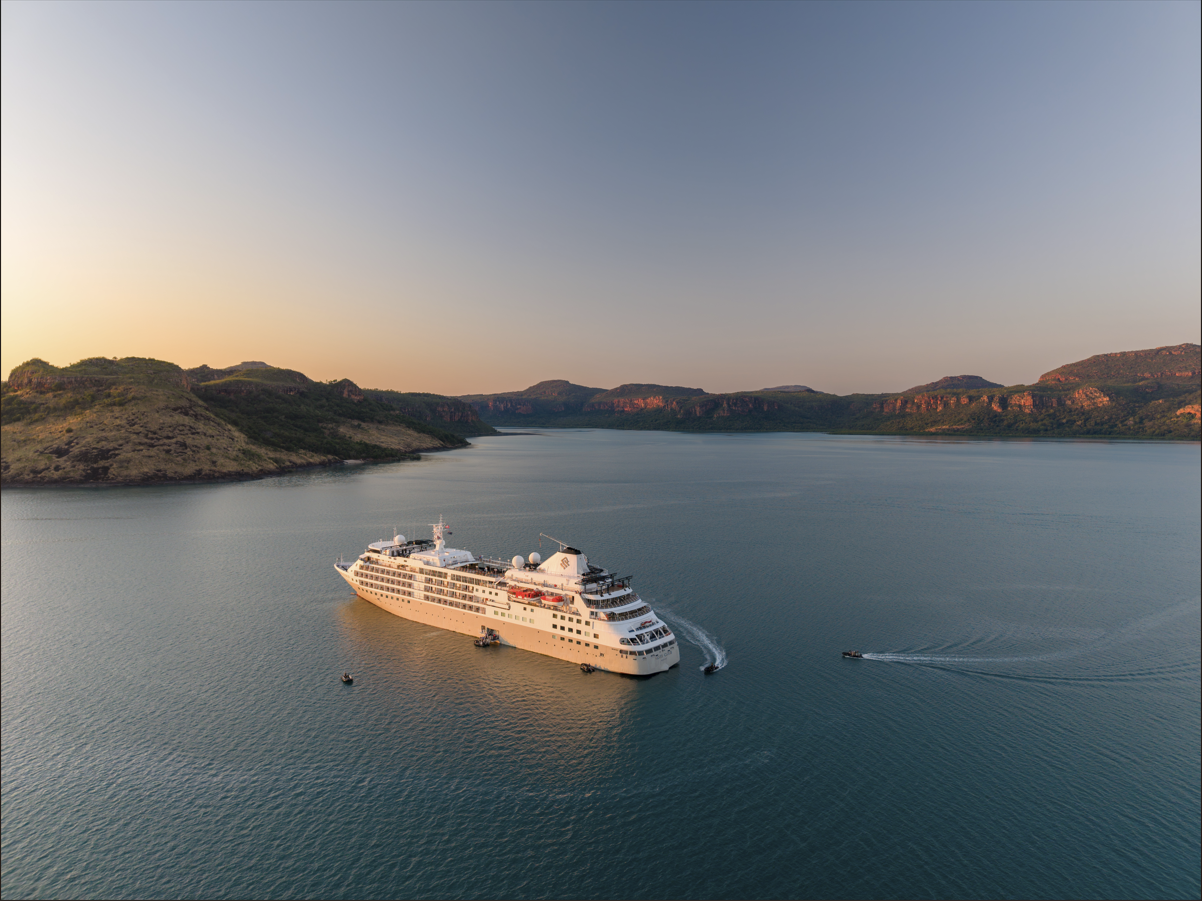
Silversea already has its next long-format voyage lined up: the Grand Mediterranean 2026, a 50-day sailing from Lisbon to Athens aboard Silver Spirit, trading Pacific atolls for the ancient port cities of southern Europe. Beyond that sits a further Grand Mediterranean edition in 2027 aboard Silver Dawn, a Grand Voyage South America in 2028 aboard Silver Ray, and a Grand Voyage Asia in 2028 aboard Silver Muse — each built on the same underlying idea driving the current South Pacific expedition, that some parts of the world only really open up to travellers willing to give them weeks instead of days.
Most cruise itineraries are built around compression — as many highlights as the calendar will bear, packed into as few days as the market will tolerate. The Grand South Pacific Expedition runs on the opposite instinct. It hands guests 77 days to absorb an extraordinary range of landscape and culture — the deep time of Gwion Gwion rock art, the still-living history of Pitcairn's Bounty descendants, the reef systems of Raja Ampat, the moai of Rapa Nui — without squeezing any of it into a rushed two-hour port stop. That may be the real luxury on offer here: not simply a longer cruise, but a different relationship with time and distance altogether, in one of the least-visited quarters of the planet. As Silver Cloud continues her long arc toward Valparaiso, she is carrying, alongside her passengers, a fairly persuasive argument for what expedition cruising looks like once a line stops compressing the world and lets it unfold on its own terms.
Gabriele Bassi