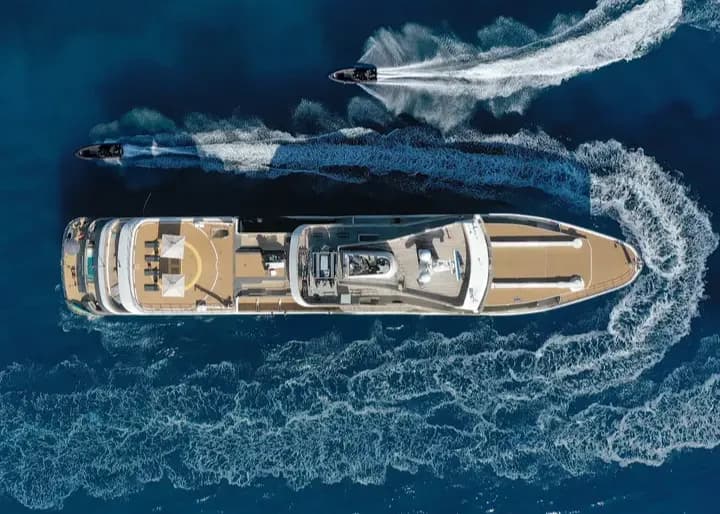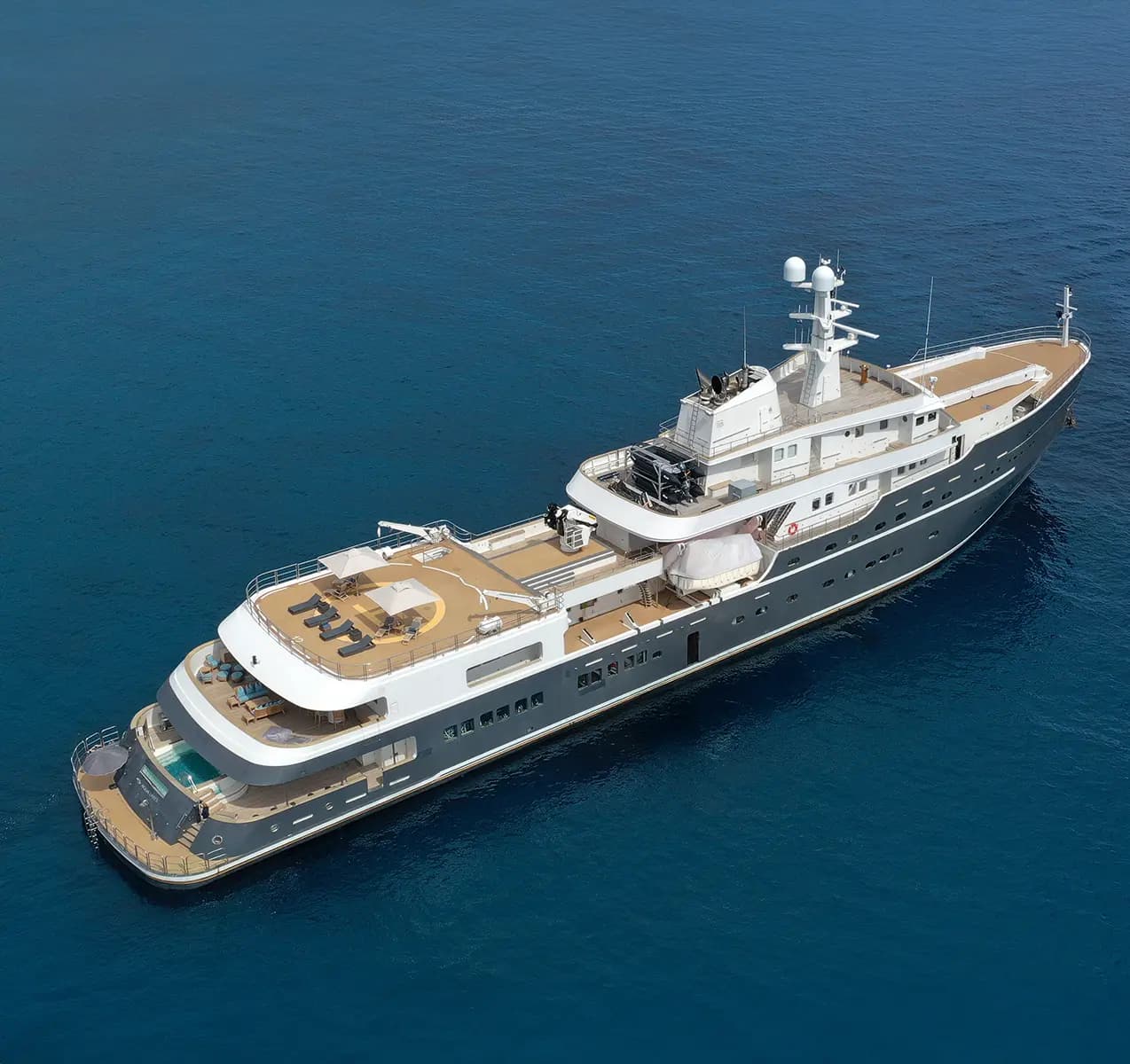
Aqua Lares, the line's 77-metre superyacht, returns to East Africa this November following a well-received debut season in Svalbard and the Arctic Circle — a contrast in latitude that says something about the ambitions Aqua Expeditions has for the vessel. From November 2026 through April 2027, the yacht will run a rotating slate of five- to fourteen-night voyages through Seychelles and Tanzania, timed to the region's calmest and clearest sailing season, when seas settle, skies clear, and marine life becomes markedly easier to find.
There is a particular category of coastline that resists easy description — not quite the postcard tropics, not quite untouched wilderness, but something older and stranger than either. East Africa's scattered island world, stretching from the granite outcrops of Seychelles to the mangrove-fringed shores of Zanzibar, belongs firmly in that category. This November, Aqua Expeditions is sending its newest yacht back into it.
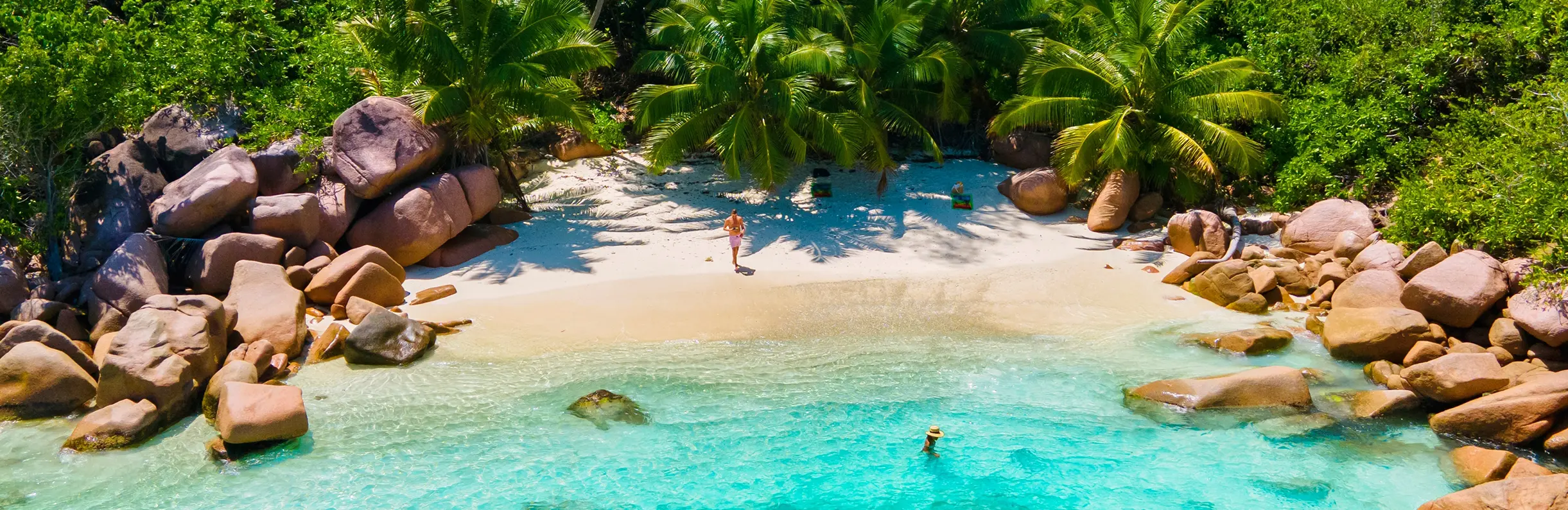
The Seychelles portion of the program splits, depending on the specific itinerary, between two very different versions of the archipelago. The granitic inner islands offer Praslin's Vallée de Mai — a UNESCO World Heritage forest once mistaken by early European visitors for the literal Garden of Eden, and still the only place on Earth where the Coco de Mer palm grows wild, its seed the largest in the plant kingdom — alongside the marine sanctuary of Curieuse Marine National Park. Further out, the coralline outer islands push guests toward genuine remoteness: Astove and Aldabra, both renowned for giant tortoise populations that number in the tens of thousands, and for marine biodiversity largely undisturbed by mass tourism. Select departures also work in diving and snorkelling at the Astove Wall, a four-mile coral formation with visibility stretching to 40 metres, regularly compared by divers to an underwater Grand Canyon and considered one of the standout dive sites anywhere in the Indian Ocean.
The longer sailings — ten and eleven nights — push further west into the Zanzibar archipelago, trading Seychelles' granite and coral geology for a landscape shaped as much by human history as by nature. Ras Kisimani, on Mafia Island's southwestern tip, was once a thriving Swahili trading settlement linking East Africa to Arabia between the 12th and 14th centuries; today its shoreline sits largely undisturbed, the remains of the old town slowly being reclaimed by the sea. Mafia Island itself holds a rarer distinction: it's the only place in Tanzania where whale sharks appear with any regularity, drawing snorkellers and divers into the calm, glass-clear waters of Kilindoni Bay for close encounters with the ocean's largest fish. Nearby, Chole Bay offers a gentler counterpoint — coral gardens dense with tropical fish, and mangrove lagoons quiet enough to explore by kayak.
What ties the whole program together is the yacht itself. Aqua Lares holds the distinction of being East Africa's first superyacht to offer both private charter and individual cabin bookings, a flexibility that widens its appeal well beyond the traditional full-boat-buyout crowd. She carries just 30 guests across 15 individually designed cabins spanning five categories, including three Owner's Suites ranging from 419 to 710 square feet (39 to 66 square metres) — generous by any small-ship standard, let alone one built for genuine expedition work. A one-to-one crew-to-guest ratio underpins the level of personalised service Aqua Expeditions has built its reputation on, while the culinary program is overseen by Michelin-starred chef Karime López, bringing a level of gastronomic ambition rarely paired with this kind of destination access.
The interiors lean into a deliberate fusion of European refinement and East African craftsmanship: warm wood-panelled cabins dressed in textiles from Italy's Dedar, bespoke ceramics from Gaya, furniture pieces from Minotti and Poltrona Frau set against antique maps and prints. It's a design language built to feel less like a conventional yacht and more like a well-travelled private residence that happens to move between islands. Spread across six decks, the ship layers in a full spa with sauna and massage room, an outdoor jacuzzi and swim platform, a cinema, a gym, and a sun deck built for sunset cocktails — the kind of five-star-hotel comforts meant to counterbalance days spent kayaking tidal channels or diving reef walls.
Excursions throughout the season are led by expert naturalist guides, with private tenders opening up terrain a standard cruise ship could never reach — Aldabra's lagoon and mangrove forests among them, where sharks and elusive manta rays share the water with more than 100,000 giant tortoises roaming the atoll's four islands, alongside rare bird species like the red-footed booby. Remoter still is Alphonse, an outer atoll ringed by powdery beaches and coconut forest, whose isolation makes it one of the richest bird-spotting locations anywhere in the Seychelles, drawing migratory species like the sociable lapwing and tufted duck alongside a coral-fringed lagoon built for kayaking. Remire Island, roughly 245 kilometres southwest of the Seychelles capital, adds a quieter historical layer — a former guano-mining settlement and presidential retreat, its waters now prized chiefly for scuba diving and snorkelling around the adjacent Remire Reef, with land and seabirds, and the occasional giant tortoise, still working their way through the coastal vegetation.
What emerges across the full season is less a single itinerary than a modular exploration of one of the least-visited corners of the Indian Ocean — granite islands and coral atolls, Swahili ruins and virgin reef, tortoise colonies and whale shark migrations, all accessible through a ship built specifically to reach the places larger vessels can't. Having proven the concept in the ice and fjords of the Arctic, Aqua Lares now carries that same small-ship philosophy into considerably warmer water — trading polar bears and glaciers for giant tortoises and coral walls, but keeping intact the same underlying premise: that the most rewarding expeditions happen at the edges of the map, reached by a vessel small enough to actually get there.
Gabriele Bassi