
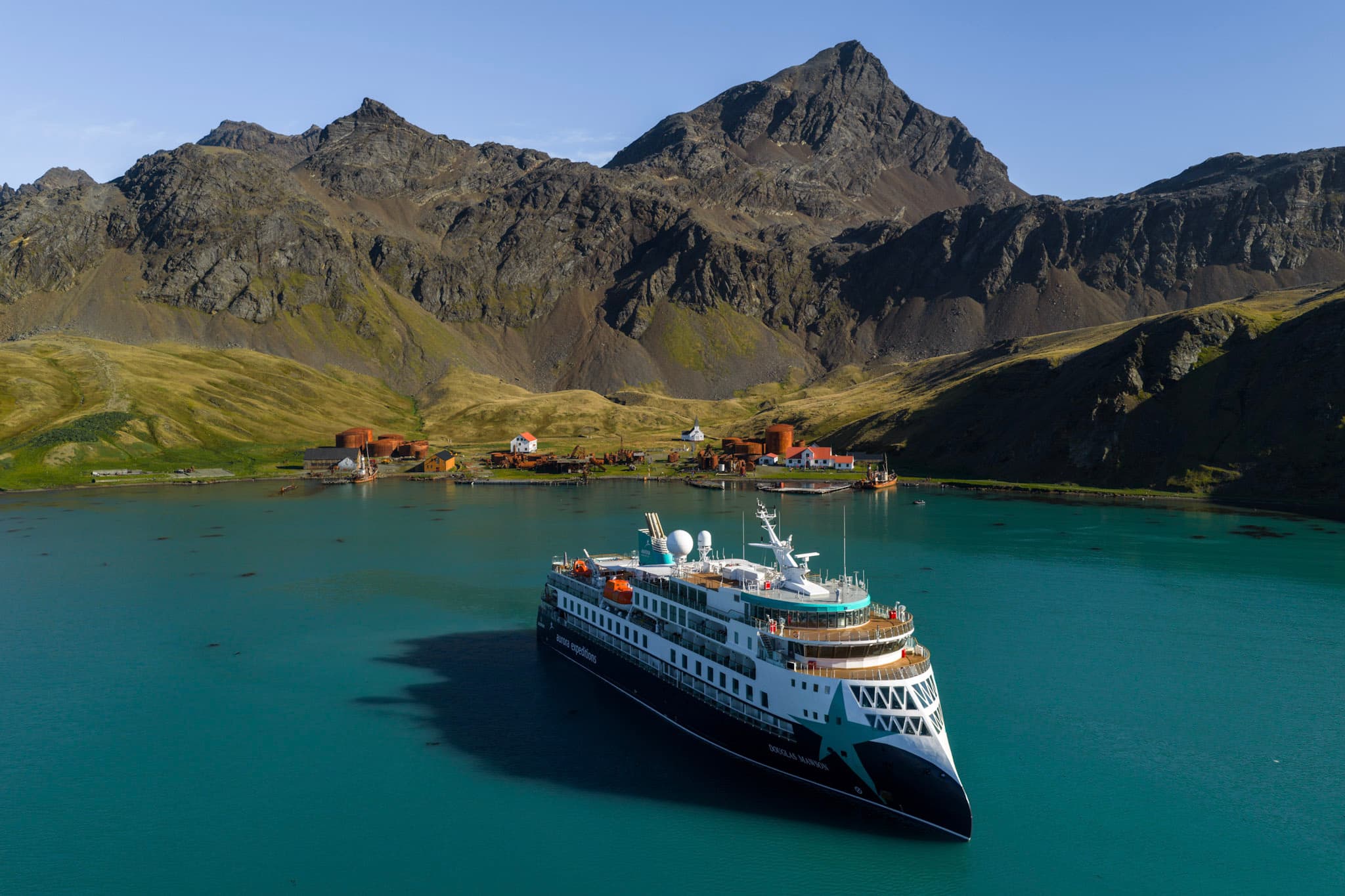
In March 2027, AE Expeditions will introduce a new itinerary dedicated almost entirely to this environment, using its newest purpose-built expedition vessel, Douglas Mawson, for an 11-day journey from Ushuaia to Punta Arenas. The new Glaciers & Fjords of Southern Patagonia expedition departs on 28 March 2027 and follows a route through some of the most remote waterways of Tierra del Fuego and Chilean Patagonia.
Rather than treating the region simply as an extension to an Antarctic voyage, the itinerary places Patagonia itself at the centre of the expedition, with days devoted to Zodiac exploration, hiking, glacier viewing and wildlife encounters in an area where road access is limited or entirely absent. Southern Patagonia is a landscape that seems almost designed for expedition cruising: narrow waterways disappearing between mountains, glaciers descending directly toward the sea, forests growing at the edge of ice fields and isolated islands where wildlife colonies vastly outnumber human settlements.
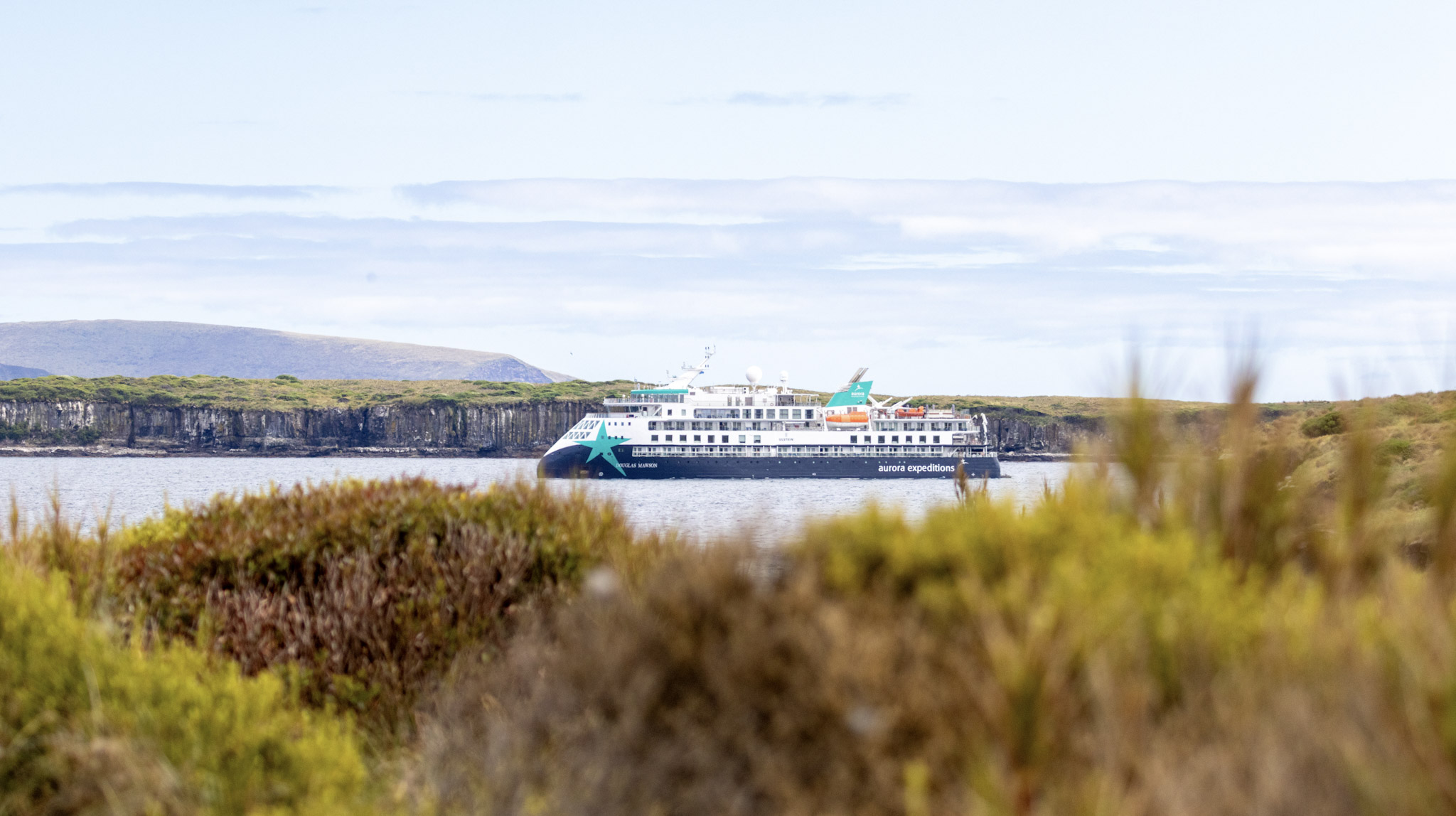
The voyage begins in Ushuaia, at the southern end of Argentina, before Douglas Mawson enters the Beagle Channel and begins working its way into the complex system of channels and fjords that separates the islands of Tierra del Fuego. From this point onward, the itinerary becomes deliberately flexible. As with most genuine expedition voyages, exact landings and navigation depend on weather, sea state and local conditions, allowing the expedition team to adapt the program according to what is possible each day. One of the defining areas of the voyage is the so-called Glacier Alley, where the waterways of the Darwin Range pass beneath a succession of glaciers flowing from the mountains toward the Beagle Channel. The greater region forms part of the Cape Horn Biosphere Reserve, a landscape where the southern Andes break apart into islands, fjords, forests and ice. Here, the experience is less about arriving at a conventional port than about slowing down sufficiently to examine individual corners of the landscape. Zodiac cruises bring passengers closer to glacier fronts and floating ice, while hikes lead toward elevated viewpoints across fjords surrounded by snow-covered mountains. Birdlife is another constant presence, with the waterways supporting a variety of seabirds adapted to the cold, nutrient-rich environment of southern Patagonia.
Among the areas expected to feature during the expedition is Seno Agostini, within Alberto de Agostini National Park. The park occupies a remarkable transition zone where the Andes reach the ocean, producing a succession of glaciers, steep valleys, channels and sub-Antarctic forest. Exploration here can take place both from the ship and by Zodiac, with opportunities to approach ice-filled waters and observe the changing landscape at a much smaller scale than would be possible from a conventional cruise vessel.
The northernmost reaches of the voyage bring Douglas Mawson toward Pío XI Glacier, one of the itinerary's major natural landmarks. Pío XI is the largest glacier in South America and is particularly unusual because, unlike many Patagonian glaciers that have experienced significant retreat, it has shown periods of continued advance. Its scale is difficult to appreciate from maps alone. The glacier descends from the Southern Patagonian Ice Field into Bernardo O'Higgins National Park, creating an enormous wall of ice surrounded by mountains and fjords. For an expedition ship, the approach is part of the experience itself, with navigation becoming progressively more dominated by glacial landscapes and floating ice.
From Pío XI, the expedition turns south again, using the protected waterways and smaller channels of western Patagonia as opportunities for further Zodiac exploration and possible landings. In this part of Chile, place names on a chart often correspond not to towns but to caletas, bays and anchorages hidden within a coastline that has been carved repeatedly by ice. Whenever conditions allow, these sheltered locations provide opportunities to leave the ship and explore on foot. Patagonia's image may be dominated by glaciers and mountains, but much of the lower landscape is covered in remarkably dense vegetation, including sub-Antarctic forest adapted to cold temperatures, strong winds and extremely high rainfall.
The contrast between ice and forest becomes particularly evident farther south in Almirantazgo Sound, one of the great fjord systems of Tierra del Fuego. Here the itinerary introduces another perspective on the Darwin Cordillera and its glaciers, combining hikes through Magellanic forest with elevated views across the surrounding waterways. The Marinelli Glacier is one of the principal landmarks in this area. Walks can lead through moss-covered forests and glacially sculpted terrain toward viewpoints overlooking the glacier and the mountains beyond, making this part of the voyage as much a terrestrial exploration as a marine one.
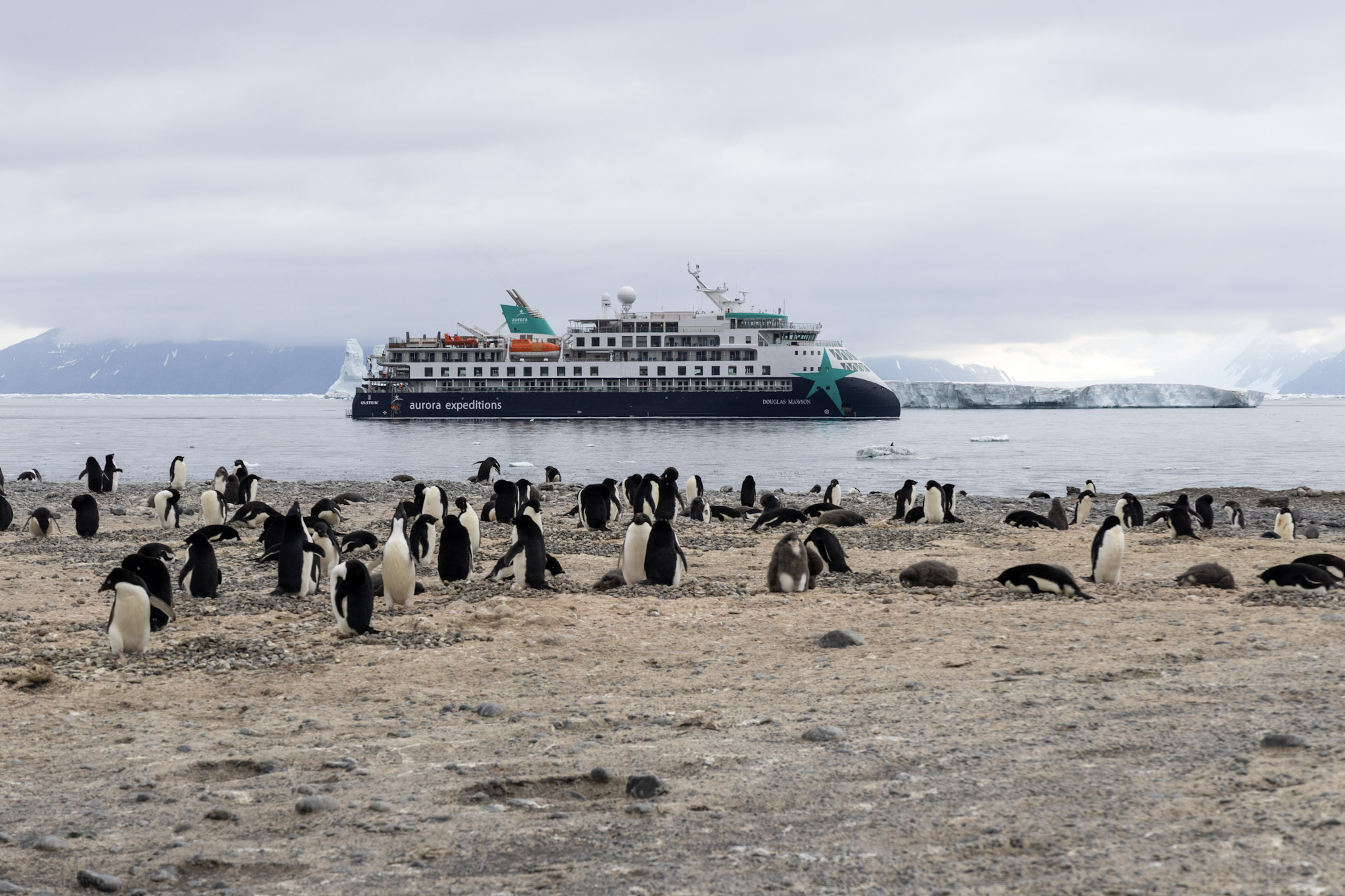
Almirantazgo Sound is also home to one of the expedition's most important wildlife encounters. At the Tucker Islets, passengers can explore by Zodiac around an important Magellanic penguin breeding area, where the colony can number more than 4,000 birds during the season. Landings are restricted in order to protect the breeding habitat, so observation takes place from the water. The penguins share the area with imperial cormorants and other seabirds, while dolphins can also appear in the surrounding channels. The combination is representative of the wider itinerary: wildlife is not presented as an isolated excursion but encountered within the broader landscape through which the vessel is travelling. Navigation through the Strait of Magellan adds another layer to the journey. The waterway has carried enormous historical significance since Ferdinand Magellan's expedition found a navigable passage between the Atlantic and Pacific oceans in 1520, yet much of its coastline remains strikingly undeveloped even today. Weather permitting, AE Expeditions plans to attempt a landing at Bahía Fortescue, a location associated with the first Christian mass celebrated on what is now Chilean territory during Magellan's voyage. The site is notoriously exposed to the strong winds characteristic of the Strait, making a landing far from guaranteed, but that uncertainty is part of the expedition format.
Rather than promising a rigid succession of stops, the voyage is structured around a geographical area and the possibilities it offers from day to day. A planned hike may become a Zodiac cruise if weather changes; an inaccessible landing may be replaced by time exploring another inlet; and wildlife sightings can alter the rhythm of an afternoon altogether. This flexibility is particularly appropriate in Patagonia, where weather systems can move rapidly across the mountains and dramatically transform conditions within a matter of hours. The region rewards a vessel capable of spending time inside the fjords rather than simply transiting between major ports.
Douglas Mawson has been designed around precisely this type of operation. Delivered in 2025, the ship is the newest vessel in the AE Expeditions fleet and follows Greg Mortimer and Sylvia Earle in using Ulstein's distinctive X-BOW design, with a hull profile developed to improve performance in difficult seas. The ship measures 104.4 metres in length and has 86 cabins across eight decks. Although its maximum capacity is 154 passengers, AE Expeditions limits expedition voyages to a maximum of 130 guests, maintaining the small-ship scale that is particularly relevant when operating frequent Zodiac excursions and landings. That number matters in a destination such as Patagonia. The experience depends heavily on moving guests efficiently between ship and shore and on being able to explore locations where infrastructure is either minimal or completely absent. Smaller passenger numbers also allow activities to remain closely connected to the expedition team rather than requiring the logistics associated with much larger vessels.
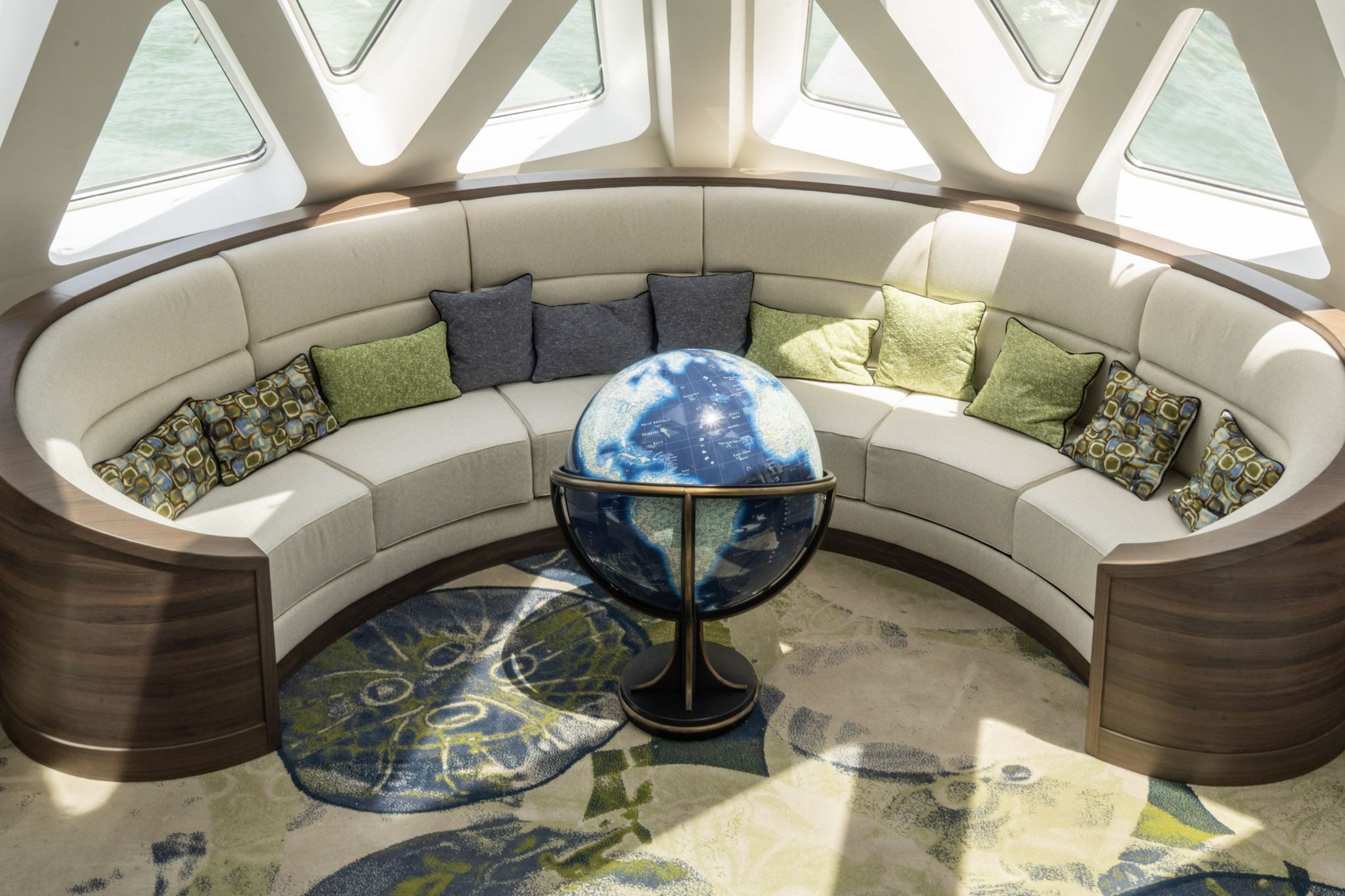
Douglas Mawson's public spaces have also been conceived around observation of the surrounding environment. Expedition voyages spend long periods navigating through scenery that can change continuously, and Patagonia in particular rewards time on deck: glaciers may appear around a bend in a channel, dolphins can surface alongside the vessel and mountain ranges emerge and disappear as weather moves through the fjords. The ship therefore becomes less a destination in itself than a mobile base from which the landscape can be explored. Included activities listed for the itinerary range from Zodiac cruising and shore excursions to walking, birdwatching, photography, marine mammal spotting and lectures covering wildlife, environment, history and the destinations visited. Sea kayaking is also available as an additional activity for travellers wanting to experience the fjords almost at water level.
That approach reflects a broader evolution within expedition cruising. Patagonia has long formed part of routes connecting Ushuaia, Cape Horn and Antarctica, but increasingly operators are treating the Chilean fjords as a primary expedition destination rather than simply the scenery encountered before or after another voyage. The reasons are clear. The region offers many of the elements traditionally associated with polar expedition travel — glaciers, remote navigation, Zodiac operations, unpredictable weather and significant wildlife — while also adding extensive forests, longer hiking opportunities and a strong maritime history. It is also a destination where the geographical complexity of the coastline becomes part of the appeal. From the Beagle Channel to the Strait of Magellan, the map is an extraordinary network of waterways, islands and peninsulas, many of which can only be properly appreciated from the sea.
For travellers familiar with more conventional Patagonian routes, the new itinerary offers a different scale of exploration. Instead of moving primarily between established gateways such as Ushuaia and Punta Arenas and visiting the interior by road, the voyage follows the waterways themselves, reaching glaciers and coastal landscapes that are naturally oriented toward expedition vessels. The timing in late March gives the itinerary another distinctive character. The southern summer is moving toward autumn, bringing changing light and potentially more dramatic conditions while still allowing expedition operations across the region. As always in Patagonia, however, weather rather than the calendar ultimately determines what happens on any given day. The voyage finishes in Punta Arenas after ten nights of navigation and exploration, completing a route that effectively cuts through the maritime heart of southern Patagonia from Argentina into Chile.
What makes Glaciers & Fjords of Southern Patagonia particularly interesting is that there is no single landmark around which the entire journey is constructed. Pío XI Glacier may be the largest natural feature, Tucker Islets may offer the most concentrated wildlife encounter, and Glacier Alley may provide some of the most dramatic scenery, but the real attraction lies in the continuity between them. For much of the voyage there is no clear division between travelling and arriving. Sailing through a narrow fjord beneath the Darwin Range can be as significant as the hike at the end of it, while a Zodiac journey between floating ice and forested shoreline may become more memorable than a scheduled landing. That is precisely where expedition cruising differs most clearly from a conventional itinerary. In Southern Patagonia, the route itself is the destination, and aboard Douglas Mawson AE Expeditions is building an entire voyage around that idea.
Gabriele Bassi