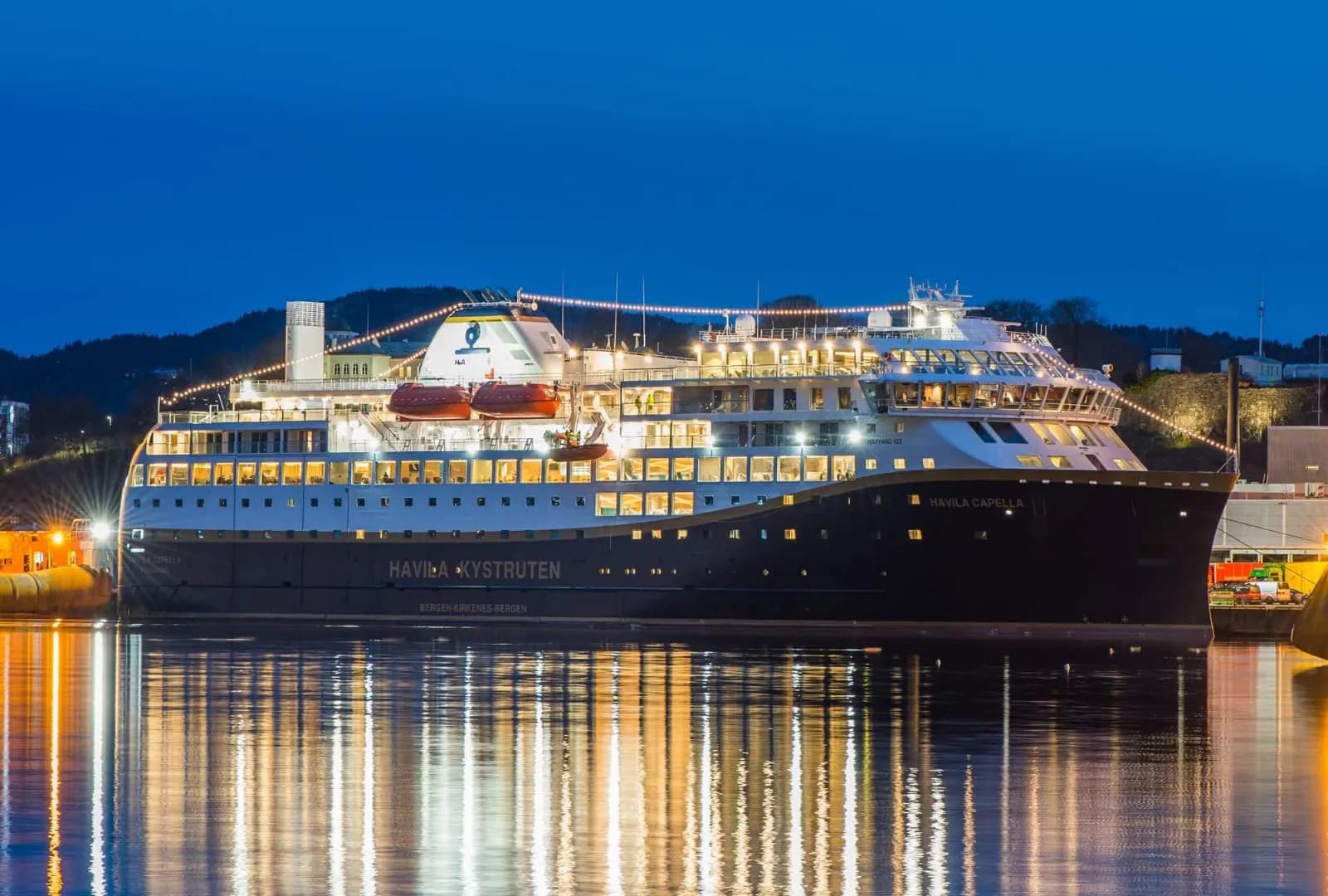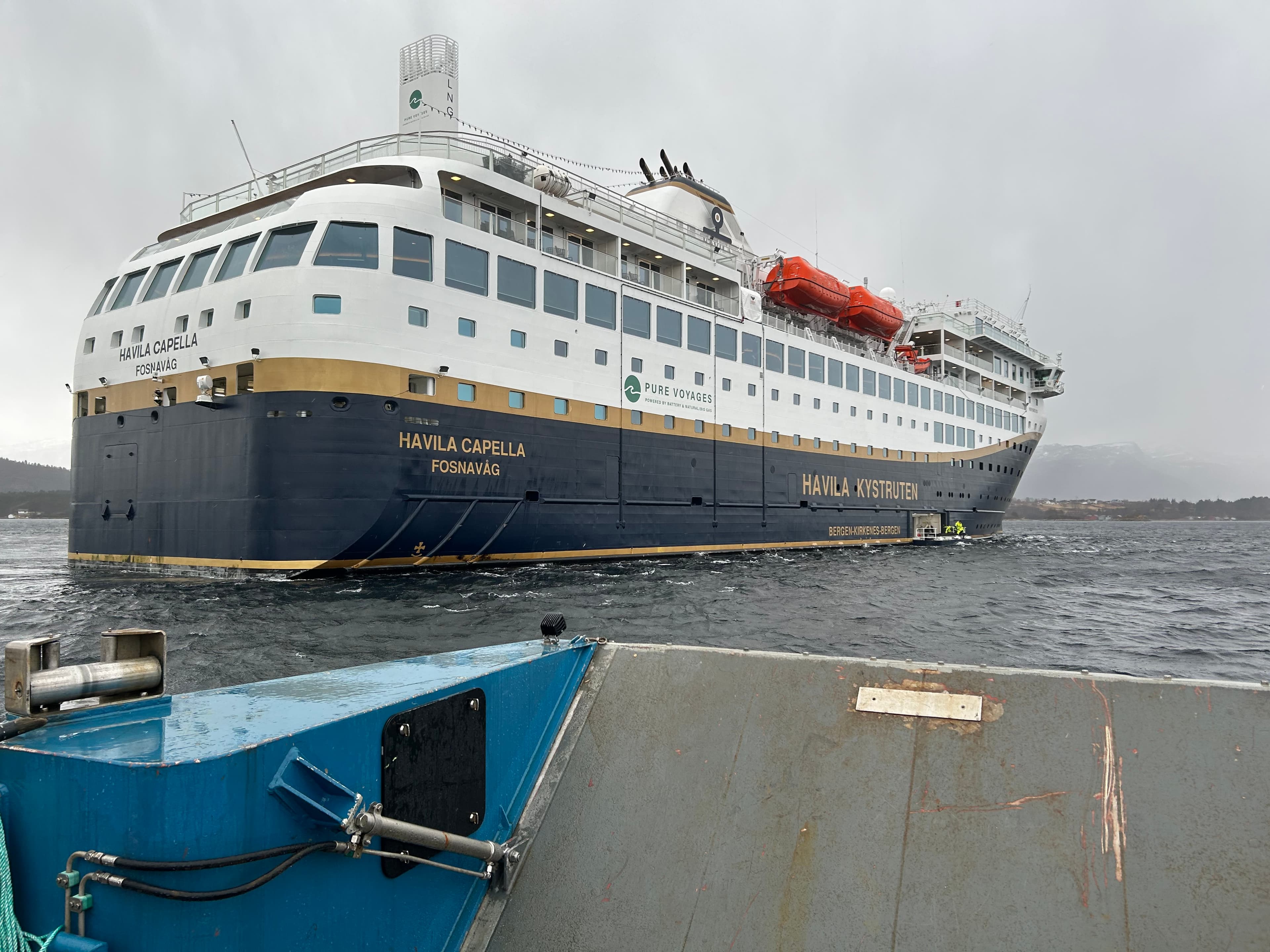
Havila Voyages has joined the European LOWNOISER project as an associated partner, reaffirming its commitment to advancing more sustainable maritime transport and protecting the marine environment.
The project aims to reduce the impact of underwater noise generated by shipping activities and contribute to the preservation of marine ecosystems. As part of the initiative, Havila Voyages will make its vessel, MS Havila Capella, available for full-scale testing along the Norwegian coastal route between Bergen and Kirkenes. Advanced sensors and hydrophones will be installed on board to monitor radiated underwater noise and vibrations generated during the vessel’s normal operations. The data collected will provide valuable insights for the development of innovative solutions designed to make maritime transport quieter and more environmentally responsible.
Marianne Vågen Langeland, Chief Operating Officer of Havila Voyages, emphasizes that the future of maritime transport must be built with respect for the oceans and the coastal communities that depend on them. Joining the LOWNOISER project and making MS Havila Capella available for full-scale trials represent a tangible contribution to the development of a shipping industry that is not only cleaner, but also quieter and more respectful of marine life.
According to Vågen Langeland, underwater noise is an environmental impact that often goes unnoticed, yet it can have significant consequences for marine ecosystems. Operating year-round along one of the world's most spectacular and environmentally sensitive coastlines carries a responsibility to help drive positive change. Through collaboration, knowledge sharing and innovation, Havila Voyages aims to contribute to the establishment of new standards for increasingly sustainable coastal shipping.
As part of the project, the demonstration vessel will be used to evaluate new technologies designed to reduce noise generated by the propulsion system developed by Kongsberg Maritime, including advanced solutions for optimizing bevel gear performance. Monitoring activities will compare the vessel's operating conditions before and after the implementation of these technological improvements, providing a clear assessment of their effectiveness.
To ensure a comprehensive analysis, fixed monitoring stations equipped with hydrophones will also be deployed to collect reference data, enabling researchers and technology developers to evaluate the performance of the new solutions under real operating conditions.
An initial measurement campaign was carried out in March 2026 to assess the underwater noise generated during the vessel's normal operations, both when powered by LNG-fuelled generators and when operating exclusively on battery-electric propulsion. The data collected provided valuable insights into the relationship between operating modes, propulsion systems and underwater noise levels, establishing an important baseline for the development of future noise mitigation solutions.
While the maritime industry has made significant progress in reducing emissions, radiated underwater noise remains an environmental challenge that has received comparatively limited attention. Many marine species rely on sound for essential life functions, including communication, navigation, foraging and reproduction. Increasing levels of ship-generated noise can interfere with these natural processes, particularly in environmentally sensitive coastal waters.
By making one of its state-of-the-art vessels available for full-scale testing, Havila Voyages is supporting the development of practical solutions to reduce underwater noise at its source. The data collected will improve understanding of how operating conditions and propulsion systems influence underwater noise, while contributing to the development of effective mitigation measures. These findings will also help shape future environmental standards and regulatory frameworks for the maritime sector.
Coordinated by Maritime CleanTech, the European LOWNOISER project brings together 15 partners, including companies, research institutions and technology providers committed to developing innovative solutions to reduce the environmental impact of shipping. Funded under the European Union's Horizon Europe programme, the project aims to develop, test and validate technologies that will make maritime transport quieter, more efficient and more sustainable.
Havila Voyages' participation represents a significant contribution to the project's demonstration activities and data collection efforts. As Emilie Dorgeville, LOWNOISER Project Coordinator at Maritime CleanTech, explains, the collaboration with the Norwegian company will provide essential insights to improve understanding of underwater noise and assess the effectiveness of the technologies being developed to reduce it. The project's findings will also contribute to the definition of future environmental standards for the maritime industry.
The partners share a common vision of a future in which the seas are not only cleaner, but also quieter. By addressing underwater noise alongside ongoing efforts to reduce emissions, the LOWNOISER project promotes an integrated approach to sustainability in the maritime sector, with the goal of protecting marine ecosystems and fostering more environmentally responsible shipping.
Giorgia Lombardo