
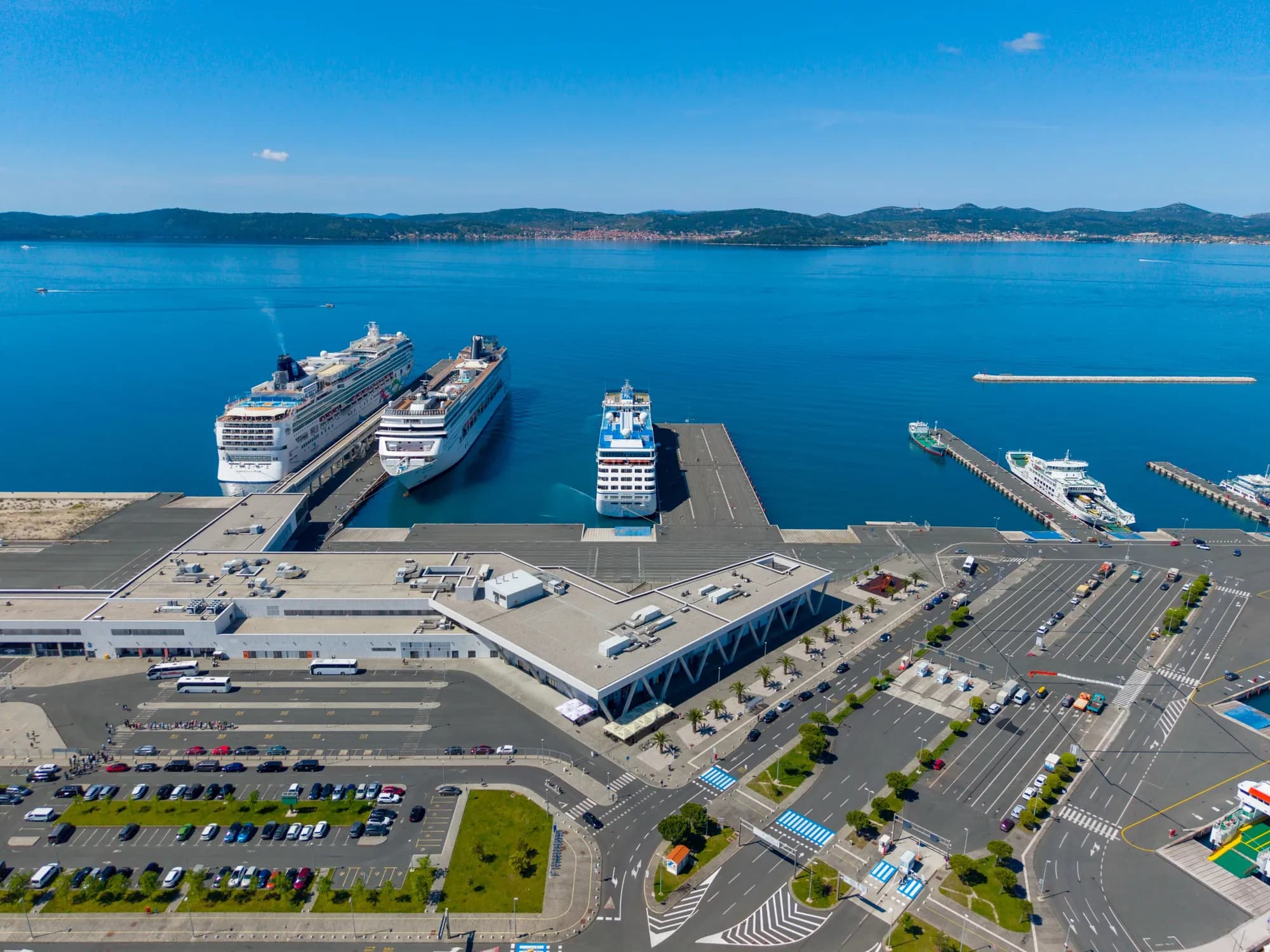
Few destinations in the Adriatic combine history, culture, and maritime heritage as seamlessly as Zadar. With its Roman ruins, medieval streets, world-famous Sea Organ, and spectacular coastal setting, the Croatian city has long attracted travelers arriving by land and sea.
Today, however, Zadar is earning recognition for something beyond its tourism appeal: its commitment to becoming one of the Mediterranean’s most innovative and sustainable cruise destinations.
At the center of this transformation is Zadar Cruise Port, operated by Global Ports Holding (GPH), which has embraced a forward-looking strategy focused on environmental stewardship, technological innovation, and transparency. Through a pioneering partnership with SeaCras, a Croatian company specializing in marine environmental intelligence and sustainable blue economy solutions, the port has developed a model that balances cruise tourism growth with the protection of marine ecosystems and the well-being of the local community.
Supported by a management team committed to sustainable growth and led by General Manager Rebeka V. Pevec, MBA, Zadar Cruise Port has actively invested in environmental innovation and responsible destination management. Working alongside SeaCras founder and CEO Dr. Mario Špadina, the port has helped create a framework that demonstrates how modern cruise destinations can successfully align economic development with environmental responsibility.
As one of the Adriatic’s leading cruise gateways, Zadar Cruise Port welcomes a growing number of international cruise passengers each year. Recognizing the responsibility that accompanies this growth, port management has invested in advanced environmental monitoring initiatives designed to ensure that tourism development remains sustainable. Working closely with SeaCras and local stakeholders, the port has introduced innovative projects focused on water quality and MARPOL pollution assessment, emissions monitoring, and environmental awareness, generating measurable results and strengthening its reputation as a responsible cruise destination.
These efforts have received international recognition. Zadar Cruise Port and Seacras were recently nominated for the 2025 World Sustainable Travel & Hospitality Awards (WSTHA) in the category “World’s Leading Marine & Biodiversity Conservation Programme,” highlighting the city’s dedication to protecting marine environments while supporting sustainable tourism development.
A cornerstone of this strategy is the integration of technology into everyday port operations. Central to the initiative is the SeaCras App, an artificial intelligence-driven platform developed through the collaboration between SeaCras and Zadar Cruise Port. The application enables real-time monitoring and visualization of marine water quality, offering unprecedented transparency regarding environmental conditions in and around the port.
Zadar Cruise Port became the first port location to implement this advanced technology, which combines high-resolution satellite imagery with artificial intelligence algorithms capable of identifying pollution indicators in accordance with the MARPOL Convention. The system operates without direct intervention in the marine environment, minimizing greenhouse gas emissions while delivering highly accurate environmental assessments. Through an accessible web-based interface, passengers, residents, and stakeholders can easily access information about sea conditions, encouraging greater environmental awareness and engagement.
According to Dr. Mario Špadina, CEO of SeaCras, the objective extends beyond environmental monitoring alone. The project was designed to create a practical decision-making tool that enables ports, tourism stakeholders, and local authorities to understand environmental conditions in real time and take proactive measures to protect marine ecosystems. Through his leadership, SeaCras has transformed complex satellite and environmental data into an accessible platform that supports both sustainability goals and operational efficiency.
The project represents a significant step forward in environmental transparency within the cruise sector. By providing continuous monitoring and reliable data, the platform helps identify environmental pressures, supports preventive action, and contributes to more sustainable and regenerative tourism practices. The information generated through the SeaCras App is increasingly being integrated into operational decision-making processes at the port, as well as broader sustainability initiatives across the local tourism industry.
Beyond MARPOL polution monitoring, Zadar Cruise Port is also pioneering new approaches to understanding and managing the environmental impact of cruise operations. Developed through the collaboration between SeaCras and the port’s management team, the initiative combines scientific expertise with practical operational experience to assess emissions generated by ships while in port and better understand their impact on the surrounding marine environment.
Under the leadership of Dr. Mario Špadina and with the support of General Manager Rebeka V. Pevec MBA, the project utilizes advanced environmental intelligence tools capable of processing extensive datasets, including biochemical and atmospheric indicators, satellite observations, and human activity patterns. The result is a comprehensive and continuously updated picture of marine ecosystem health that supports more informed environmental decision-making.
An important aspect of the Zadar model is its emphasis on public participation. Environmental sustainability is not treated solely as a technical exercise but as a shared responsibility. Through QR codes and digital access points across the port area, residents and visitors can consult real-time environmental information and report potential pollution incidents. This collaborative approach transforms citizens from passive observers into active contributors to environmental protection and conservation efforts.
The success of the initiative has also demonstrated the broader potential of satellite-based marine monitoring throughout the Adriatic region. The model developed in Zadar can be adapted for use in ports, marinas, resorts, protected marine areas, and coastal destinations of varying sizes. Such solutions are becoming increasingly important as coastal communities confront the challenges of climate change, including rising sea levels, higher sea temperatures, and ecosystem degradation.
The benefits are already visible. Visitors arriving through Zadar Cruise Port increasingly associate the destination with responsible tourism and high environmental standards. This enhanced trust contributes directly to the local economy, supporting businesses, hospitality providers, and tourism services while helping preserve the natural and cultural assets that make Zadar unique.
Equally important, the availability of objective environmental data helps reduce the risk of greenwashing. Port authorities, tourism operators, public institutions, and environmental managers can rely on transparent and verifiable information to guide decision-making and communicate sustainability achievements with credibility and confidence.
Another defining strength of the project is its scalability. The SeaCras App and Coastal Intelligence platform can be deployed in virtually any coastal destination worldwide, regardless of its size or operational complexity. In this respect, Zadar Cruise Port has become a showcase for how technology, innovation, and public-private collaboration can work together to create a sustainable tourism model that delivers environmental protection, community engagement, and long-term economic value.
The successful collaboration between Zadar Cruise Port, led by General Manager Rebeka V. Pevec MBA, and SeaCras under the leadership of Dr. Mario Špadina demonstrates how partnerships between port operators and technology providers can accelerate the transition toward more sustainable cruise tourism. By bringing together operational leadership, scientific expertise, and a shared commitment to environmental stewardship, they have created a model that is attracting attention well beyond Croatia’s shores.
Through this pioneering approach, Zadar is demonstrating that a modern cruise destination can successfully combine growth with responsibility. By embracing advanced environmental technologies and fostering collaboration between the public and private sectors, Zadar Cruise Port is not only safeguarding the Adriatic Sea but also helping shape the future of sustainable cruise tourism. Its experience offers an inspiring and highly replicable example for ports and destinations across the Mediterranean and beyond.
Don’t miss updates, news and reviews from the world of cruises on Cruising Journal.