
Egypt, a land where civilizations and religions have flourished for thousands of years, is home to one of the world's richest and oldest Christian heritages. The country's remarkable Coptic legacy attracts pilgrims, history enthusiasts, archaeologists, and travelers seeking spiritual inspiration, peace, and cultural discovery.
The roots of Egypt's Christian heritage date back to the sacred journey of the Holy Family when Virgin Mary, Child Jesus, and Joseph sought refuge in Egypt while fleeing from King Herod. Welcomed by the Egyptian people, they traveled across the land, leaving behind a spiritual legacy that continues to inspire millions of believers around the world. Their journey remains one of the most significant events in Christian history and forms the foundation of Egypt's unique Coptic identity.
Over the centuries, Egypt’s Christian heritage has been preserved through a remarkable network of churches, monasteries, pilgrimage sites and living religious communities. The country is home to the Coptic Orthodox Church, one of the world’s oldest Christian traditions, whose roots are traditionally traced back to the preaching of Saint Mark the Evangelist in Alexandria in the first century. Today, this heritage remains deeply embedded in Egypt’s cultural landscape, offering visitors the opportunity to discover places where faith, history, architecture and centuries-old traditions continue to coexist.
Among the most significant landmarks is Saint Mark’s Coptic Orthodox Cathedral in Cairo, the principal cathedral of the Coptic Orthodox Church and one of the most important Christian sites in modern Egypt. Inaugurated in 1968, the cathedral is closely associated with Saint Mark, traditionally regarded as the founder of Christianity in Egypt. The building became an important symbol of the Coptic community and has hosted major religious ceremonies and historic events.
Beyond Cairo, the Egyptian desert preserves some of the most extraordinary chapters in the history of Christian monasticism. The Monastery of Saint Anthony, located in the Eastern Desert near the Red Sea, is traditionally regarded as one of the world’s oldest continuously inhabited Christian monasteries. Its origins are connected with Saint Anthony the Great, who lived as a hermit in the surrounding mountains and died in 356 AD. Over time, a monastic community developed around the cave where he lived, transforming the remote desert landscape into one of the great centres of Christian monasticism.
Another essential destination is Wadi El Natrun, a desert valley between Cairo and Alexandria that became one of the most important centres of Egyptian monasticism. Several ancient monasteries have survived here, including the Monastery of the Paromeos, the Monastery of Saint Pishoy, the Monastery of Saint Macarius and the Monastery of Saint Mary Deipara. These communities have played a crucial role in preserving Coptic religious traditions, manuscripts and forms of monastic life for centuries. The monasteries of Wadi Natrun and the Arab Desert are currently included on Egypt’s UNESCO Tentative List, reflecting their recognised cultural importance.
Near Alexandria lies Abu Mena, one of the most remarkable early Christian pilgrimage centres in the Mediterranean world. Developed around the tomb of Saint Menas, a Christian martyr, the site grew from the fourth century onwards into a vast religious complex containing churches, monasteries, accommodation for pilgrims, workshops and other buildings. Its reputation as a place associated with miraculous healing attracted pilgrims from across the Mediterranean. Abu Mena was inscribed on the UNESCO World Heritage List in 1979 and represents an exceptional example of early Christian pilgrimage and monastic architecture.
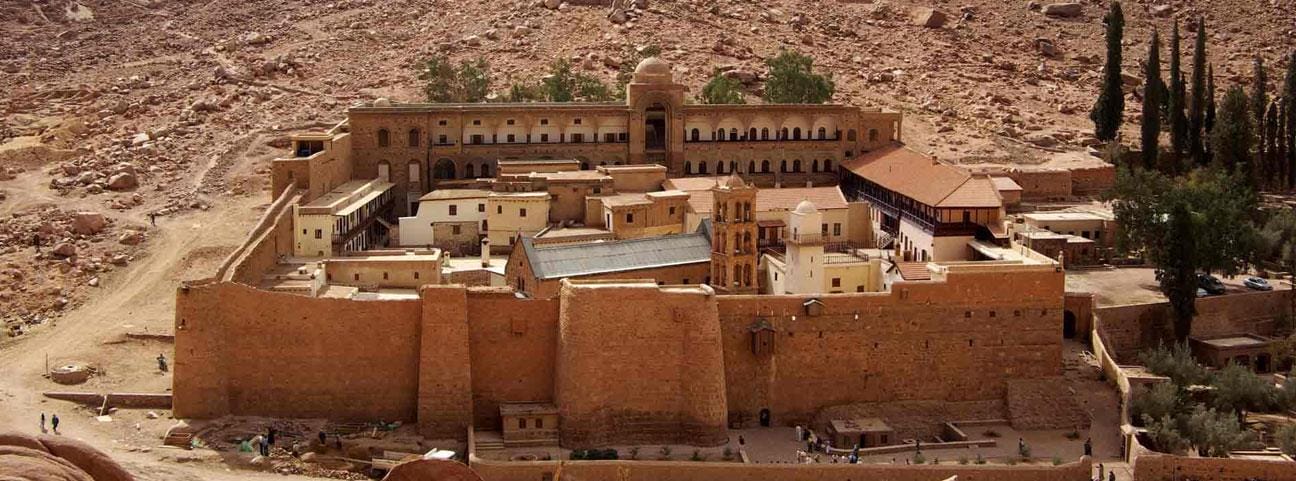
In the Sinai Peninsula, Saint Catherine’s Monastery offers an entirely different but equally profound expression of Egypt’s Christian heritage. Standing at the foot of Mount Sinai, the monastery was founded in the sixth century and is recognised by UNESCO as the oldest Christian monastery still operating continuously in its original function. Its extraordinary collection of early Christian manuscripts, icons and religious treasures, together with its dramatic mountain setting, has made it one of the most important spiritual and cultural landmarks in the region. The surrounding area is sacred to Christianity, Judaism and Islam, giving the site an exceptional interfaith significance.
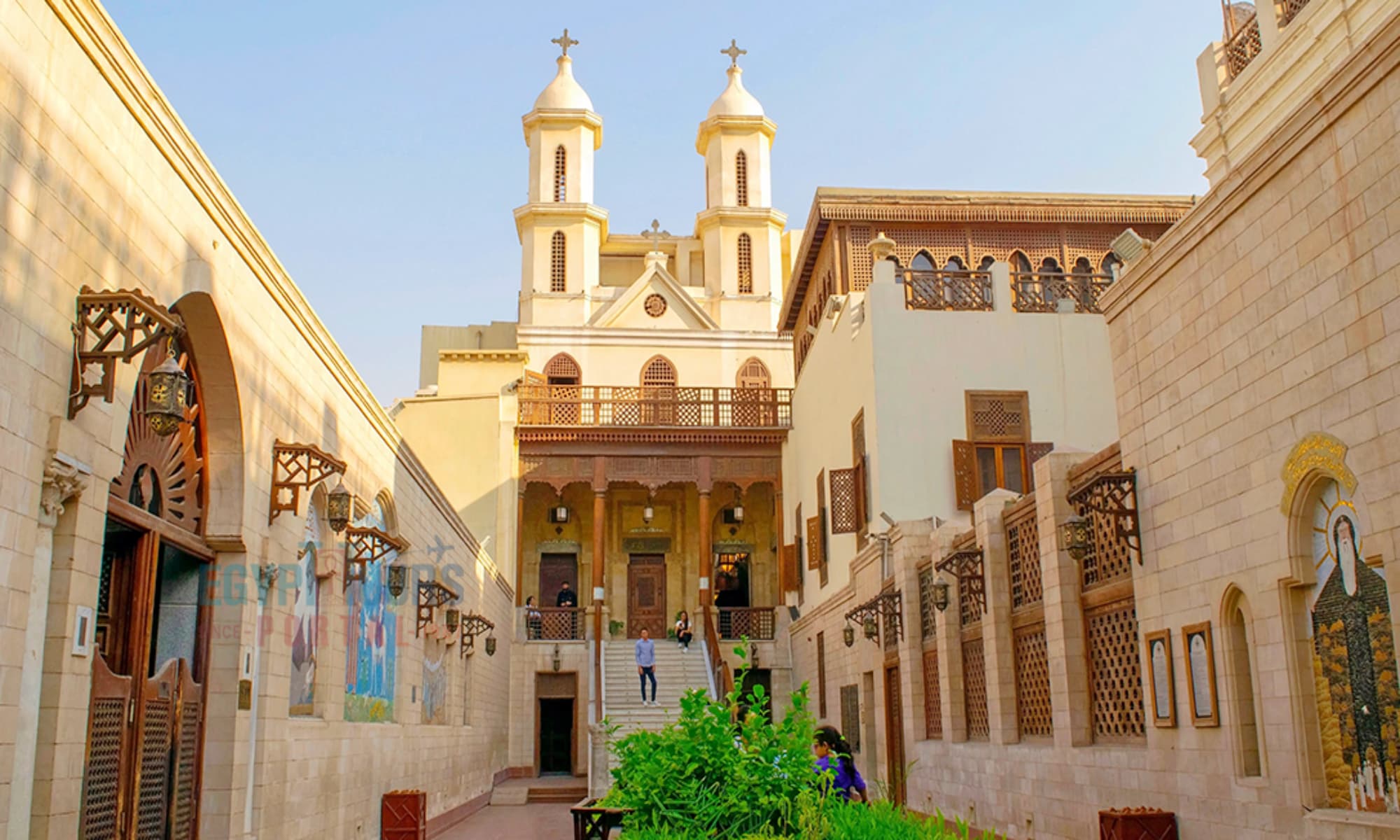
Back in Cairo, the Hanging Church, or Church of the Virgin Mary, is one of the city’s most recognisable Coptic monuments. Located in the historic Coptic quarter, it was built above the towers of the ancient Roman fortress of Babylon, giving rise to its distinctive name and elevated position. The church forms part of the historic Christian landscape of Old Cairo, an area where churches, monasteries and other monuments bear witness to the long history of Christianity in the Egyptian capital.
A more contemporary but equally striking expression of Coptic faith can be found in the Monastery of Saint Simon, also known as the Cave Church, in Cairo’s Mokattam Hills. Built into the rocky landscape, the complex combines the natural setting of the Mokattam mountain with monumental religious spaces and large-scale Christian artworks. The site has become particularly known for its spectacular amphitheatre-like church carved into the mountain and for its strong connection with Cairo’s Coptic community.
Among Egypt’s most remarkable spiritual tourism experiences is the Holy Family Trail, a unique pilgrimage route that retraces the footsteps of the Holy Family across Egypt. Stretching approximately 3,500 kilometers, the trail connects numerous sacred locations associated with their journey.
Some of the most significant stops along the route include Al-Farma in Sinai, traditionally regarded as one of the first places where the Holy Family entered Egypt. The ancient site, located in the northeastern part of the country, was historically an important settlement and religious center on the route connecting Egypt with the Levant.
Tell Basta and Mostorod in the Nile Delta, two locations associated with episodes from the Holy Family’s journey. At Tell Basta, near modern Zagazig, tradition recalls the presence of the Holy Family and the appearance of a spring. Mostorod, near Cairo, is associated with the Church of the Virgin Mary and a traditional spring believed to have provided water for the Holy Family.
Matariya, in present-day Cairo, is traditionally linked to the Holy Family through the famous Sacred Tree, often identified with the Virgin Mary’s Tree. The site has become one of the most recognizable symbols of the Holy Family’s journey in Egypt and remains an important destination for Christian visitors.
Old Cairo, one of the most important historic areas of Christian Egypt, contains several churches and religious sites associated with the Holy Family tradition. Among them are the Hanging Church, the Church of Saints Sergius and Bacchus—traditionally known as Abu Serga—and other ancient Christian monuments located around the remains of the Roman Fortress of Babylon.
Maadi, on the banks of the Nile south of Cairo, is traditionally believed to be the place where the Holy Family crossed the river by boat. The Church of the Virgin Mary stands beside the Nile and preserves a long-standing tradition connected with their departure toward Upper Egypt.
Wadi El Natrun represents one of the most significant spiritual centers along the broader Holy Family route. The area became a major center of Egyptian monasticism from the fourth century onward and is home to historic monasteries that continue the ancient Coptic monastic tradition.
Gabal El Tair in Minya, overlooking the Nile Valley, is associated with another important episode in the traditional journey. The site is home to the Monastery of the Virgin Mary, dramatically positioned on the limestone cliffs above the river, and has long attracted pilgrims and visitors.
Al Muharraq Monastery in Assiut occupies a particularly important place in Coptic tradition. According to the tradition of the Holy Family’s journey, the family remained in this area for an extended period. The monastery, one of the oldest Christian monastic sites in Egypt, is closely associated with the Church of the Virgin Mary and is sometimes referred to in Coptic tradition as the place where the first altar in Egypt was established.
Mount Dronka in Assiut marks one of the southernmost points traditionally associated with the Holy Family’s journey. The Monastery of the Blessed Virgin Mary, built around a cave believed to have sheltered the Holy Family, remains an important pilgrimage destination and offers a striking setting overlooking the Nile Valley.
Recognizing its exceptional religious, cultural, and tourism value, the Egyptian government has placed the Holy Family Trail among its key development priorities. Significant restoration and infrastructure projects have enhanced accessibility to the route, which can now be explored through road journeys and customized Nile cruise itineraries.
Today, tour operators offer a variety of Holy Family Trail experiences, allowing visitors to immerse themselves in a journey that combines faith, history, culture, and breathtaking landscapes. Whether motivated by religious devotion, cultural curiosity, or the search for inner peace, travelers will discover in Egypt a spiritual experience unlike any other—where ancient history and living faith continue to meet.
Egypt’s Coptic heritage is more than a legacy of ancient monuments: it is a living expression of faith, history and spirituality, offering travelers a unique journey where the past and present continue to meet.
Giorgia Lombardo