
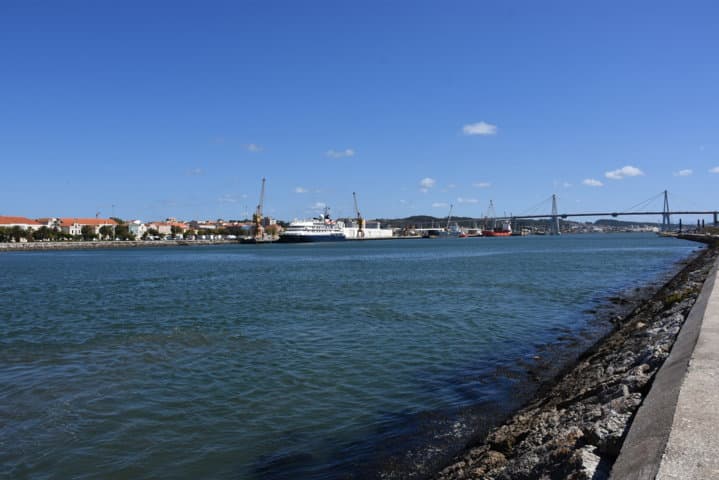
Figueira da Foz is a Portuguese city in the Coimbra District, located in the Coimbra subregion, within the Centro region.
Figueira da Foz is therefore situated on Portugal’s Atlantic coast, at the mouth of the Mondego River, and stretches as far as Cape Mondego.
It is one of Portugal’s leading tourist centres and is home to the oldest casino in the entire Iberian Peninsula and the only one in the Centro region, Casino Figueira, as well as a bullring, a vast expanse of sand considered the widest urban beach in Europe, with leisure and sports facilities, and a lively nightlife. There are also several other places of interest within around ten kilometres of the city.
The Clock Tower and the Forte de Santa Catarina are among the city’s landmarks. Figueira da Foz is also home to the Palácio Sotto-Mayor, a historic building located in a central area of the city. The Parque das Abadias is one of the city’s “green lungs” and an important recreational area, hosting cross-country races and numerous initiatives designed to provide enjoyable experiences for local residents. The park runs through the city from north to south, reaching the Jardim Municipal, which has recently undergone redevelopment.
In terms of military architecture, highlights include the emblematic Forte de Santa Catarina, located at the southern end of Figueira da Foz beach and enhanced by the Water Mirror, as well as the Fortaleza de Buarcos, a defensive wall situated north of the beach.
An important historical landmark, the Pelourinho of Figueira da Foz was “erected in 1782 on a square base consisting of five steps, upon which rises a bulbous pedestal and, above it, an elegant twisted column crowned by a capital bearing, on one of its faces, amid shell-shaped ornaments, the national coat of arms.”
Figueira da Foz is a modern and cosmopolitan city that embraces European trends at various levels, focusing on creating excellent living conditions for both residents and visitors. From sport to events, and from cultural heritage to gastronomy, the Figueira da Foz area preserves unique experiences and stories. Known as the “Queen of Beaches”, it boasts the largest urban beach in Europe. The river and the sea also make Figueira da Foz an ideal destination for competitive and recreational sporting activities at both national and international level.
Recently recognised as a Family Friendly city, Figueira da Foz stands out for its safety and has continued to grow and adapt to the needs of its residents, responding to new lifestyles and habits. A stage for a wide variety of events, the city offers great cultural and social diversity, as well as a broad choice of entertainment for those who enjoy nightlife.
Figueira da Foz Port
The Port of Figueira da Foz once again took centre stage at Seatrade Europe 2025. Its participation aimed to promote the Port of Figueira da Foz as an outstanding destination for receiving small cruise ships, strengthen commercial contacts, consolidate strategic partnerships and showcase the tourism offering of the Centro region, as well as ongoing port projects that will enable the facility to accommodate larger vessels in the future.
In Figueira da Foz, cruise activity focuses on welcoming small- and medium-sized ships. The Port of Figueira da Foz is promoting its potential in the religious, historical and cultural tourism segments, positioning itself as one of the Atlantic gateways to central Portugal.
The Port of Figueira da Foz is strategically located in the Mondego River estuary, at the river’s mouth, with access to a west-facing entrance channel bordered by two converging outer breakwaters. The Port of Figueira da Foz therefore represents an important logistics hub for the country’s Centro region and benefits from excellent road and rail connections. It offers specialised terminals for general cargo and solid and liquid bulk, as well as a marina for leisure craft and the capacity to accommodate small cruise ships. The port also has extensive storage areas and modern logistics services, including projects focused on the energy and digital transition.
Excursions
Passengers disembarking at the Port of Figueira da Foz can take a tour of the city, visiting some of its monuments, or go shopping in the numerous shops available.
One of the must-see attractions is the Figueira da Foz Salt Pans, featuring a route of just over four kilometres on completely flat terrain. The trail also offers the opportunity to discover what remains of the region’s traditional salt-making heritage and observe numerous bird species within the ecosystem, making this another major attraction, particularly for birdwatching enthusiasts.
At the end of the Salt Pans Route, the trail continues towards the Pranto River, the last tributary of the Mondego, which rises in the neighbouring district of Leiria. The route passes along embankments and plots of land from which visitors can admire, among other points of interest, the city of Figueira da Foz, the Edgar Cardoso Bridge, built in 1982, and the Moinho das Doze Pedras, an eighteenth-century tidal mill.
Another option is an excursion to the city of Coimbra, located 55 kilometres from Figueira da Foz. Coimbra is one of Portugal’s oldest cities and has a strong identity linked to education and culture, having historically been recognised as a university city. This reputation is largely due to the presence of the University of Coimbra, one of the oldest universities in Europe and one of the most important in Portugal. Founded in 1290 as the Estudo Geral Português on the initiative of King Denis, the university was initially established in Lisbon. After alternating between the two cities, it was permanently transferred to Coimbra in 1537, on the banks of the Mondego River.
In Coimbra, visitors can also take a walk through the historic city centre, where they can admire buildings dating from the sixteenth to the eighteenth centuries, including the Paço das Escolas and the Mosteiro de Santa Cruz.
Wine enthusiasts can instead head to the Bairrada wine region and visit the Museu Subterrâneo Aliança, a unique venue combining a winery and an art museum. Here, visitors can explore a network of underground tunnels housing an extraordinary collection of African and Portuguese art, as well as cellars filled with large oak barrels containing wines and spirits undergoing maturation.
Finally, more religiously minded visitors can travel to the Sanctuary of Fátima, located approximately 88 kilometres from Figueira da Foz. The Sanctuary of Fátima, formally designated by the Catholic Church as the Sanctuary of Our Lady of the Rosary of Fátima, is a Marian shrine dedicated to Our Lady of Fátima. It is located in Cova da Iria, in the city of Fátima, within the municipality of Ourém, Portugal.
Rui Minas