
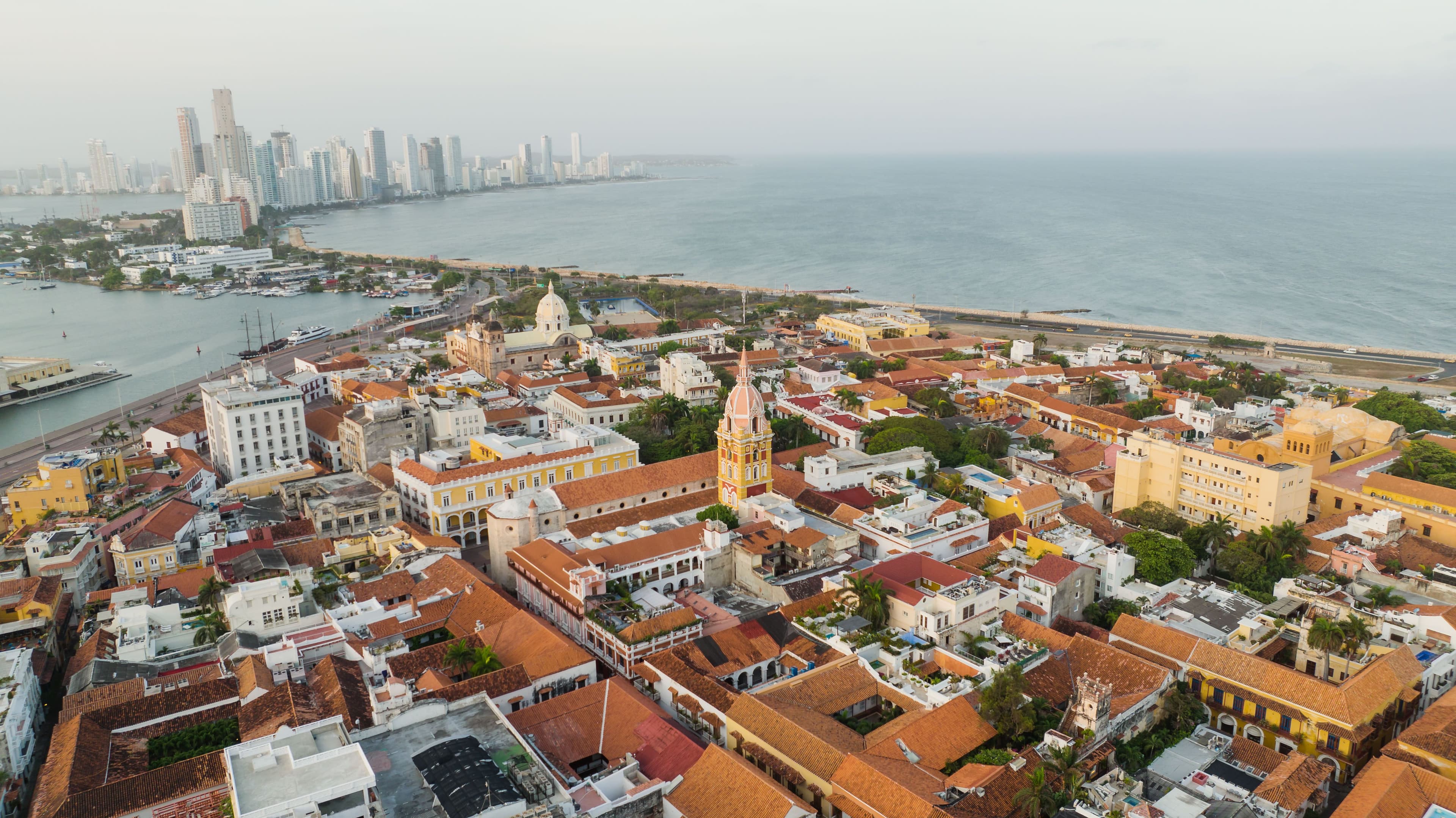
Among colonial walls painted in vivid colors, fortresses that have withstood pirates and sieges, and a street life that never seems to stop, this Colombian Caribbean city remains one of the most intense, layered and complete ports of call in all of South America.
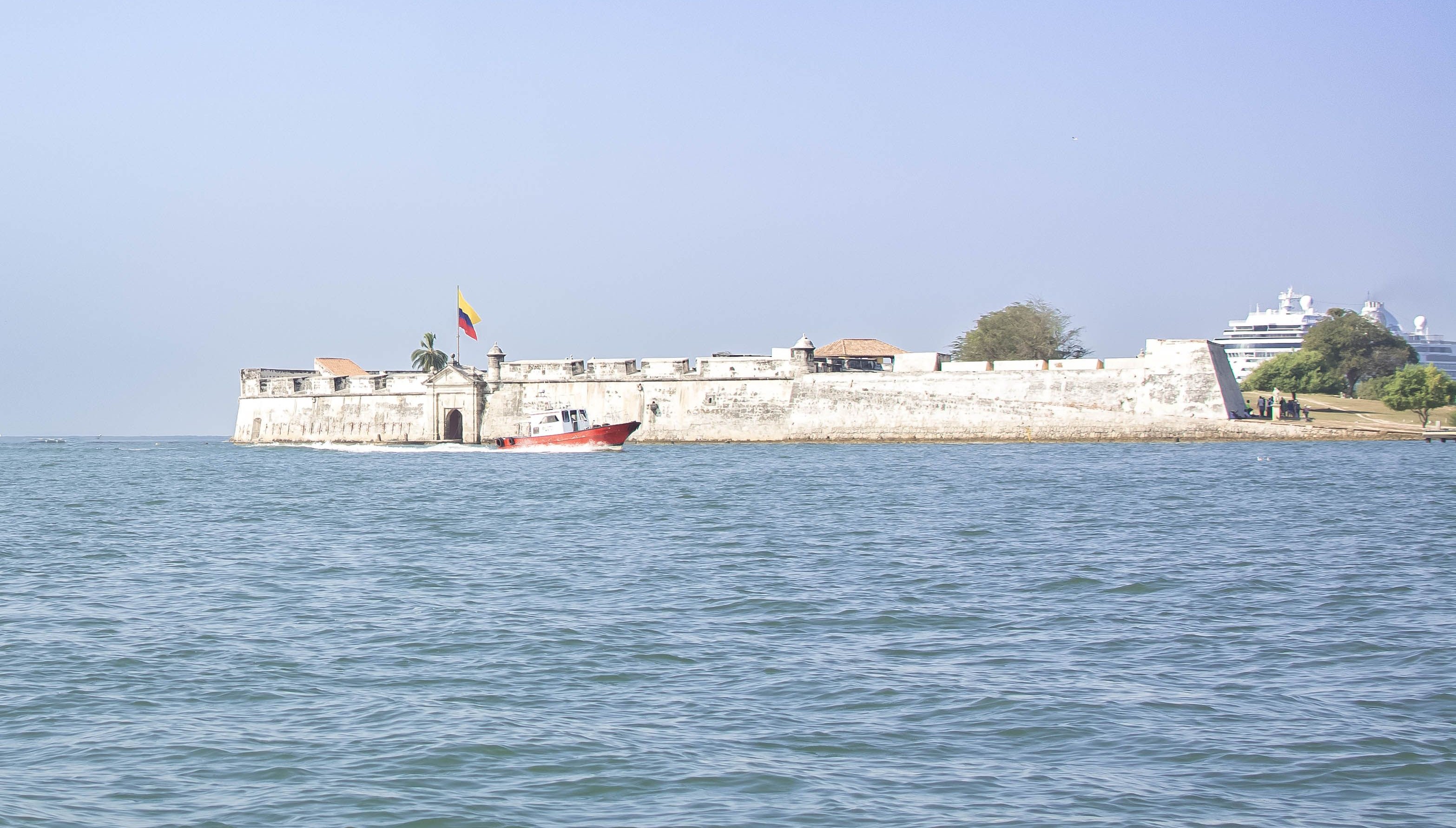
Cruise ships calling at Cartagena enter one of the best-protected bays in the Caribbean Sea, a natural lagoon that the first Spanish colonists identified as early as 1533 as an ideal strategic point for collecting the gold and silver plundered from the Americas before shipping it to the motherland. It was precisely this role as a hub for colonial treasure that made Cartagena de Indias one of the most coveted — and most heavily attacked — ports in the entire Spanish Empire: over the course of two and a half centuries, the city endured sieges and raids by privateers and pirates of every flag, including the famous Francis Drake, who sacked it in 1586 after weeks of siege, obtaining a colossal ransom in exchange for sparing it from total destruction, and Baron John Hawkins, another recurring name in the chronicles of attempts to conquer the city.
It was precisely in response to these recurring threats that the Spanish Crown invested for more than two centuries in the construction of one of the most imposing defensive systems ever built in the Americas: eleven kilometers of walls that still surround almost the entire historic center today and which, together with the fortified complex of San Felipe de Barajas and the San Lázaro Archaeological Park, earned the city a place on the UNESCO World Heritage List in 1984, with the designation recognizing Cartagena as one of the best-preserved examples of Spanish colonial military architecture in the world. Walking through Cartagena today therefore means literally moving inside one of the continent’s greatest works of colonial military engineering, a detail worth keeping in mind in order to fully appreciate what you are passing through as you walk along its streets.
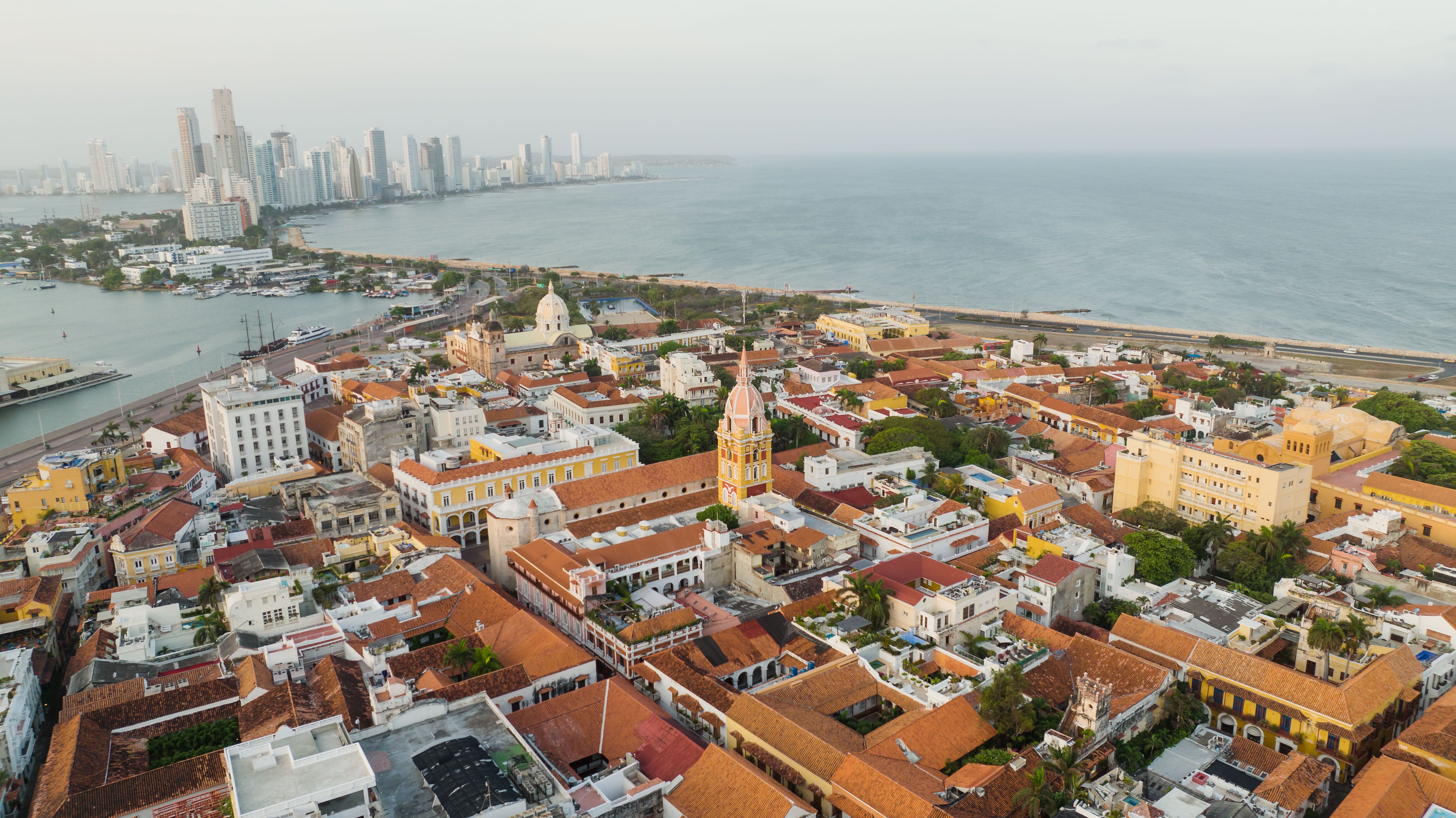
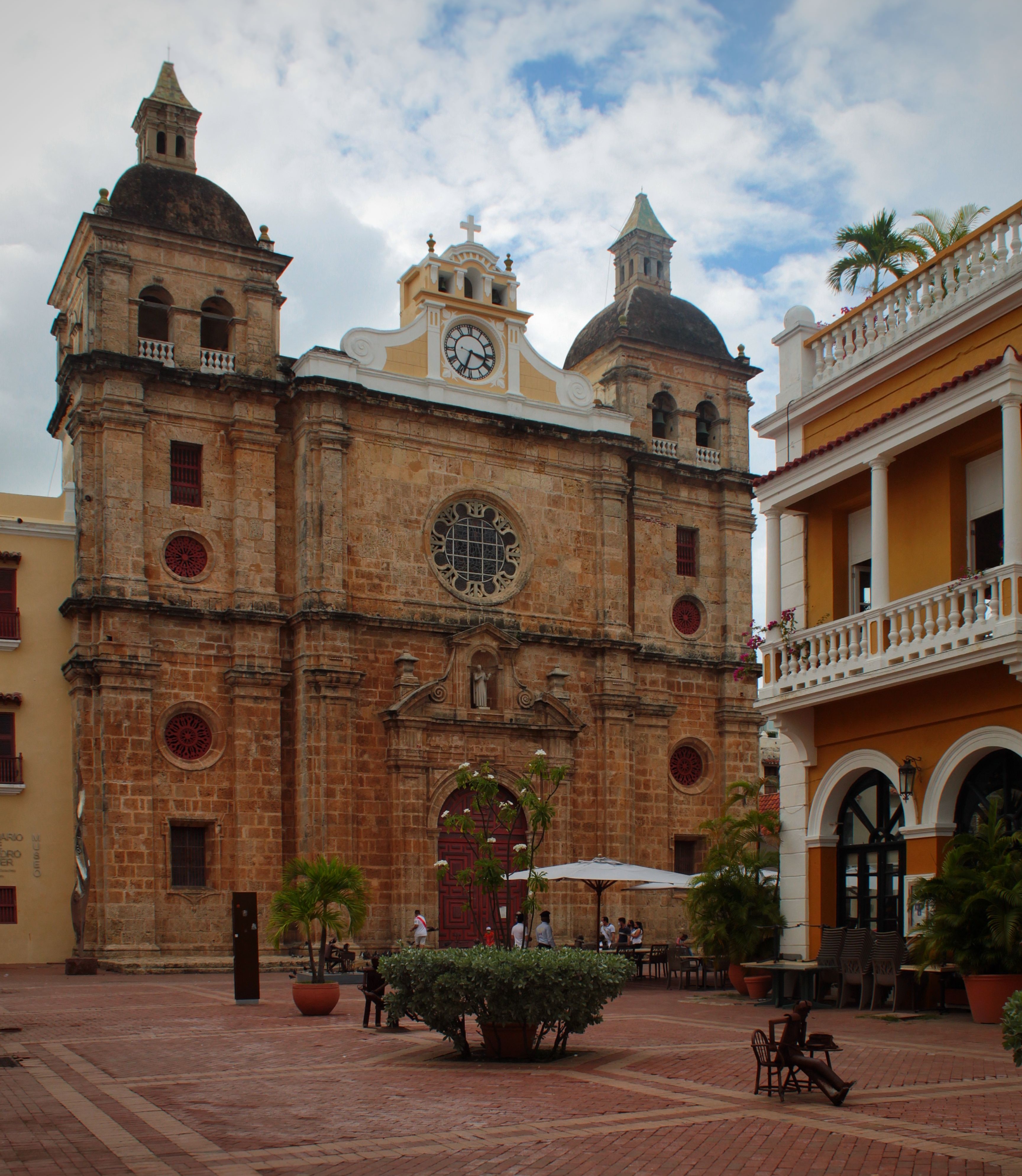
The history of Cartagena, however, does not end with its military and colonial dimension. The city was also one of the main entry ports for the African slave trade into the Spanish Americas, a painful chapter that left a profound cultural imprint on the music, cuisine, syncretic religious traditions and demographic composition of the entire Colombian Caribbean region. It was in Cartagena that San Pedro Claver worked for decades, the Spanish Jesuit later canonized for his commitment to providing spiritual and material assistance to newly arrived slaves. His church and convent, now converted into a museum, remain an important stop for anyone wishing to understand this lesser-known but fundamental aspect of the city’s history. It was also in Cartagena that, in 1811, one of the first declarations of independence from Spain in the whole of the South American continent was proclaimed, a pioneering act that came at a heavy cost to the city: the subsequent Spanish reconquest of 1815, led by General Pablo Morillo, imposed a brutal siege that decimated the population through hunger and disease before definitive independence was achieved a few years later under the leadership of Simón Bolívar. It was no coincidence that Bolívar chose Cartagena as one of the symbolic cities of his campaign for liberation, to such an extent that the city is still remembered today by the nickname “Heroic City.”
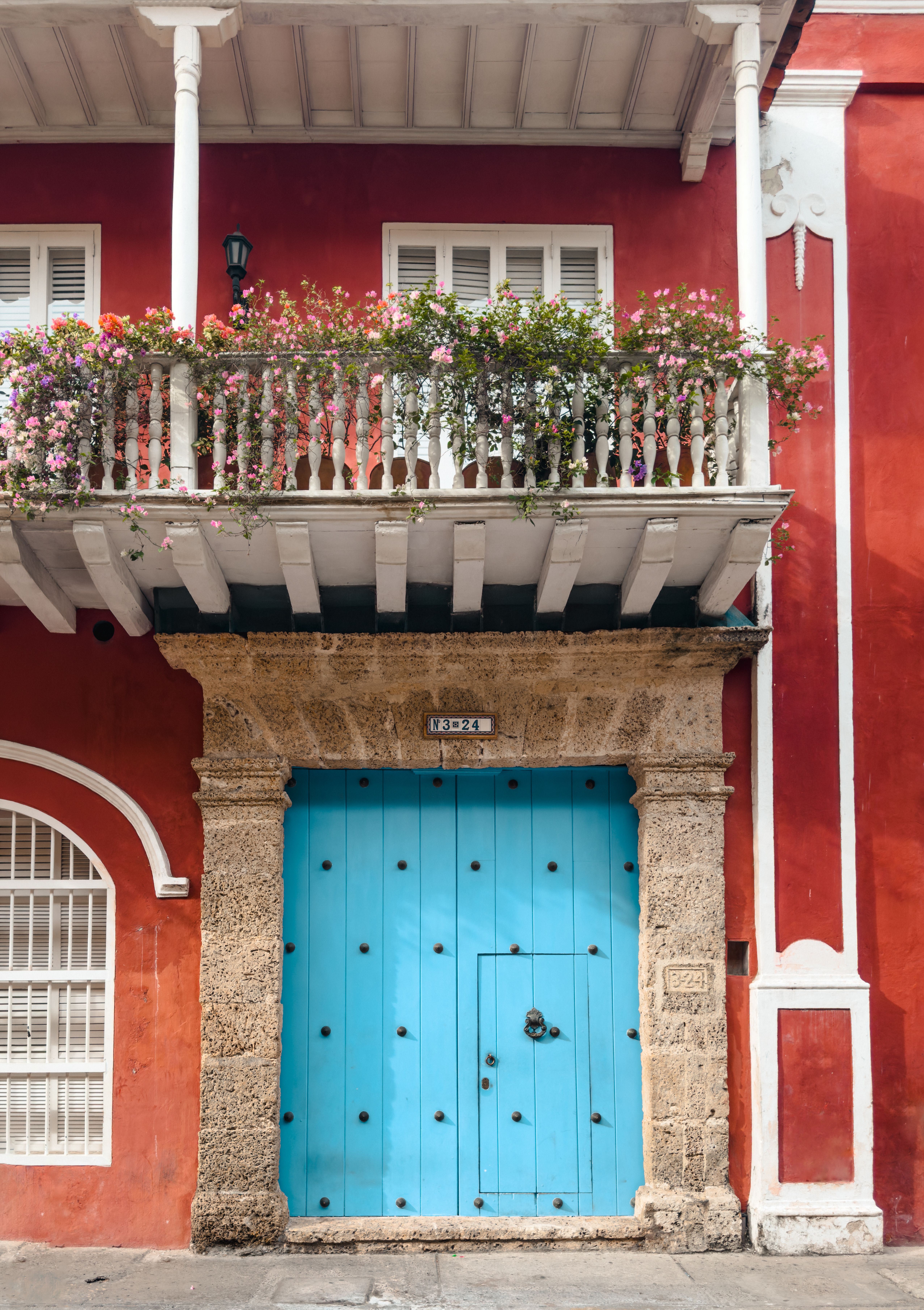
Cruise ships generally dock at the cruise terminal located just outside the historic center, in the Manga area, an early twentieth-century residential neighborhood characterized by eclectic villas featuring Neoclassical, Moorish and Art Nouveau influences, built by wealthy bourgeois families who prospered through port commerce. From there, the walled district can be reached in just a few minutes by taxi or organized shuttle; some itineraries instead provide for docking closer to the Getsemaní neighborhood, which is equally convenient for beginning the exploration on foot. After passing through one of the historic gates in the walls — without a doubt, the most scenic is the Puerta del Reloj, the main entrance crowned by a clock tower that leads directly into Plaza de los Coches, once a slave market and today a lively arcaded square surrounded by bars and restaurants — you find yourself immersed in a historic center that surprises with its density of color: façades painted in shades of ochre, turquoise, coral and mustard yellow line narrow streets shaded by carved wooden balconies covered with lush bougainvillea, in an architectural style that blends Andalusian, Moorish and Caribbean influences in a completely original way, with solid wooden doors decorated with bronze knockers whose shape and size once indicated the social status of the family living there.
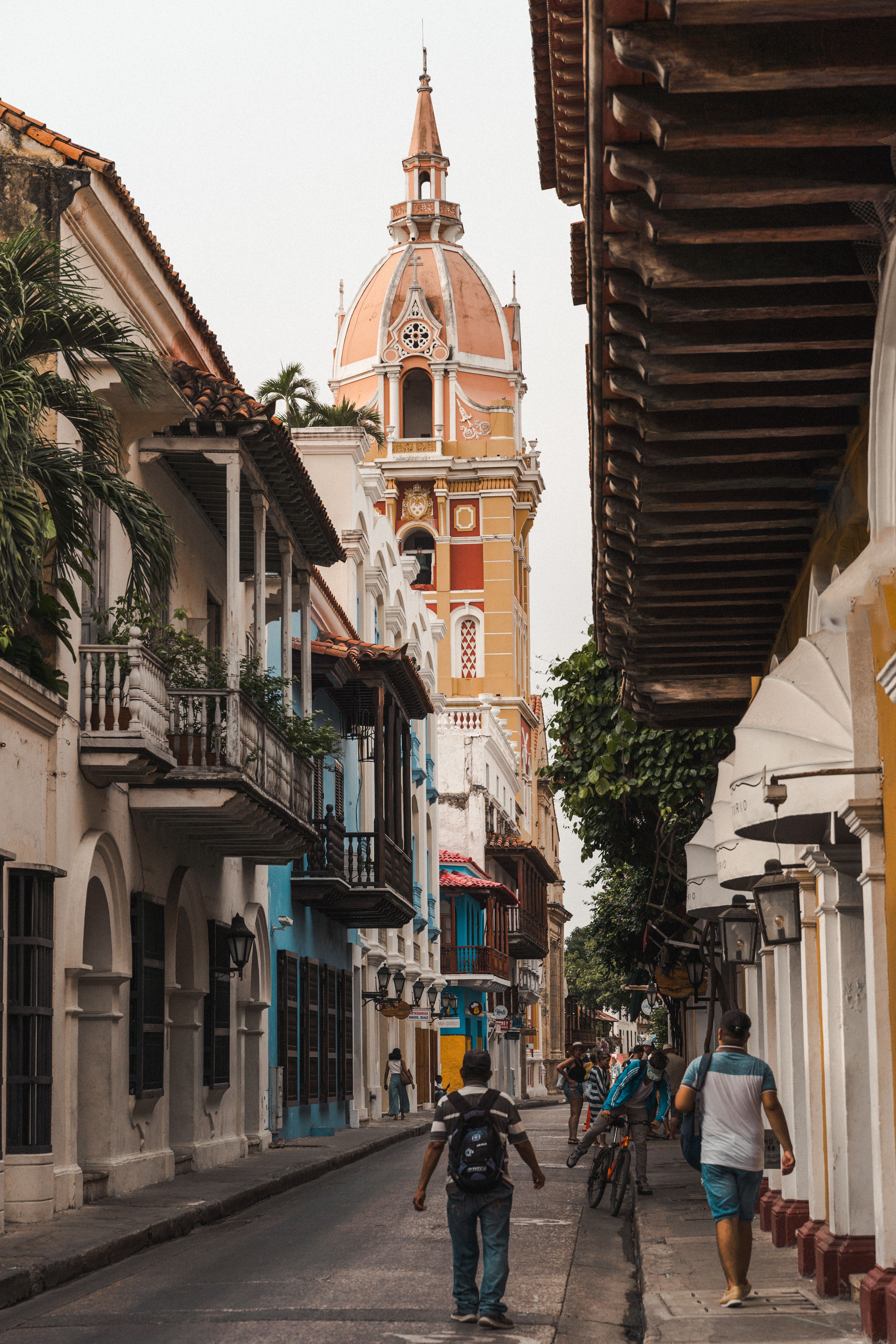
Plaza de Bolívar, the civic heart of the old city, contains a statue of the Libertador at its center, surrounded by mango trees that provide precious shade during the hottest hours. It is flanked by the Palace of the Inquisition, a building with a Baroque façade considered one of the finest examples of South American colonial civil architecture, which today houses a museum devoted to one of the darkest chapters of colonial history, with documents, original instruments of torture and reconstructions of trials held by the Tribunal of the Holy Office during the colonial period, when Cartagena was home to one of only three Inquisition tribunals established in the Spanish Americas. Not far away, the Cathedral of Santa Catalina de Alejandría, begun in 1575 and repeatedly modified after the damage suffered during Drake’s attack, dominates one of the city’s most photographed corners with its sober mass, while its interior alternates Baroque elements with a restrained nineteenth-century Neoclassical restoration.
Walking toward the San Diego neighborhood, historically inhabited by artisans and small merchants during the colonial period, you come across the Convent and Church of Santo Domingo, the oldest religious building in the city. Its slightly leaning tower — according to popular tradition because of a construction error, according to others because of ground subsidence — has become one of Cartagena’s unofficial symbols. In the square in front, lively until late in the evening with street musicians, street performers and fruit vendors, you will also find the famous bronze sculpture “Gorda Gertrudis” by Colombian artist Fernando Botero, one of his characteristic voluptuous female figures that has become a regular photographic stop for visitors, partly thanks to a small local tradition according to which touching certain parts of the statue brings good luck. The Zenú Gold Museum, run by the Bank of the Republic and offering free admission, deserves a stop for anyone wishing to understand the region’s pre-Columbian period, with a collection of gold artifacts crafted by the indigenous Zenú people even before the arrival of the Spanish, testimony to a sophisticated gold-working civilization that is often overshadowed, in the more widespread historical narrative, by the subsequent colonial epic. The Palace of Naples and numerous other colonial buildings converted into boutique hotels tell, through their interior courtyards cooled by fountains and tropical plants, how the wealthier families of the period lived, and many of these hotels allow even non-guests to discreetly glimpse these spaces with a drink at the bar.
The Getsemaní neighborhood deserves a separate discussion because it represents Cartagena’s most authentic and rapidly changing soul today. Once a working-class outskirts of the city, inhabited by artisans, sailors and small merchants deliberately kept outside the walls of the aristocratic district, Getsemaní has become over the past fifteen years one of the most photographed and vibrant districts in all of Colombia, thanks to colorful street art covering entire façades with political, social and purely decorative murals, often created by local and international artists invited to festivals specifically dedicated to urban art. Plaza de la Trinidad, the beating heart of the neighborhood, comes alive every evening with live music, street-food vendors and a mix of long-time residents and visitors who mingle in an atmosphere that is decidedly less formal than that of the walled historic center. Getsemaní also has a continuously growing food and nightlife scene, with trendy small restaurants alongside traditional stalls that still sell the same street dishes they have been serving for generations, a contrast that makes the neighborhood particularly interesting to explore on foot without following an overly rigid itinerary.
The most iconic experience Cartagena offers its visitors undoubtedly remains a visit to Castillo San Felipe de Barajas, the largest fortress built by the Spanish in the Americas. Construction began in 1536 and the fortress was expanded over the following two centuries under the direction of military engineer Antonio de Arévalo, eventually becoming a masterpiece of military engineering capable of withstanding repeated sieges, including the 1741 attack led by British Admiral Edward Vernon with a fleet of more than 180 ships and over 20,000 men, against a much smaller Spanish garrison commanded by Blas de Lezo. Despite having already lost an eye, a leg and the use of an arm in previous battles, Lezo managed to repel the siege in what is remembered in Colombia as one of the most significant defensive victories in the history of Spanish colonial rule on the continent, so much so that he is still commemorated today with a statue dedicated to Blas de Lezo at the foot of the fortress. The fortress extends across multiple levels connected by an intricate system of underground galleries carved into the rock, designed to allow defenders to move rapidly without being exposed to enemy fire and to amplify any sound coming from outside, an acoustic device that is still remarkable to experience today when walking through the darkest tunnels with the help of a flashlight, often available for rent at the entrance or usable through a smartphone. From the top of the fortress, the view stretches across the entire old city, the port and the bay, offering probably the best overall panorama of Cartagena, comparable in scenic importance to the climb along the walls of Dubrovnik or Kotor, but here enriched by an even more dramatic and less touristically “polished” historical setting.
For those who have a few additional hours beyond simply visiting the historic center, Cartagena offers several excursions worth considering carefully depending on the time available and physical condition. A short boat transfer takes you to the Rosario Islands, an archipelago of coral islets about 35–45 minutes by boat from the port, with turquoise waters ideal for snorkeling and small beaches where you can spend a few hours away from the city’s bustle. The archipelago is part of a protected natural park, and some of the islands host resorts and beach clubs equipped for day visits, while others remain wilder and accessible only through specific organized excursions. It is, however, an excursion that requires careful consideration of return times relative to the ship’s departure, given the significant travel involved, and it is generally not recommended for those on a short port call. Those who prefer to stay closer to the center can instead consider a visit to Convento de la Popa, perched on the highest hill in the city and reachable by taxi, from which there is another remarkable panoramic view of the city and bay, along with a small religious museum attached to the still-active Franciscan convent. An evening walk along Baluarte de Santo Domingo, one of the bastions of the walls now converted into a row of bars and restaurants overlooking the Caribbean sunset, is instead an experience particularly beloved by Cartageneros themselves in the evening hours, and a good way for visitors to end their day ashore with a cocktail in hand while watching the sun sink over the ocean. Those with an entire day available thanks to an extended port call can also consider an excursion to Volcán de Totumo, a small mud volcano about an hour and a half from Cartagena, where it is possible to immerse yourself in a natural pool of warm mud with purported therapeutic properties, a decidedly unusual experience that is widely photographed on social media, although it requires a significant time commitment compared with the average duration of a port call.
On the culinary front, Cartagena is one of the richest destinations along the entire South American Caribbean coast, with a cuisine that combines Indigenous, African and European traditions in an extremely varied and layered repertoire. Arepas de huevo, small fried corn cakes with a whole egg cooked inside, are among the region’s most iconic street foods and can be found virtually on every corner of the old city and Getsemaní, sold from street carts often operated by the same family for generations. Equally widespread are Colombian empanadas, filled with meat, potatoes and spices, generally served with spicy ají sauce prepared according to homemade recipes that vary from vendor to vendor. Those looking for a more substantial meal should opt for pescado frito con patacones — green plantains that are flattened and fried twice until crisp — a dish that perfectly sums up the Caribbean soul of the local cuisine, often accompanied by coconut rice (arroz con coco), another distinctive element of Colombian coastal cuisine that clearly differentiates it from the Andean cuisine of the country’s interior, where rice is traditionally prepared more simply. Colombian ceviche, generally sweeter and less spicy than Peruvian versions and often enhanced with tomato sauce and orange juice in addition to lime, is worth trying, as is sancocho, a thick broth made with fish, chicken or mixed meats, root vegetables such as yuca and ñame, and other vegetables. Colombians consider it almost therapeutic and traditionally prepare it on weekends for family gatherings.
As for fruit, Cartagena’s markets and street vendors offer an almost bewildering variety of tropical fruits that are little known outside South America — guanábana, lulo, mamoncillo, níspero and zapote — often served as fresh juices (jugos) prepared to order and drunk while walking around, an inexpensive and refreshing way to cope with the city’s humid heat. The famous “palenqueras,” the fruit vendors who walk through the streets of the old city carrying enormous trays of fresh fruit balanced on their heads and dressed in brightly colored traditional clothing, are one of Cartagena’s most iconic and photographed images. They are descendants of the inhabitants of San Basilio de Palenque, the first settlement of freed slaves in the Americas, and their presence in the streets is both a tourist attraction and an important living testimony to the region’s Afro-Colombian history — it is good manners to ask permission before photographing them, and it is customary to leave a small tip in return. Finally, in the numerous cafés and bars of the historic center, there is no shortage of opportunities to taste Colombian coffee in its most authentic form, far removed from internationalized versions, perhaps accompanied by a glass of aguardiente, the typical Colombian anise-flavored spirit often served as a digestif after dinner, or by a Club Colombia beer, the local beer that has become in recent years a small symbol of national pride within the South American brewing scene.
From a practical standpoint, it is worth paying close attention to the climate: Cartagena lies in a tropical climate zone with high temperatures year-round, generally ranging between 27 and 32 degrees Celsius, and very high humidity that significantly increases the perceived heat. These conditions make walking during the central hours of the day particularly demanding, especially along the walls exposed to the sun or during a visit to Castillo San Felipe, which offers very little shade along the route. It is strongly recommended to schedule the most strenuous activities in the early morning, wear light-colored, lightweight and breathable clothing, always carry enough water and apply adequate sunscreen at regular intervals. Many European visitors underestimate the intensity of the Caribbean climate compared with the Mediterranean climate, with unpleasant consequences in terms of exhaustion and dehydration if they are not properly anticipated. The rainy season, generally concentrated between May and November, brings short but intense downpours in the late afternoon, which rarely disrupt an entire day but are worth keeping in mind when planning by carrying a light umbrella or a foldable poncho. The streets of the historic center are largely paved with uneven stones and have narrow sidewalks, often occupied by street vendors and restaurant tables, so comfortable footwear and a certain amount of patience when moving through crowds are just as important as elsewhere.
The official currency is the Colombian peso, and although credit cards are accepted at more established restaurants and hotels, it is always useful to carry some cash for street purchases, taxis and small daily expenses. The exchange rate is generally better handled through a bank or ATM withdrawal rather than at informal street exchange booths, which are more expensive and less reliable, and it is good practice to always check the change you receive, given the widespread practice of rounding prices in ways that are unfavorable to tourists. Spanish is the official language and, although English is widely spoken among guides and hotel staff in the more tourist-oriented areas, knowing a few basic phrases in Spanish is very useful outside the most heavily traveled tourist circuit and is generally greatly appreciated by locals, who tend to be warm and welcoming toward anyone making even a small linguistic effort. As in many South American destinations, ordinary caution is advisable regarding valuables that are prominently displayed, particularly in less central areas or during evening travel outside the main well-lit and busy routes. It is generally preferable to use official taxis or transportation apps rather than relying on unidentified vehicles. The historic center and Getsemaní remain, during daylight hours and along the main tourist routes, generally peaceful areas with a visible tourist police presence; the officers are easy to recognize and available to provide directions. As for bargaining, which is common among street vendors and in craft markets, it is considered normal and even almost expected, provided it is done politely and without excessive insistence.
Finally, for those with limited mobility, it should be noted that the historic center has sidewalks that are often narrow and uneven, with steps that are not always clearly marked and polished stone surfaces that can become slippery. Access to Castillo San Felipe requires navigating ramps and stone surfaces that are not always easy to negotiate, an aspect that should be carefully considered when planning a day ashore, perhaps favoring a visit to the walled historic center alone, which is generally flatter and easier to navigate, rather than the fortress. For those wishing to take home an authentic memento of their port call, the craft markets of the old city offer locally traditional gold and silver filigree pieces, handwoven bags and hats made using traditional techniques from the Caribbean region, as well as high-quality Colombian coffee beans — considerably more genuine souvenirs than the typical tourist-market trinkets.
Gabriele Bassi