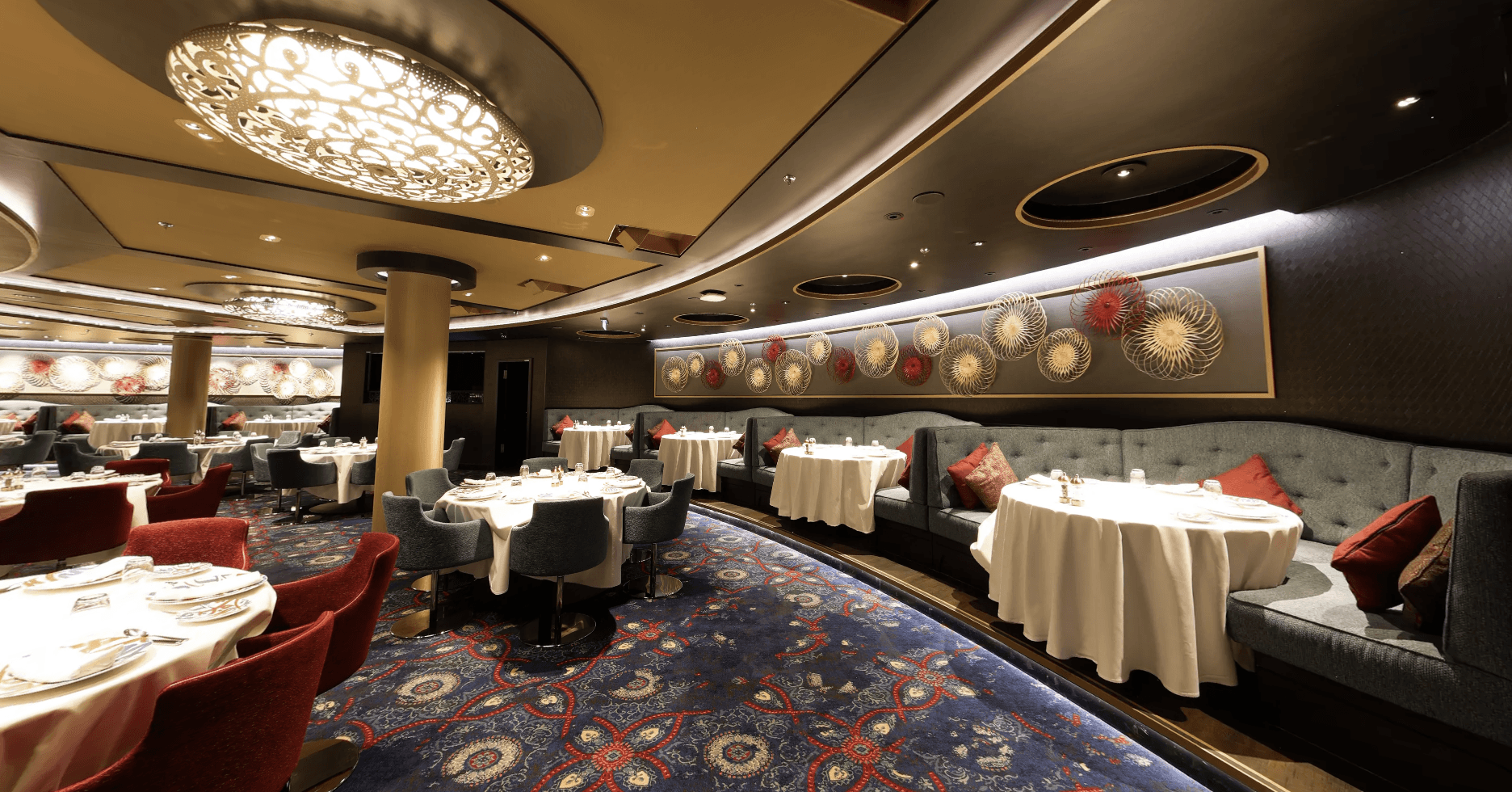
Among the many specialty restaurants aboard AROYA Cruises, Layalina is arguably the venue that best captures the cruise line's ambition to showcase the culture, traditions, and hospitality of the Arab world.
More than simply a restaurant serving Lebanese cuisine, Layalina is a carefully choreographed experience where gastronomy, music, performance, and design come together to create an evening unlike anything typically found aboard a cruise ship. While most cruise lines focus on internationally recognizable dining concepts—steakhouses, Italian trattorias, seafood restaurants, or Asian fusion venues—AROYA has chosen to celebrate its own regional identity, inviting guests to discover one of the Middle East's richest culinary traditions in an atmosphere that is both elegant and immersive.
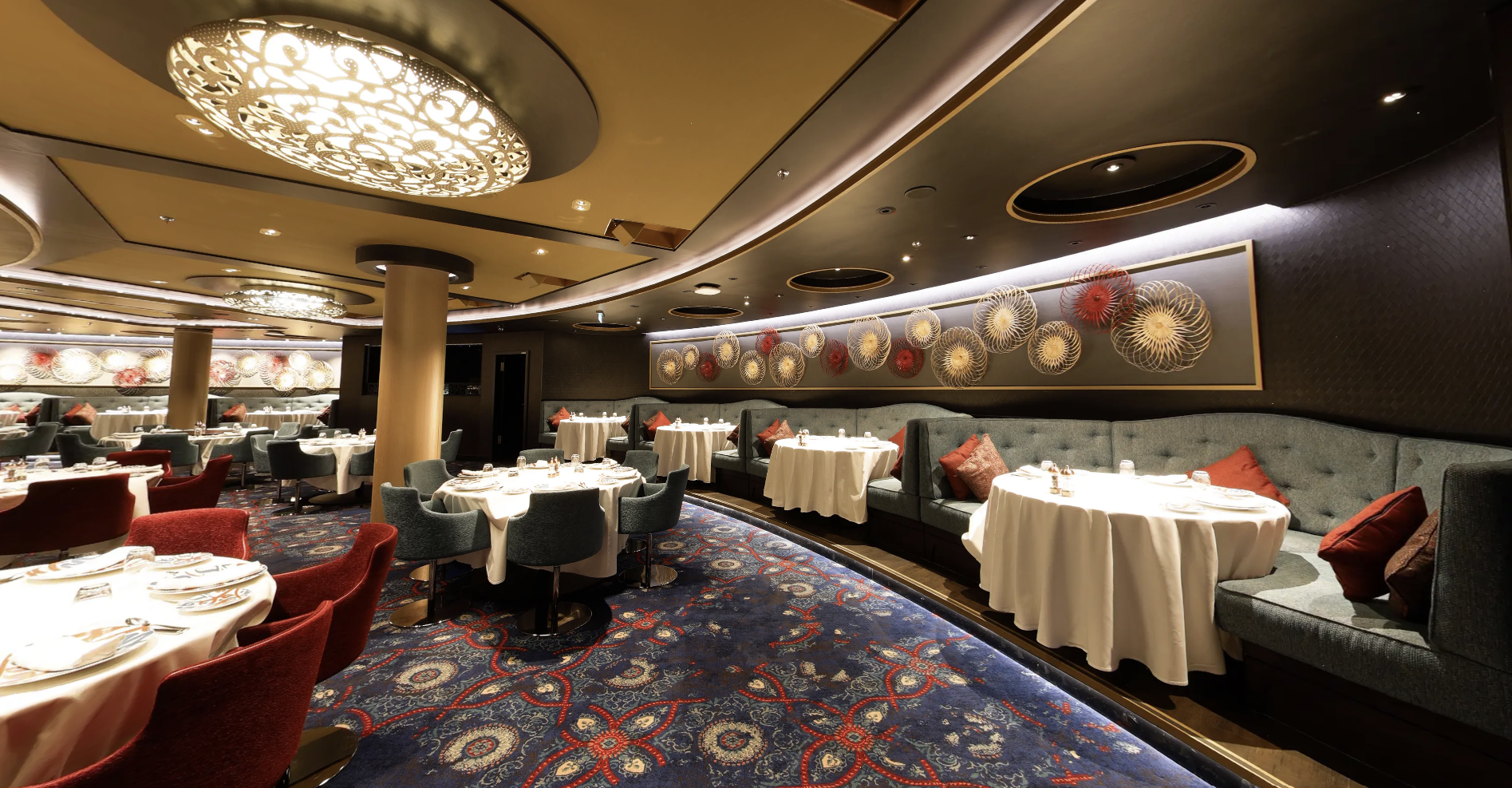
From the moment guests enter the venue, it becomes clear that Layalina has been designed to tell a story. The restaurant combines contemporary luxury with unmistakable Middle Eastern influences. Rich colors, decorative Arabic motifs, geometric artwork, brass accents, and warm ambient lighting create an environment that feels sophisticated without becoming overly formal. Comfortable banquette seating alternates with spacious round tables dressed in crisp white linens, while custom-designed plates decorated with Arabic calligraphy reinforce the restaurant's cultural identity. Every detail, from the decorative lanterns placed on each table to the subtle lighting that changes throughout the evening, contributes to an atmosphere that is refined, welcoming, and distinctly different from the typical cruise ship dining room.
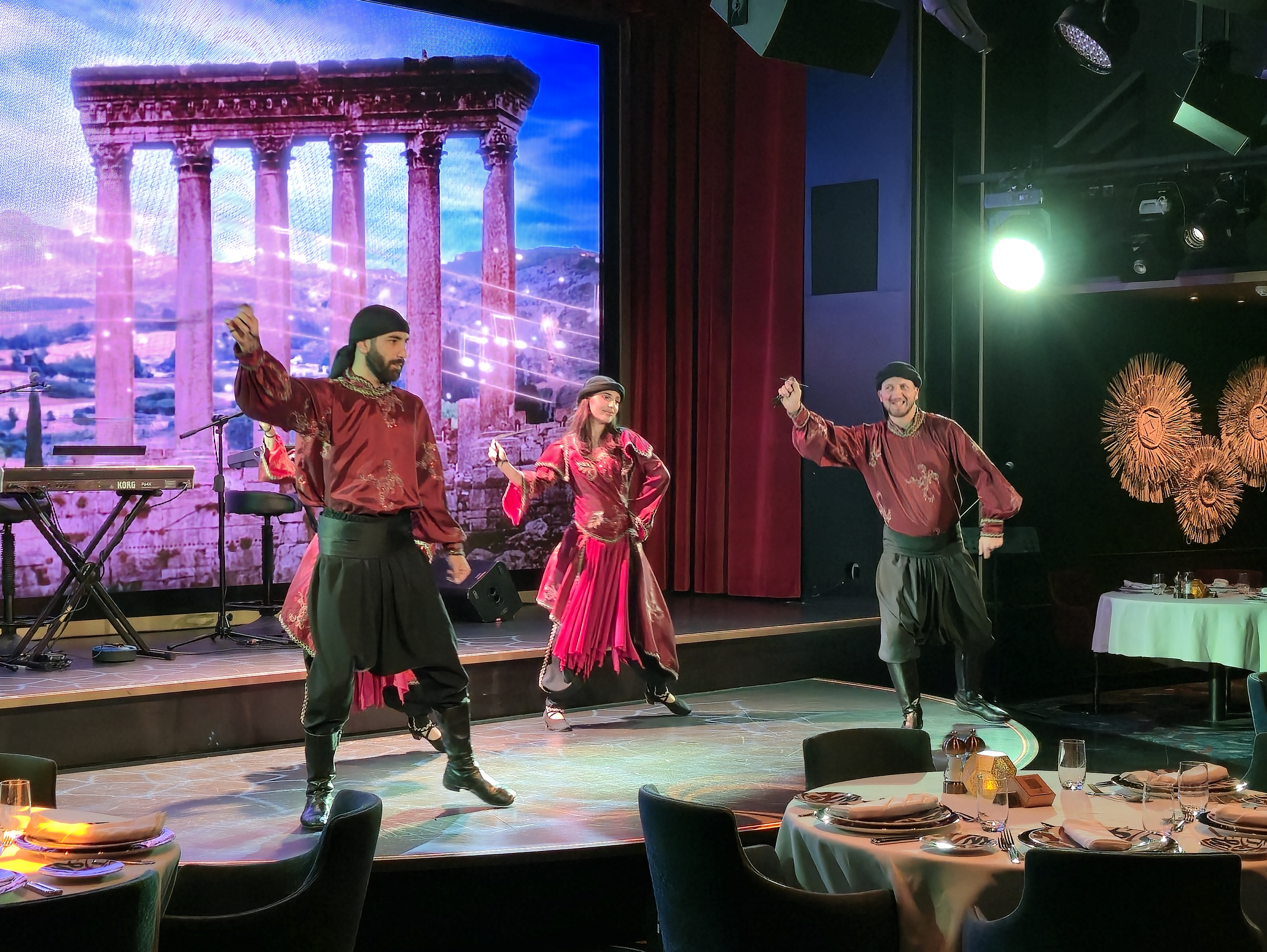
The heart of Layalina is its impressive central stage, immediately revealing that this is not intended to be just another specialty restaurant. The venue has been conceived as a true dinner theater, where food and entertainment enjoy equal importance. Throughout the evening, diners are treated to a carefully choreographed live production featuring musicians, singers, and dancers performing traditional and contemporary Middle Eastern music. Large LED screens transform continuously, displaying spectacular scenery inspired by Lebanon and the wider Arab world, from ancient Roman ruins and mountain landscapes to vibrant decorative patterns that reinforce the changing mood of each performance.
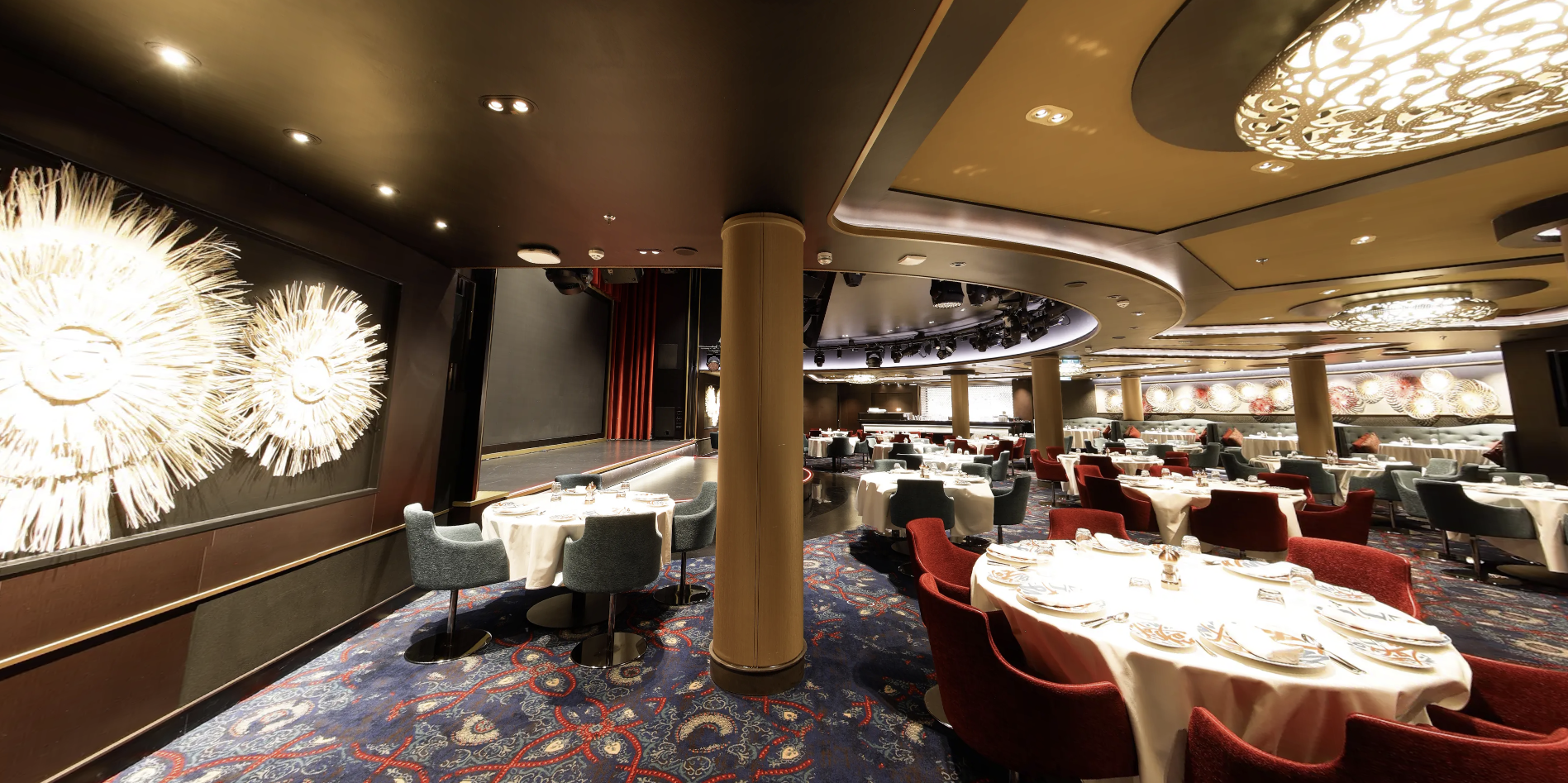
What makes the entertainment particularly successful is how naturally it integrates into the dining experience. Rather than interrupting service, the performances are thoughtfully synchronized with the arrival of each course. Guests have time to enjoy their appetizers before the first performance begins, allowing the evening to build gradually. As the meal progresses, dancers dressed in traditional costumes perform energetic choreographies inspired by Levantine folklore, accompanied by live musicians whose performances add authenticity and warmth to the atmosphere. At certain moments the lights dim, the stage becomes the focal point of the room, and the restaurant transforms entirely into a live performance venue before seamlessly returning guests' attention to their tables. This rhythm gives the dinner a sense of progression and creates an experience that feels far more immersive than a conventional restaurant.
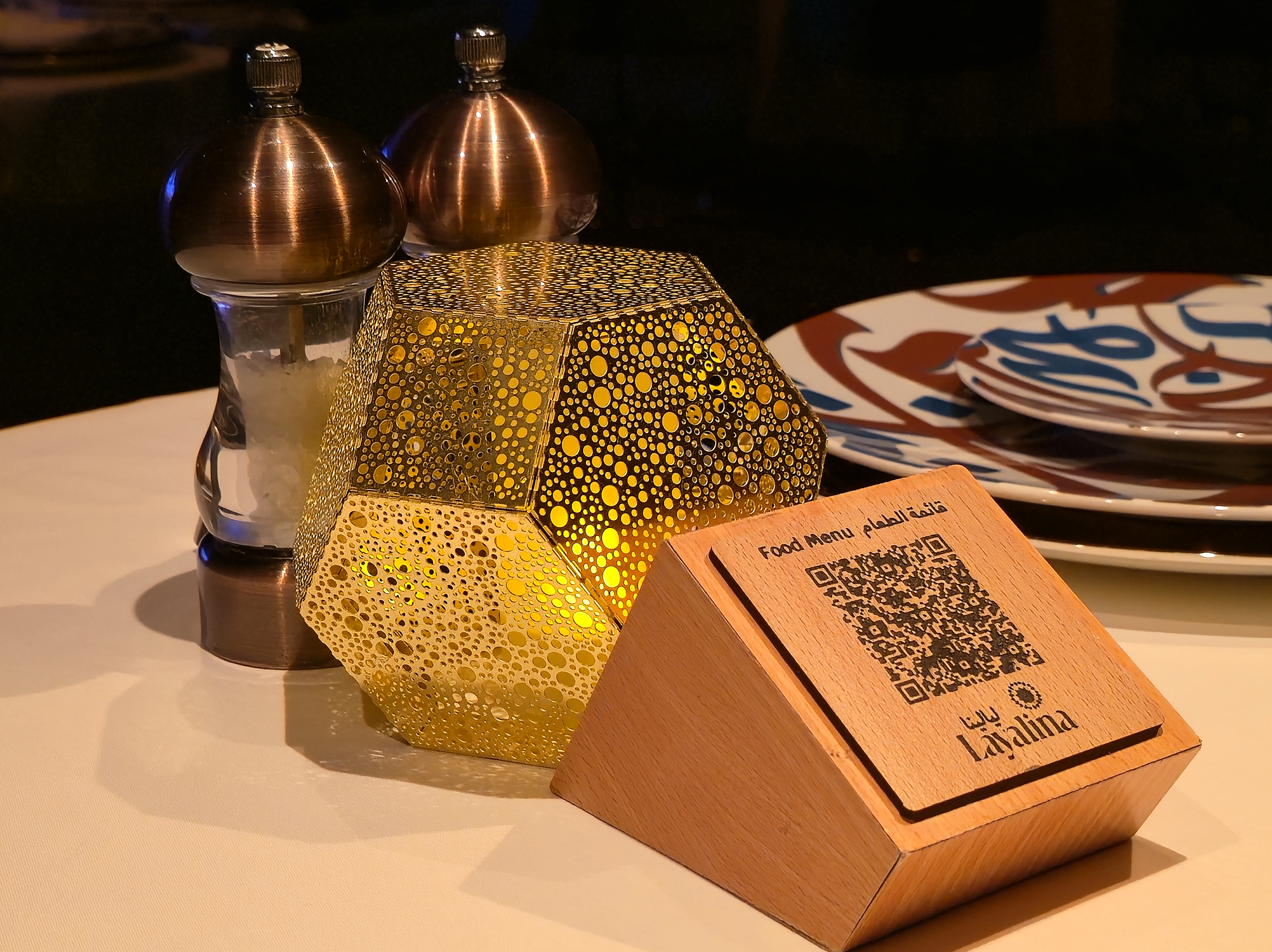
Unlike many cruise ship dinner shows, however, Layalina never allows the entertainment to overshadow the cuisine. Instead, both elements complement one another. The music provides an elegant soundtrack to the meal, while the performances celebrate the social nature of Middle Eastern hospitality, where food, family, conversation, and celebration have always been deeply connected. The result is an atmosphere that encourages guests not simply to dine, but to spend an entire evening immersed in Arab culture.
The culinary journey begins exactly as one would expect in an authentic Lebanese restaurant—with an abundant selection of mezze, the small shared plates that form the foundation of Levantine cuisine. Lebanese gastronomy has long been regarded as one of the world's great culinary traditions, combining fresh vegetables, fragrant herbs, olive oil, citrus, spices, grains, and carefully prepared meats in recipes that emphasize balance rather than intensity. Layalina embraces this philosophy from the very first course.
The opening trio of hummus, mutabbal, and muhammara immediately demonstrates the kitchen's commitment to authenticity. The hummus is exceptionally smooth and creamy, finished simply with extra virgin olive oil and whole chickpeas. The mutabbal delivers delicate smoky notes from roasted eggplant blended with tahini, while the muhammara introduces sweetness and gentle spice through roasted red peppers, walnuts, and pomegranate molasses. Warm Lebanese bread accompanies the spreads, inviting guests to enjoy them in the traditional shared style.
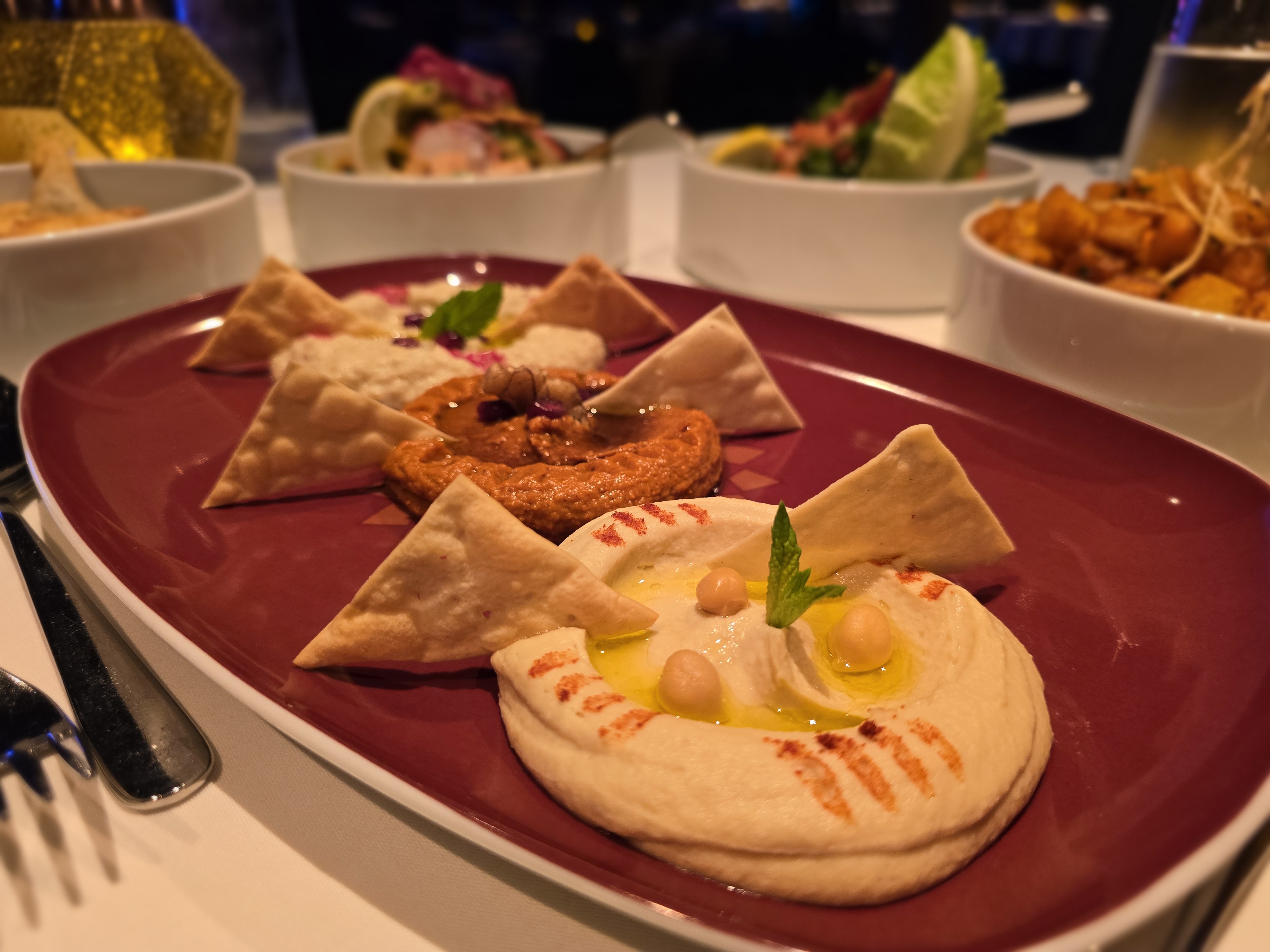
The cold appetizers continue with tabbouleh and fattoush, two classics that showcase the freshness for which Lebanese cuisine is famous. The tabbouleh is dominated by finely chopped parsley, brightened by lemon juice and fresh mint, while the fattoush combines crisp vegetables with toasted pita chips and the unmistakable sweet acidity of pomegranate molasses. Every ingredient tastes remarkably fresh, creating a refreshing contrast with the richer dishes that follow.
Hot mezze are equally satisfying. Crispy cheese rolls arrive golden brown with perfectly melted filling, while spinach fatayer offer delicate pastry surrounding a savory filling enhanced by the citrusy notes of sumac. Batata Harra, one of Lebanon's most beloved potato dishes, combines crispy diced potatoes with garlic, coriander, and aromatic spices, becoming one of the evening's most addictive side dishes. Although each preparation is relatively simple, together they illustrate the extraordinary diversity that characterizes Lebanese cuisine.
The main courses continue this culinary journey through the Levant. The Lebanese Mixed Grill serves as the restaurant's signature offering, presenting a generous assortment of lamb chops, beef kebab, kafta, and shish tawook accompanied by grilled vegetables and traditional tahini and garlic sauces. The meats are cooked with precision, remaining juicy and tender while displaying the subtle smokiness expected from authentic charcoal grilling. The seasoning is restrained, allowing the quality of the ingredients to remain at the forefront rather than masking them beneath heavy marinades.
Equally interesting are some of the more traditional regional specialties featured on the menu. Kebab Karaz combines grilled meatballs with an unexpectedly elegant cherry sauce, a recipe originating from Aleppo that perfectly illustrates the sophisticated balance between sweet and savory flavors found throughout Levantine cooking. Kibbeh Labanieh presents Lebanon's iconic bulgur croquettes served with a creamy yogurt sauce finished with garlic and toasted pine nuts, while the vegetarian Lebanese Mousaka highlights eggplant, tomatoes, onions, and chickpeas in a hearty yet surprisingly light preparation.
One of the strengths of Layalina is that the menu never feels adapted for international tastes. Instead, it confidently presents authentic recipes while making them accessible through excellent ingredients, balanced seasoning, and careful presentation. For many international guests, the restaurant may serve as a first introduction to Lebanese cuisine, and it succeeds in demonstrating why this culinary tradition has earned worldwide recognition.
The dessert selection concludes the experience with some of the Middle East's most iconic sweets. Kunafa, perhaps the region's most celebrated dessert, combines crisp kataifi pastry with a rich cream filling finished with fragrant syrup and crushed pistachios. Muhalabia offers a lighter alternative through a silky milk pudding delicately scented with rose water, while classic Baklava delivers the familiar combination of delicate filo pastry, chopped nuts, and aromatic syrup. These desserts provide a fitting conclusion to a meal that consistently balances richness with freshness and sweetness with restraint.
The beverage program deserves recognition as well. Since AROYA Cruises operates as an alcohol-free cruise line, Layalina has developed an extensive collection of premium mocktails that stand comfortably on their own rather than merely replacing traditional cocktails. Drinks such as the Passion Rose Spritz, Mango Chili Daiquiri, Ginger Margarita, Blueberry Mojito, and the uniquely Middle Eastern Vimto Mojito are prepared with fresh ingredients and thoughtful flavor combinations that complement the cuisine while reinforcing the restaurant's contemporary identity.
Service throughout the evening reflects one of the defining characteristics of Middle Eastern hospitality: generosity. The staff displays genuine enthusiasm in introducing guests to unfamiliar dishes, explaining ingredients and traditional preparations with confidence while maintaining an attentive yet relaxed pace. The timing of the service is particularly impressive, carefully coordinated with the evening's entertainment so that neither the meal nor the performances ever feel rushed.
Ultimately, what makes Layalina exceptional is not any single dish, nor even the quality of the entertainment, but the way every component contributes to a cohesive experience. The elegant interior, authentic cuisine, attentive service, live performances, music, digital stage production, and warm hospitality all work together to create an evening that feels distinctly different from anything offered elsewhere aboard the ship. Rather than simply adding another specialty restaurant to its culinary portfolio, AROYA Cruises has created a venue that expresses its cultural identity through every aspect of the guest experience.
In an industry where specialty restaurants increasingly resemble one another regardless of the cruise line, Layalina stands apart by offering something genuinely original. It is not simply a place to enjoy Lebanese food; it is an invitation to experience the traditions, flavors, music, and convivial spirit of the Arab world. For guests sailing aboard AROYA, Layalina is far more than another dinner reservation—it is one of the ship's signature attractions and one of the clearest examples of how gastronomy can become a powerful expression of culture at sea.
Gabriele Bassi