
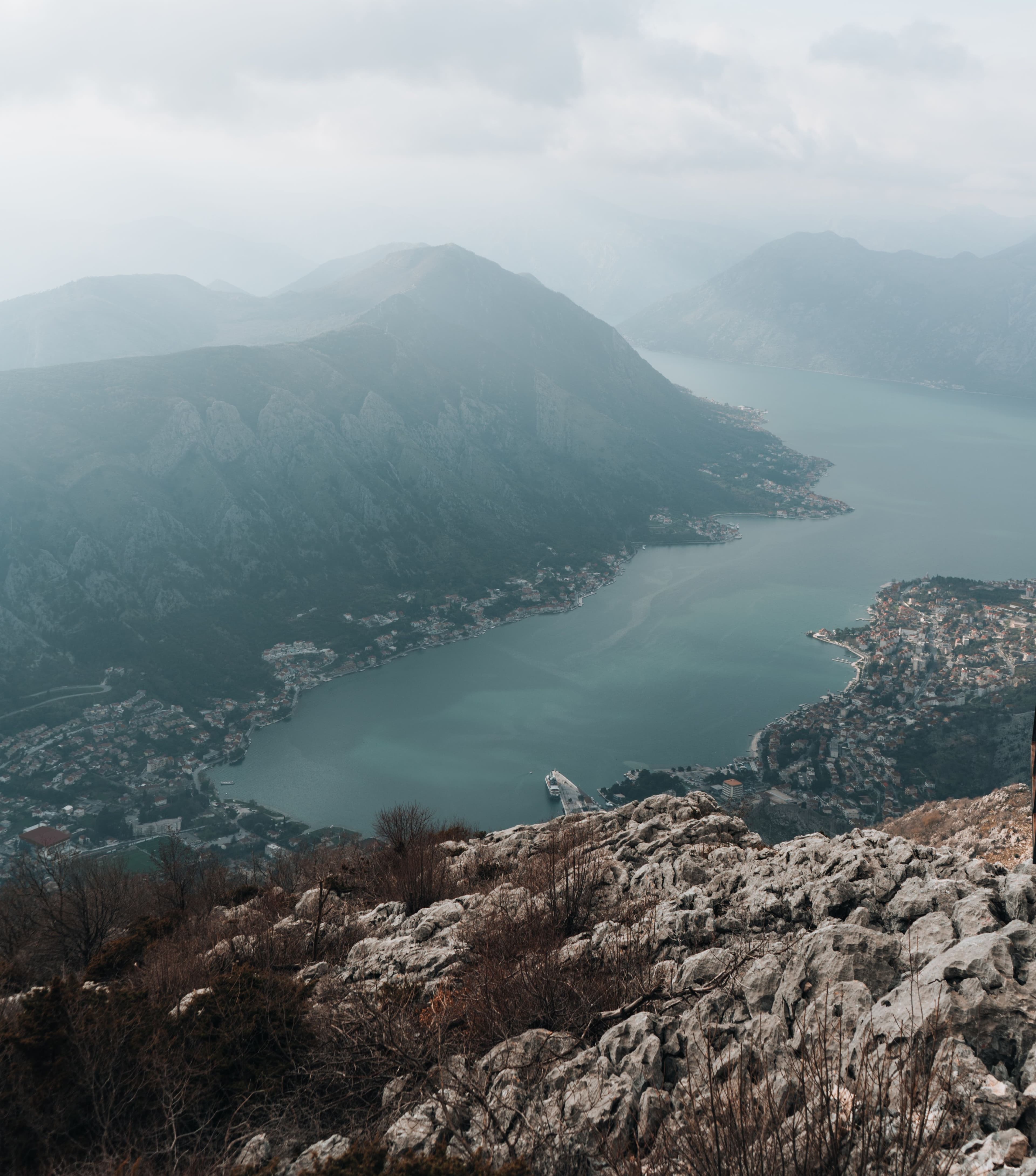
Nestled between mountains and the dark waters of its bay, the ancient fortified city has established itself in recent years as one of the most fascinating and complete ports of call in the southern Adriatic.
Cruise ships calling at Kotor experience an arrival that is, in itself, worth the journey. The Bay of Kotor, often described as the southernmost fjord in Europe, although geologically it is actually a submerged karst canyon, stretches for more than twenty kilometres between mountain walls that plunge almost dramatically into the water. Small villages, isolated churches on artificial islets and ancient fishing settlements dot the landscape. The approach through this extraordinary scenery, which takes place before the ship actually docks, is already an integral part of the experience. Many passengers remain on deck from the early hours of the morning so as not to miss it, particularly because the entrance into the bay often takes place at dawn, when the low morning light illuminates the rocky slopes with delicate shades of pink.
Kotor itself, which gives the bay its name, has a history stretching back more than two thousand years. It was first an Illyrian settlement, then Roman and Byzantine, before being contested by medieval Serbia, the Kingdom of Hungary and the Republic of Venice. Venetian rule lasted for around four centuries and left a powerful architectural imprint that can still be seen today in the façades, the winged lions of St Mark carved above city gates and the cathedral bell tower. This was followed by a brief period of French rule during the Napoleonic Wars, then annexation by the Austro-Hungarian Empire and, after the First World War, incorporation into the Kingdom of Yugoslavia. Each phase has left traces that can still be read today by anyone who takes the time to look carefully while walking through the city’s streets. The Old Town, enclosed by more than four kilometres of walls that climb up the steep slopes towards the Fortress of St John, almost 260 metres above the city, was declared a UNESCO World Heritage Site in 1979. Today, this recognition exists alongside a dramatic increase in tourism over the past fifteen years. Local authorities have therefore introduced restrictions on the number of ships allowed in port simultaneously in an effort to protect the city from overcrowding, while further measures to manage visitor flows are periodically discussed.
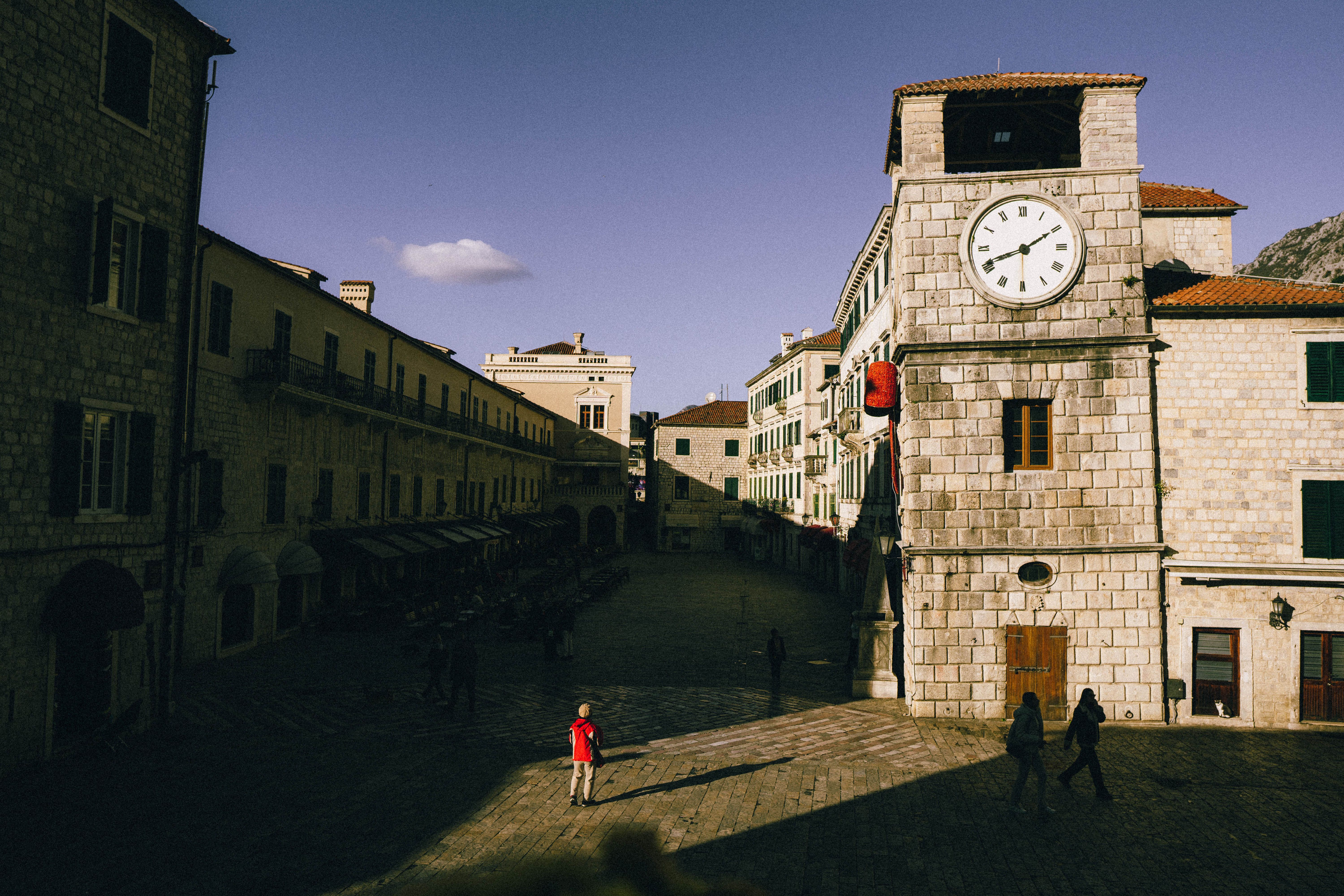
Cruise ships generally berth just a few steps from the city walls, often directly opposite the Sea Gate, the main entrance to the Old Town. Built in 1555, it is topped by the Lion of St Mark and a relief depicting the Madonna and Child. It is one of the rare cases where passengers literally find themselves at the entrance to the historic centre as soon as they step off the gangway, without the need for any transfer. On particularly busy days, when several ships are berthed at the same time, some larger vessels may remain at anchor in the bay, with passengers brought ashore by tender. Checking with the ship’s crew about the planned disembarkation arrangements for the day can help avoid surprises and make it easier to plan the time available ashore. Once through the gate, visitors immediately arrive in the Square of the Arms, once the centre of the city’s civil and military life. The square is dominated by its seventeenth-century clock tower and surrounded by pale-stone buildings that once housed the guard of the Rector’s Palace. From here, the Old Town unfolds into a maze of narrow lanes, small squares and courtyards that cannot really be explored according to any logical order. Indeed, the city reveals much of its charm precisely to those who are happy to lose themselves among its time-worn stones.
The Cathedral of St Tryphon, dating from 1166 and rebuilt several times following earthquakes and fires — the last of them particularly destructive, in 1979 — houses relics of the city’s patron saint and a treasury containing Byzantine silverware and finely crafted medieval reliquaries. A small adjoining museum also tells the story of Kotor through the centuries. Nearby, the small and understated Church of St Luke is notable for having been shared for centuries by Catholic and Orthodox communities, a rare symbol of coexistence in a Balkan region often marked by deeper religious divisions. It is also worth seeking out the Grgurina Palace, home to the city’s Maritime Museum, dedicated to Kotor’s past as a minor but respected naval power in the Adriatic. Its collection includes ship models, uniforms and memorabilia belonging to local captains who sailed the Mediterranean for centuries, first in the service of Venice and later Austria. This aspect of the city’s history is often little known to visitors, yet it provides a fascinating insight into the extent to which Kotor, despite its relatively small size, was a significant maritime centre. Nearby, the Pima Palace, now used for cultural events, and the Bizanti Palace, with its elegantly decorated Baroque façade, complete the picture of a historic centre that, despite its compact dimensions, preserves an exceptionally high density of fine civic architecture.
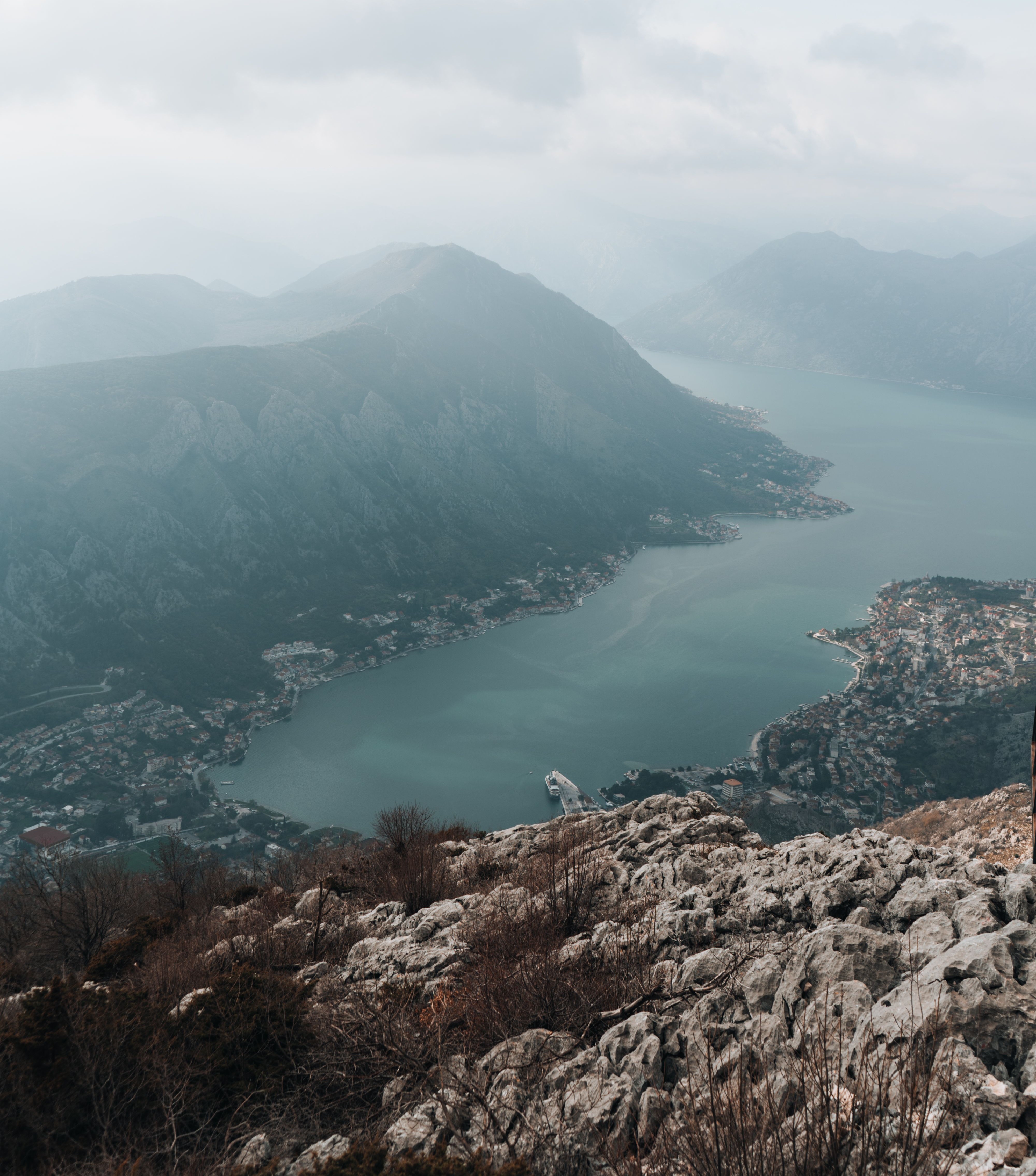
The most famous and physically demanding experience Kotor offers its visitors is undoubtedly the climb to the city walls. They wind up the steep slopes of Mount St John towards the fortress of the same name. The route consists of approximately 1,350 uneven steps, often steep and largely without shade, and normally takes between one and one and a half hours of sustained walking to reach the summit. Several natural resting points can be found along the way, including the remains of the small Church of Our Lady of Remedy, roughly halfway up. It makes a good intermediate goal for those who want to decide whether to continue to the top or settle for an already impressive view. Those who take on the climb — preferably in the early morning, to avoid the strongest heat and the crowds of organised groups — are rewarded with a panorama extending across the entire bay, over the red roofs of the Old Town and towards the mountains that surround it on every side. It is probably the single most photographed viewpoint in Montenegro and, for many visitors, remains the most vivid memory of their entire port of call. For those who would rather spare their legs, or simply do not have enough time for the complete ascent, a shorter walk along the first sections of the walls still offers remarkable views over the Old Town without requiring the full climb to the fortress. Access to the walls is subject to an admission fee, with tickets available directly at the main access points. These are generally open from the early morning until late afternoon, although opening hours may vary depending on the season.
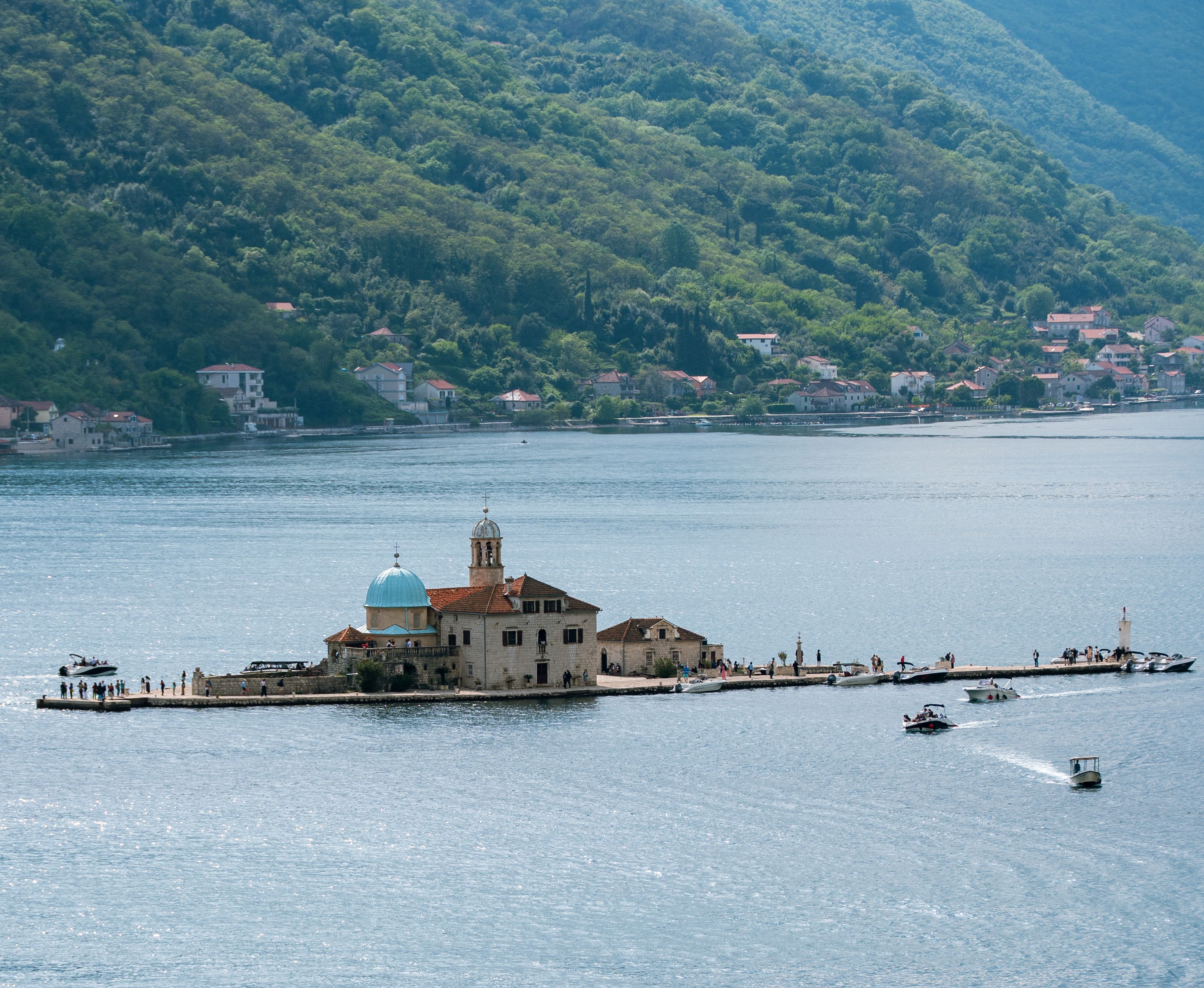
For those with a few additional hours beyond a visit to the historic centre alone, the Bay of Kotor offers some of the most spectacular excursions in the Adriatic, many of which can be enjoyed even with only half a day available. A short boat trip takes visitors to Our Lady of the Rocks, an artificial islet that, according to legend, was created by local sailors who spent centuries depositing stones and the wreckage of sunken ships around a rock where an icon of the Madonna was said to have been found. Today, the island is home to a small Baroque church filled with sailors’ votive offerings and silver ex-votos, as well as a small museum containing embroidery and devotional paintings left over the centuries by sailors’ families in exchange for protection during their voyages. It remains one of the most iconic images of the entire region. Not far away, the village of Perast, once a maritime rival even to Venice itself, with a highly respected fleet and naval school, preserves eighteenth-century patrician palaces along a waterfront overlooking the waters of the bay. It is easily reached by taxi or on an organised excursion in around twenty minutes. A climb to the bell tower of St Nicholas Church, when access is available, offers one of the most impressive views across the entire bay. Those seeking a more pronounced contrast can continue to Budva, a livelier and more modern coastal town with sandy beaches and a small fortified Old Town built in the Venetian style, particularly popular with regional beach tourism. Alternatively, visitors can head uphill along the spectacular winding mountain road leading to Lovćen National Park. When weather conditions permit, the views over the bay are even more spectacular than those from Kotor’s city walls. The park is also home to the mausoleum of Njegoš, the poet and prince-bishop who remains one of the most revered figures in Montenegrin culture. For those with a full day available and travelling on an organised shore excursion arranged by the cruise ship, it is also possible to reach Cetinje, the former royal capital of Montenegro. Rich in museums and former foreign embassies, the town has a sleepy, aristocratic atmosphere that provides a pleasant contrast to the tourist bustle of Kotor.
From a culinary perspective, Kotor and the Montenegrin coast offer a cuisine that naturally combines Mediterranean, Balkan and Venetian influences, the result of centuries of commercial and cultural exchanges along the Adriatic. Fish and seafood dominate the scene and are often prepared with great simplicity in order to highlight their freshness. Buzara-style mussels, cooked in a light sauce of tomato, garlic, white wine and parsley, are an essential classic and among the dishes most frequently ordered by visitors. So too is brodet, a fish stew that varies slightly from one restaurant to another but remains an emblematic dish of the coast. According to the oldest traditions, it is often served with soft polenta. Those wishing to try something more distinctly Montenegrin should look for pršut, a smoked dry-cured ham traditionally produced in the Njeguši region, not far from Kotor along the road towards Lovćen. It is often served with local cheese produced in the same mountain area. The combination of the two, perhaps accompanied by a glass of Vranac red wine — the most widely cultivated indigenous grape variety in Montenegro — is one of the best ways to experience the flavours of the region in a single dish. Many restaurants in the Old Town offer mixed platters specifically designed for visitors passing through. Among the desserts, it is worth seeking out Kotor cake, a layered sweet made with walnuts, almonds and liqueur, particularly common in the city’s historic pastry shops. Meanwhile, the many cafés tucked into small courtyards hidden among the Old Town’s narrow lanes provide the perfect setting for a break with a Turkish coffee prepared in the local style. It is a legacy of Ottoman influence which, although less pronounced than elsewhere in the Balkans, can still be detected in certain everyday customs. Traditionally, the coffee may be served with a small spoonful of rose or plum jam alongside the cup. Those who enjoy bringing home local food and drink will find several small shops along the Old Town’s lanes selling local honey, artisanal fruit brandies flavoured with mountain herbs and olive oil produced along the coast. These make more authentic souvenirs than the standard tourist items sold along the busiest streets.
From a practical perspective, as in Dubrovnik and many other fortified Adriatic cities, the streets of Kotor’s Old Town are entirely pedestrianised and paved with stone polished smooth by centuries of use, which can become slippery when wet. Comfortable shoes with good grip are therefore essential, particularly for anyone planning to climb the city walls. Summer weather can be extremely hot, and temperatures during the central hours of the day can make the climb to the fortress particularly strenuous. Carrying sufficient water is almost essential, as there are few opportunities to replenish supplies along the route. It is also advisable to apply sunscreen before setting out, since much of the climb takes place without any shade. Visitors travelling to Kotor in spring or early autumn will find more manageable temperatures both for climbing the walls and exploring the Old Town on foot, as well as significantly fewer visitors than in July and August, when the city can become quite crowded from late morning onwards. Montenegro uses the euro as its de facto currency, despite not being a member of the European Union. This makes payments considerably easier for visitors from the eurozone. Credit cards are accepted in most establishments in the city centre, although it is always useful to carry some cash for smaller purchases or for entry to the fortress, which is often charged separately from other attractions.
English is widely understood in tourist areas, while Italian, a legacy of the city’s long Venetian presence, is still understood and sometimes spoken by some older shopkeepers. It is a small detail that often comes as a pleasant surprise to Italian visitors. Finally, it should be noted that, although Kotor is a relatively compact port of call, the upper part of the city features significant changes in elevation. As a result, it is not the easiest destination for visitors with significant mobility difficulties. The lower section of the Old Town, around the Square of the Arms and the cathedral, however, remains fully accessible and still offers a complete experience even to those who are unable to undertake the climb to the city walls. For those wishing to take home a small souvenir from their port of call, the Old Town also offers several local craft shops selling silver filigree jewellery made using traditional techniques passed down through generations of Kotor goldsmiths. It is a considerably more distinctive souvenir than the classic refrigerator magnets.
Gabriele Bassi