Swan Hellenic is renewing its partnership with the SETI Institute for 2027, launching six new itineraries in its Explore Space at Sea series, a programme that combines exploration of some of the planet’s most fascinating regions with a deeper understanding of the Universe.
Six internationally renowned scientists and experts will join the company’s ships, ready to share their research with guests, from the origins of the Solar System and the formation of stars to the possibility of detecting signs of life beyond Earth. Now in its fifth year, the partnership between Swan Hellenic and the SETI Institute offers a particularly compelling interpretation of the expedition cruise philosophy. Destinations become starting points for exploring phenomena that also concern other worlds, connecting what guests observe during their journey with the major questions addressed by scientific research. The experience’s value lies above all in the opportunity to engage directly with researchers involved in leading international programmes, turning days at sea into opportunities for discovery and learning.
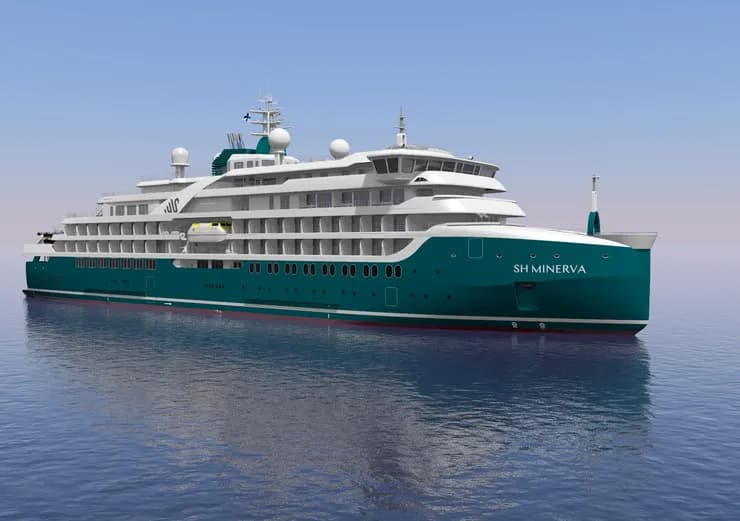
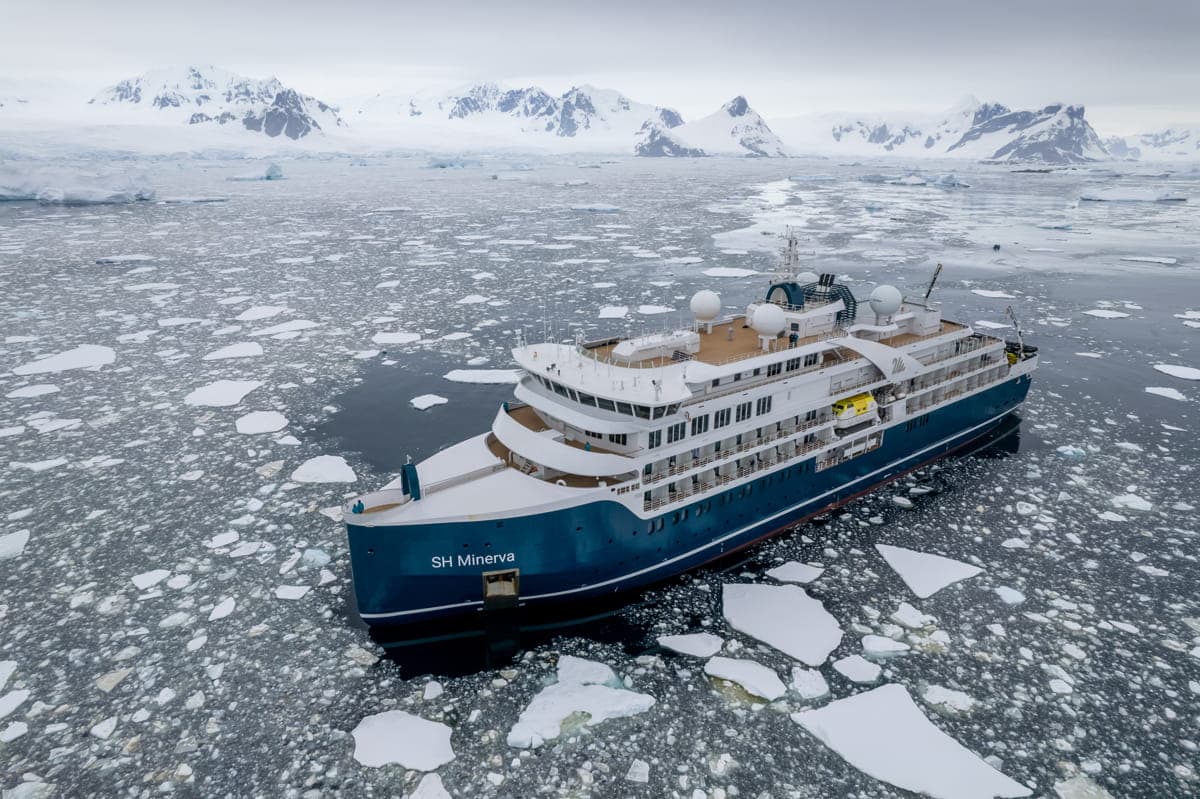
The programme will begin on 21 March 2027, with SH Minerva sailing until 3 April on an itinerary from Auckland to Honiara, via New Caledonia, Vanuatu and the Solomon Islands. Accompanying guests will be Ross Beyer, a planetary scientist at the SETI Institute’s Carl Sagan Center, specialising in the study of celestial bodies’ surfaces. Beyer has contributed to NASA missions including HiRISE, New Horizons and VIPER, taking part in the analysis of geological environments on Mars, the Moon and icy worlds such as Europa and Enceladus. The voyage across the Pacific will provide a particularly stimulating setting for his lectures, thanks to the volcanic and tectonic activity that characterises the Ring of Fire. Similarities between these terrestrial processes and those observed on other planets will help guests better understand how the surfaces of celestial bodies evolve.
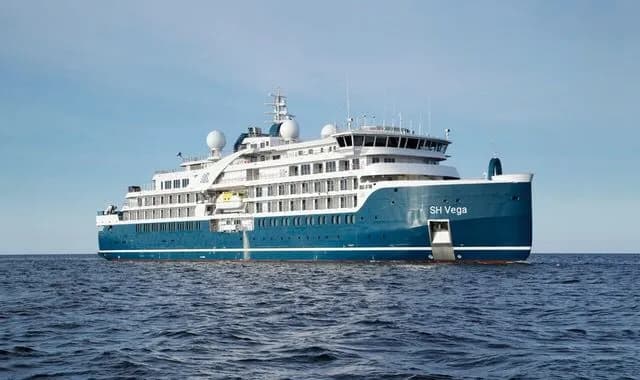
Just a few days later, on 25 March, SH Vega will depart Ushuaia for Montevideo, arriving on 8 April, on an itinerary dedicated to Patagonia, the Falkland Islands and the coasts of the South Atlantic. On this voyage, the featured expert will be Uma Gorti, head of Astronomy and Astrophysics at the Carl Sagan Center. Her research focuses on the formation of stars and planets through the study of gas and dust surrounding young stars. Drawing also on data collected by observatories such as Hubble, ALMA and the James Webb Space Telescope, Gorti will make complex and fascinating subjects accessible to guests. The southern sky, the history of astronomical navigation and scientific experiments conducted in Antarctic regions will be among the topics explored during the voyage. It will be a particularly compelling opportunity to rediscover the relationship between sea and sky, which guided navigators and explorers for centuries and continues to fuel scientific curiosity today.
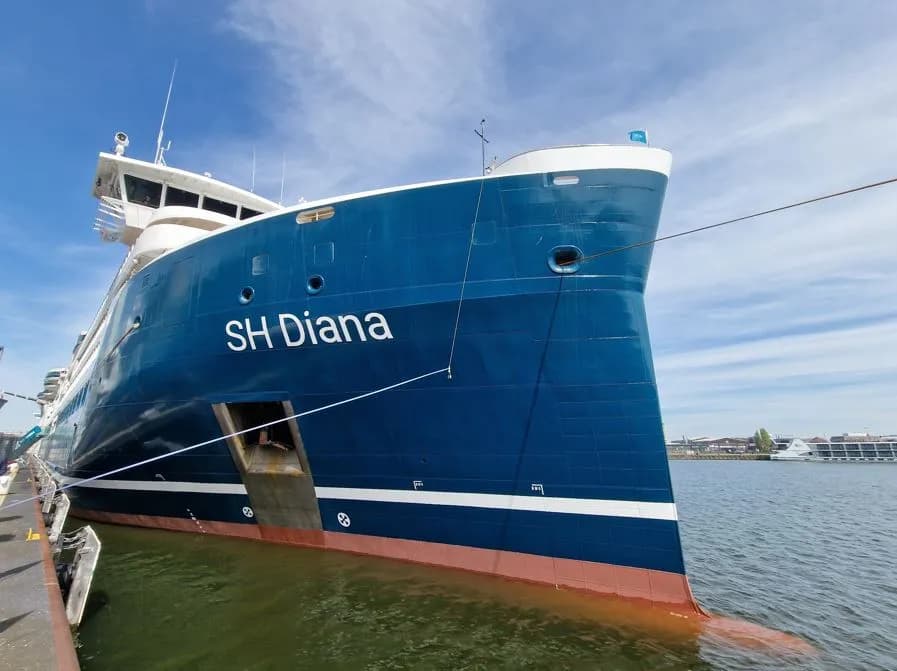
The third cruise will depart Dakar on 5 May and arrive in Lisbon on 14 May aboard SH Diana, following the coasts of West Africa and crossing the Atlantic islands. Derek Kozel, leader of the GNU Radio project, one of the world’s most widely used open-source platforms for developing radio systems, will be the guest expert. His experience in communications research, scientific instrumentation and machine learning will introduce guests to the technologies used to study the cosmos. Radio signals are, in fact, among the fundamental tools scientists use to gather information about the Universe and understand its phenomena and characteristics. The Atlantic crossing will therefore offer an opportunity to explore a less immediate dimension of astronomy, focusing on the instruments that allow scientists to listen to and interpret signals coming from space.
From 20 to 31 May, SH Vega will sail from Halifax to Reykjavík, following ancient Viking routes across the North Atlantic. Guests will be accompanied by Bill Diamond, president and CEO of the SETI Institute, a leading figure in the technology sector with more than 30 years of experience in optical communications, laser photonics and other advanced technologies. His contribution will provide a broad overview of the institute’s work and the challenges involved in the search for extraterrestrial life. The itinerary offers a compelling connection between exploration in the past and the present: the routes followed by navigators across unknown seas and the research conducted by scientists seeking answers beyond our planet express, on vastly different scales, the same extraordinary human curiosity.
SH Vega will continue its voyage from 31 May to 10 June, sailing from Reykjavík to Longyearbyen in Svalbard on an itinerary through some of the most spectacular environments of the North Atlantic and the Arctic. On board will be Megan Seritan, a researcher at the SETI Institute and Deputy Manager of NASA’s Planetary Data System Ring-Moon Systems Node. Her research focuses particularly on the history of planetary magnetic fields and the information that can be obtained from the geological characteristics of planetary surfaces. Iceland’s volcanic formations, whose rocks preserve traces of Earth’s magnetic field, will provide an extraordinary point of comparison with research into the Moon’s magnetic history. This is one of the project’s most fascinating aspects: landscapes that already inspire wonder through their beauty take on additional significance when viewed through the lens of planetary science.
The final cruise in the series, running from 29 October to 18 November 2027, will see SH Diana sail from Cape Town to Ushuaia across the South Atlantic and Antarctica. On board will be Janice Bishop, head of Planetary Exploration at the Carl Sagan Center and a researcher also working with NASA’s Ames Research Center. Her work focuses on Martian minerals and rocks, particularly past climatic conditions and the possibility that Mars once hosted environments favourable to life. Antarctica is of exceptional interest to this research because it contains cold, arid environments that share some characteristics with those on Mars. Field observations, combined with Bishop’s explanations, will help guests explore how scientists study minerals and search for possible biological traces on other planets. The Antarctic landscape will thus become a lens through which to understand the history of a world millions of kilometres away.
Highlighting the significance of the initiative, Mario Bounas, Chief Commercial Officer of Swan Hellenic, has expressed his satisfaction with the fifth year of the partnership with the SETI Institute and the six new cruises planned for 2027. According to Bounas, each itinerary connects extraordinary destinations with some of science’s most fascinating questions, giving guests the opportunity to broaden their perspective on both Earth and the Universe.
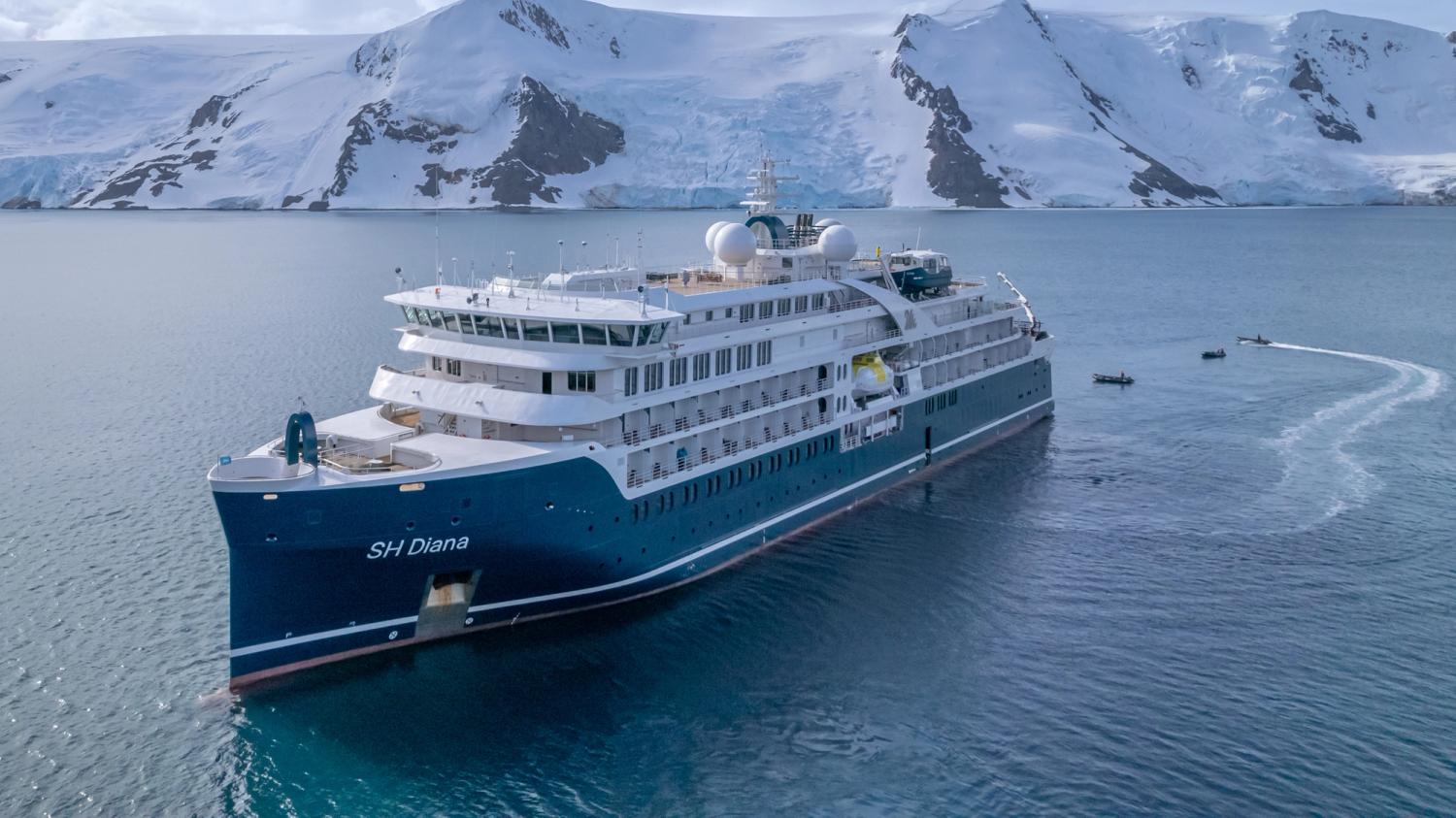
Swan Hellenic’s offering also deserves attention for the way it makes the most of time spent on board. On expedition cruises, shore experiences are naturally among the most eagerly anticipated moments, but days at sea can be just as meaningful when they become opportunities for encounters, discussion and learning. The involvement of researchers working in different disciplines broadens the cultural dimension of the journey and allows passengers to gain a deeper understanding of the places they visit.
It is precisely this ability to create connections that makes Explore Space at Sea so compelling. The geology of a Pacific island can reveal something about the surface of Mars, an Icelandic rock can help explain lunar magnetism, and the southern sky can become a starting point for understanding how stars and planets form. Each destination therefore offers new avenues for discovery, while every encounter with the experts enriches the meaning of the experience. In a sector where access to remote places is already a privilege, Swan Hellenic adds a cultural dimension that continues to inspire travellers long after the cruise has ended.
Gabriele Bassi