
At a time when travel is becoming increasingly authentic, immersive, and conscious, expedition cruising stands out as one of the most fascinating evolutions in international tourism. It is no longer simply about reaching remote destinations, but about embracing transformative experiences, connecting with cultures, nature, and extraordinary landscapes, and rediscovering the true value of exploration.
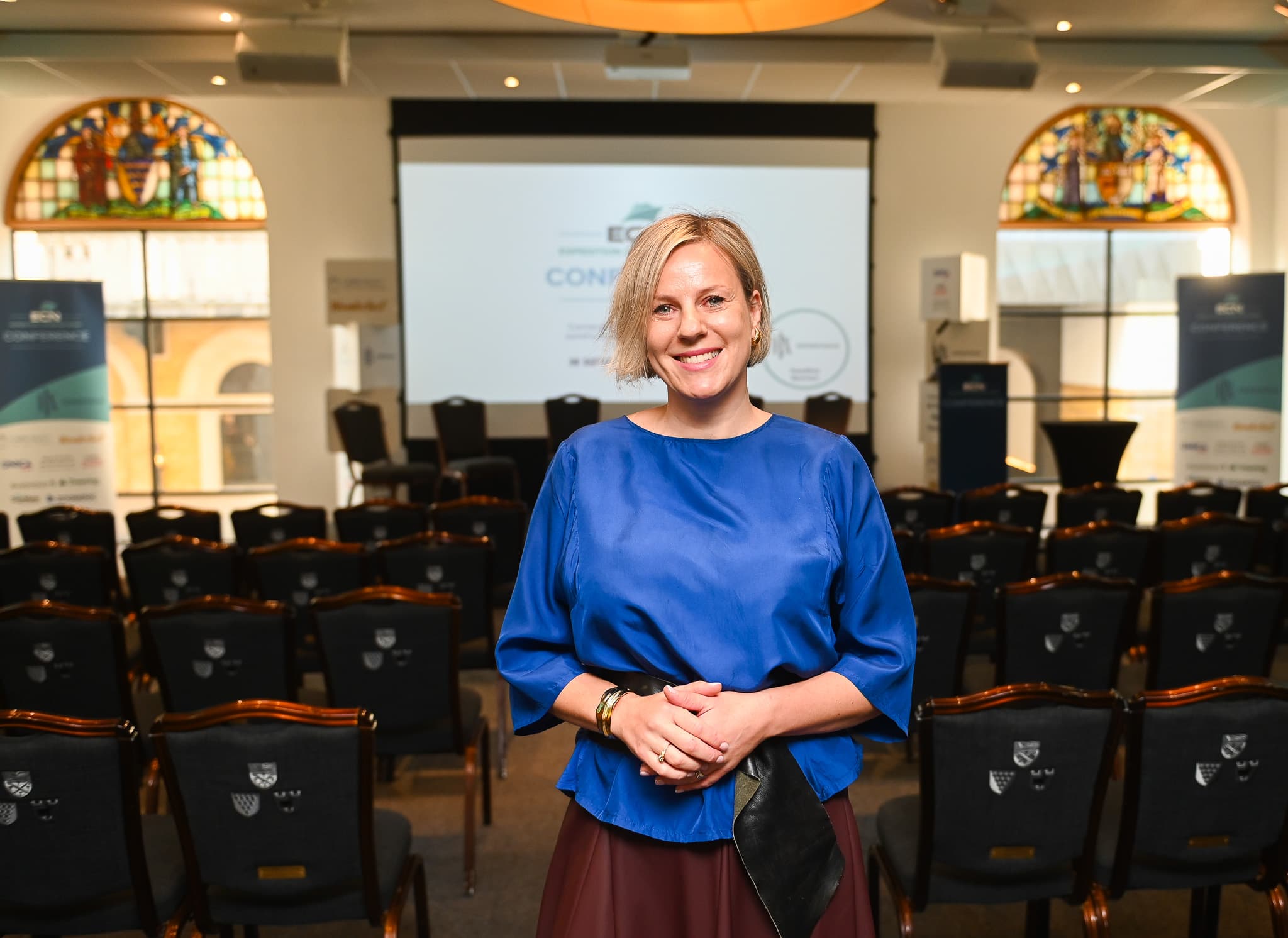
In this interview, we are pleased to meet Akvile Marozaite, CEO and Co-Founder of Expedition Cruise Network (ECN), one of the most dynamic international organizations in the expedition cruising sector. Through her professional journey and extensive industry experience, Akvile takes us inside a constantly evolving world where exploration, global vision, and human connections come together to shape new ways of experiencing travel.
This conversation offers an authentic perspective not only on the growth of expedition travel, but also on the passion, determination, and vision required to build a global community within such a highly specialized and compelling segment of contemporary tourism.

The world of expedition cruising often begins with a powerful personal encounter: a journey, a destination, or a moment capable of changing one’s perspective. In your case, this connection seems to have been particularly deep, gradually becoming not only a passion but also a professional path. Akvile, your journey into the world of expedition cruising began with a deeply personal and transformative experience. How did your connection with this sector begin, and when did you realize it would become part of your professional life?
I started working for Silversea Cruises in 2011. Before then, I did not know much about cruising in general, and even less about expedition cruising. My interest first grew from learning about it for work purposes. I loved how it seemed to combine exploration with expert knowledge and interpretation.
In 2014, I finally had the opportunity to experience it firsthand, not only by travelling to some of the world's most remote regions, but also by joining the ship as a member of the expedition team. My first voyage aboard Silver Discoverer took me to Indonesia and Malaysia, but the moment I truly connected with expedition cruising came a little later, during our first voyage to the Russian Far East and Alaska.
It was on one of the islands there that I fell in love with it. Being surrounded by hundreds of northern fur seals, Steller sea lions, and thousands of guillemots flying overhead was an extraordinary experience. I realised how little I knew about the natural world and that I would be happy to spend the rest of my life learning more.
As a voracious reader and lifelong learner, the educational aspect of expedition cruising resonated with me then and continues to resonate with me today.
Certain journeys leave a lasting mark, not only because of the places visited, but because of the emotions, encounters, and sense of discovery they generate. Remote regions, in particular, have the power to challenge our habits and open up completely new horizons. You have said that your first journey to the Russian Far East in 2014 completely changed the course of your life. What did you experience during that trip, and what impacted you so profoundly that it inspired you to dedicate yourself to the world of exploration?
If you are anything like me—a person who grew up largely in an urban environment, somewhat removed from the natural world—you often experience nature through television, films, books, or perhaps a visit to a zoo. I was also born in Lithuania during the final decade of the Soviet Union, which added its own limitations when it came to travelling and experiencing the wider world.
Encountering nature on its own terms is something entirely different. Standing among sea lions weighing close to a tonne during mating season, hearing them huffing and puffing around you, is an experience that stays with you. It makes you feel very alive and very present. It also reminds you of your own fragility and that, despite how we often live, humans do not dominate the natural world.
That is one of the aspects of expedition cruising I value most. Travelling to remote, wildlife-rich places offers a refreshing perspective that many of us need in modern life. Experiencing these environments with all your senses inspires wonder and a deeper appreciation of how interconnected everything is.
To this day, that remains one of the main reasons I continue to do what I do and enjoy it just as much as I did on that first voyage.
The expedition cruise industry is a highly specialized segment that requires specific knowledge, international vision, and the ability to understand both travel and maritime dynamics. For those entering this sector, the first years can be both exciting and demanding. Entering such a highly specialized and international industry could not have been easy. What were the main challenges you faced during your early years in the travel and cruise industry?
I would not say I specifically faced challenges because of the industry itself. Some of the challenges I encountered reflected broader workplace dynamics, including gender inequality, which remains prevalent across many sectors. It is one of the reasons I am passionate about supporting and highlighting female talent.
Leadership positions still appear to be disproportionately occupied by men despite the fact that talent is distributed equally across genders. Rather than focusing on barriers, I have always focused on what I could control: learning, staying curious, and going the extra mile when it came to understanding expedition cruising.
Curiosity has always been one of my greatest strengths. Everything happening now is really the result of years of passion, dedication, and continuous learning. I also believe that success is rarely achieved alone. It is usually a combination of determination, timing, opportunity, and the support of people who believe in you. I have been fortunate to have many mentors throughout my career, and I remain grateful for that.
Many successful projects are born from a clear need in the market, but also from the passion and determination of those who believe in a new vision. Expedition Cruise Network seems to have emerged precisely from this combination of experience, intuition, and commitment to the sector. How did the idea of creating ECN come about?
It was actually ECN co-founder Martin Johnson who came up with the idea and approached me to see whether I would be interested in getting involved.
I asked him to give me two weeks to think about it. Not because I already knew why I should say yes, but because I wanted to understand whether there was a compelling reason not to. In the end, I could not find one.
Three years later, here we are. It turned out to be a good idea and a very good decision.
Creating a network means much more than bringing companies and professionals together; it means building trust, encouraging dialogue, and offering value to an entire industry. The growth of ECN shows how strong the demand was for a dedicated platform in the expedition cruise sector. Today, ECN brings together nearly 30 expedition cruise lines and more than 2,500 sales professionals. Building an international community of this scale requires strategic vision, strong relationships, and a remarkable ability to adapt. Did you ever imagine such significant growth? What was the most challenging phase in building the network, and, on the other hand, what have been the most rewarding moments of your journey so far?
The growth was probably most surprising right at the beginning. Once you are fully immersed in building something, you do not always have time to pause and reflect on how far it has come.
The continued growth is a testament to the need we are addressing and, hopefully, to the fact that we are doing something right. I am immensely proud of what we have achieved. I genuinely wake up every day thinking about how we can better serve this community while remaining true to the values we set out with.
Like anything in life, it is a continuous journey. You achieve one goal, new ideas emerge, new opportunities appear, and the process continues.
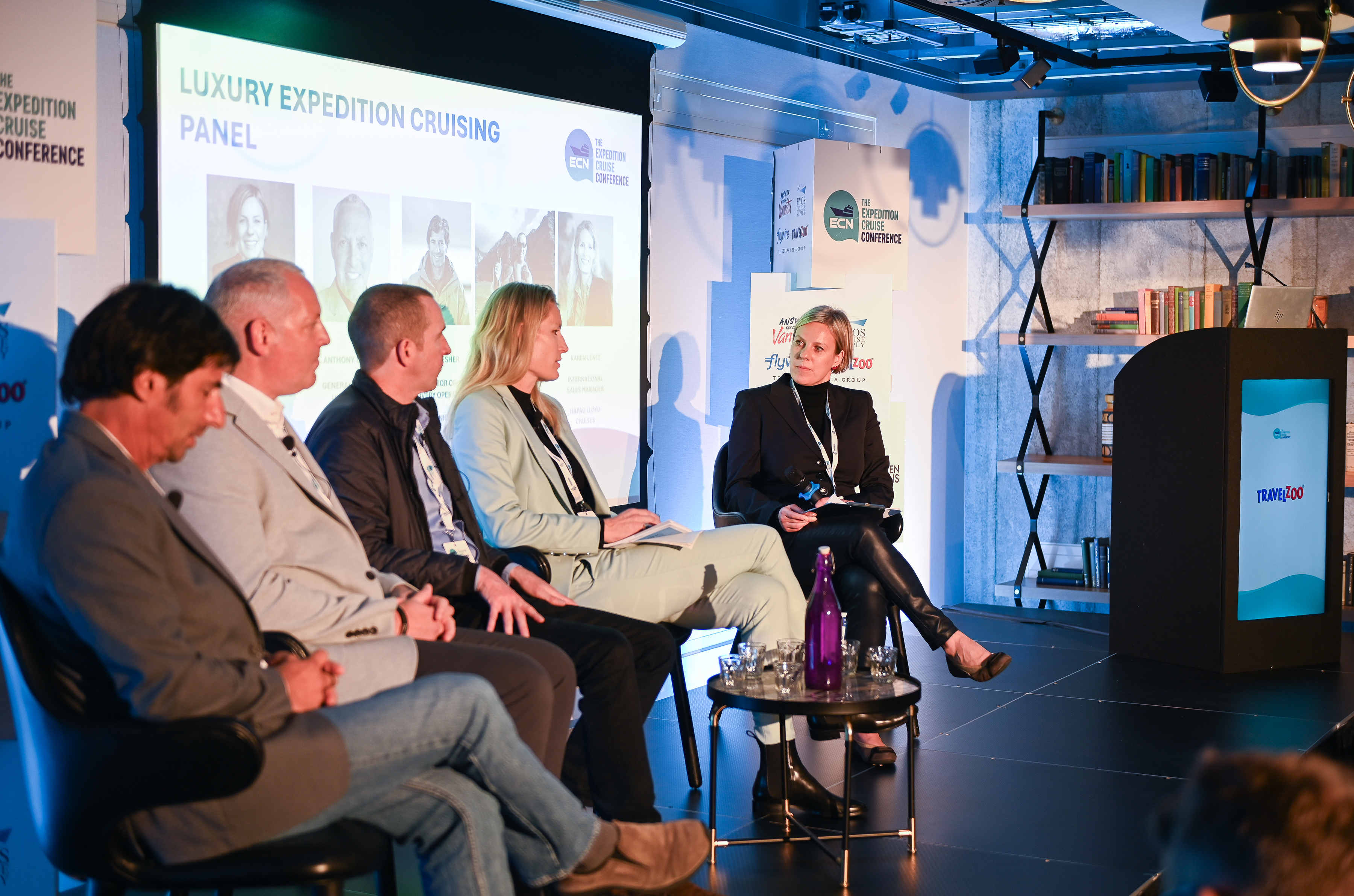
Some of the most rewarding moments come during our annual conference. You see the community gathered in one place, hear the conversations, the laughter, and the passion people have for this form of travel. It suddenly sinks in that you helped create something that did not previously exist. Knowing that we have played even a small role in helping people and businesses become more successful is incredibly rewarding
Leading an organization in constant development requires the ability to combine long-term strategy with daily operational decisions. It also means inspiring people, strengthening partnerships, and maintaining a clear direction in a fast-changing market. Today, your role combines leadership, strategy, innovation, and human connection. Behind a continuously growing organization like ECN, there is undoubtedly an intense amount of daily work. How would you describe your leadership style, and what are the main responsibilities you manage as CEO?
We are growing, but we are still a relatively small organization, which means I wear a number of different hats. It requires a great deal of juggling and making sure you do not become so focused on day-to-day operations that you lose sight of the bigger picture.
I am fortunate to have some very capable team members around me, and we will be welcoming another colleague in August.
My approach to leadership is quite simple: you should not hire people you do not trust. I want our team members to be as passionate and knowledgeable about expedition cruising as possible, and I am happy to invest time and energy in helping them get there.
Because we are still a small organization, I remain involved in most of our activities. That said, coming up with new ideas, projects, and ways to serve the industry is probably the part of the job I enjoy most.
Although expedition cruising is gaining increasing attention, it remains a segment that many travelers are still discovering. Its identity is very different from traditional cruising, as it is based on exploration, education, nature, and a deeper connection with destinations. Expedition cruising is a rapidly growing segment, yet it is still relatively unfamiliar to the wider public compared to traditional cruising. For someone approaching this world for the first time, how would you define expedition cruising?
That is an excellent question and one we often debate internally as well.
To me, expedition cruising is a curious traveller's holiday. It takes you to places where you can observe fascinating natural, cultural, or historical phenomena while learning from experts who help bring those destinations to life. I do not believe there is another form of travel that allows you to experience and appreciate a destination as holistically as expedition cruising.
Add the excitement of travelling by water, the possibility of encountering some of the largest animals on Earth, access to remote regions that can often only be reached by sea, and opportunities to engage with unique cultures, and the appeal becomes obvious.
At its broadest, expedition cruising is an adventure by water. The details may vary depending on the destination, but the core idea remains the same.
It is also worth noting what is missing from that description: the ship. While ship size and onboard amenities certainly matter, they are rarely where the conversation starts. In traditional cruising, the ship is often the centrepiece. In expedition cruising, the destination takes that role.
Travel habits are changing, and many guests are now looking for experiences that go beyond sightseeing. There is a growing desire to understand places more deeply, to reach less conventional destinations, and to return home with a stronger personal connection to the journey. In recent years, more and more travelers seem to be searching for authentic, immersive experiences that move away from conventional tourism. In your opinion, why is there such a growing desire to explore remote destinations and pursue more meaningful travel experiences? And speaking of trends, which expedition destinations are currently the most requested or emerging?
I think the pandemic has a lot to do with it. We experienced firsthand what it was like not to be able to travel or enjoy things we had previously taken for granted. It encouraged many people to reassess what experiences matter most to them.
At the same time, modern life can sometimes leave us feeling disconnected. We spend increasing amounts of time on digital devices and social media, and there is plenty of research suggesting that this does not necessarily make us happier. Travel, in general, is a wonderful antidote to that, and expedition cruising is particularly well positioned because it often takes people closer to nature and into remote, wildlife-rich environments.
We are also in the business of creating opportunities for the unexpected. Even as adults, we still crave a sense of wonder. You cannot tell a wild whale to breach in front of you, but when it does, it is both humbling and extraordinary. Expedition cruising creates the conditions for those moments to happen, and they often stay with people long after they return home.
Alongside that, there is the camaraderie onboard and the meaningful human connections people form while sharing these experiences.
As for destinations, the polar regions and the Galápagos remain firm favorites. We are also seeing growing interest in warm-water destinations, culturally rich regions such as Papua New Guinea, and river expeditions, including journeys into the Amazon Basin.
Expedition cruising often takes place in some of the most fragile and extraordinary environments on the planet. For this reason, sustainability is not simply a trend, but a fundamental responsibility for companies, operators, and travelers alike. When discussing expedition travel, the topic of sustainability inevitably becomes central. How important will this aspect be for the future of the industry? And above all, do you believe the industry is truly capable today of finding a concrete balance between exploration, tourism growth, and environmental protection?
This is a topic I am deeply passionate about.
Expedition cruising is not yet a fully sustainable form of travel. Much of that relates to fuel use and the wider environmental impact of marine transport. However, of all forms of travel by water, I believe expedition cruising is leading the way towards a more responsible future.
We travel to some of the world's most remote and fragile places, which gives operators a strong incentive to help preserve them. Expedition cruising has always been rooted in education, conservation, and learning.
The sector frequently goes beyond regulatory requirements and often self-regulates. Organizations such as IAATO and AECO are excellent examples of this approach.
When managed carefully, destinations such as the Galápagos demonstrate that tourism can be regulated in a way that protects ecosystems, limits visitor numbers, and delivers meaningful benefits to local communities.
In some cases, expedition cruising can even contribute positively. Many operators support citizen science initiatives, conservation projects, foundations, and fundraising programmes in the regions they visit. Expedition team members are often actively involved in scientific research and conservation work beyond their roles onboard.
There is much more to this conversation, and I hope ECN can play a role in helping operators communicate these efforts more effectively and showcase the many ways the sector is working towards a more responsible future.
A long career in travel and exploration requires resilience, curiosity, and the ability to continue evolving with the industry. Your journey also offers an important example for those who aspire to grow professionally in a sector that is both competitive and full of opportunities. After so many years in the industry, you continue to be an extremely active, passionate, and influential figure within the international community. What continues to motivate you in your work today? And looking at the next generation, what advice would you give to a young woman who dreams of building a leadership career in the travel industry?
I have always been a very curious person and a voracious reader. Expedition cruising is a perfect fit because I never stop learning.
While curiosity may not be essential in every role, I think it is one of the most valuable qualities in both work and life. It takes you down unexpected rabbit holes, sparks creativity, encourages collaboration, and opens the door to lifelong learning.
Curiosity is also genderless. Although we have made progress, I do not believe we yet live in a world of completely equal opportunities. Many women still find they need to be especially resourceful, resilient, and determined as they progress into leadership roles.
For a young woman hoping to build a leadership career in the travel industry, I would borrow a quote from Dolly Parton that I have always loved: "Find out who you are and do it on purpose."
I cannot think of better advice. We are naturally drawn to authenticity because we recognize it when we see it. If you keep that as your North Star, success tends to follow, even if it often looks very different at the end of the journey than it did at the beginning.
Looking ahead, the expedition cruise sector seems destined to continue expanding, with new destinations, new partnerships, and new ways of engaging both the trade and travelers. ECN’s role within this evolution will certainly be important to follow. What are the next goals for Expedition Cruise Network? Can we expect new initiatives, events, or international projects in the coming months?
Absolutely. I am working on a couple of very exciting projects that I am not quite ready to share yet.
What I can say is that I am excited by the way expedition cruising continues to evolve and by how much more familiar and enthusiastic the travel trade is becoming about the sector.
I spend a great deal of time thinking about how ECN can continue adapting and serving our travel advisor community. At the same time, I want to help our expedition cruise operator members collaborate, innovate, and amplify their voices even further.
Ultimately, my goal is quite simple: to help our members become more successful tomorrow than they are today. That remains my North Star, both personally and for the company.
Expedition cruising is undoubtedly undergoing a profound phase of evolution, driven by travelers who are increasingly attentive to experience, discovery, and the deeper meaning of travel itself. Through the work of organizations such as Expedition Cruise Network and the vision of professionals like Akvile Marozaite, this sector continues to redefine the concept of contemporary exploration, creating connections between destinations, operators, and travelers from all over the world.
We would like to thank Akvile Marozaite for her availability and for allowing us to explore not only the dynamics of a rapidly growing sector, but also the human and professional journey behind the creation of an international community such as ECN. From leadership to new perspectives in travel, her vision reflects a form of tourism increasingly focused on awareness, collaboration, and discovery.
Gabriele Bassi