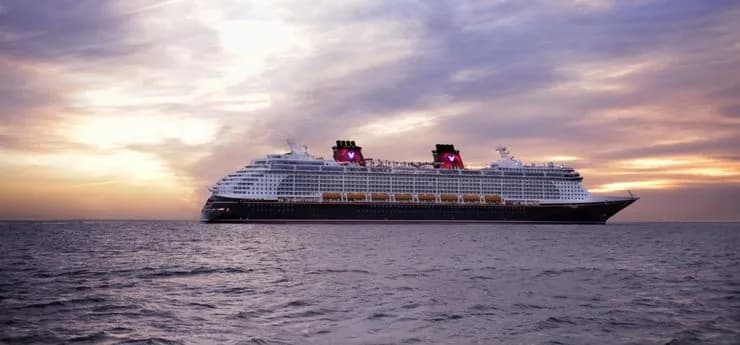
There are ships you return to without ever truly feeling as though you are repeating a journey. This happens when a ship is not simply a means of reaching different destinations, but a narrative world: an environment built around recognizable codes, carefully defined atmospheres and rituals that passengers rediscover and reinterpret each time.
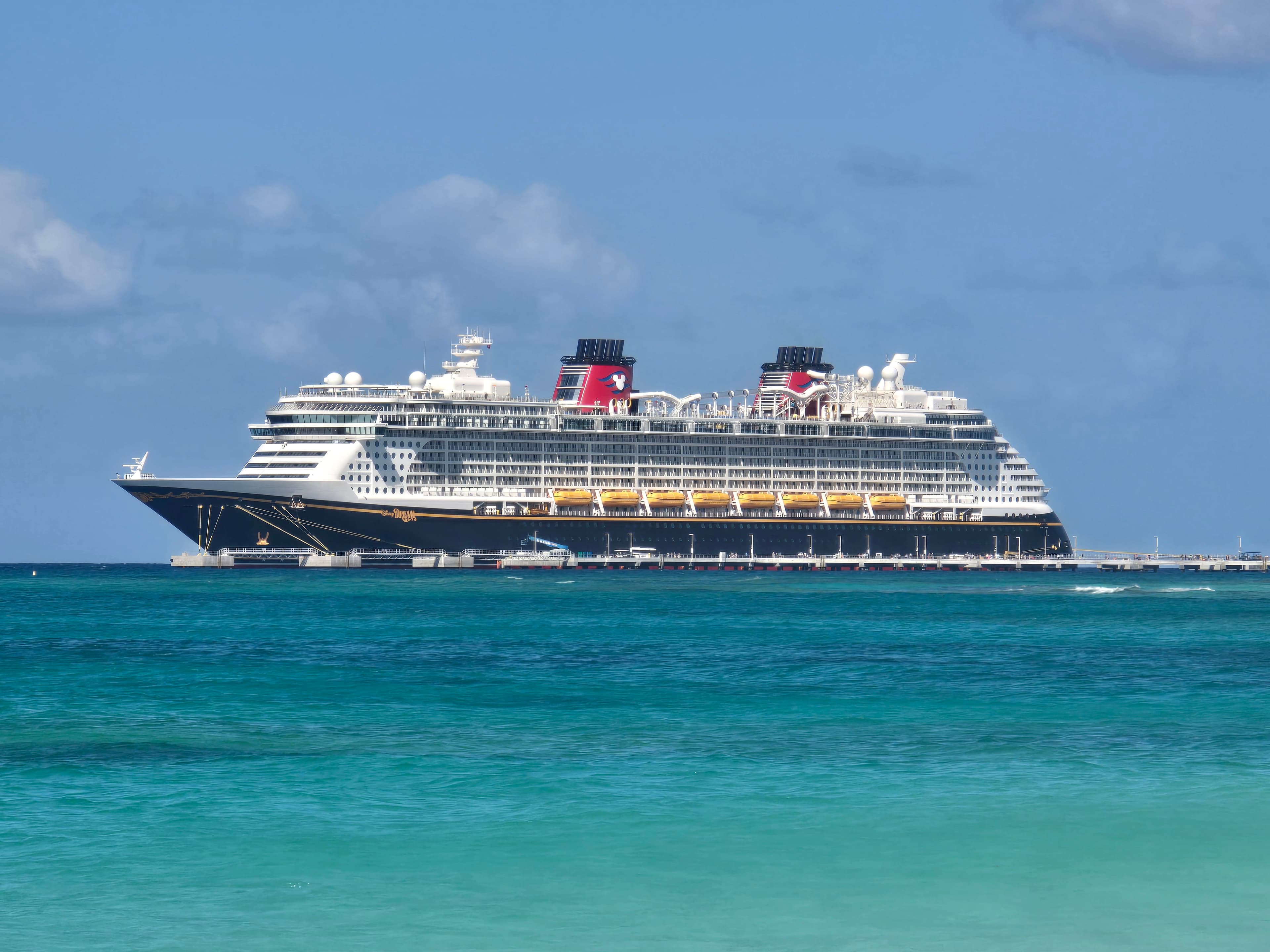
Disney Dream belongs to this category. It is not simply a familiar Disney Cruise Line ship, nor a floating platform designed solely for family travel. Rather, it is a ship that has developed a remarkably distinct identity over time: elegant without being cold, lively without becoming chaotic, and highly themed without ever being reduced to a theme park at sea. Returning onboard, even after previous experiences, means engaging once again with a concept that continues to work because it relies not only on novelty, but also on consistency.
The cruise taken in April 2026 from Fort Lauderdale to the Bahamas—with calls at Disney Lookout Cay at Lighthouse Point, Nassau and Disney Castaway Cay, as well as a day at sea—offered an itinerary that was already familiar on paper. The real difference this time, therefore, was not the route, but the way of experiencing it: the Concierge Level.
And this is precisely where the narrative begins to change.
It is no longer simply about observing the ship through its public spaces, restaurants, shows, and services for families and children. Nor is it solely about experiencing the Disney journey through the excitement of embarkation, the care given to the characters, the quality of the entertainment, or the Caribbean scenery. This time, the focus shifts to another level of the experience: the management of time, ease, seamless comfort, and a form of hospitality that does not replace the traditional Disney product, but makes it smoother, more personal, and more intimate.
The Concierge Level on Disney Dream is not simply a higher cabin category. It is a different way of experiencing the ship. It changes the perception of the cruise without altering its essence, because it does not turn Disney Dream into something different from what it is; rather, it allows guests to experience it at a gentler, more selective, and more mindful pace.
The difference can be felt even before the journey truly begins. A Disney cruise has always had a strong sense of ritual: arriving at the terminal, waiting, transitioning from everyday life into the world of the ship, and stepping onboard with that almost theatrical sensation that Disney creates better than many other operators. With the Concierge Level, this transition becomes less crowded, less fragmented, and more seamless. The essence of embarkation does not change; the pace does.
And pace is precisely the key to understanding this cruise.
Disney Dream is a rich ship, filled with options, activities, venues, and moments to discover. It can be experienced intensely, almost without pauses, following schedules, shows, character encounters, restaurants, pools, evening events, and children's activities. But it can also be experienced more selectively, allowing the sea, the stateroom, the lounge, the outdoor deck, a leisurely breakfast, or a pre-dinner drink to shape the day.
This is where the Concierge Level is particularly valuable: it does not simply add privileges; it removes friction.
It reduces waiting. It reduces the need to organize everything at the last minute. It reduces the feeling of having to “chase” the ship's schedule. It allows guests to experience Disney Dream with more breathing room, choosing what to do and what to skip, when to immerse themselves in the ship's overall rhythm and when to remain slightly apart from it.
This is an especially interesting perspective for those who are already familiar with Disney Cruise Line. On a first Disney cruise, everything tends to be about discovery: the characters, the entertainment, the rotational dining, the attention given to children, the layout of the ship, the shows, and Castaway Cay. After several experiences, however, the way you look at the journey changes. You are no longer seeking surprise alone. You begin to appreciate the quality of repetition.
And Disney Dream, from this perspective, remains an exceptionally well-rounded ship.
Its interior architecture retains one of the most successful characteristics of the Disney fleet: the ability to blend the classic references of the great ocean liners with an immediately recognizable decorative language. It is not a minimalist ship, nor does it aspire to be. It is a ship built around imagination, yet with a sense of balance that prevents it from becoming permanently excessive. The main public areas maintain an almost cinematic elegance, with nautical details, warm colors, generous spaces, and an overall design that conveys from the very beginning an idea of traditional cruising reinterpreted through the Disney aesthetic.
The central lobby remains one of the ship's most iconic spaces. It is the point of arrival, the setting for photographs, encounters, and the constant flow of guests. Here, the ship reveals its most theatrical side: everything is movement, anticipation, and a sense of stepping onto a stage. Yet moving into other areas quickly reveals a different atmosphere—calmer, more sophisticated, and more nuanced than one might often imagine when talking about Disney Cruise Line.
This is one of the aspects that is always worth emphasizing. Disney Dream is undoubtedly an ideal ship for families, but it is not a ship designed exclusively for children. The quality of its dining, the attention to its entertainment, its dedicated adults-only spaces, the organization of its service, and the precision of its overall product also make it appealing to those who observe the cruise industry from a professional perspective. Disney has created a formula in which families are at the heart of the experience, but are by no means its only audience.
On this voyage, the Concierge experience makes this balance even more apparent. The Concierge Lounge becomes a discreet point of reference, almost like an extension of the stateroom. It is not simply a place to have a drink or enjoy a snack. It is a transitional space. Guests may stop by in the morning before beginning their day, in the afternoon after returning from shore excursions, or in the evening before or after dinner. It is an environment that breaks down the scale of the ship, bringing it back to a more intimate dimension.
Perhaps this is the most interesting feature of the Concierge Level on a ship like Disney Dream: it helps narrow the distance between Disney's vast organizational machine and the individual passenger's experience.
On a Disney cruise, efficiency is everywhere. Schedules, activities, dining rotations, restaurants, shows, kids’ clubs, disembarkation, photographs, character meet-and-greets: everything is meticulously organized. This is one of the company’s greatest strengths, but at times it can also create a certain intensity. The Concierge Level introduces a gentler dimension. It does not eliminate the structure; it filters it.
There is also a less obvious, but perhaps even more important, element: the Concierge Level changes the way guests deal with the unexpected. On a traditional cruise, even aboard a perfectly organized ship like Disney Dream, passengers still have to manage small moments of decision-making: confirming a schedule, making a reservation, making a special request, clarifying the day’s program, choosing an activity, or adjusting the family’s schedule. These are minor details, but taken together, they create a quiet, often unnoticed part of the travel experience. In the Concierge setting, many of these steps are handled by a more attentive and personalized service that does not take away the passenger’s freedom, but makes it easier to exercise.
This aspect is particularly significant for those who already know the ship well. When stepping aboard Disney Dream for the first time, attention is drawn primarily to the scenery, the spaces, the characters, the shows, and Disney’s ability to turn each day into a sequence of instantly recognizable moments. Returning several times, however, makes you more sensitive to the quality of the organization, the management of time, and the smoothness of the service. The element of surprise becomes less important, while the precision of the system becomes more apparent. The Concierge Level allows guests to appreciate precisely this second layer of the cruise experience: not the most visible or spectacular one, but the more subtle dimension shaped by consistency, prompt responses, and thoughtful little touches.
The stateroom, naturally, becomes a central part of the experience. Aboard Disney Dream, Concierge accommodations offer more generous spaces and an enhanced sense of comfort. But what matters is not simply the square footage. It is the overall feeling: returning to the stateroom after an intense day ashore or an evening filled with shows and finding a tidy, bright, quiet environment becomes an essential part of the journey. The stateroom is no longer simply a place to sleep, but a true space for unwinding.
And on an itinerary like this, having time to unwind matters.
Departing from Fort Lauderdale offers a different perspective compared with other Florida ports. It is a convenient, straightforward departure, with a more manageable scale and an immediate gateway to the Bahamas and the Caribbean. Embarkation therefore takes on a practical yet pleasant character, ideal for a short or medium-length cruise that is nevertheless rich enough to alternate between beaches, time at sea, and moments onboard.
The first major highlight of the itinerary is Disney Lookout Cay at Lighthouse Point, Disney’s newest destination in the Bahamas, located on Eleuthera. Lookout Cay is significant because it represents an evolution beyond the traditional private-island concept. Castaway Cay is now a classic of the Disney Cruise Line product: seamless, well-organized, and perfectly integrated into the company’s distinctive storytelling. Lookout Cay, by contrast, has been conceived with a different language. It is more open, more closely connected to the local setting, and more contemporary in its approach to engaging with the environment and Bahamian culture.
Arriving at Lookout Cay creates a different impression from Castaway Cay. Here, the landscape feels less enclosed within the Disney aesthetic and more exposed to the island’s natural character. The sea, light, vegetation, and open spaces take center stage. Disney is naturally present, but the intention is to give greater visibility to the local context. It is still a young destination, and that is precisely what makes it interesting to observe: it does not yet have the emotional resonance or instantly recognizable character of Castaway Cay, but it offers a new perspective on the future of private or semi-private destinations within the cruise industry.
For Disney Cruise Line, Lookout Cay at Lighthouse Point is much more than a new beach. It is a strategic component of the brand’s expansion. As the fleet grows and demand increases, new destinations owned or controlled by the company are needed—destinations capable of ensuring quality, product consistency, and effective management of guest flows. From this perspective, Lookout Cay represents a concrete response: a destination designed to support growth while also refreshing the Disney narrative in the Caribbean.
Nassau, by contrast, offers a sharp change of pace.
It is a well-known port of call, often debated and sometimes underestimated by frequent visitors to the Bahamas. Yet precisely for this reason, it remains an interesting element of a Disney itinerary. After the carefully curated atmosphere of a Disney destination, Nassau brings passengers back into a more complex, commercial, and urban port environment. It can be experienced in many different ways: through organized excursions, walks through the city center, beach experiences, cultural visits, or simply as a chance to take a break from the ship.
On a journey already rich in places strongly shaped by the brand, Nassau introduces an element of contrast. Not everything is Disney, not everything is perfectly designed, and not everything follows the same visual language. And it is precisely this difference that makes Nassau valuable to the rhythm of the itinerary. After the immersive dimension of the ship and Disney destinations, Nassau serves as a reminder that cruising is also about experiencing real places, not simply engaging with a branded product.
The day at sea, between these ports of call, is perhaps when Disney Dream expresses itself at its best. It is the day when the ship once again becomes the undisputed protagonist. There is no need to disembark, no schedules dictated by excursions or beach visits, and none of the energy of a port. There is simply the ship.
And aboard Disney Dream, a sea day can be busy or unhurried, family-oriented or more adult-focused, lively or surprisingly peaceful. The pool deck naturally concentrates much of the energy, particularly during the middle of the day. Families move between pools, waterslides, activities, and casual dining. Indoor spaces host games, character encounters, screenings, and themed activities. Children have access to some of the best-organized youth clubs in the industry, while adults can carve out quieter moments in designated areas or less crowded spaces.
Once again, the Concierge Level changes the perspective. On a sea day, the advantage is not so much having “more,” but having an alternative. When the ship is at its busiest, being able to retreat to a private space, find peace and quiet, receive assistance, enjoy a drink or a snack, and spend time in a less exposed environment can profoundly change the experience. It is not about separating yourself from the ship, but about being able to control the level of intensity.
This ability to regulate the pace is particularly important on Disney Cruise Line. The Disney product is emotionally powerful. Colors, music, characters, shows, families, children, excitement: everything contributes to an engaging atmosphere, but also one that is almost continuous. Concierge guests can choose when to fully immerse themselves in this world and when to experience it from a more comfortable distance.
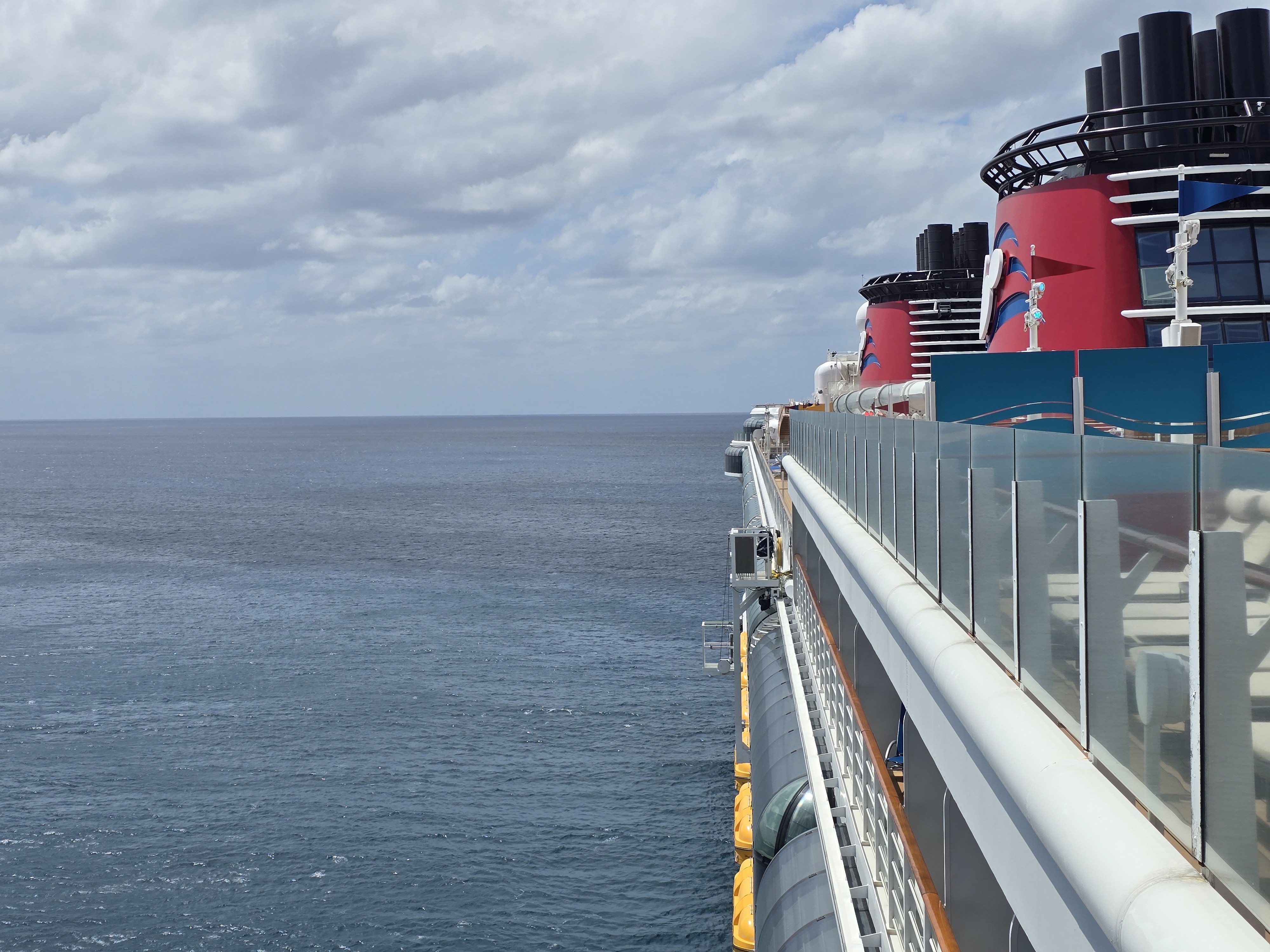
One of the most revealing moments of this different perspective often comes away from the day's main events. Not during a show, not necessarily while disembarking at a private destination, and not in the midst of the activity on the pool deck. It may come in the late afternoon, when the ship sets sail again after a port of call, the light begins to fade over the ocean, and a Concierge guest can retreat to a quieter space, watching the ship's movement from above without being completely immersed in it. It is in these moments that Disney Dream reveals a less frequently discussed dimension: not only a ship defined by family excitement and theatrical magic, but also a place of comfort, rhythm, and contemplation.
Dining remains one of the cornerstones of the Disney Dream experience. The rotational dining system continues to be one of the company's distinctive features: the restaurants change, but the service team stays with the guests, creating a sense of personal continuity within ever-changing surroundings. It is a familiar concept, but it remains effective because it combines visual variety with the familiarity of consistent service.
Onboard, the value lies not only in the quality of the individual dishes, but in the experience as a whole. Disney does not simply offer dinner; it creates a narrative sequence. Each restaurant has its own identity, its own rhythm, and its own relationship with the ship's overall storytelling. For those who have experienced this concept several times, the element of surprise may be less pronounced, but its reliability remains evident. It is a well-established system, capable of offering predictability without becoming mundane.
Entertainment, another major strength of Disney, continues to stand in a category of its own within the cruise industry. The shows are not simply an evening complement, but a fundamental part of the product. The company works with a highly recognizable theatrical language designed to appeal to different age groups simultaneously. This is perhaps where Disney Cruise Line demonstrates its distinctiveness most clearly: it does not simply adapt family-oriented content to cruising, but builds the cruise experience around a culture of entertainment that is deeply rooted in its identity.
In this sense, Disney Dream does not need to chase industry trends. It does not need to resemble a generic resort ship, pursue the aesthetics of contemporary luxury, or transform itself into a water park competing with other brands. Its strength lies in remaining true to its identity. And that identity, even years later, remains remarkably recognizable.
Castaway Cay, the final major stop on the itinerary, represents a return to a classic. If Lookout Cay is the new chapter, Castaway Cay is the established memory. It is one of the most iconic private destinations in the cruise industry because it has succeeded in turning a beach day into a seamless extension of the ship. Everything is simple, intuitive, and immediate. The beach, pathways, service, lunch, activities, and spaces for families and adults are all designed to minimize the effort of organizing the day and maximize the enjoyment of the experience.
Castaway Cay works because it does not ask passengers to figure much out. You step ashore and immediately settle into the rhythm of the island. It is a reassuring destination, familiar even to those visiting for the first time. After Lookout Cay, the comparison is inevitable and fascinating: on one side, a new destination more open to the landscape of Eleuthera; on the other, a place perfectly integrated into the tradition of Disney Cruise Line.
Having both destinations on the same itinerary makes it possible to appreciate an important stage in Disney's evolution. The company is not simply increasing the number of destinations; it is diversifying the way it interprets the concept of a “Disney island.” Castaway Cay is the original model, compact and perfectly defined. Lookout Cay is a more recent interpretation, seeking to incorporate local culture, nature, and a stronger sense of environmental awareness into a broader narrative.
For the passenger, the result is a remarkably balanced itinerary. Not necessarily revolutionary, but exceptionally coherent. Fort Lauderdale provides a convenient departure point; Lookout Cay introduces something new; Nassau adds a real and urban port; the sea day restores the ship to center stage; and Castaway Cay brings the journey to a close with the quintessential Disney classic.
But the true focus of this journey remains the relationship between familiarity and difference.
After traveling several times aboard Disney Dream, after having already written about the ship, the family experience, the excitement of having a child onboard, the appeal of the characters, and the destinations in the Bahamas, one might wonder what is left to say. The answer lies in the way the same cruise can change depending on the perspective from which it is experienced.
The Concierge Level does not transform Disney Dream into a traditional luxury ship. That is not the point. Disney Dream remains a Disney ship: family-oriented, theatrical, energetic, and deeply connected to its own narrative universe. But the Concierge Level allows guests to experience it with a different quality of time. It offers a smoother, more sheltered, and more personal cruise. It makes it possible to appreciate the ship without being overwhelmed by its busiest moments. It helps create a balance between participation and distance, between immersion and tranquility.
This is a value that becomes particularly clear when returning onboard. On a first experience, you tend to look at everything. On the second, you begin to choose. By the third, you start to understand what really matters. And on this journey, what mattered was not discovering Disney Dream as though it were new, but discovering a new way of experiencing it.
In this sense, a cruise aboard Disney Dream also becomes a reflection on the value of repetition in cruise tourism. Many cruise lines constantly seek novelty as their primary storytelling tool: new ships, new restaurants, new concepts, new destinations. Disney, while continuing to innovate and expand its fleet and shoreside experiences, retains a particular strength in continuity. Guests who return onboard are not necessarily looking for something completely different, but for the pleasure of rediscovering a world that works, a familiar language, and a recognizable standard of quality. The challenge for travel journalism, therefore, is not simply to describe what is already known, but to understand how expectations, perspective, and perception of the product evolve over time.
From this perspective, the April 2026 journey takes on a different meaning compared with previous experiences. It is not simply another cruise aboard the same ship, nor another confirmation of how effectively Disney Cruise Line speaks to families. Rather, it demonstrates that a mature ship can still offer compelling editorial material when viewed from a specific angle. The Concierge Level, the evolving dynamics of the itinerary, the presence of Lookout Cay alongside Castaway Cay, and the departure from Fort Lauderdale come together to create a different narrative, one focused more on the overall quality of the experience than on simply describing the product.
From an editorial perspective, this cruise also reinforces a broader reflection on Disney Cruise Line. The company continues to occupy a distinctive position within the industry: it is not simply family cruising, not premium in the traditional sense, not luxury, and not pure entertainment. It is an integrated product in which the ship, destinations, service, storytelling, and management of the guest experience work together with rare consistency.
This consistency is precisely why Disney Dream remains relevant. Despite the arrival of new ships, new classes, and new destinations, the Dream retains a strength of its own. It is a mature ship, not an outdated one. Familiar, but never taken for granted. Family-oriented, yet still capable of offering new perspectives.
In this context, the Concierge experience should not be described simply as an upgrade. That would be too reductive. It should be understood as a different lens—a lens that makes it possible to observe the ship's inner workings more clearly, appreciate the quality of its organization, experience the ports of call with greater ease, and transform a familiar cruise into a more sophisticated experience.
Perhaps this is precisely the key to returning aboard Disney Dream: understanding that, on certain ships, the novelty is not always found in the ship itself. Sometimes it lies in the passenger’s perspective. Sometimes it is in the stateroom chosen, the service received, the way the spaces are experienced, or the time one finally manages to reclaim.
Disney Dream, sailing from Fort Lauderdale to the Bahamas, remains an appealing cruise for families, Disney enthusiasts, and travelers seeking a carefully organized Caribbean vacation. But experienced from the Concierge Level, it also becomes a more adult, more mindful, and more measured experience. Not less Disney, but Disney in a different way.
And after several journeys onboard, perhaps this is the most interesting discovery of all: the magic does not necessarily change its form. It changes its pace.
Gabriele Bassi