The journey into the past takes little more than a minute. The timeline, spanning several hundred years, reveals just how incredibly rapid the emergence of new land in the far north of Europe has been when viewed on a geological timescale.
Where there was nothing but water in the mid-18th century, countless rocks began to emerge just a few decades later: some no larger than a fist, others several metres high. As the decades passed, the Baltic Sea gradually receded, making room for new islands: barren, rocky worlds that, over time, were colonised by lichens and mosses, shrubs and trees.
The Kvarken Archipelago, not far from the Finnish city of Vaasa, is a gigantic open-air geography textbook, an extraordinary example of the interplay between Ice Age glaciers, land uplift and erosion. Here, an ongoing process of transformation can be observed, as the land rises by around eight millimetres every year. A figure that may seem insignificant, but which accumulates over time. Since the glaciers retreated just over 10,000 years ago, the land has risen by more than 280 metres. New rocks are constantly emerging from the water; islands merge; bays turn into lakes; sea channels dry up. The archipelago comprises more than 5,600 islands. The largest is Replot, connected to mainland Finland by a 1,045-metre-long bridge. Every year, the land area increases by another square kilometre. In around 2,000 years, it may even be possible to walk from Finland to Sweden. On the opposite shore lies the Höga Kusten, or High Coast, which forms Sweden’s counterpart to Kvarken. But that time is still a long way off. The process and its consequences, however, are visible everywhere across the vast expanse of the Gulf of Bothnia, the northernmost extension of the Baltic Sea, whose elongated shape bears a striking resemblance to a fjord.
Anyone wanting to understand why land uplift is proceeding at such a remarkable rate here should visit the World Heritage Visitor Center, less than 20 minutes by car from the centre of the western Finnish port city of Vaasa, founded in 1606 by the Swedish King Charles IX Vasa. While outside, the waves of the Baltic Sea lap against the quay, inside visitors travel back in time to the last Ice Age in a kind of time capsule. Twenty thousand years ago, an ice sheet three kilometres thick covered the land; the enormous weight of this gigantic glacier exerted constant pressure on the Earth’s crust, forcing it downwards by around 800 metres, according to estimates. When the ice finally began to melt, the opposite process set in: the pressure decreased and the land began to rise. Initially, the ground rose by more than a metre a year; today, the rate has fallen to around eight millimetres annually, but it is still one of the highest rates anywhere on Earth. The result is an archipelago of islands and islets, a true paradise for hikers, kayakers and those seeking relaxation, which has been a UNESCO World Heritage Site since 2006. Countless islands – some several square kilometres in size, others little more than piles of rocks – define this maritime landscape. Fishing villages and summer houses nestle along the coastlines, while winding bays and rugged beaches lie hidden behind them. Birch, fir and pine forests spread across the larger islands. The shallow waters, reed beds and uninhabited islands provide an ideal habitat for more than 100 bird species.
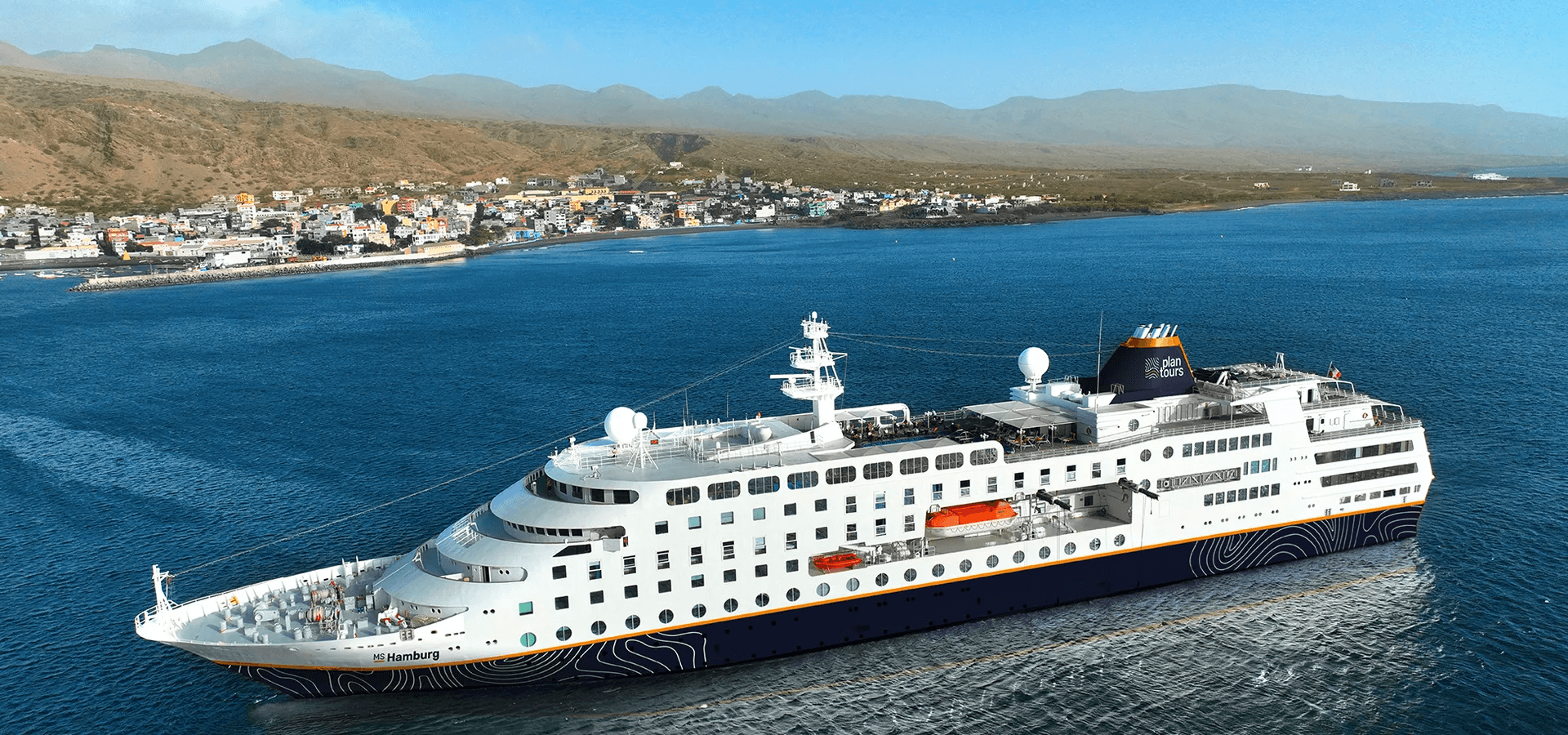
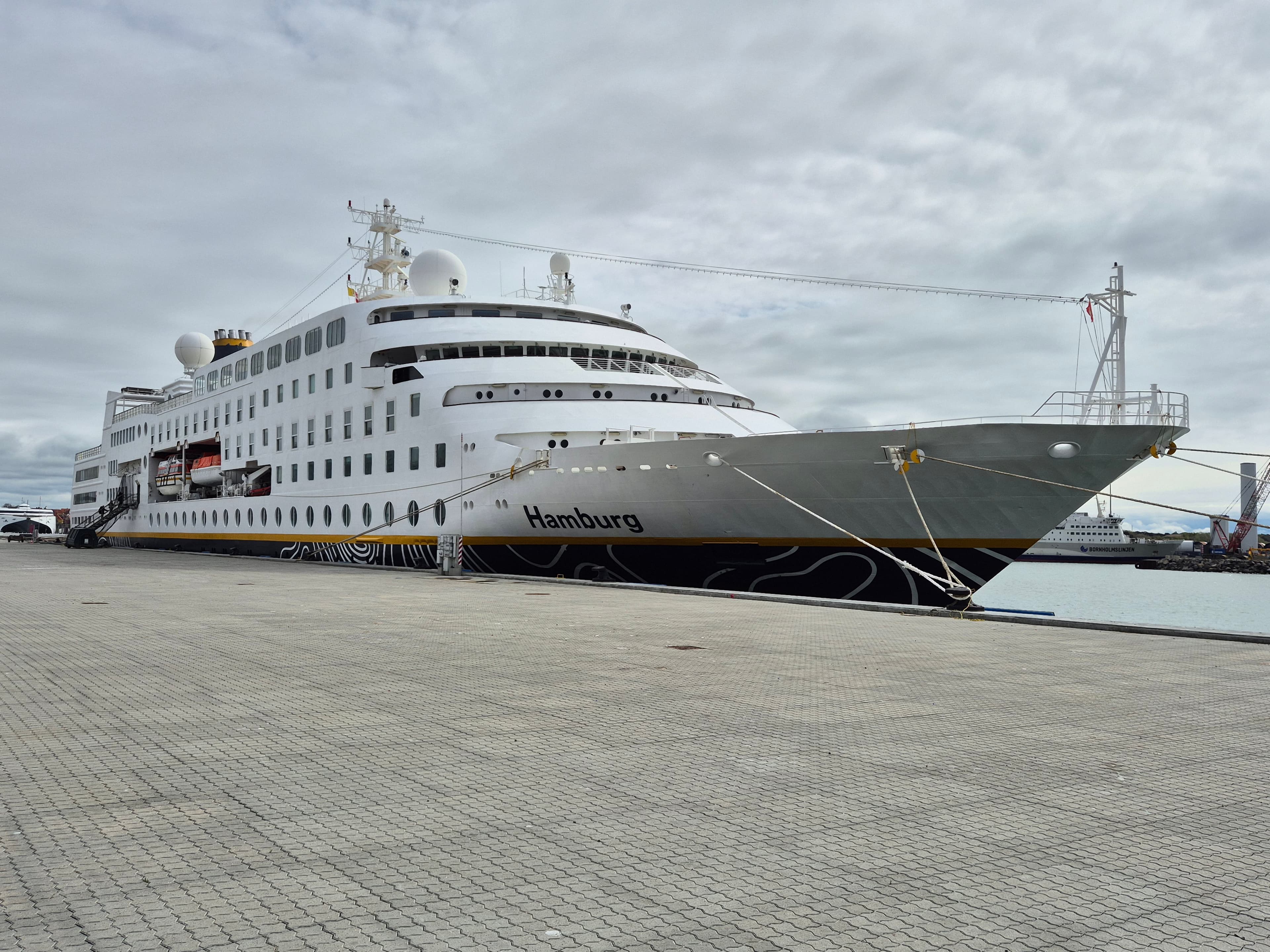
The Finnish archipelago is one of the highlights of the cruise through the Gulf of Bothnia. And there can hardly be a ship better suited to sailing up Sweden’s east coast and then working its way south along Finland’s west coast than the MS Hamburg operated by Plantours. At just 144 metres long and 21.5 metres wide, this cruise ship, with a draught of just over five metres, can also dock in smaller ports that larger vessels are forced to avoid.
Ports, however, are another matter. This more than 700-kilometre-long extension of the Baltic Sea, which begins in the south at the latitude of the Åland Islands and stretches northwards to the Arctic Circle, is hardly a typical cruising ground. Ports with adequate infrastructure – Wi-Fi, cruise terminals and bus connections to the towns included in the excursion programme – are therefore the exception. Anyone wanting to see more than austere commercial ports, where forklifts are busy loading and unloading supply vessels, inevitably has to rely on shuttle buses, and would be well advised to keep their timetables firmly in mind. The farther north the “Hamburg” ventures, the more remote and sparsely populated the landscapes become. Public buses and taxis are few and far between. And who would want to find themselves stranded in places such as Sundsvall, Umeå, Luleå, Kemi or Oulu, whose very existence was previously unknown to most of the passengers?
The 400 fans of the Hamburg, including a surprisingly large number of solo travellers who can afford the dream of a sea voyage thanks to remarkably modest single supplements, do not seem to mind at all. On the contrary: when departing from Kiel, newcomers almost feel as though they are attending their final school reunion. Passengers greet one another with hugs and smiles, exchange pleasantries and reminisce about their previous trip together. Judging by appearances, almost one passenger in two is a repeat traveller, for whom the Hamburg’s friendly, relaxed atmosphere, the crew’s service and the exceptional itineraries away from the most overcrowded tourist routes matter more than an endless choice of restaurants, bars and leisure activities. The Hamburg, which once sailed the world’s oceans under the name Columbus for Hapag-Lloyd and has been part of the Plantours fleet since 2012, may show some signs of age – some cabins could certainly benefit from a modern update – but Germany’s smallest cruise ship offers everything needed for a holiday at sea. At dinner, everyone gathers for a multi-course menu in the “Alsterblick” restaurant, without being tied to a fixed seating. The theatre, the cosy wine bar and the various bars are the meeting places for entertainment and convivial get-togethers. Those who wish can indulge in some pampering at the spa or hair salon.
Balcony cabins, water slides, climbing walls or even go-kart tracks, all far from unusual on today’s oversized floating resorts, are not missed by anyone. Even the small but stylish fitness centre with its sea views remains largely unused throughout the two-week voyage. After all, on Plantours’ only ocean-going vessel, passengers under 60 are few and far between.
The Hamburg, an elegant white diva with a refined silhouette, is at her best in Copenhagen. While rival cruise ships, recognisable by the characteristic kiss painted on their bows, are forced to anchor far outside the Danish capital, the Hamburg docks just a short walk from the Little Mermaid, with a splendid view of the Dannebrog, the royal family’s luxurious yacht, lavishly adorned with gold. Amalienborg Palace, famous for the Changing of the Guard ceremony held punctually at noon, is just a few steps away; Tivoli Gardens and the hugely popular Nyhavn waterfront, with its colourful gabled houses, historic wooden ships and countless restaurants and cafés, are also easily reached on foot. In Stockholm, another highlight of the journey, the Hamburg has to dock at one of the ferry terminals, as the city authorities eventually deemed the heavy concentration of ships around the historic centre of Gamla Stan too much and banned the giant cruise ships from the heart of the city. Thanks, however, to a perfectly organised bus network, passengers can reach Stockholm’s historic core within minutes, with its cobbled streets, earth-toned gabled houses and intimate squares, where tourists and locals alike can enjoy a traditional Swedish fika: a coffee break accompanied by a cinnamon bun or a shrimp sandwich. It is best not to suffer from claustrophobia in this maze of narrow streets, though, because Sweden’s capital exerts a magnetic pull.
The several-hour voyage through the archipelago surrounding the capital is one of the most spectacular passages of the entire 4,358-kilometre journey. It is hard to imagine a more quintessentially Swedish experience than this, right on the doorstep of the capital. Almost 30,000 islands rise from the steel-blue waters of the Baltic Sea, but only 150 are inhabited year-round. There are, by contrast, more than 50,000 holiday homes, many of them without electricity or running water, because the desire to “return to nature” is deeply rooted in the Swedish soul. The Hamburg glides slowly past rocks polished smooth as glass, crowded with sun-seekers; she passes ferries and sailing dinghies and winds her way through a seemingly endless maze of islands. It feels as though one has suddenly found oneself in the scenery of an Inga Lindström film, or in the setting of Seacrow Island, the children’s television series featuring Tjorven, Pelle and Stina, filmed on Norröra. Astrid Lindgren spent 60 summers at her holiday home on Furusund. August Strindberg immortalised the archipelago not only in his literary works but also on canvas. And even today, this mosaic of islands and bays continues to attract celebrities. In Vaxholm, a picturesque town with shops, galleries, cafés and sailing and motorboats gently bobbing in the harbour, stands the holiday home of Björn Ulvaeus. The creative mastermind behind ABBA regularly refuels his 20-metre yacht at the orange petrol station on the jetty along Strandgatan. On Grinda, which was once owned by the Swedish Crown and later became the site of a summer camp for girls from disadvantaged families, US superstar Pink plunged into the icy waters of the Baltic before speeding through the islands on a jet ski, in perfect Instagram style. And in Sandhamn, with its lively nightlife, you may encounter Viveca Sten, bestselling author of the popular television series The Sandhamn Murders.
This will not be the only encounter with the darker side of the Scandinavians. Is it the long, dark winter days that lead some people to indulge in violent fantasies? Or is it the wilderness, where people can lose themselves and inevitably end up becoming eccentrics? In Umeå, more than 600 kilometres north of Stockholm, crime-fiction fans could follow in the footsteps of Stieg Larsson, author of the Millennium trilogy. If only the city paid tribute to its illustrious son. In this northern Swedish city, which has a young, vibrant and exceptionally creative character thanks to its prestigious university, there is not a statue, a square or even a school dedicated to the writer, who died of a heart attack at just 50 and never lived to witness the worldwide success of his books. Were it not for Nya Konditoriet on Kungsgatan, where the much-maligned author loved to indulge in fika, the sacred Swedish ritual of an afternoon coffee, cake and conversation, there would be virtually nothing in Umeå to commemorate the famous writer. In this establishment, where the atmosphere of a traditional Viennese coffee house meets that of a grandmother’s sitting room, complete with lace doilies and vintage tea and coffee sets, locals and visitors gather over cream-laden cakes, cinnamon buns or a hearty räksmörgås, the classic Swedish shrimp sandwich.
Anyone strolling through the city, founded in 1622 by King Gustav II Adolf at the mouth of the Ume älv River, might be rather disappointed at first sight. Umeå, like many of the other places encountered during the two-week journey, is certainly not a picture-postcard Nordic beauty. The building boom of the second half of the 20th century stripped the city of much of its historic character, replacing it with a decidedly nondescript appearance. Plain concrete blocks dominate the landscape, scattered about like Lego bricks and built with the literal purpose of providing a roof over people’s heads rather than for aesthetic reasons. There are, however, reminders of a distant past, when Umeå began to establish itself as an important trading centre, from the Neo-Renaissance town hall to the old villas in delicate pastel colours, with elegant bay windows and intricate wooden ornamentation on their gables. Architectural gems, though, are few and far between. Along the river, by contrast, the city has embraced innovative, forward-looking architecture, such as the Bildmuseet designed by Henning Larsen, which houses an important collection of photographs documenting life in this remote corner of the world. The seven-storey building, with its distinctive Siberian larch slats, looks almost like a showpiece straight out of an IKEA catalogue.
Beyond the architectural monotony, visitors need only venture onto the party boats or onto the stone steps along the Ume älv, where the long summer nights, fuelled by rivers of beer, seem never to end, to realise just how young and vibrant this urban centre on the Gulf of Bothnia really is. Thanks to the university and a new generation of young, innovative entrepreneurs, the population has risen to 134,000; one in four residents is a student. By 2050, the city is expected to reach a population of 200,000. It is the unique combination of untamed nature and modern culture that acts as a magnet, drawing people from all over the world. Umeå can even afford the luxury of having an opera house with a permanent company. There is no shortage of museums either, including the Guitar Museum, which houses instruments once owned by Paul McCartney, Jimi Hendrix and Bruce Springsteen, as well as the gleaming white Väven cultural centre. Culture is the true defining feature of this city, as young, dynamic and carefree as many of its inhabitants. Locals continue to get around by bicycle even in the depths of winter, when temperatures plunge well below freezing. The initiative came from the municipal authorities, who have set themselves the goal of turning Umeå into a model green city. Not only do they promote the construction of environmentally friendly housing, they also heat cycle paths and roads – far from a matter of course in a place where snow can remain on the ground for as many as eight months of the year.
Today, life this far north is remarkably comfortable, thanks to airports, roads, electricity and the internet. In the past, however, things were very different. Those concerned with the salvation of their souls had to undertake days-long journeys on foot simply to attend church services. For this reason, so-called church villages sprang up throughout the region, providing worshippers with places to stay overnight. The most impressive of the 71 church villages lies just a few kilometres from Luleå. The first houses of historic Gammelstad, designated a UNESCO World Heritage Site in 1996, were built in the mid-16th century. Today, the village comprises more than 400 buildings, all painted in the characteristic Falun red, with tiny rooms and low ceilings. The simple cottages, known as kyrkstugor, provided more than just a warm place to sleep. These small villages were places where friends and acquaintances met, markets and court hearings were held, and where, after nightfall, young people set out in search of a future wife or husband. The cottages had no stoves, let alone kitchens. Anyone undertaking the several-day journey to the church town of Luleå – whose parish once covered an area of more than 90,000 square kilometres, larger than the whole of Bavaria – had to bring food from home and eat it cold. The risk of fire would simply have been too great.
During the week, Gammelstad appears almost deserted. At weekends, however, life returns to the small settlement clustered around the late-medieval stone church, which is still used for weddings and baptisms. Cyclists roll along the cobbled streets, sun-seekers bring out their deckchairs and, in the “Captain’s House”, now converted into a café, tourists tuck into homemade blueberry cake topped with generous amounts of whipped cream. Almost all the cottages are privately owned and may be used during the day. Their owners, however, are not allowed to stay overnight. From time to time, a cottage even comes up for sale and, as Charlotte, who lives in Luleå, puts it, “they sell like hot cakes.”
Every day aboard the MS Hamburg brings new places waiting to be discovered. In Sundsvall, the gateway to the Höga Kusten, Sweden’s counterpart to the Kvarken Archipelago, passengers are enchanted by the magnificent stone buildings with turrets, bay windows and richly decorated façades. After a devastating fire broke out on Midsummer Day in 1888, the city in Västernorrland was rebuilt in the Historicist style, earning it the nickname “Stenstad”, the City of Stone. In Kemi, Finland, meanwhile, the programme includes a visit to Santa Claus, who, for a substantial fee, poses for souvenir photographs and allows visitors to write Christmas letters to their loved ones and send them on their way in the middle of summer. In Visby, the charming capital of the island of Gotland, excursion-goers make their way from one romantic church ruin to the next: imposing buildings that are now used as theatres or atmospheric open-air cafés. The atmosphere becomes truly hyggelig, that is, cosy and pleasantly intimate, on Bornholm, Denmark’s easternmost outpost and a true paradise for outdoor enthusiasts. According to legend, when the Creator had finished shaping the world, some material was left over. He simply threw it into the sea and used it to create this beautiful patch of land, which enjoys an impressive 1,700 to 1,800 hours of sunshine a year. The result is a kind of “Best of Scandinavia”, with rugged granite cliffs, white sandy beaches, fortified round churches and Hammershus, the largest castle ruin in Northern Europe, whose caves are said, according to legend, to be home to the lord of the underworld.
Normally, there is certainly no need for a cruise passenger to worry about food. The MS Hamburg’s latest daily provisions list includes 1,221 kilograms of beef, 1,120 kilograms of pork, 1,140 kilograms of poultry and 11,000 eggs. And that is without even counting the seafood, fresh fruit and vegetables, or all those liquid calories. In Bornholm, however, we allow ourselves a little culinary detour, because the dish known as “Sol over Gudhjem” is celebrated throughout Denmark. Take a golden-smoked herring, garnish it with radishes, onion rings, chives and green salad, and crown it with a raw egg yolk. The smørrebrød is ready, and it tastes even better with a cold beer from the nearby brewery.
Roswitha Bruder-Pasewald