
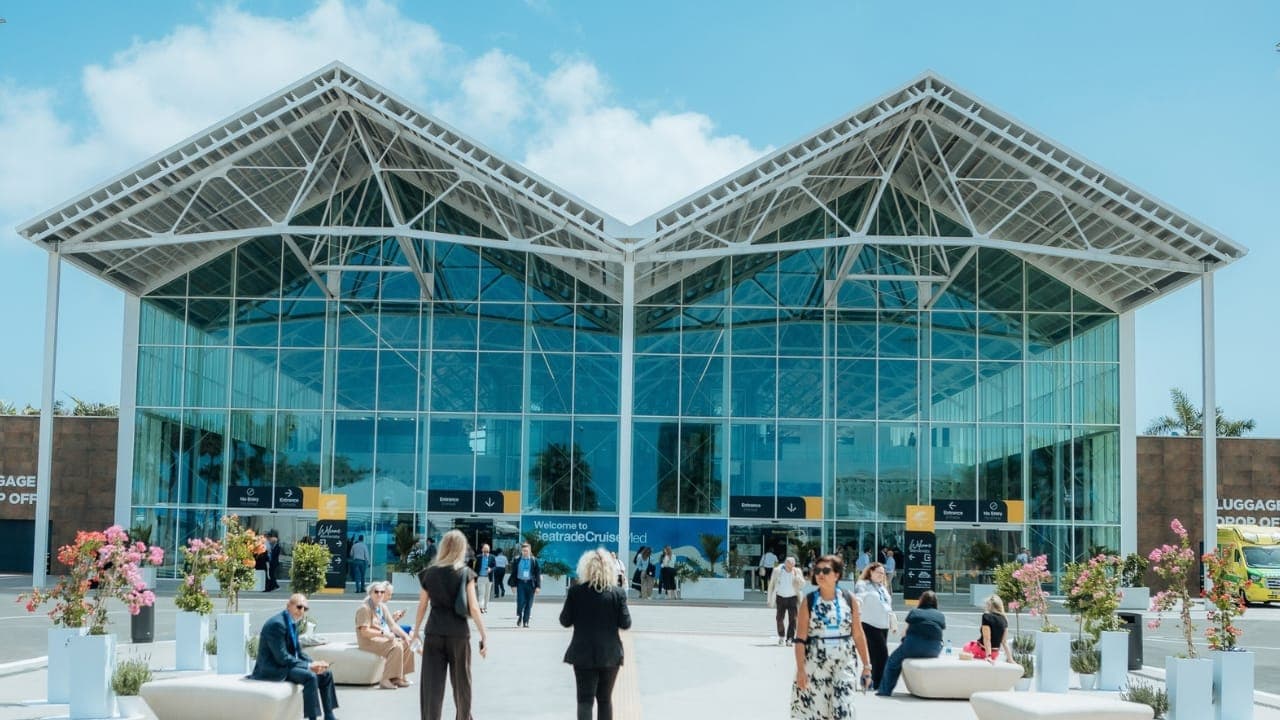
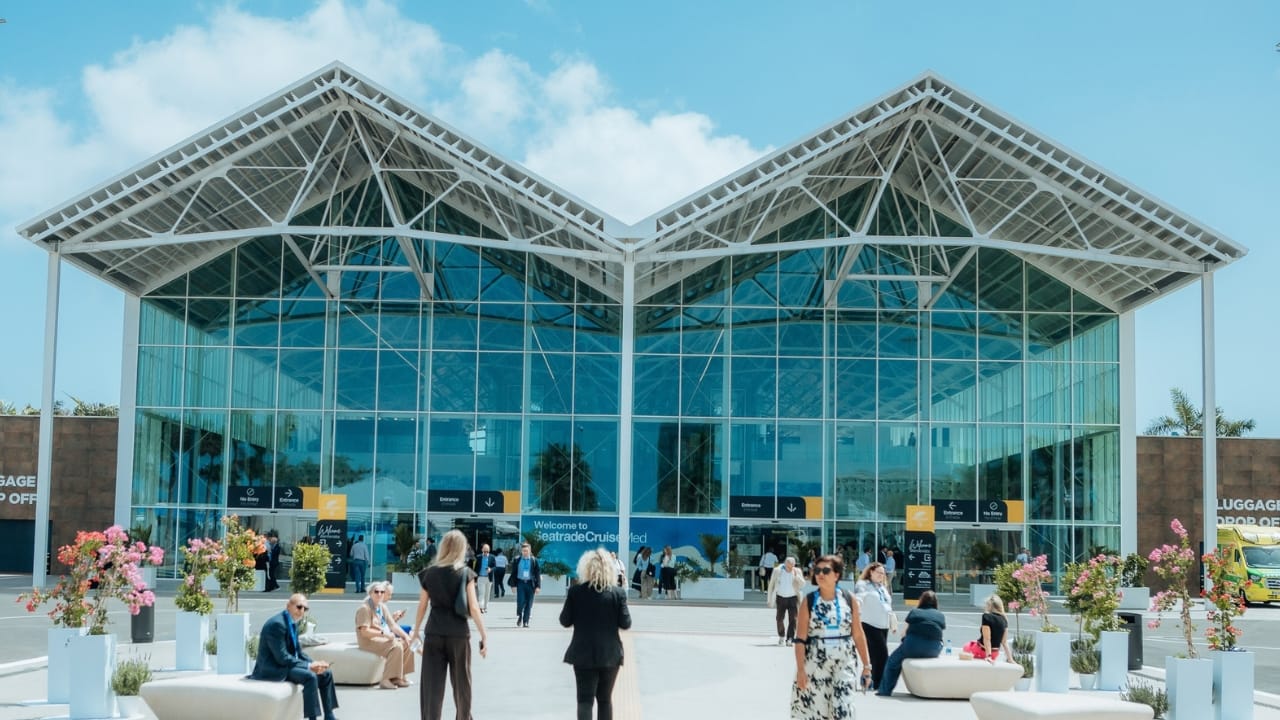
The 2026 edition of Seatrade Cruise Med has come to a close in Las Palmas de Gran Canaria. Held on September 16 and 17, the event brought together cruise lines, ports, industry professionals and other key stakeholders to discuss the main transformations currently shaping the Mediterranean cruise market.
Under the theme “Raising Expectations”, the conference programme placed the spotlight on sustainable growth, the evolution of destinations, the future of luxury cruising and the need to strike a balance between development, authenticity and the impact on local communities.
Across the two-day event, 25 conference sessions featuring more than 90 speakers explored new opportunities for the Mediterranean and the growing role of the Atlantic, as well as prospects for reducing seasonality and the evolution of the travel experience.
The conference programme opened with Charles “Bud” Darr, President and CEO of the Cruise Lines International Association (CLIA), who highlighted the strategic role of the Mediterranean in the global cruise landscape and the importance of collaboration between cruise lines, destinations and industry stakeholders. Darr stressed that cruise tourism is, by its very nature, an industry managed in close cooperation with destinations, highlighting the commitment of CLIA member cruise lines to promoting responsible growth, strengthening sustainable destination management and developing technologies and practices capable of reducing emissions and improving environmental performance. According to Darr, the Mediterranean still offers significant opportunities for development, and closer collaboration will be essential to ensure that industry growth can generate lasting value for local communities, travellers and the region as a whole.
Another key moment of the programme was the panel “State of the Mediterranean Cruise Industry: Raising Expectations”, dedicated to the growth prospects and new challenges facing the Mediterranean cruise market. At the heart of the discussion was the need to “raise the bar” in order to keep the Mediterranean among the world’s most attractive cruise destinations. Growth brings new responsibilities, particularly in terms of infrastructure, destination management, sustainability and long-term value creation. With 39.75 million passenger movements recorded in 2025, together with strong expansion in the luxury segment and significant investment in new ships over the coming years, the Mediterranean is entering a new phase of transformation in which growth and quality will increasingly need to go hand in hand.
Another topic addressed during Seatrade Cruise Med 2026 was the relationship between cruise lines, ports, cities and destinations in the panel “The Destination Stewardship Compact: How Cruise, Ports and Cities Build Better Tourism Together”. The discussion focused on the need to plan tourism growth well in advance through greater cooperation among all stakeholders. From flow management and infrastructure to mobility and environmental performance, the importance of responsible destination management emerged clearly, with the aim of generating tangible benefits for local communities.
Particular attention was given to the delicate balance between tourism growth and the priorities of local communities. Governments, destinations, port authorities and cruise lines are called upon to share objectives and responsibilities, encouraging more coordinated and forward-looking planning. In this context, the growth of the European blue economy will need to go hand in hand with a tourism model capable of keeping destinations attractive and sustainable, while also strengthening the economic value generated by cruise tourism.
Reducing seasonality was one of the recurring themes at Seatrade Cruise Med 2026, addressed in two sessions of the programme. The opening keynote “The Rarest Season: Building the Mediterranean’s Year-Round Economy” highlighted the strong concentration of tourism flows during the summer months and the need to better distribute demand throughout the year. The low season remains an underutilised resource, offering significant potential for destinations, businesses and local communities.
The topic was then explored further in the panel “Balancing Seasonality: The Year-Round Tourism Economy”, held in collaboration with the Tourism Seasonality Summit, which brought together representatives from airlines, cruise lines, airports and ports. The discussion highlighted the importance of greater cooperation to strengthen the shoulder seasons, reduce pressure during peak periods and create new economic opportunities. The goal is to transform seasonality from a challenge into an opportunity for growth, contributing to a more stable tourism economy that remains active throughout the year.
Decarbonisation was another central theme at Seatrade Cruise Med 2026, with the panel “Moving the Needle: Decarbonisation Beyond Fuel”, dedicated to practical solutions for reducing emissions across the cruise industry. Beyond alternative fuels, the discussion examined technologies and strategies such as energy efficiency, smarter itinerary planning, the use of batteries and the optimisation of onboard and port operations.
The discussion highlighted the need to take a broader approach to decarbonisation by combining different solutions and accelerating their adoption. In this process, collaboration between cruise lines, ports and other industry stakeholders is essential to share technologies and expertise and turn existing solutions into tangible results in reducing environmental impact.
The relationship between ports and local communities was at the heart of the panel “More Than a Port: A Gateway to Community Trust & Engagement”, which focused on the need to build and maintain trust within local communities. In a growing industry, infrastructure development and the arrival of new ships must be accompanied by initiatives capable of generating tangible benefits for residents, crews and visitors.
The discussion focused on accessibility, inclusion, training and community engagement, highlighting the role of ports as points of connection between the cruise industry and the local territory. A more open and participatory approach can strengthen relationships with communities and build greater support for the industry, transforming the port from a simple gateway for passengers into an active member of the community and a contributor to local economic and social development.
The growth of the luxury segment was at the centre of the panel “Beneath the Luxury Itinerary: What the Med & Atlantic Demand of Ports & Destinations Now”, in a market that has expanded significantly over the past decade. The number of luxury cruise ships increased from 28 in 2010 to 97 in 2024, with growth increasingly extending to the Mediterranean and Atlantic.
The discussion highlighted how premium guests’ expectations now go beyond the onboard experience, encompassing welcoming arrangements, privileged access, personalised shore experiences and visitor-flow management. Ports and destinations are therefore being called upon to rethink their role and work more closely with cruise lines to deliver shore experiences aligned with a luxury positioning, built around authenticity, quality and privileged access. In this context, the destination is becoming an increasingly integral part of the premium experience.
The theme of personalising shore experiences was addressed in the panel “Tailored, Not Templated: Delivering Brand Differentiation Ashore”, which focused on the need for cruise lines to maintain a distinctive identity beyond the ship. While brands are increasingly investing in recognisable experiences onboard, this identity can risk being lost when passengers encounter shore excursions and activities that are too similar to one another.
The discussion highlighted the need for destinations and local operators to develop more personalised offerings that reflect the positioning of different brands, from luxury and expedition to contemporary and family cruising. Greater cooperation between cruise lines, destinations and shore-side partners can create more authentic and targeted experiences, strengthening the overall value of the itinerary and turning each excursion into a natural extension of the onboard experience.
The Seatrade Cruise Med 2026 programme also focused on the opportunities offered by the Caribbean and Latin America, with the interactive workshop “Beyond the Beach: Creating Authentic Caribbean & Latin American Experiences for European Cruise Guests”. At the heart of the discussion was the evolution of European travellers’ expectations, with growing interest in immersive and authentic experiences that go beyond traditional sightseeing. Caribbean and Latin American destinations offer an extremely rich combination of culture, history, gastronomy, music, nature, adventure and hospitality, which can represent an important source of appeal for the European market. The challenge is to turn these assets into experiences that offer passengers more authentic connections with destinations and local communities.
Among the initiatives presented at Seatrade Cruise Med 2026 was “Cruise Ready”, the new series of Masterclasses developed by CLIA for port and destination leaders. The programme was created to help destinations better understand cruise lines’ needs and respond to the transformations taking place across the industry.
The Cruise Ready Masterclass Series, developed with the contribution of industry experts, consists of 21 modules covering topics such as infrastructure, operations, technology, sustainability, security, guest experience, investment and port-city integration. Its goal is to provide practical tools to help ports and destinations plan investments more effectively and prepare for the evolution of the market.
The growing convergence between luxury hospitality and cruising was at the centre of the panel “When Hotel Brands Set Sail”, dedicated to the entry of major international hotel brands into the maritime sector. As these brands move into the cruise space, the boundary between a luxury hotel and a cruise experience is becoming increasingly blurred, bringing new standards of service, design and guest experience onboard.
The discussion examined the first operational experiences of these new players and their contribution to redefining luxury cruising, with greater emphasis on personalisation, exclusivity and attention to detail. This convergence is also affecting destinations, ports and the wider tourism ecosystem, marking a new phase in the evolution of the luxury segment, increasingly connected to the world of hospitality.
The evolution of the expedition segment was at the centre of the panel “What Defines Expedition Cruising Today?”, which examined how expedition cruising is changing as operators expand into new regions and traveller expectations evolve. Today, expedition cruising is no longer defined solely by the destination, but increasingly by the quality and authenticity of the experiences offered.
The discussion highlighted the importance of cultural immersion, engagement with local communities and more meaningful and unconventional experiences, requiring operators to adopt an increasingly destination-focused approach. In this context, exploration, authenticity and connection with destinations are becoming the defining elements of the new generation of expedition cruising.
The growth of the cruise industry and the opportunities linked to the Atlantic were at the centre of the session “Cruise Outlook: Growth, Deployment & the Atlantic Opportunity”, during which Oxford Economics analysed the data behind market expansion, cruise line deployment strategies and the growing role of the Atlantic within the Mediterranean cruise landscape. The region is emerging as one of the most dynamic areas, offering new development opportunities while also helping to diversify available capacity.
The role of technology in managing tourism growth was at the centre of the panel “Smarter Destinations: Can Technology Help Manage Destination Growth?”, dedicated to digital solutions that can help Mediterranean destinations manage increasing visitor flows while maintaining a balance between visitor experience and the needs of local communities.
Among the tools analysed were artificial intelligence, real-time data, digital wayfinding systems and visitor-flow management technologies, which can help distribute arrivals more effectively, reduce congestion and improve planning. However, the discussion stressed that technology alone is not enough: strategy, planning and collaboration between destinations, ports, operators and local communities are essential. A “smart” destination is therefore one that can integrate digital tools into a model that improves both the visitor experience and residents’ quality of life.
Artificial intelligence was at the centre of the panel “Practical AI in Ports: Cutting Through the Hype”, dedicated to the practical applications this technology is already bringing to the cruise industry. The discussion sought to move beyond the enthusiasm surrounding AI, focusing instead on cases where its use can already deliver tangible results in port operations.
Areas examined included berth management, congestion control, predictive modelling and passenger-flow management, all of which can make operations more efficient and support decision-making processes. The discussion also highlighted the need for adequate digital infrastructure, reliable data and a clear strategy to turn AI’s potential into effective results.
The role of storytelling in destination development was at the centre of the panel “Beyond the Bucket List: The Art of Destination Storytelling”, which focused on the need to move beyond the best-known attractions and offer cruise passengers more authentic experiences. At a time when destinations are seeking to distribute visitor flows more effectively, the ability to tell the story of a place can become a strategic tool.
The panel highlighted how lesser-known neighbourhoods, local experiences, gastronomy, culture and traditions can create a deeper connection between visitors and destinations. Effective storytelling can therefore inspire passengers to explore new places, distribute visitor flows more evenly and create opportunities for local communities, making the overall experience more authentic and memorable.
The panel “The Atlantic Advantage” explored the role the Atlantic can play in the evolution of the Mediterranean cruise system. At the heart of the discussion was the Atlantic’s ability to increase cruise capacity, ease pressure on established ports and strengthen the wider Mediterranean cruise ecosystem. Growing interest in the region is also linked to the opportunity to develop new itineraries, distribute visitor flows more effectively and showcase destinations capable of offering new experiences to passengers. The discussion therefore highlighted how the Atlantic can represent not only a natural extension of the Mediterranean market, but also a strategic lever for more balanced and diversified cruise growth in the region.
The ability of port infrastructure to keep pace with the technological evolution of new ships was at the centre of the panel “Is Shoreside Infrastructure Ready for the Next Generation of Ships?” Cruise lines are investing in increasingly efficient ships designed to use alternative fuels and shore-side electricity, raising a fundamental question: are ports ready to support this evolution?
The discussion examined challenges related to cold ironing, alternative fuels, electricity-grid capacity and regulatory requirements, highlighting the risk of a growing gap between the technologies available onboard and those available in ports. Bridging this gap will require investment, planning and collaboration between cruise lines, port authorities, governments and energy providers.
Infrastructure upgrades will also play an increasingly important role in cruise line deployment decisions, influencing the ability to include certain destinations in the itineraries of next-generation ships. Port readiness is therefore not only an environmental and operational issue, but also a key competitiveness factor for the destinations of the future.
The role of cruising as a gateway to a broader tourism experience was at the centre of the panel “Making Every Call Count: Unlocking Longer Stays & Lasting Destination Value”. More and more passengers are choosing to extend their trips before or after their cruise, while some later return independently to destinations they first discovered by ship. For destinations, this means moving beyond simply attracting new ships and turning every port call into an opportunity to create lasting value.
The discussion examined how ports, destinations and tourism operators can work together to encourage longer stays, increase visitor spending and strengthen connections with local communities. The aim is to turn a first cruise visit into an experience capable of encouraging future visits and creating a longer-lasting relationship with the destination.
The theme of responsible tourism was at the centre of the panel “Leave Something Behind: Responsible Shore Experiences”, dedicated to the growing demand for experiences that leave a positive impact on destinations. Travellers are increasingly interested in meaningful experiences that do not compromise cultural heritage, local communities or ecosystems.
The discussion explored the role of responsible wildlife encounters, regenerative tourism initiatives, community-led experiences and partnerships with local organisations, demonstrating how experience quality and destination protection can go hand in hand. The goal is to develop offerings that do not simply minimise tourism’s impact, but can actively contribute to the wellbeing of destinations.
The importance of the first moments ashore was at the centre of the panel “The First 15 Minutes Ashore”, which highlighted how the destination experience begins well before passengers reach an attraction or take part in an excursion. From the moment they disembark, signage, transport, accessibility and welcoming arrangements all contribute to shaping passengers’ perception of the destination and the cruise experience as a whole.
The discussion therefore examined how ports and destinations can improve these first moments and turn them into a competitive advantage. An efficient, clear and positive welcome can facilitate movement, reduce potential difficulties and create a favourable first impression of the destination. In a market where passenger expectations continue to rise, the first 15 minutes can be decisive in shaping the overall destination experience.
The evolution of deployment strategies in the Mediterranean and adjoining seas was at the centre of the panel “Shifting Deployment in the Med & Adjoining Seas”, which analysed changes in the region’s cruise geography. Passenger demand, the growth of year-round operations and the emergence of new cruise corridors are making itineraries increasingly dynamic.
The discussion highlighted how flexibility, diversification and collaboration have become essential elements of itinerary planning. Ports and destinations are therefore being called upon to adapt to new requirements and strengthen partnerships with cruise lines in order to seize opportunities for growth. Greater agility in deployment decisions can represent a strategic advantage within an ever-evolving Mediterranean cruise map.
The concept of destination immersion was instead at the centre of the panel “Destination Immersion: From Ship to Shore”, dedicated to creating a deeper connection between passengers and destinations throughout the entire journey.
The discussion highlighted how gastronomy, entertainment, storytelling and culture can bring distinctive elements of destinations onboard, encouraging passengers to enjoy more authentic experiences during their port calls. The goal is to create greater continuity between ship and shore, transforming a simple visit into a more meaningful connection with the places and cultures encountered along the itinerary.
Naturally, the event also featured the Seatrade Cruise Awards, which this year celebrated their 20th anniversary, bringing together leading figures from the international cruise industry to recognise excellence, innovation and leadership across the sector.
Among the key awards, Destination of the Year went to Stavanger, Norway, while Skjolden Port, also in Norway, was named Port of the Year. In the areas of guest experiences and innovation, HX Expeditions and AROS Marine received the Expedition Cruise Initiative of the Year award, while Excursions Ltd was recognised with the Innovative Shorex of the Year award.
On the sustainability front, the Sustainability Initiative of the Year award, sponsored by Cruise Baltic, was presented to the Port of Dover for its Carbon Net Zero initiative. Meanwhile, Zeero Group received the Product of the Year award for its circular biofuel technology developed for the cruise industry.
Rounding out the winners, Richard J. Vogel received the Outstanding Achievement of the Year award, while Philippe Hetland Brault, President of Orient Express SILENSEAS, was named Personality of the Year.
The awards highlighted some of the key trends shaping the future of the international cruise industry, innovation, sustainability, new guest experiences and destination development, while celebrating the individuals and organisations helping to drive the sector forward.
The 2026 edition of Seatrade Cruise Med confirmed that the Mediterranean is entering a new phase of development, in which growth will need to be accompanied by greater attention to sustainability, experience quality and the value generated for destinations. From reducing seasonality to decarbonisation, from technology and new infrastructure to the evolution of the luxury and expedition segments, the topics discussed highlighted an industry undergoing continuous transformation.
The message emerging from the two days in Las Palmas de Gran Canaria is therefore clear: raising expectations means not simply welcoming more passengers and new ships, but building a cruise model that is more deeply integrated with destinations and local communities. In this process, collaboration, innovation and the ability to adapt to change will be essential to keeping the Mediterranean competitive while ensuring that its growth becomes more balanced and sustainable.
Gabriele Bassi