
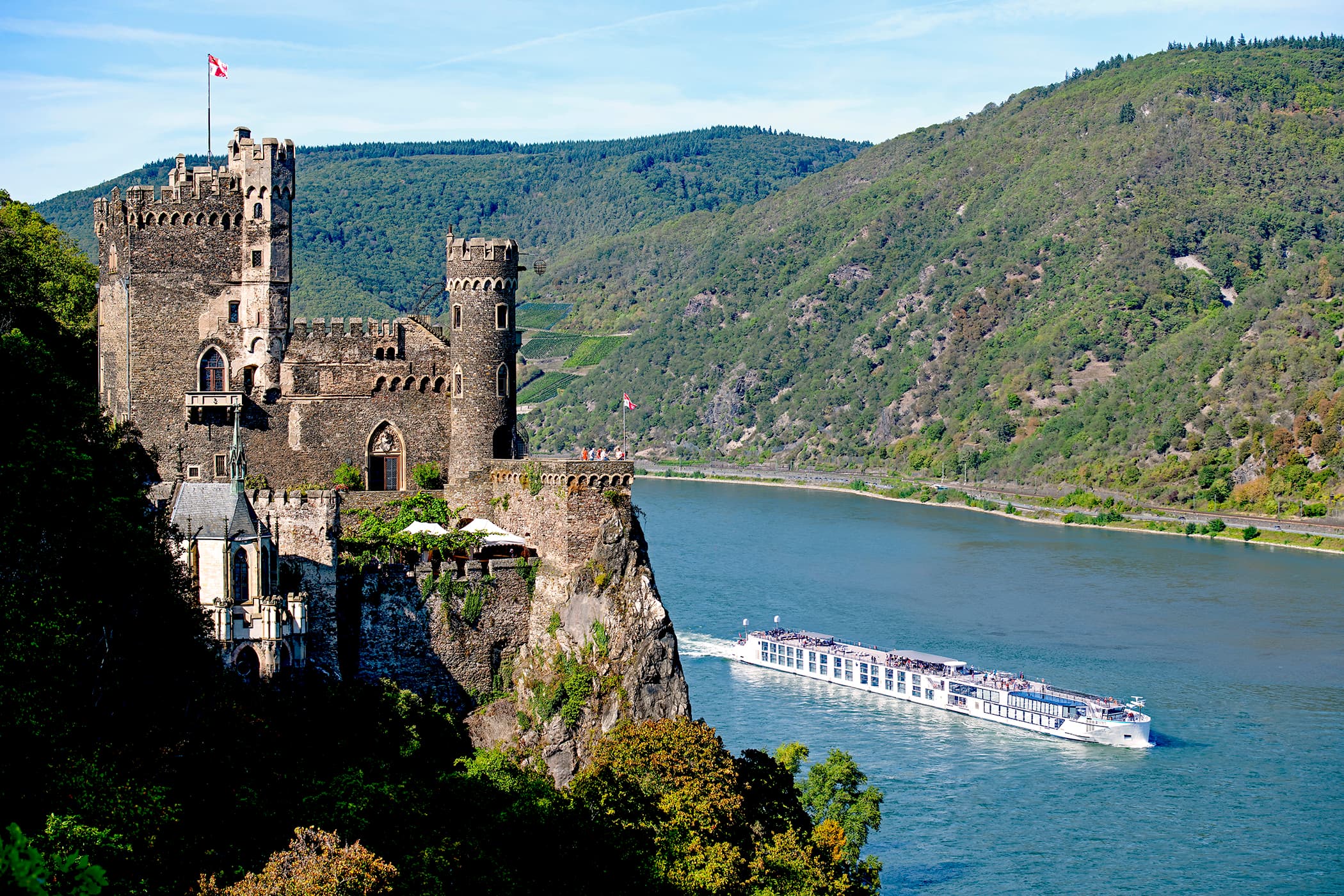
Riverside Luxury Cruises has opened reservations for its 2028 season, with the debut of Riverside Mahler marking the most important development in a programme that clearly points towards broader coverage, greater flexibility and a more structured presence across Europe’s main river systems.
The new ship will enter service in May 2028 and join Riverside Debussy on the Rhine, Main and Danube. Riverside Mozart will continue to focus on the Upper and Lower Danube, while Riverside Ravel will remain on the Rhône and Saône in France. For Riverside Luxury Cruises, the arrival of Mahler is not simply a matter of adding another vessel to the fleet. It gives the company more room to work across some of its most important itineraries, particularly along the Main-Danube Canal, where the number of departures will rise to 12 in 2028, compared with four in 2026 and two in 2027.
That increase is significant because it strengthens one of the most interesting aspects of European river cruising: the possibility of moving between the Rhine and Danube systems rather than treating them as two separate worlds. The 2028 programme will include 10 Budapest-to-Regensburg sailings and 10 in the opposite direction, alongside two Dutch Waterways itineraries and three Lower Danube departures. Mahler will spend much of its first summer moving between the two river systems, connecting destinations in Germany, Austria and Hungary with Amsterdam and Basel, before moving to the Lower Danube in September, returning to the Rhine in October and ending its inaugural season with Christmas sailings on the Danube.
There is also a practical side to the fleet expansion. Riverside Luxury Cruises points to the additional flexibility offered by another ship in managing periods of high or low water, including the possibility of ship swaps when necessary. This is a detail that may sound operational, but it matters considerably in river cruising, where water levels can affect itineraries far more directly than they do at sea. More ships on overlapping routes can therefore mean greater resilience as well as more choice.
Riverside Debussy will begin its 2028 season in March with spring tulip sailings in the Netherlands and Belgium, before moving towards the Lower Danube. One of the most appealing additions comes in early summer, when the ship will operate new nine- and ten-night itineraries between Amsterdam and Basel incorporating the Moselle. It is a natural extension of the classic Rhine experience, but one that adds a different pace and atmosphere, with the Moselle bringing its smaller-scale landscapes and wine regions into a broader itinerary. Through the summer and autumn, Debussy will continue with Amsterdam-Basel sailings, Dutch Waterways itineraries and selected journeys into the Danube, before closing the year with Christmas market cruises on the Rhine.
Riverside Mozart remains strongly connected to the Danube and will introduce a new seven-night itinerary from Vienna to Budapest including the Wachau Valley. The programme will also include a new Hungarian port, Győr, whose Baroque centre and compact old town add another layer to a route already rich in major capitals and cultural landmarks. Mozart will also host several themed departures in 2028, including Riverside Active cycling cruises in July and August, Darlings of the Danube golf sailings and a cruise linked to Hungary’s National Day celebrations.
This growing attention to themed departures is worth noting. River cruising is increasingly about more than simply moving from one city to another, and operators are looking for ways to create stronger reasons to return to destinations that many experienced travellers may already know. Cycling, golf, local celebrations and expert-led experiences all move in that direction, giving familiar itineraries a different focus without having to reinvent the route itself.
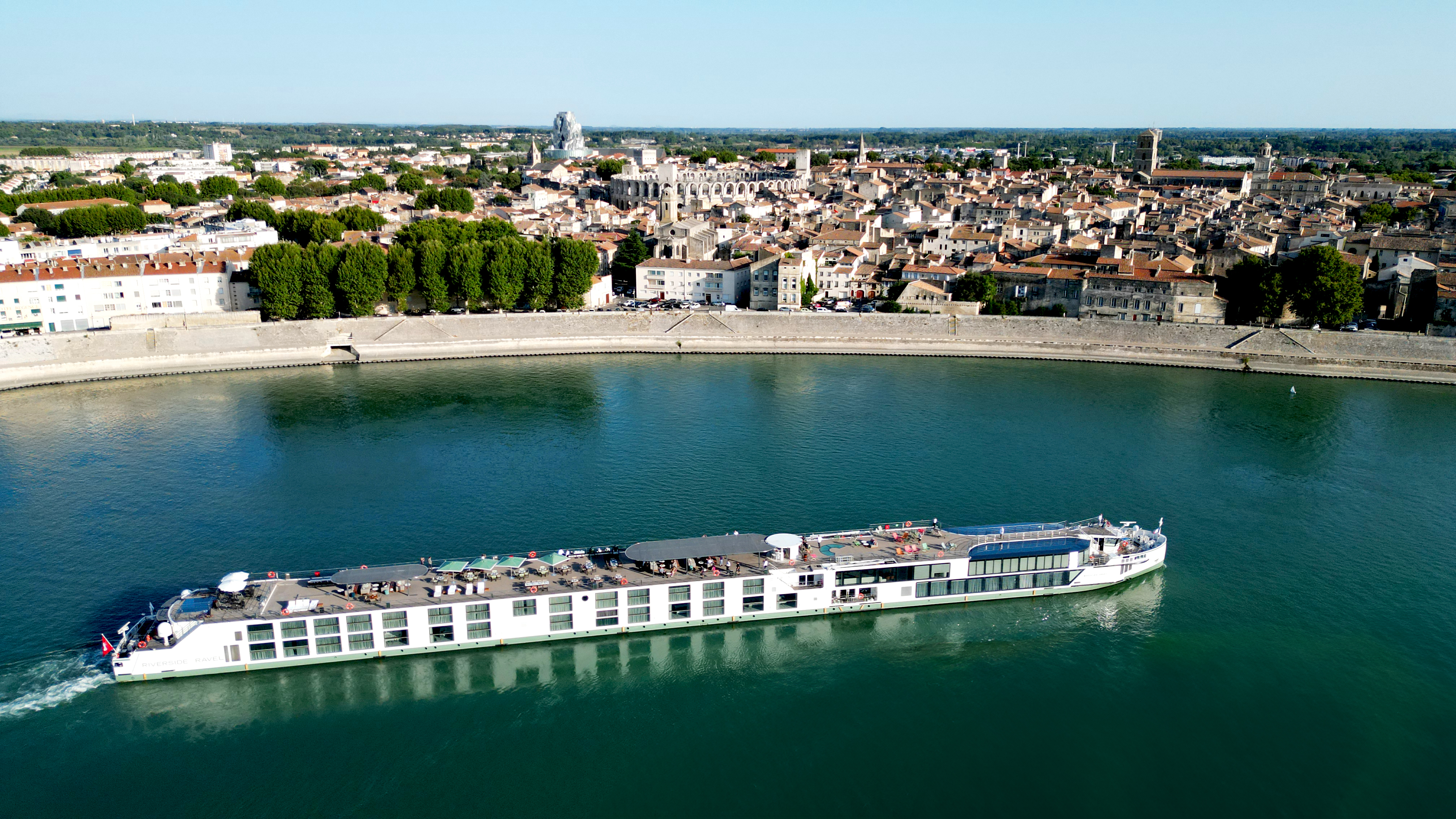
In France, Riverside Ravel will continue its Rhône and Saône programme, with itineraries built around Lyon, Avignon, Arles, Viviers and Tain-l’Hermitage. Châteauneuf-du-Pape, the Pont du Gard and the Rhône Delta remain among the highlights, reinforcing the very different character of Riverside Luxury Cruises’s French offering. Compared with the Rhine and Danube, these cruises are more closely associated with gastronomy, wine and the landscapes of southern France, giving the fleet a useful geographical and stylistic balance.
What stands out most in the 2028 programme is perhaps the range of ways in which Riverside Luxury Cruises is trying to make its product more flexible. Cruises will range from short three-night escapes to journeys lasting up to 23 nights, with departures stretching from early spring to the end of December. That makes it possible to approach the same brand in very different ways: as a short introduction to river cruising, as part of a wider European holiday or as a long, slower journey through several countries and river systems.
The company will also continue developing expert-led and themed sailings, with a focus on active experiences and local celebrations. According to Jennifer Halboth, CEO of Riverside Luxury Cruises Americas, the aim of the 2028 season is to give travellers more ways to experience Europe by river, both through additional departures on established routes and through new options on the Lower Danube and Dutch Waterways.
That idea of greater choice probably describes the season better than any dramatic change in concept. Riverside Luxury Cruises is not trying to reinvent its identity. Instead, it is expanding the structure around it, increasing capacity where demand is strongest and using the new ship to create a more connected network between the Rhine and Danube.
With Mahler joining Mozart, Debussy and Ravel, Riverside Luxury Cruises will operate four all-suite ships across the Rhine, Rhône, Danube, Moselle and Main. The product remains firmly positioned in the luxury segment, with king-size beds, butler service in every suite, cuisine prepared à la minute, premium wines and spirits, an onboard sommelier, Starlink Wi-Fi, shore excursions, prepaid gratuities and complimentary ground transfers.
For me, the most interesting aspect of the 2028 announcement is therefore not simply the arrival of Riverside Mahler, but what that arrival makes possible. More capacity means more departures, but also more combinations, more operational flexibility and a stronger connection between itineraries that previously had fewer opportunities to overlap. In a sector where the route remains central but the way it is experienced matters increasingly, that kind of flexibility can become a real part of the product itself.
Gabriele Bassi