
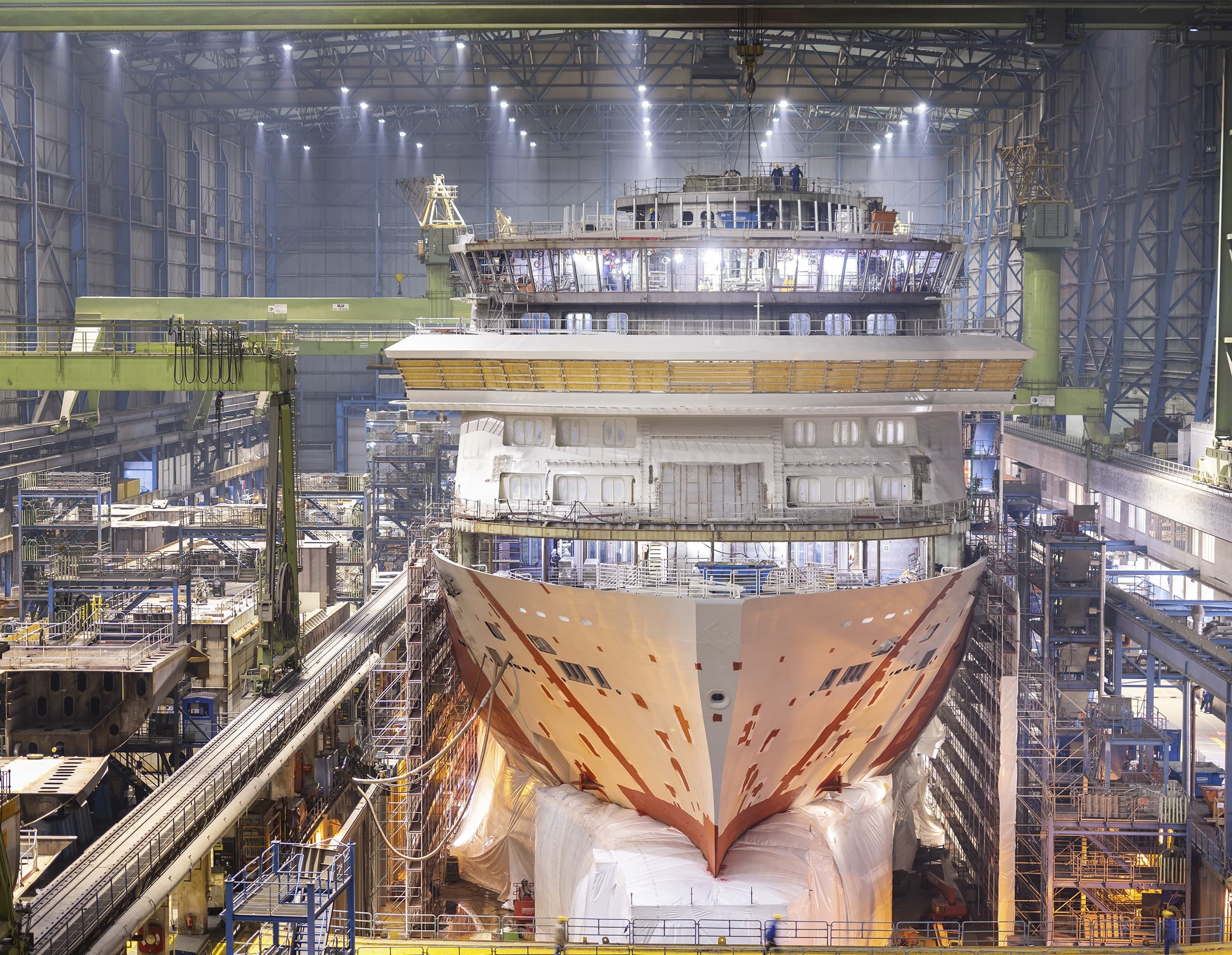
Meyer Werft is reporting significant progress in its restructuring programme, with 2025 revenues more than doubling and operating losses narrowing substantially as the German shipbuilder works towards break-even in 2026.
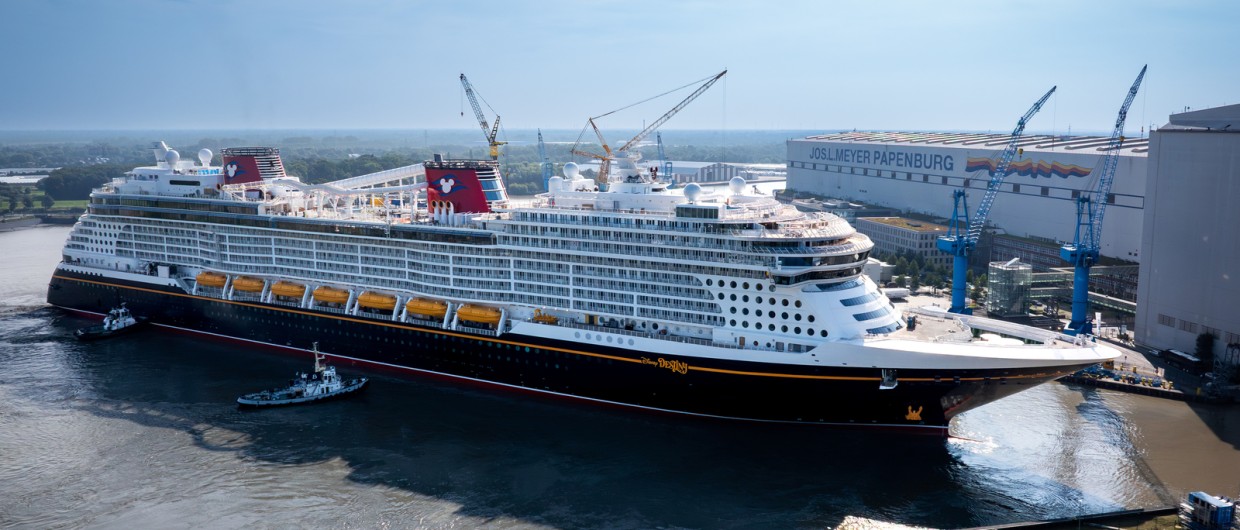
The latest consolidated figures provide an important indication of how one of Europe’s most strategically significant cruise shipyards is stabilising after the financial pressures that led to a major restructuring and public-sector intervention in 2024. Group revenue reached €2.83 billion in 2025, compared with €1.37 billion in the previous year, supported primarily by the delivery of Asuka III for NYK Cruises and Disney Destiny for Disney Cruise Line, as well as two river passenger vessels built by subsidiary Neptun Werft and a cruise ship refurbishment completed at the Wismar site. EBITDA improved from a loss of €527.6 million in 2024 to a negative €251.8 million in 2025, while the net loss narrowed from €569.2 million to €383.8 million. Meyer Werft has cautioned that the two years are not directly comparable because of the extensive corporate restructuring undertaken in 2024, but the direction of travel is nevertheless clear.
The financial improvement comes as the group continues a restructuring programme comprising more than 60 individual measures aimed at reducing material and personnel costs and improving operational efficiency. According to Chief Restructuring Officer Ralf Schmitz, these measures are expected to generate a positive annual earnings impact in the low-to-mid three-digit million-euro range over the medium term. An independent restructuring expert has also confirmed that Meyer Werft remains on the agreed roadmap and that financing requirements through the end of 2028 are covered by committed equity and debt funding. This is particularly relevant given the unusual ownership structure that emerged from the 2024 rescue, when the German federal government and the state of Lower Saxony each acquired around 40% of the company, alongside the Meyer family and financing banks.
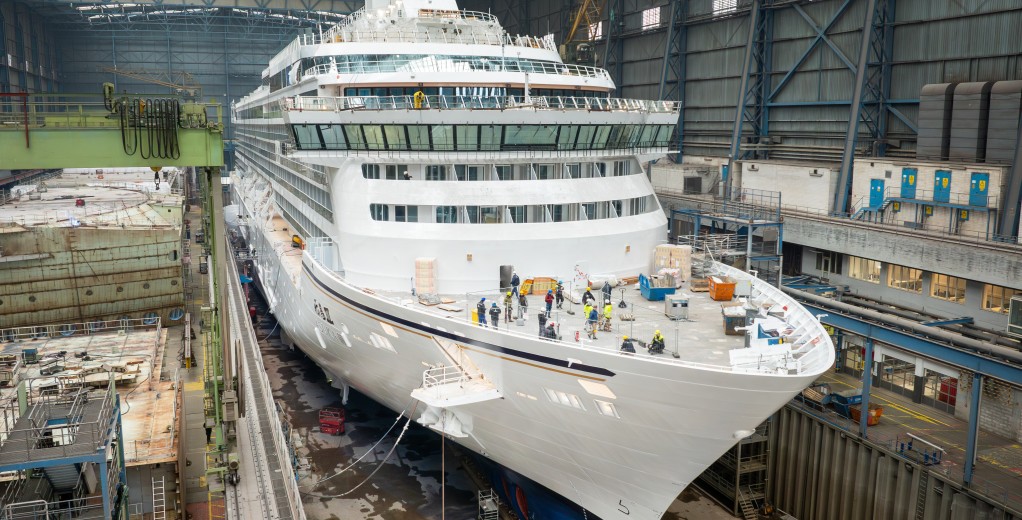
For the cruise industry, however, the most important issue is not simply the reduction of past losses but the shipyard’s ability to secure profitable new work. Meyer Werft has been explicit that expected losses associated with older, unprofitable contracts have already been reflected in previous financial statements, while newer cruise ship orders are being calculated on a more sustainable basis. The company currently expects a further significant improvement in EBITDA during 2026, potentially bringing the group close to break-even despite the fact that no cruise ship deliveries are scheduled for the year. That is a notable milestone for a business model in which revenue recognition and cash flow are heavily influenced by the timing of major vessel deliveries. The developing relationship with MSC Cruises could become particularly important for the next phase. Meyer Werft and MSC announced a letter of intent in December 2025 covering four next-generation cruise ships plus two options. By June 2026, the partners said that ship design and contractual negotiations had reached an advanced stage. The vessels, provisionally known as the New Frontier class, are expected to measure around 180,000 gross tons and carry up to 5,400 passengers, with annual deliveries planned from 2030. If finalised, the programme would provide substantial workload visibility for Papenburg well into the next decade and would represent one of the most significant cruise shipbuilding contracts currently under development in Europe.
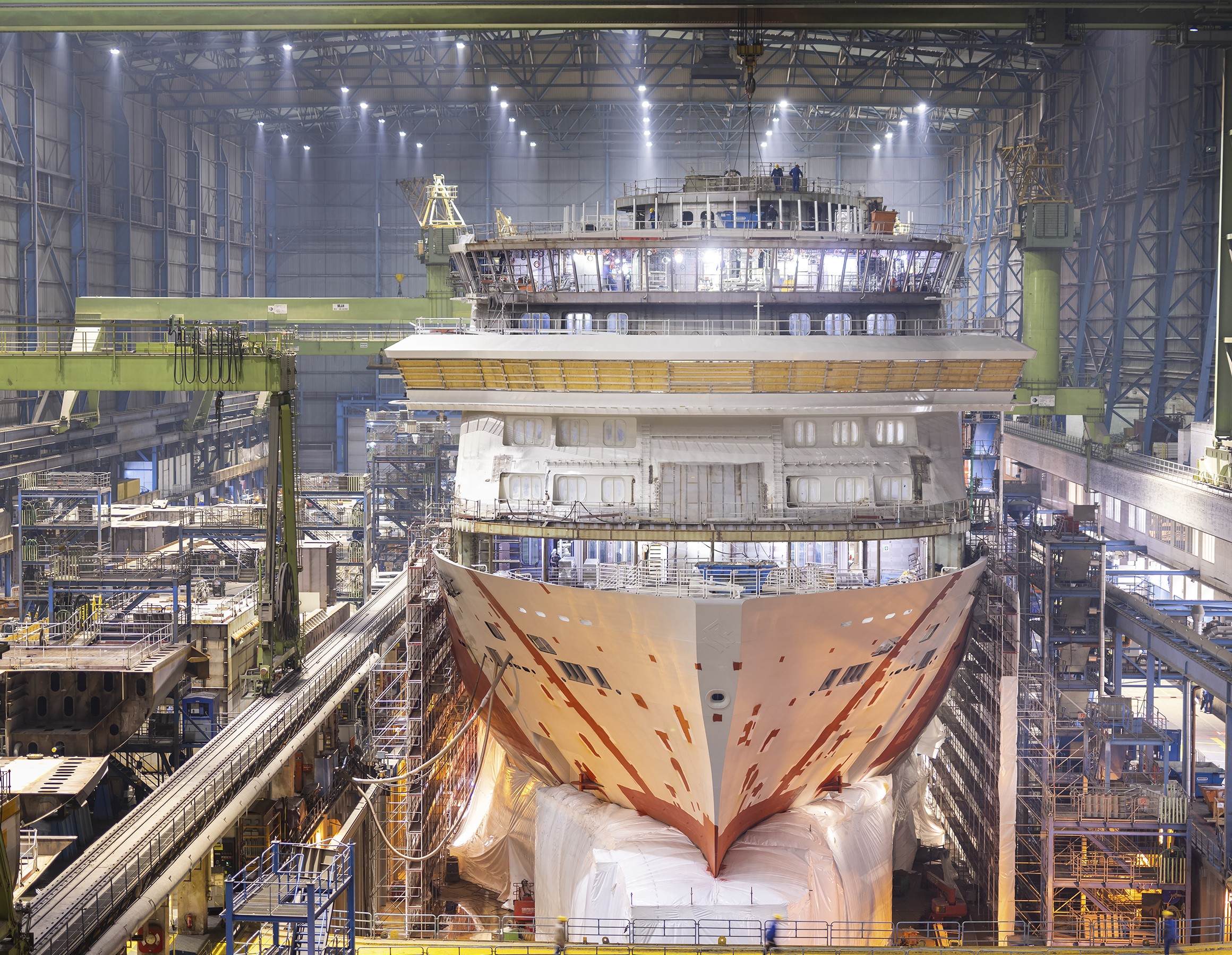
The importance of a contract of this scale extends beyond Meyer Werft itself. Cruise ship construction relies on a broad European supplier network covering propulsion, interiors, HVAC, electrical systems, automation, safety equipment, hotel operations and increasingly complex environmental technologies. Long-term orderbook stability at the major yards therefore has implications for hundreds of subcontractors and specialised suppliers, particularly in Germany and across Northern Europe. For the cruise sector, maintaining sufficient shipbuilding capacity is becoming increasingly relevant as several major operators continue to plan new generations of vessels well into the 2030s. Meyer Werft is also seeking to diversify its industrial base beyond ocean cruise ships. Neptun Werft continues to benefit from demand for river passenger vessels, while the Rostock operation entered the offshore converter platform market in June 2026. Management sees this diversification as an additional pillar of the restructuring, reducing some of the group’s dependence on the highly cyclical and capital-intensive cruise shipbuilding market. At the same time, cruise vessels remain central to the company’s identity and orderbook, and the ability to price future contracts profitably will be crucial to the long-term success of the turnaround.
The restructuring must also be viewed against the particular economics of modern cruise ship construction. Projects can take several years from contract signing to delivery, requiring significant working capital long before the final vessel payment is received. Inflation in raw materials, labour costs and energy can therefore have a major impact when contracts were originally negotiated under very different economic conditions. This helps explain why legacy orders have weighed so heavily on the financial performance of several European shipbuilders following the pandemic and subsequent inflationary period. For Meyer Werft, the current objective is therefore not simply to rebuild revenue but to restore sustainable margins across the orderbook. The substantial rise in 2025 turnover is encouraging, yet the continued net loss demonstrates that the restructuring remains a work in progress. The more meaningful indicator may be whether the group can reach the expected EBITDA improvement in 2026 while simultaneously converting new negotiations into contracts that generate acceptable long-term returns.
The appointment of André Walter as CEO from July 1, 2026 also places the group under new leadership at an important moment. Walter now heads Meyer Werft alongside Schmitz and Chief Operating Officer Jörg Heidelberg, with the company moving from emergency stabilisation towards a phase focused increasingly on operational execution and future competitiveness. For the wider cruise industry, Meyer Werft’s recovery matters because the number of yards capable of designing and delivering very large, technologically advanced passenger ships remains extremely limited. Fincantieri, Chantiers de l’Atlantique and the Meyer group represent the core of European cruise shipbuilding capacity, and strong orderbooks across the sector depend on the financial and industrial stability of all three. The potential MSC programme, together with recently secured orders and continuing demand for river vessels, therefore represents more than a positive development for a single company: it contributes to maintaining competition and capacity within the European cruise shipbuilding ecosystem.
Meyer Werft is not yet at the end of its restructuring journey, which is scheduled to continue through 2028. Nevertheless, the latest figures indicate that the gap is narrowing. With revenue recovering, losses declining, financing secured for the restructuring period and negotiations underway for major new cruise ship orders, 2026 could prove to be the year in which the Papenburg shipyard moves decisively from financial stabilisation towards a more sustainable industrial future.
Gabriele Bassi