
Today’s cruise traveler is no longer defined by a single demographic. Families traveling with children, grandparents exploring alongside grandchildren, and multi-generational groups seeking meaningful shared experiences are reshaping excursion trends across the Mediterranean.
In Croatia’s Zadar Region, this evolution is creating new opportunities for immersive shore experiences that combine education, culture, sustainability, and hands-on participation.
Among the most distinctive examples are the sea salt harvesting experiences offered at Solana Nin and Paška Solana, two historic saltworks that transform a simple shore excursion into a memorable journey through centuries of Adriatic heritage.
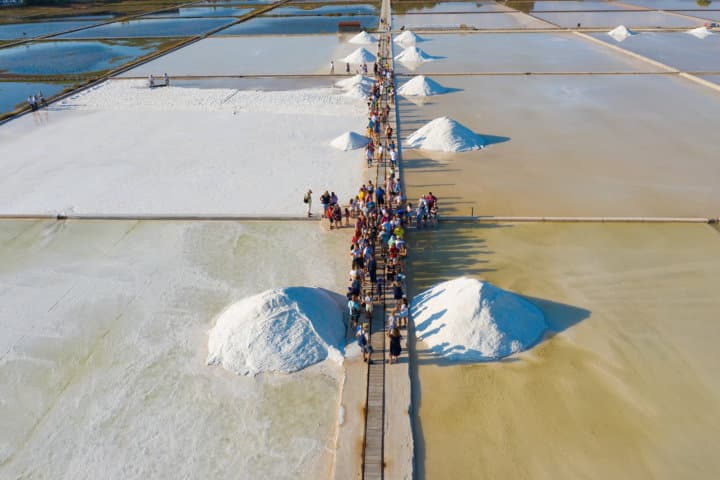
Located within easy reach of Zadar Cruise Port, Solana Nin offers visitors an opportunity to discover one of the oldest traditional sea-salt production sites in the Adriatic. The saltworks has a history spanning more than 1,500 years and welcomes over 100,000 visitors annually. Guests can explore the Salt House Museum, learn about the ecological production process, and witness how salt is still harvested by hand using methods passed down through generations. During seasonal events and guided tours, visitors of all ages can participate in harvesting activities, making the experience particularly attractive for families and multi-generational groups.
For cruise guests seeking a broader perspective on the region’s maritime traditions, Paška Solana on the island of Pag provides an equally compelling experience. As Croatia’s largest producer of sea salt, the saltworks covers approximately 225 hectares and benefits from the island’s unique microclimate, abundant sunshine, and steady winds. Visitors gain insight into a production tradition that has shaped Pag’s economy, culture, and identity for centuries. The dramatic lunar-like landscapes surrounding the salt pans add a visual dimension that appeals to both younger travelers and photography enthusiasts.
A highlight of both saltworks experiences is the opportunity to discover Salt Flower—the delicate crystals that form naturally on the surface of seawater during specific weather conditions. Hand-harvested in limited quantities, Salt Flower is prized by chefs and gourmets worldwide for its subtle texture and clean mineral flavor. Visitors can learn about the meticulous harvesting process, observe how these fragile crystals are collected, and participate in tastings that showcase the connection between Adriatic nature and local gastronomy. For many cruise guests, especially families and food enthusiasts, the experience transforms a traditional industrial visit into an engaging culinary story that can be shared across generations.
These experiences align perfectly with the expectations of modern cruise passengers. Rather than passive sightseeing, today’s guests increasingly seek authentic encounters that connect them with local communities and traditions. Salt harvesting tours offer a rare combination of outdoor activity, educational content, cultural storytelling, and intergenerational engagement. Children enjoy interactive elements and hands-on demonstrations, while adults appreciate the historical and gastronomic significance of one of the Adriatic’s most valuable natural resources.
The growing role of Zadar Cruise Port further strengthens the appeal of such excursions. Positioned as a key gateway to northern Dalmatia, the modern port welcomed 127 cruise calls and more than 265,000 passengers in 2025. Its award-winning facilities and proximity to the region’s cultural and natural attractions enable efficient access to destinations beyond Zadar’s historic center.
As cruise tourism continues to evolve, destinations that successfully balance visitor experience with authentic local heritage will stand out. The saltworks of Nin and Pag demonstrate how traditional industries can become contemporary tourism assets, creating enriching experiences that appeal to travelers of every age.
For cruise lines, tour operators, and destinations alike, the lesson is clear: the future of shore excursions lies not only in what guests see, but in what they can learn, share, and experience together. In the Zadar Region, a handful of sea salt tells a story that resonates across generations.
Whether collecting salt alongside local experts, exploring centuries-old salt pans, or tasting the prized Salt Flower harvested from the Adriatic sun and sea, visitors gain a deeper appreciation for one of Dalmatia’s oldest traditions. These authentic, hands-on experiences exemplify the type of meaningful, multi-generational excursions increasingly sought by today's cruise travelers visiting Zadar and its surrounding region.