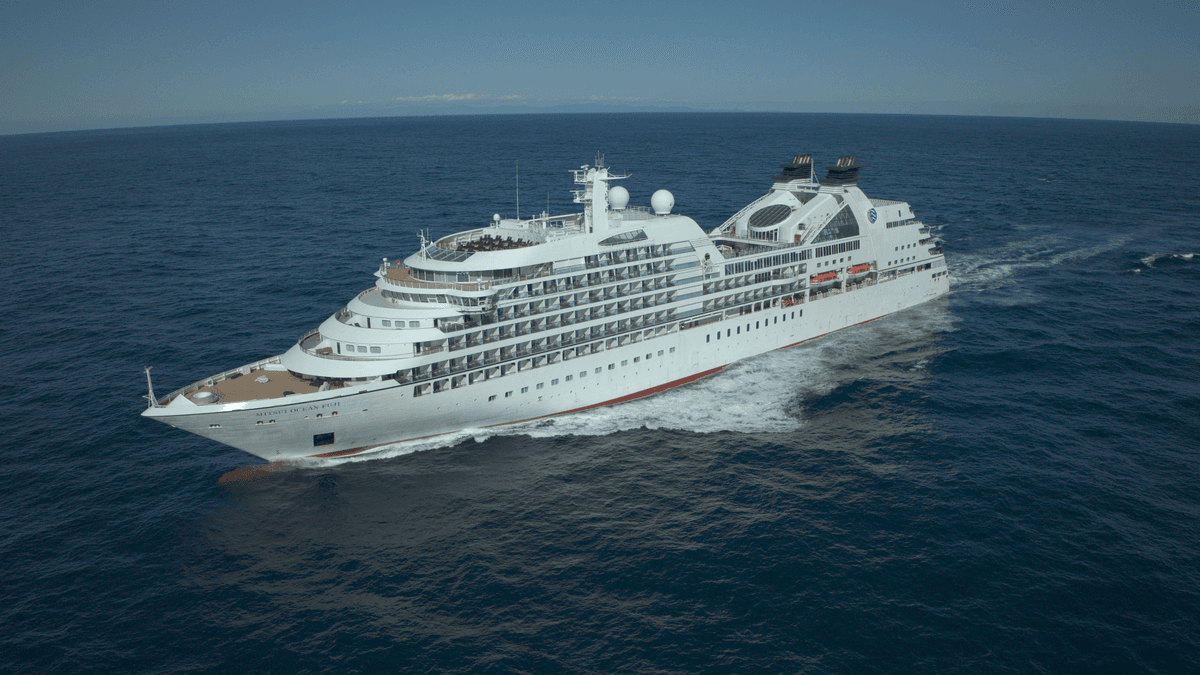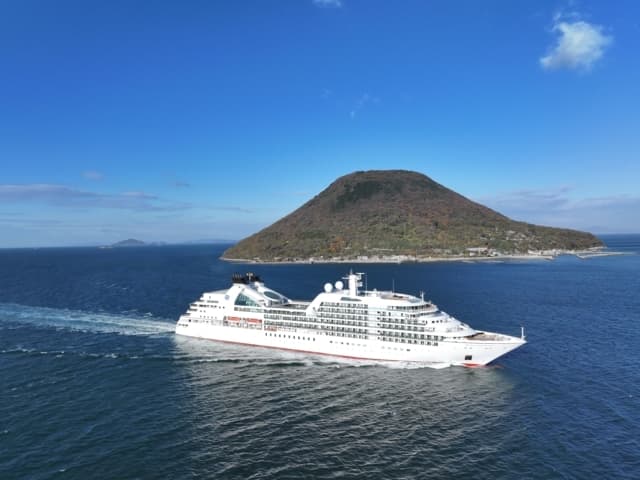
Mitsui Ocean Cruises represents a new way of experiencing travel at sea, blending Japan’s rich maritime heritage, authentic culture, and extraordinary natural beauty into a refined and exclusive luxury experience.
With the concept “FUNATABI – Beautiful Encounters with Japan”, the company offers itineraries designed to allow guests to discover the true spirit of the Land of the Rising Sun through immersive experiences, often far from the most conventional tourist routes.
With departures from Tokyo, Yokohama, and other fascinating ports, Mitsui Ocean Cruises offers a unique way to explore Japan: not through artificially constructed experiences, but by encountering daily life, traditions, and Japanese hospitality in a natural and authentic way. From matcha tea ceremonies to mist-covered coastal shrines and relaxing moments in the hot springs of Beppu, each voyage becomes a deeper immersion into local culture.
Launched in December 2024, Mitsui Ocean Fuji is Japan’s most luxurious all-suite cruise ship and perfectly embodies the concept of omotenashi, the traditional Japanese approach to hospitality based on attention to detail, elegance, and sincere care for the guest. In 2026, she will be joined by Mitsui Ocean Sakura, further strengthening the brand’s presence in the luxury cruise market and expanding its ability to offer intimate, destination-focused voyages across Japan and beyond.
In this exclusive interview, we explore the company’s strategic vision with Tony Kaufman, Head of Commercial Strategies at Mitsui Ocean Cruises, to better understand the challenges, opportunities, and future of one of the most distinctive and innovative brands in the international cruise industry.
To begin, we would like to learn more about the roots of your career and how you took your first steps in such a complex and competitive industry. Could you tell us how your career in hospitality and cruising began, and what led you to become a senior executive?
My career has always been connected to travel, hospitality, and the idea of creating memorable experiences for guests. I have had the opportunity to work in different areas of the cruise and travel industries, and over time I became increasingly fascinated by the complexity of this business. A cruise is not only a product; it is a combination of hospitality, logistics, destination development, maritime operations, sales, service, and emotional storytelling. What led me to senior leadership was the opportunity to work across different markets and cultures, learning how to connect commercial strategy with the expectations of guests and trade partners. I have always believed that successful leadership in this industry requires both a strong commercial vision and a genuine understanding of people. Cruising is ultimately about human connections: between guests and destinations, between teams and partners, and between a brand and the values it wants to represent.

Every successful career is marked by challenges. What have been the most challenging moments of your career, and how did you successfully overcome them?
The most challenging moments have often been those in which the industry itself was changing very quickly. In travel and cruising, we constantly face external factors that can transform the market: economic cycles, geopolitical events, changes in consumer behavior, and, of course, global disruptions that affect the way people travel. What I have learned is that challenges must be approached with flexibility, transparency, and a strong sense of purpose. It is important to listen carefully to guests, partners, and internal teams, because each of them offers a different perspective on what is really happening. At the same time, you must remain focused on the long-term identity of the brand. Short-term decisions are necessary, but they should never compromise the values and the trust that a company has built over time.
Your current role is at the heart of the company’s strategic decision-making. Could you describe the main responsibilities of your role as Head of Commercial Strategies for Mitsui Ocean Cruises?
My role is to help shape and guide the commercial direction of Mitsui Ocean Cruises as the brand grows and reaches new audiences. This includes sales strategy, market positioning, international development, distribution, partnerships, and the way we communicate the uniqueness of our product to the trade and to guests. A key responsibility is to ensure that our commercial approach reflects the true identity of Mitsui Ocean Cruises. We are not simply selling itineraries; we are presenting a very distinctive way of experiencing Japan at sea. This means working closely with different teams to align the product, the guest experience, the destination narrative, and our relationships with travel advisors and partners around the world. Another important part of the role is to identify opportunities for growth while preserving the authenticity of the brand. As we expand internationally, we must make sure that new markets understand what makes Mitsui Ocean Cruises different: our Japanese heritage, our small-ship luxury experience, our attention to detail, and our deep connection with the culture and nature of Japan.
Looking at the mission and vision of Mitsui Ocean Cruises, which values do you consider most important in guiding the company over the long term, and how do you transmit them to operational teams around the world?
The values that guide us are authenticity, respect, excellence, and hospitality. Mitsui Ocean Cruises has a long maritime tradition behind it, and this heritage gives us both strength and responsibility. We want to offer guests a refined experience, but also an honest and meaningful connection with Japan. One of the most important concepts for us is omotenashi. It is sometimes translated as hospitality, but in reality it means much more. It is the ability to anticipate guests’ needs, to care for details, and to make people feel genuinely welcomed without being intrusive. This value influences every part of the experience, from service on board to cuisine, design, excursions, and the way we communicate with guests. To transmit these values to our teams, we need consistency. Training is important, but culture is even more important. Every person involved in the operation must understand not only what we do, but why we do it. When teams understand the purpose behind the product, they can deliver an experience that feels natural, sincere, and deeply connected to the brand.
Managing global projects means dealing with different cultures and traditions. How do you balance innovation and respect for cultural traditions in the international projects you lead?
For Mitsui Ocean Cruises, innovation must never erase tradition. On the contrary, the most meaningful innovation often comes from finding new ways to express tradition in a contemporary and accessible form. Our guests may come from many different countries, but they are often looking for something authentic, something they could not experience anywhere else. The balance comes from listening and from respecting the cultural context. When we design experiences, develop itineraries, or communicate with international markets, we always ask ourselves whether we are presenting Japan in a respectful and truthful way. We want to make traditions understandable and engaging for international guests, but we do not want to simplify them to the point that they lose their meaning. Innovation also plays an important role in service, distribution, and guest engagement. Today’s luxury traveler expects personalization, efficiency, and seamless communication. Our challenge is to combine these modern expectations with the elegance, discretion, and depth of Japanese hospitality.
International expansion brings unique opportunities and complexities, especially in markets such as Asia or the Middle East. What are the most interesting challenges in expanding business into new international markets such as Asia or the Middle East?
One of the most interesting challenges is that each market has a different perception of luxury, travel, and cruising. In some markets, the cruise product is already well understood; in others, there is still a need to explain the value of a small-ship, destination-focused experience. Asia is incredibly diverse. Guests from different Asian markets may have very different expectations in terms of language, food, service style, itinerary length, and booking behavior. The Middle East is also a very interesting market, with a strong appetite for luxury travel and exclusive experiences. In both cases, the opportunity is significant, but the approach must be carefully adapted. For Mitsui Ocean Cruises, the goal is not simply to expand quickly, but to expand intelligently. We need to work with the right partners, educate the market, and communicate clearly what makes our brand special. Japan has enormous appeal internationally, and our role is to transform that appeal into a cruise experience that feels both luxurious and culturally meaningful.
Sustainability and environmental responsibility are becoming increasingly central in the cruise industry. What initiatives is Mitsui Ocean Cruises carrying out to reduce the environmental impact of its operations and promote sustainable practices on board and in the ports where it operates?
Sustainability is a fundamental responsibility for every company operating at sea, and even more so for a brand that is so closely connected with nature, coastal communities, and local cultures. For Mitsui Ocean Cruises, sustainability is not only about technology, although operational efficiency and responsible ship management are very important. It is also about the way we design our itineraries and interact with destinations. Our ships are smaller in size, which allows us to visit a wider variety of ports, including smaller communities that can benefit from carefully managed cruise tourism. This also helps distribute tourism flows more widely, rather than concentrating guests only in the most visited destinations. On board, we look at responsible sourcing, waste reduction, energy efficiency, and the promotion of local products whenever possible. In the destinations, we want to work with local partners who respect cultural heritage and natural environments. Sustainability must be practical and measurable, but it must also be part of the mindset of the company and of the experience we offer to guests.
“Travel Like a Local” aims to offer passengers authentic experiences beyond conventional routes. How does the company select and develop shore excursions to ensure that each voyage provides a true immersion into local culture, history, and traditions?
The development of shore experiences is one of the most important parts of our product. We do not want guests simply to visit a place; we want them to understand it, even if only through a small but meaningful encounter. This requires careful selection of local partners, guides, artisans, cultural experts, and communities. When we design excursions, we look for experiences that reflect the identity of each destination. This may include local cuisine, traditional crafts, festivals, nature, spiritual heritage, architecture, or daily life. Japan is a country of extraordinary regional diversity, and one of our goals is to show guests that there is not just one Japan, but many different expressions of Japanese culture. We also pay attention to scale. A small-ship environment allows for more intimate experiences, and this is essential when visiting local communities. The objective is not to create a spectacle for tourists, but to create respectful encounters. The best travel experiences are often those in which guests feel they have been welcomed into a place rather than simply brought to see it.
The cruise industry is constantly evolving. Looking at the future of the sector, which commercial trends do you consider most important in keeping Mitsui Ocean Cruises competitive?
Several trends are particularly important. The first is the growing demand for authentic and meaningful travel. Guests, especially in the luxury segment, are increasingly looking for experiences that go beyond comfort. They want culture, nature, learning, and emotional connection. The second trend is the importance of smaller ships and more destination-focused itineraries. Large-scale cruising will continue to have an important place in the industry, but there is also strong demand for more intimate ships that can access different ports and offer a more personalized experience. Another key trend is the role of travel advisors and specialist partners. For a product like Mitsui Ocean Cruises, education and storytelling are essential. We need partners who can explain the difference between simply visiting Japan and experiencing Japan through our concept of FUNATABI. Finally, personalization will continue to be central. Guests expect a journey that reflects their interests, whether that means cuisine, wellness, culture, nature, photography, history, or relaxation. The more we understand our guests, the better we can create experiences that feel truly relevant to them.
For those who dream of an international career, what advice would you give to someone aspiring to become a leader in a highly competitive and global industry?
My first advice would be to stay curious. In an international industry, you must always be willing to learn: from different cultures, different markets, different generations, and different ways of working. Curiosity is one of the most important qualities for leadership. The second piece of advice is to build relationships based on trust. This industry is global, but it is also very personal. Partnerships, collaborations, and careers are built over time, through reliability, integrity, and respect. Finally, I would encourage young professionals not to be afraid of complexity. The cruise industry is demanding because it brings together hospitality, maritime operations, destinations, sales, marketing, logistics, and guest experience. But this is also what makes it fascinating. If you are willing to understand the business from different angles, you can develop the kind of vision that is necessary to become a leader.
In an increasingly competitive and experience-oriented cruise landscape, Mitsui Ocean Cruises stands out for its ability to transform every voyage into an authentic connection with Japan, its culture, and its deepest traditions. Through a vision that combines luxury, sustainability, innovation, and hospitality, the company aims to redefine the very concept of experiential cruising.
With an expanding fleet, new international markets, and an increasingly immersive approach to travel, Mitsui Ocean Cruises looks to the future while remaining firmly rooted in its cultural heritage and Japanese identity.
Gabriele Bassi