
The maritime and shipbuilding sectors are built on rigorous technical standards and continuous inspections, essential for ensuring safety, reliability, and compliance with international regulations.
In this context, ship classification societies play a central role: they establish rules and specifications for the design, construction, and maintenance of ships and offshore platforms, verifying that these standards are adhered to throughout the entire lifecycle of the structures. Classification assigns ships a class according to predefined criteria, while certification ensures compliance with national and international regulations. In addition to these tasks, classification societies maintain public registers and carry out periodic inspections, ensuring that vessels continue to meet the required standards even after repairs or modifications. In an increasingly complex and technological world, these activities form the foundation for maritime safety, environmental protection, and the sustainable development of the naval industry and related industrial sectors.
This interview allows us to explore how a multinational group operating in these areas faces current challenges and plans its future around innovation, sustainability, and technical expertise.
RINA was established in 2000 as a spin-off of the Italian Naval Register (Registro Italiano Navale), which itself was created to meet the needs of shipowners and insurers for an independent third party to provide technical assessments of vessels and support the determination of insurance premiums. How does this original role as an independent classification society continue to influence your approach to safety, certification, and international credibility today?
RINA was formally established in 2000, but the history of the organisation and classification itself goes back much further. Classification societies were originally created because insurers needed an independent technical body to assess risk as maritime trade expanded and more ships operated globally. Over time, this evolved into a highly structured international framework of rules and regulations covering vessel safety, operational standards, and environmental performance.
Today, our role remains fundamentally independent. Classification societies are third-party organisations and that independence is essential. We operate according to international regulations, our own class rules, and the unified requirements developed through IACS. We also work on behalf of flag state administrations, which authorise us to issue statutory certificates and, where necessary, withdraw them if vessels are not compliant.
The industry has changed significantly, particularly in the cruise sector where decarbonisation and new technologies are transforming vessel design and operation. LNG, methanol, battery systems and even modern sail technologies are now appearing on ships. This creates new operational and safety challenges, which means we must continuously invest in training and technical expertise so our people can properly support shipowners, operators and shipyards. At the same time, operators themselves must invest in training crews capable of managing increasingly complex technologies safely and efficiently.
Our role remains what it has always been, helping the industry mitigate risk through independent technical oversight, robust standards, and practical engineering expertise.
In a highly regulated and constantly evolving sector like maritime transport, ship classification plays a fundamental role in ensuring high standards of safety and reliability. What are the main technical and methodological criteria RINA currently adopts to guarantee the structural and operational safety of ships throughout their entire lifecycle?
A core element of our work is the regular survey regime carried out throughout a vessel’s operational life. Cruise ships undergo annual class surveys, intermediate class surveys, and major renewal class surveys every five years. Hull inspections are required as well, either afloat or whilst in drydock, with intervals depending on the age of the ship and Flag. These inspections are extremely comprehensive and cover structural integrity, machinery, electrical systems, safety systems, operational management, and crew competency.
For passenger vessels, the Passenger Ship Safety Certificate is renewed annually. The renewal survey process usually begins within a three-month window before certificate expiry and can involve one to one-and-a-half weeks onboard for teams of surveyors, depending on vessel size. Surveyors assess every critical operational and technical area to ensure compliance with international regulations and class requirements.
In addition to traditional inspection activities, risk-based methodologies have become increasingly important, particularly with the introduction of alternative fuels and advanced technologies such as LNG, methanol and battery systems. These technologies require extensive risk assessments during design and throughout operation, and the implementation and maintenance of mitigation measures on board must be verified.
We apply these methodologies throughout the vessel lifecycle. Some cruise ships operate for forty or even fifty years, so maintaining and upgrading existing vessels is also a critical aspect of sustainability. Sustainability is not only about building new ships. Extending the safe and efficient life of existing assets through retrofits and modernisation is equally important.
The Italian Naval Register has historically played a leading role in developing national regulations for navigation safety and marine environmental protection, promoting international initiatives such as the first conference of classification societies in 1939 and contributing to the establishment of the International Association of Classification Societies (IACS) in 1968. In light of this consolidated commitment, how does RINA’s role evolve today in developing, interpreting, and applying international regulations, particularly within IMO and IACS frameworks?
RINA continues to play an active role in the development of both national and international maritime regulations. We support administrations at IMO level and participate directly in technical discussions through various committees and working groups.
RINA is also an active member of IACS, where we contribute with our technical expertise and currently chair the Environmental Panel. This involvement is important because safety standards must continuously evolve alongside changes in technology and operational practice. The industry is facing rapid transformation, particularly in areas such as decarbonisation, digitalisation and alternative fuels, and regulations must evolve accordingly.
Our responsibility is to contribute engineering knowledge and practical operational experience to strengthen and improve the regulatory framework without compromising safety. Safety remains paramount and this principle has not changed since the earliest days of classification societies.
RINA has historically played an important role in developing maritime regulations and continues to do so today, while also contributing internationally through IMO and IACS activities.
With the maritime sector evolving towards increasingly digital and connected solutions, how is RINA integrating smart technologies, big data, and remote monitoring systems to innovate inspection, surveillance, and certification activities, improving efficiency, safety, and reliability throughout the entire lifecycle of vessels?
Remote survey capabilities became particularly important during the COVID period when surveyors were sometimes unable to travel onboard vessels. This accelerated the adoption of remote inspection techniques using video systems, cameras, drones and digital communication tools supported by onboard crews.
Today, remote surveys are increasingly used for selected activities such as tank inspections and structural assessments, where high-resolution imaging technologies can effectively identify coating damage, corrosion or structural issues. However, remote inspection still requires close cooperation with onboard personnel because experienced operators are needed to provide the correct access, perspectives and operational support. It also calls for continuous training of our surveyors to effectively use these technologies.
At the same time, cruise ships now generate enormous amounts of operational data through onboard sensors and digital systems. Properly managing and analysing that data is becoming central to improving operational efficiency, reducing fuel consumption and, ultimately, enhancing overall energy performance.
RINA supports this through its wider technology capabilities, including Sertica, which provides advanced software solutions for data analysis and operational optimisation. Data utilisation is becoming increasingly important for shipowners seeking to improve performance, reduce emissions and optimise maintenance planning.
Artificial intelligence will also play an increasingly important role in the future. AI can already support activities such as rule development, document reviews and data analysis. However, in our view, human oversight remains essential, particularly when safety and liability are involved. AI can support engineering and operational decision-making, but final responsibility must always remain with qualified professionals.
Today, RINA operates far beyond the naval sector, extending its activities to multiple industrial areas. How are engineering, testing, and certification competencies integrated to ensure safety, reliability, and technological development across the diverse industries in which the group is active?
Marine was the foundation of RINA, but today the group operates across multiple industries including energy, offshore, infrastructure, industry and certification services. This broad industrial presence creates significant advantages because technologies and operational approaches developed in one sector can often be transferred into another.
Shipping remains a relatively traditional industry compared with some other industrial sectors, particularly regarding digitalisation and data usage. Many technologies now being introduced onboard vessels have already been deployed extensively ashore and can be adapted for maritime applications.
Because RINA operates across such a wide industrial portfolio, our teams can share expertise, lessons learned and operational experience between sectors. This multidisciplinary approach strengthens our ability to support innovation safely and efficiently across all the industries in which we operate.
RINA is present in over 70 countries with more than 200 offices and operates across several industrial sectors. Looking ahead, what are the main projects or strategic areas RINA plans to focus on in the coming years, and how do you plan to further integrate innovation and sustainability into your services?
Innovation and sustainability have always been central to the role of a classification society. These are not new concepts for RINA. They have been part of our activities for decades.
Today, sustainability is often discussed primarily in terms of decarbonisation, but the concept is much broader than emissions reduction alone. It also includes operational efficiency, lifecycle management, safety, resilience and long-term asset optimisation.
Going forward, RINA will continue investing heavily in digitalisation, operational efficiency and cybersecurity. The increasing connectivity between ships and shore-based systems creates significant opportunities but also introduces new cyber risks that must be properly managed. Data flows between vessels and shore operations are becoming increasingly valuable and protecting those systems is essential.
We also see major opportunities in helping the industry better utilise operational data to improve efficiency, maintenance planning and environmental performance while supporting the transition towards new fuels and technologies.
Specifically in the cruise sector, we are strengthening even more our network with the launch of RINA’s “Cruise Houses”, new dedicated hubs designed to bring together expertise, clients and partners in key maritime locations. The first, scheduled to open at the end of June in Southampton, is conceived not simply as an office presence but as a collaborative platform to support the passenger ship sector more closely and dynamically. By fostering proximity to cruise operators and enabling faster, integrated responses across disciplines, the initiative reflects a broader shift towards more accessible, relationship-driven technical support for an industry undergoing rapid growth and transformation.
In a constantly evolving industrial context, how crucial is continuous training for RINA’s inspectors and engineers? How does constantly updating technical skills contribute to maintaining high standards and addressing emerging industry challenges?
Continuous training is essential. The industry is evolving rapidly, with new fuels, digital systems, automation technologies and operational requirements constantly emerging. Our people must remain ahead of these developments to properly support customers and maintain the highest safety standards.
Training has always been important in classification, but it is becoming even more critical as ships become more technologically advanced and operationally complex. We invest heavily in training because our surveyors and engineers need both technical expertise and practical understanding of how these technologies function onboard.
At the same time, attracting new talent has become a major industry challenge. There is a clear shortage of skilled professionals across many areas of the maritime sector. Alongside internal training and development, we are also actively seeking new talent with expertise in emerging technologies and digital systems.
With the recent integration of Foreship’s activities and the expansion of marine consulting services, how is RINA addressing the challenges posed by the complexity of naval and cruise engineering projects, and what competitive advantages does this unified multidisciplinary structure offer to clients?
Cruise engineering projects are becoming increasingly complex. Modern cruise ships are effectively floating cities, combining highly sophisticated technical systems within a very compact environment. Managing these projects requires extensive multidisciplinary expertise across design, engineering, regulation and operations.
The integration of Foreship significantly strengthens RINA’s ability to support clients from the earliest stages of project development. Foreship operates independently as the consulting arm within the group, focusing on design feasibility, engineering consultancy and technical advisory services, while RINA Services maintains its independent classification and certification role throughout construction and operation.
This structure allows us to support clients throughout the entire vessel lifecycle while maintaining the independence required of a classification society. Foreship helps owners and designers develop technically feasible and regulation-compliant concepts, while RINA Services might later verify compliance during construction and operation.
The acquisition also strengthens our position in the cruise sector specifically. With increasing complexity driven by new technologies, sustainability requirements and passenger expectations, clients increasingly require integrated engineering expertise capable of supporting highly advanced projects over the whole lifespan, from concept through building, operation and scrapping.
RINA recently strengthened its marine consulting activities under the Foreship brand. How does this integration support the future development of cruise and passenger ship engineering?
By bringing together marine consulting capabilities under the Foreship brand, we are creating a larger multidisciplinary engineering team with expertise across vessel design, conversions, energy efficiency, decarbonisation pathways, alternative fuels, digital engineering and lifecycle services.
This is particularly important because cruise and passenger ship projects are becoming increasingly sophisticated. Owners require support not only for traditional naval architecture but also for energy transition strategies, operational optimisation and future technology integration. Combining these capabilities within a single coordinated structure allows us to provide more comprehensive support while maintaining the flexibility and specialist expertise clients expect.
We are also reorganising how we support the cruise industry operationally. RINA is launching dedicated Cruise Houses, beginning at the end of June 2026 with Southampton, to create hubs where clients can directly access both Foreship consultancy expertise and RINA technical services through a more integrated structure.
Foreship recently played a major role in the development of the first Four Seasons Yacht. What does this project demonstrate about the future direction of luxury cruise and yacht engineering?
The Four Seasons Yacht project demonstrates how modern cruise and yacht engineering increasingly requires extremely close collaboration between owners, designers, engineering specialists and classification experts from the earliest stages of development.
Foreship supported the project from the original concept stage, helping transform ambitious luxury design ideas into technically feasible and regulation-compliant solutions. The project involved complex engineering challenges, including maintaining the highest safety standards, naval architecture and structural items, energy-efficiency studies and specialised risk assessments linked to innovative design features.
One important aspect was ensuring that safety and regulatory requirements could be fully integrated without compromising passenger comfort or the owner’s design vision. This included support for unique features such as the four-deck-high Funnel Suite and innovative covered lifeboat arrangements.
Projects like this reflect the future direction of the cruise and yacht sector, where operators increasingly seek highly differentiated passenger experiences while also demanding greater sustainability, technical performance and operational efficiency. Delivering these projects successfully requires multidisciplinary expertise from concept design through construction and operation
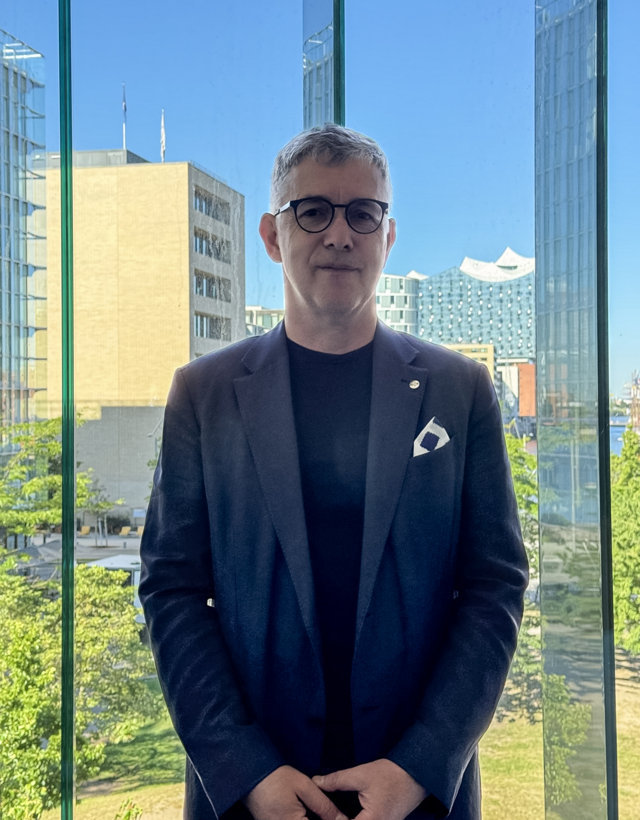
We thank Andreas Ullrich, Global Market Director, Passenger Ships and Ferries, RINA for sharing with us the company’s growth journey, strategic vision, and the innovation and sustainability initiatives that characterize the group. It is clear that the focus on safety, continuous training, and technology not only maintains high operational standards but also represents a key factor in tackling future challenges across the various industrial sectors in which RINA operates.
Gabriele Bassi