
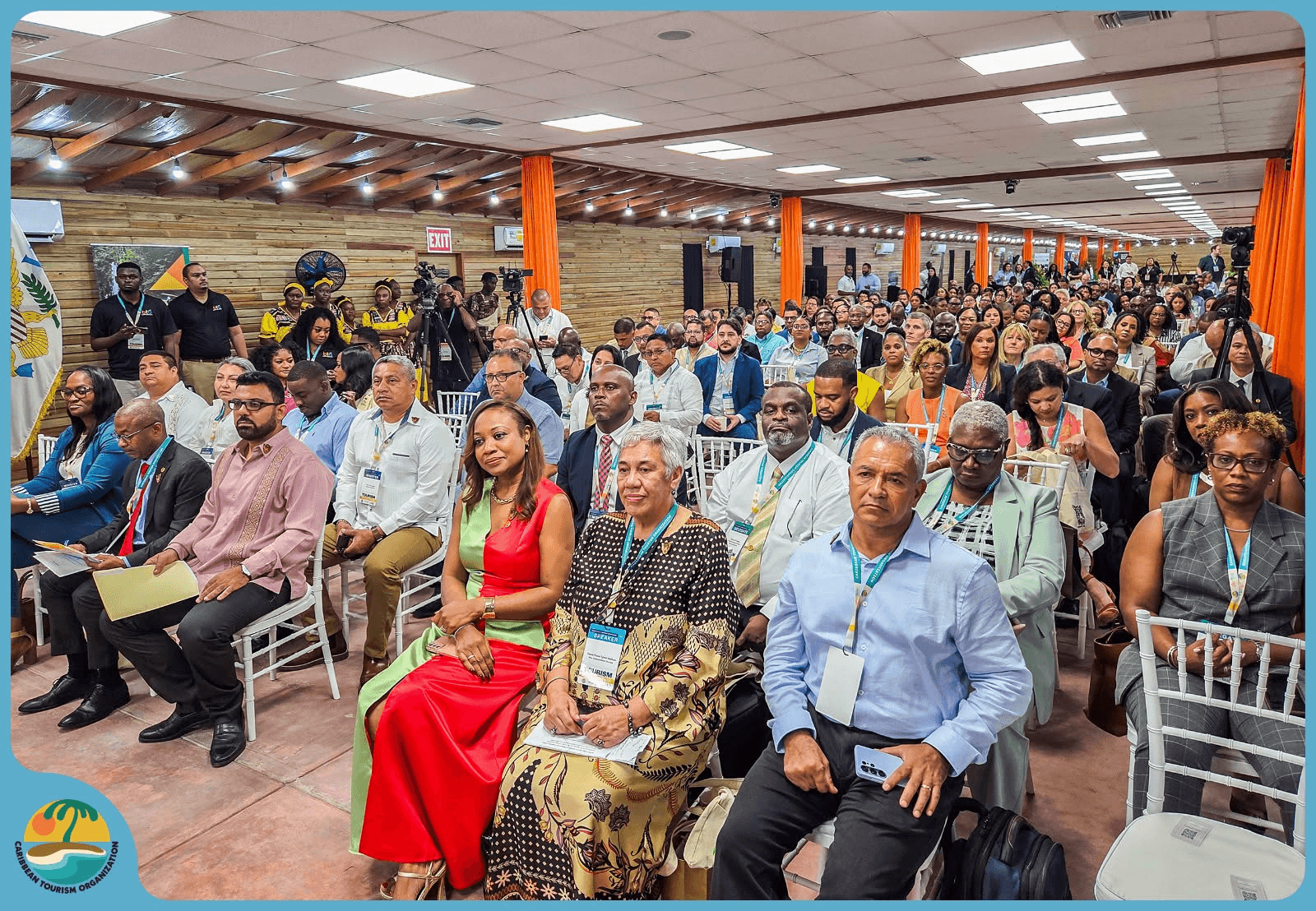
The Caribbean Tourism Organization (CTO) hosted its 17th Sustainable Tourism Conference (STC 2026) in San Pedro, Belize, bringing together more than 40 experts, government representatives, tourism professionals, and innovators from across the Caribbean and beyond to discuss the future of responsible tourism.
Held from 27 to 30 April 2026, the conference revolved around the theme "Tourism in Full Color," inviting participants to move beyond traditional, fragmented tourism development models in favour of a more integrated approach that combines environmental sustainability, cultural preservation, social inclusion, and economic growth.
A key message emerging from the conference was the need for Caribbean destinations to adopt strategies capable of delivering tangible benefits to local communities while safeguarding the region's natural ecosystems and cultural heritage.
The conference opened with a keynote address by Dame Pania Tyson-Nathan DNZM, Chief Executive of New Zealand Māori Tourism, entitled "Tourism in Full Color – A New Development Paradigm." Drawing on Indigenous knowledge and inclusive development models, she highlighted the importance of a tourism industry that celebrates local identities, traditions, and communities while balancing economic growth with environmental stewardship.
Throughout the conference, delegates explored a range of economic models linked to sustainable tourism. Discussions covered the Blue Economy, which promotes the responsible use of marine and coastal resources; the Green Economy, focused on reducing emissions and strengthening climate resilience; the Orange Economy, centred on culture and the creative industries; and the Purple Economy, which emphasises social cohesion, well-being, and inclusive development.
Among the featured speakers was Professor Dale Webber, Jamaica's Ambassador and Special Envoy for Climate Change and the Environment, who examined strategies for addressing the climate-related risks facing Caribbean destinations. Paloma Zapata, CEO of Sustainable Travel International, focused on tourism carrying capacity management, an increasingly important issue as many of the world's most fragile destinations face mounting visitor pressure.
One of the conference's highlights was the ministerial dialogue on resilience, featuring Anthony Mahler, Belize's Minister of Tourism, Youth, Sports and Diaspora Relations; Orlando Habet, Minister of Sustainable Development, Climate Change and Solid Waste Management; and Zorisha Hackett, Secretary of Tourism for Tobago.
Community involvement in tourism development was another central theme. Sessions dedicated to inclusion featured Dr Kadijatu Grace Ahene-Kamara, Sierra Leone's Deputy Minister of Tourism and Cultural Affairs, and Dr Acolla Lewis-Cameron of the University of the West Indies, who explored pathways towards greener and more sustainable tourism. Additional contributions came from Belizean tourism expert Seleni Matus of The George Washington University, Dahlia Guard of the Saint Lucia Community Tourism Agency, Kelly Fontenelle, CEO of the St. Kitts Tourism Authority, and Frank Comito, former CEO of the Caribbean Hotel and Tourism Association.
Panel discussions moderated by renowned Caribbean journalist Julian Rogers also brought together representatives from the Inter-American Development Bank (IDB), CAF – Development Bank of Latin America and the Caribbean, The Travel Foundation, and the Organisation of Eastern Caribbean States (OECS) Commission, encouraging dialogue on the policies needed to build a more balanced and sustainable tourism sector.
One of STC 2026's defining features was "Sustainability in Action," a full day of immersive field experiences that allowed delegates to witness first-hand examples of sustainable tourism initiatives across Belize.
Participants visited sites including the Lamanai Archaeological Reserve, Hol Chan Marine Reserve, Hopkins and the Palmento Grove Eco-Cultural & Healing Lodge, Che'il Mayan Chocolate, the Cockscomb Basin Wildlife Sanctuary, and the Chaa Creek Experience. These visits demonstrated how tourism can serve as a powerful tool for environmental conservation, cultural preservation, and local economic development.
Hosted by Belize's Ministry of Tourism, Youth, Sports and Diaspora Relations and the Belize Tourism Board, STC 2026 reinforced the country's position as a leading laboratory for sustainable tourism innovation.
According to Narendra Ramgulam, Deputy Director of Sustainable Tourism at the Caribbean Tourism Organization, the conference's greatest achievement was its ability to bring together diverse perspectives, expertise, and experiences to shape new directions for Caribbean tourism. STC 2026 provided an important platform for dialogue among policymakers, industry professionals, and innovators, fostering knowledge exchange, new partnerships, and practical solutions aimed at creating a more resilient, inclusive, and sustainable tourism industry.
The conference was supported by Carnival Corporation & plc and Norwegian Cruise Line Holdings Ltd./Belize Island Holdings Ltd. (BIHL), alongside several Belizean partners, including Bowen & Bowen, Development Finance Corporation, DIGI Belize, the National Institute of Culture and History, Wine Smith Ltd., and BELTRAIDE – Belize Trade and Investment Development Service.
With STC 2026, the Caribbean Tourism Organization reaffirmed its vision of a Caribbean tourism industry guided by the principle "One Sea, One Voice, One Caribbean," promoting a development model in which sustainability, culture, and local communities remain at the heart of the region's future.
Giorgia Lombardo