
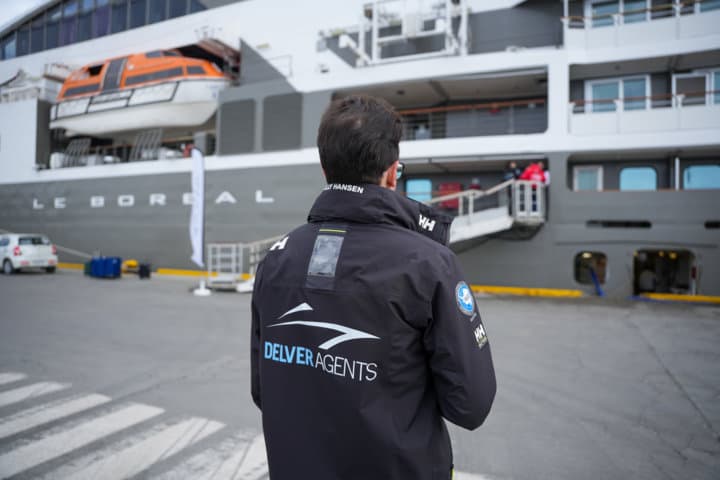
Passengers remember extraordinary landscapes. They remember stepping onto the ice in Antarctica for the first time, encountering wildlife they had only seen in photographs and returning home with stories they will share for years. They remember the experience.
What they rarely see is everything that happened long before they came on board. Months before a vessel reaches its first port, cruise operators are already building itineraries, selecting destinations, developing marketing campaigns, opening reservations and selling voyages around the world.
At the same time, Marine Operations, Hotel Operations, Procurement, Technical and Crewing teams begin coordinating everything from berth reservations, permits and seasonal provisioning to technical spares, immigration, medical requirements and passenger logistics.
Warehouses start receiving cargo from multiple countries. Fresh, refrigerated and frozen provisions are forecast and sourced. Local producers prepare seasonal supplies. Authorities review documentation. Airlines, trucking companies and logistics providers begin moving goods toward destinations that are often among the most remote in the world.
Each activity follows a different timeline, procedure and route. Eventually, however, they must all converge around one schedule: the vessel’s. By the time the ship arrives in Ushuaia or another expedition gateway, hundreds of decisions have already been made and thousands of individual tasks completed.
All of that work has one purpose: transforming months of planning into a seamless guest experience.
That is also where our story begins. Delver Agents was founded in Ushuaia in 2007, at a time when expedition cruising was developing into the global industry it is today. From the beginning, our ambition was broader than coordinating individual port calls or moving cargo.
We wanted to become the kind of partner operators could rely on throughout the complete journey. A partner that understood the itinerary, the operational environment and the pressures experienced by the people responsible for delivering the voyage. A partner capable of connecting authorities, suppliers, logistics, infrastructure and local expertise around one shared objective.
As the expedition industry evolved, so did we. Over the years, we have supported customers through new itineraries, increasingly complex seasons, infrastructure developments, regulatory changes and some of the most challenging operational moments our industry has faced.
That same service philosophy has since expanded through Horizon Air Freight’s global freight-forwarding capabilities and Swift Marine’s specialized marine logistics and freight-forwarding expertise.
Today, Horizon Air Freight, Swift Marine and Delver Agents work as one coordinated organization, combining international reach with trusted local execution and helping connect every stage of an operation—from the earliest planning discussions to the vessel’s final departure. Because while our customers create extraordinary experiences, our responsibility is helping make sure those experiences happen.
One Team Behind the Entire Operation
Cruise and expedition operators are not managing isolated shipments. They are coordinating highly interconnected operations where one decision can influence vessel readiness, hotel performance, crew planning, passenger movements and ultimately the guest experience.
A delayed technical spare may affect a maintenance schedule. A change in the vessel’s programme may impact excursions, crew movements, berth availability or local resources. Fresh provisions, frozen goods, beverages, medical supplies and thousands of everyday items must arrive at the right time, in the right condition and at the correct location.
Meanwhile, other teams may be confirming navigational permits, coordinating immigration requirements, securing port services or forecasting warehouse capacity for the season ahead.
Every activity influences another. That is why our involvement frequently begins before the first shipment leaves a supplier’s facility. We sit down with our customers to understand the season they are planning, the destinations they will visit, the operational requirements they anticipate and the opportunities they want to develop.
Together, we review itineraries, provisioning strategies, technical requirements, warehousing needs, customs procedures, crew logistics and contingency scenarios. Increasingly, customers involve us before decisions are made, asking not only, “Can you execute this?” but, “How would you approach it?”
Those conversations are some of the most valuable work we do. They allow us to contribute knowledge gained from previous seasons, challenge assumptions constructively and identify how a decision made today may affect another part of the operation weeks or months later.
This approach has shaped the way Horizon Air Freight, Swift Marine and Delver Agents work together.
Horizon Air Freight contributes more than five decades of international freight-forwarding experience and a global network connecting key marine and logistics hubs across North America, Europe, the Middle East, Asia and Latin America. Its capabilities include multimodal transportation, customs expertise, warehousing and global cargo coordination.
Swift Marine brings specialized marine logistics coordination, combining air, ocean, road and courier transportation with consolidation, warehousing and final delivery support tailored to the time-sensitive requirements of vessels worldwide.
Delver Agents provides port agency, local execution, infrastructure, provisioning support and the operational knowledge developed through nearly two decades of supporting cruise and expedition operations across South America and Antarctica.
Each company maintains its specialist knowledge. The value comes from connecting those capabilities around the customer. For our clients, this means fewer interfaces, shared visibility and continuity throughout the operation.
That coordination is supported by Navigator, our integrated operational platform, which connects orders, shipments, suppliers, documentation, transportation and operational milestones into a shared view of the entire journey. Rather than working from disconnected information, our teams—and our customers—benefit from greater visibility, faster decision-making and a more coordinated operational experience.
One conversation rather than several disconnected exchanges. One team already communicating internally before the customer has to ask. One operational picture shared across departments. One organization thinking beyond today’s requirement and considering what comes next.
That continuity changes the relationship. Over time, customers invite us into planning meetings, ask us to review processes and seek our perspective when evaluating new destinations, seasonal strategies or operational alternatives.
Our role is therefore not limited to executing instructions. It is to contribute ideas, identify opportunities, anticipate challenges and help customers make decisions with greater confidence.
Sometimes the most valuable contribution we make is not solving a problem. It is preventing one from developing in the first place. That is why we see ourselves as an extension of our customers’ teams. The strongest partnerships are not built transaction by transaction. They are built season by season, voyage by voyage and through the consistency of working toward the same objective.
Navigator: Connecting Every Stage of the Journey
Rather than managing isolated shipments, today’s cruise and expedition operators need visibility across the entire operation. Navigator brings together orders, POs, shipment information, logistics, transportation, warehousing, documentation and operational milestones into one connected platform, helping teams:
- Track orders from purchase through onboard delivery.
- Coordinate air, ocean, road and courier shipments.
- Monitor transportation, documentation and customs status.
- Improve communication among departments, suppliers and operational teams.
- Access dashboards, KPIs and reporting from a shared source of information.
- Support financial visibility, invoice reconciliation and supplier-performance analysis.
- Measure operational impact, including CO₂-related reporting.
- Integrate with ERP, financial and other operational systems.
- Make faster, better-informed decisions throughout the supply chain.
Navigator is more than a shipment-tracking tool. It provides a connected operational environment designed to improve visibility, collaboration and control across the complete order lifecycle. Because better visibility leads to better coordination—and better coordination creates more predictable operations. People create trust. Processes create consistency. Navigator connects them.
The People Behind Every Successful Voyage
Technology matters. Infrastructure matters. Transportation, warehousing and systems all matter. But people create the experience.
Behind every successful voyage are teams planning months in advance, working across countries and time zones, sharing information and quietly making sure the operation remains connected.
They are the people coordinating shipments, preparing temperature-controlled provisions, reviewing customs documentation, managing immigration requirements, receiving urgent cargo at airports and working alongside port authorities. They are also the people asking questions, challenging assumptions and considering what an operational change may mean for the vessel, the crew or the passenger experience.
What distinguishes a strong partnership is not only technical competence. It is ownership.
Did someone answer when plans changed? Did someone already have an alternative in mind? Did someone understand the wider operational impact rather than simply forwarding an update? Did the customer feel supported? Those moments build trust.
They have also shaped the culture across Horizon Air Freight, Swift Marine and Delver Agents. Our teams work with a shared philosophy: Think beyond the immediate request. Communicate early. Understand the complete operation. Take responsibility for helping move it forward.
When one department identifies a potential concern, the objective is not simply to resolve its own task. It is to understand how that issue may affect every other part of the customer’s operation. That requires collaboration among freight-forwarding specialists, marine logistics coordinators, port agents, customs professionals, warehouse operators, commercial teams, operational coordinators and local managers across multiple regions.
Each person brings different knowledge. Together, they create collective experience built across expedition seasons, technical projects, dry docks, remote destinations, luxury charters, medical support and time-critical operations. Sometimes that experience is visible in major projects. More often, it appears in smaller moments: a warehouse team preparing an urgent shipment for the final available flight, a marine logistics specialist identifying an alternative routing or coordinating an urgent delivery to keep a vessel’s schedule intact, or a local operations team rebuilding an entire delivery plan after weather changes access to a destination.
These efforts rarely become headlines. That is often the point. The team’s greatest satisfaction is knowing that the vessel departed prepared, the customer remained informed and the passenger experience continued exactly as intended. True partnership is not about being visible at every moment. It is about quietly making sure the right people are there when they matter most.
Global Reach. Local Readiness.
Global capabilities are essential. Local knowledge makes them effective. This is particularly true in expedition cruising, where vessels frequently operate in remote, environmentally sensitive destinations with finite infrastructure and limited alternatives.
On paper, a port call may appear straightforward. In reality, every destination has its own rhythm, authorities, regulations, seasonal pressures and operational constraints. Local knowledge means understanding how long a process will realistically take—not only how long it is expected to take. It means recognizing when seasonal congestion is likely to affect availability, understanding which suppliers and service providers can respond under pressure and knowing what alternatives are genuinely viable when circumstances change.
That knowledge cannot be downloaded or learned from a procedure manual. It is built over years of working alongside the people and institutions that make a destination operate. Since Delver Agents was established in Ushuaia in 2007, our teams have developed long-standing relationships with port authorities, customs, immigration, health agencies, airports, transport providers, regional producers and government institutions.
The objective was never simply to maintain an office near the port. It was to become part of the operational fabric of one of the world’s most important Antarctic gateways. Today, that local knowledge is supported by specialized warehousing for dry, refrigerated and frozen goods, cold-chain capabilities, inventory management and expertise covering import, export, nationalization and transit operations.
It is also connected to Horizon Air Freight’s international freight-forwarding network and Swift Marine’s specialized marine logistics capabilities, allowing customers to benefit from one coordinated flow of information and execution across the supply chain. Whether coordinating technical shipments from Europe, consolidating hotel supplies in North America, arranging urgent air freight from Asia or managing local provisioning programmes in South America, our teams connect international logistics with the realities of the final destination.
This structure has allowed us to support a wide range of specialized operations: seasonal hotel provisioning programmes, temperature-controlled food logistics, technical mobilizations, oversized cargo, helicopter transportation, high-end yacht and charter requirements, international medical coordination and urgent vessel support.
Some projects require months of planning. Others require decisions within minutes. Some involve thousands of products. Others depend on a single critical component. The scale of an operation never determines its importance. Every order, movement and delivery ultimately contributes to the same objective: helping customers fulfil the commitments they have made to their passengers, crew and stakeholders.
Infrastructure gives our teams the tools to respond. Relationships, credibility and experience give customers confidence that the operation is in capable hands. That is where global reach and local readiness become most valuable: experienced people on the ground, connected to experienced people around the world, all working toward the same outcome.
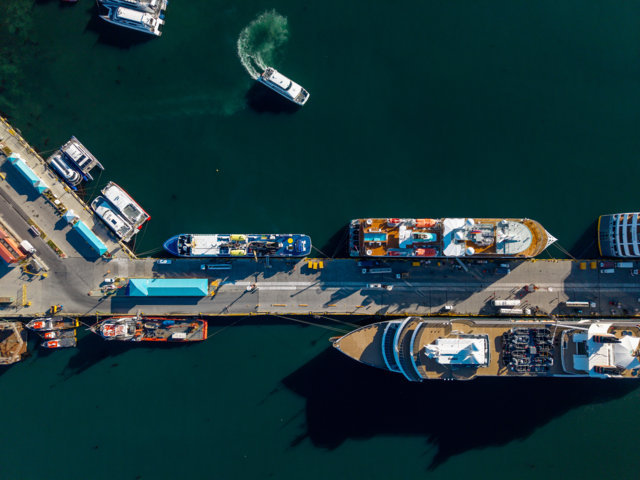
Planning Beyond the Expected
Successful operations are not defined only by how effectively a team responds when circumstances change. They are also defined by how much preparation took place before the change occurred. Every season brings uncertainty. Weather may affect schedules. A critical item may become unavailable. A flight may be cancelled. Regulations may change. Passenger numbers or itineraries may be adjusted. A vessel may require unexpected support halfway through the season.
These are not unusual exceptions. They are part of operating in complex maritime environments. For us, planning does not end when the first operational schedule is approved. That is where it begins.
Before cargo moves, provisions are consolidated or a vessel enters port, our teams review alternative scenarios and consider how the operation can continue if the original plan changes. That may involve identifying secondary service providers, evaluating different transportation routes, positioning inventory closer to the vessel’s itinerary or consulting local authorities well in advance about seasonal conditions and regulatory developments.
It also means asking the right questions early. What could affect this plan? Which dependencies are most critical? Where are the alternatives limited? Who needs to be informed if circumstances change? What decisions can be made now to protect the operation later?
This approach is one of the reasons customers involve us long before execution begins. They ask us to review operational plans, challenge assumptions, share lessons from previous seasons and evaluate options they may not yet have considered. Good planning is measured by something that rarely appears in a report: the number of disruptions that never reached the customer. Some of our most successful operations are the ones nobody remembers—not because they were simple, but because everything happened as it should.
The vessel departed on time. The hotel department had the required supplies. Technical teams received critical components before they became urgent. Passengers boarded smoothly. Crew movements were aligned. Authorities had the correct information. Behind the scenes, people had already adjusted the plan, evaluated alternatives and made decisions that protected the outcome.
Operational excellence often looks less like dramatic recovery and more like quiet preparation. That mindset has guided us through complex Antarctic seasons, time-critical technical mobilizations, specialized charter requirements, helicopter and oversized cargo movements, international medical coordination and rapidly changing pandemic-era regulations. Every situation has been different, but the customer expectation has remained consistent: they want a partner who is not only ready to respond, but already thinking about what comes next.
Planning, therefore, is not about producing more documents or creating unnecessary layers of process. It is about creating confidence. It allows our customers to focus on delivering the voyage, knowing that a coordinated team is continuously looking ahead, assessing options and protecting the operation before small concerns become significant disruptions.
Growing With the Communities We Serve
Every cruise itinerary begins with a destination. Those destinations are sustained by the people who live there, the communities that welcome visitors, the authorities that protect them and the businesses that support their long-term development.
For us, operating in a destination has always meant more than providing services. It means becoming part of the community that makes those operations possible. Since Delver Agents was founded in Ushuaia, we have had the privilege of growing alongside one of the world’s principal gateways to Antarctica. We have seen expedition cruising evolve from a specialist segment into one of the most dynamic areas of international tourism.
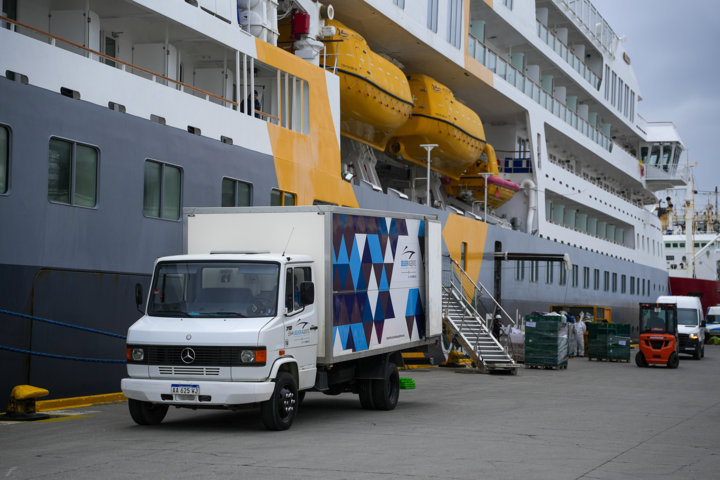
That growth creates opportunities, but it also carries responsibility. We believe successful operations should contribute to stronger and more resilient destinations. Where practical, we work with regional producers and local suppliers, helping reinforce local supply chains while reducing unnecessary transportation. Fresh products delivered to vessels operating in Patagonia often come from regional farms and businesses, creating opportunities for local producers to participate in an international industry.
Our commitment also extends to educational institutions, healthcare organizations and community initiatives that contribute to the long-term wellbeing of the region. Some of that support is visible. Much of it happens quietly. The objective remains the same: generating value beyond the immediate operation. Environmental responsibility follows the same principle. Sustainability should not exist only as a reporting category. It should influence everyday decisions about local supply-chain planning, consolidation, routing, waste, supplier selection and the use of resources.
Over the years, our teams have participated in recycling initiatives, developed local sourcing programmes, explored opportunities to reduce unnecessary transportation and supported projects intended to improve the environmental performance of expedition operations. That commitment continues through participation in the IAATO Climate Change Committee, where we collaborate with other industry stakeholders on practical approaches to reducing the environmental impact of Antarctic activities. It is also reflected in our participation in the United Nations Global Compact and in our ongoing exploration of initiatives such as reforestation and carbon-reduction programmes linked to expedition operations.
For us, sustainability is not a separate department. It is a way of evaluating impact. Impact on the customer. Impact on the destination. Impact on the community. Impact on the environment. The responsibility of supporting extraordinary voyages therefore extends beyond the vessel. It includes helping protect and strengthen the destinations that make those voyages possible.
That responsibility is shared across Horizon Air Freight, Swift Marine and Delver Agents. Whether improving efficiency, supporting local economies, reducing unnecessary movements or collaborating with industry partners, we believe long-term success depends on creating value for everyone involved.
The Confidence Behind Every Voyage
The cruise and expedition industry will continue evolving. New destinations will emerge. Regulations will change. Technology will improve visibility and decision-making. Guest expectations will continue rising, and operations will become increasingly interconnected.
The partners best prepared for that future will not be defined only by the number of services they offer. They will be defined by their ability to connect people, information, expertise and decisions into one consistent customer experience.
We already see this change taking place. Customers are involving us earlier in their planning, inviting us into operational reviews and asking us to assess logistics strategies, infrastructure, risks and opportunities for greater efficiency. Our role is evolving from executing individual requirements to helping shape stronger operations.
That development reflects the way we believe partnerships should work. Not transaction by transaction, but through collaboration. Not focused only on reacting, but on preparing. Not limited to one department, but centred on the success of the entire voyage. It has also shaped the evolution of our organization.
Delver Agents grew alongside the expedition industry, developing the local expertise, relationships and infrastructure needed to support increasingly complex operations. Horizon Air Freight brought the global freight-forwarding scale, international network, customs expertise, warehousing and multimodal transportation required to connect those operations with suppliers and logistics hubs around the world. Swift Marine added specialized marine logistics coordination and freight-forwarding expertise tailored to the operational realities of vessels, including air, ocean, road and courier transportation, consolidation and final delivery. The purpose was not simply to become larger. It was to become more valuable to our customers.
Today, Horizon Air Freight, Swift Marine and Delver Agents bring together global freight forwarding, specialized marine logistics coordination, port agency, customs expertise, warehousing, technology and local execution through one coordinated organization.
Technology will continue strengthening that model. Navigator helps connect orders, logistics, documentation, transportation, warehousing, costs and operational milestones into one coordinated view, giving customers greater visibility across their operations while enabling our teams to anticipate challenges and make faster, better-informed decisions. It allows different departments and operational partners to work from a more consistent source of information, reducing disconnected communication and creating greater continuity throughout the journey.
Technology does not replace experience. It amplifies it. By giving the right people the right information at the right time, it allows better decisions to be made long before they become urgent. Trust, however, remains human. It is built through preparation, transparency, sound judgement and consistent execution—season after season.
At the end of every expedition, passengers return home with stories. They remember the destinations, the wildlife, the service and the feeling of having experienced something exceptional. Behind those memories are hundreds of people, thousands of decisions and months—sometimes years—of preparation.
Every extraordinary voyage begins with a promise made by an operator to its guests. Our responsibility is helping our customers keep that promise. Quietly. Consistently. And with the confidence of knowing they have the right people beside them, wherever their voyages may take them.
Delver Agents