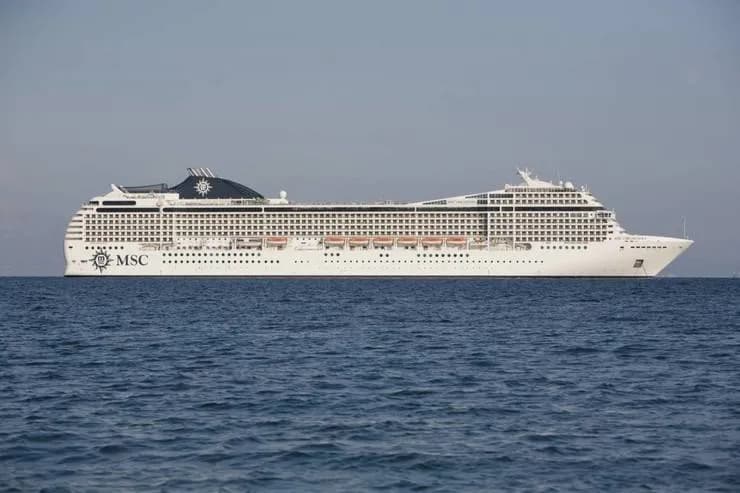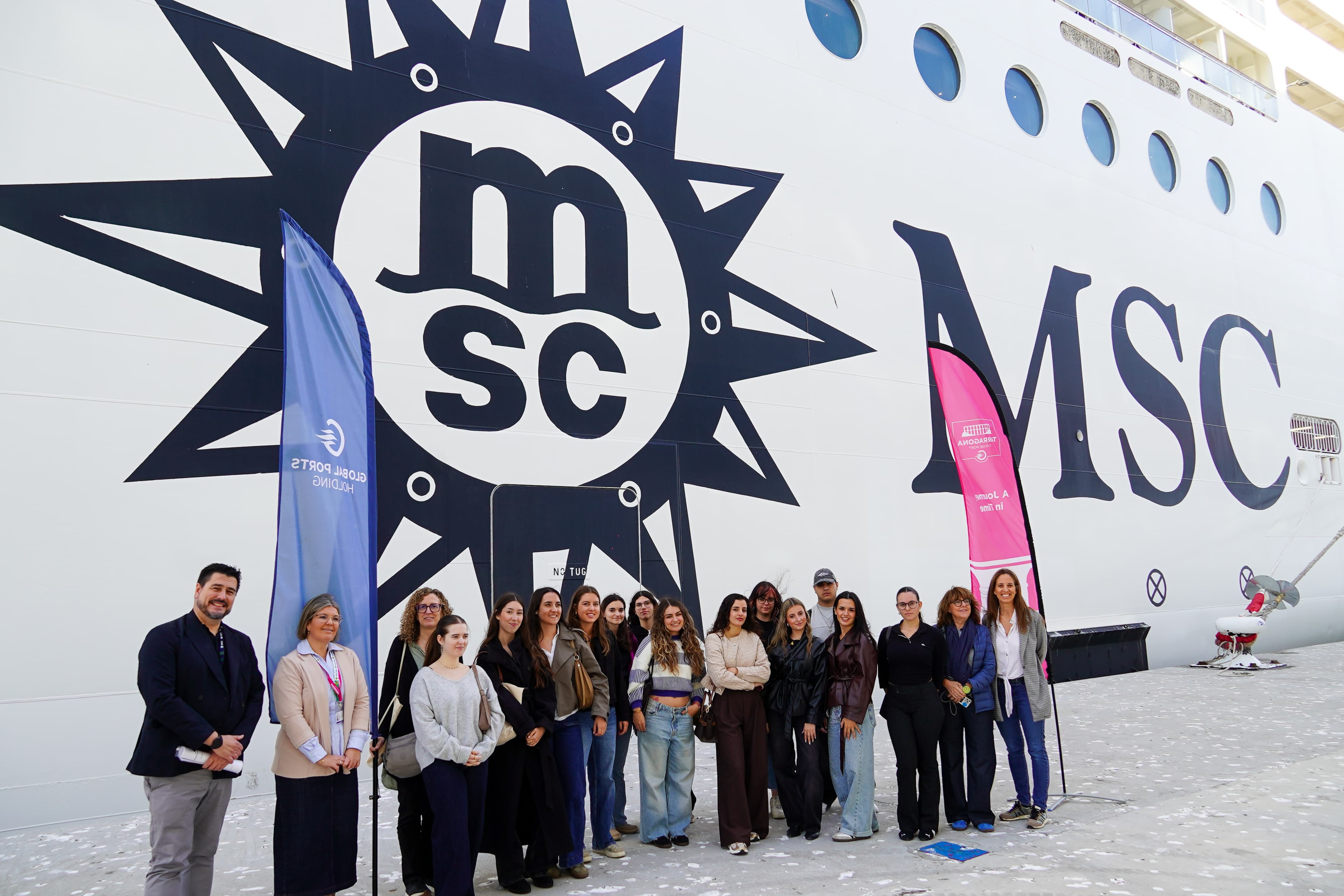
Bringing future tourism professionals closer to the operational reality of the cruise industry by giving them direct access to the infrastructure, activities and expertise that define the sector. This is the aim of the initiative promoted by Tarragona Cruise Port and MSC Cruises, which has brought the second edition of the course Cruise Industry Management: The MSC Cruises and Port of Tarragona Experience to a close. The programme was developed in collaboration with the Faculty of Tourism and Geography at Universitat Rovira i Virgili (URV).
The training programme concluded with a field visit that allowed students to gain first-hand insight into two key aspects of the cruise sector: cruise terminal management and the organisation of onboard operations. The visit to the Tarragona Cruise Port terminal and MSC Orchestra provided a practical perspective on how the cruise industry operates and the professionals involved in its various operational stages.
The initiative took place during MSC Orchestra’s final port call of the season in Tarragona, allowing participants to observe the dynamics of a port call and the procedures involved in cruise ship operations. At the terminal, students explored the facilities, management processes and coordination between the various operators. They also gained a better understanding of the port’s strategic role in connecting maritime traffic with the region’s tourism offering.
The second part of the day took place aboard MSC Orchestra, where students were able to visit the ship’s facilities and meet members of the crew. This provided an opportunity to discover the wide range of skills required to operate a cruise ship, understand the responsibilities of different departments and learn about career opportunities both at sea and ashore. The programme also included lunch on board and an informal discussion session, during which participants could ask questions, share observations and explore the practical aspects of working in the industry.
The involvement of experts from MSC Cruises and Tarragona Cruise Port is one of the course’s key features, as it aims to combine academic training with expertise gained through direct professional experience.
Alba Colet, Managing Director of Tarragona Cruise Port, led the first module, which focused on port infrastructure, cruise terminal management and tourism destination development. Sofía Basterra, Communications Director at MSC Cruises, contributed to the second, third and fourth modules, exploring the relationship between cruising and tourism, the workings of the cruise industry and cruise ships, and aspects of commercial management. The direct involvement of industry professionals enables students to engage with practical experience and specialist knowledge, offering a broad perspective on a sector that brings together tourism, logistics, port services, hospitality and onboard operations, sales and marketing.
With a total of 50 hours of training and the award of 2 ECTS credits, the course provides a structured exploration of the cruise industry through four specialist seminars and a technical visit. Topics covered include institutional organisation and coordination between industry stakeholders, cruise terminal and tourism destination management, the evolution of the international market and the main segments of cruise demand. The programme also addresses career opportunities at sea and ashore, sustainability, technological innovation, and commercial and marketing strategies.
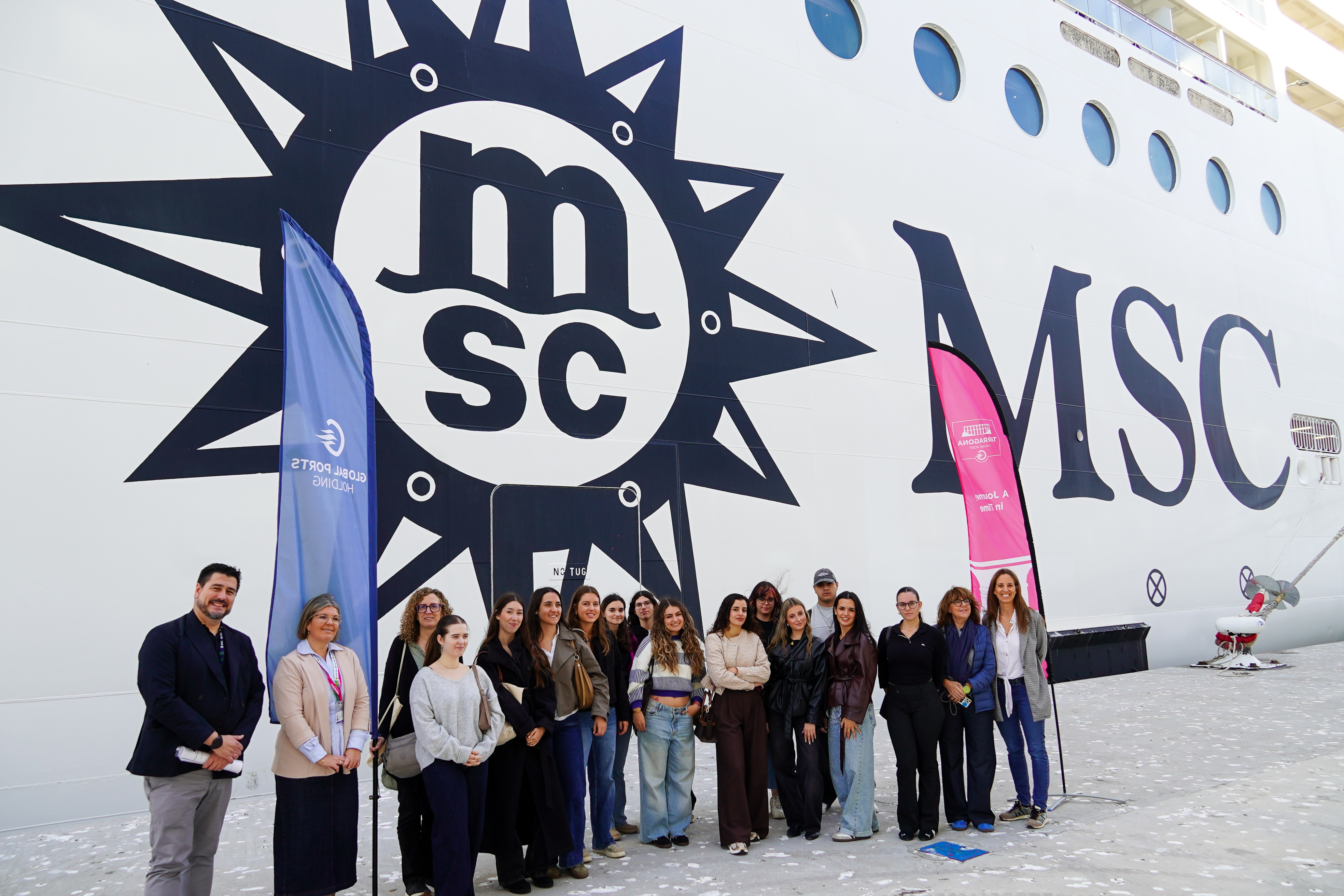
The experience at the terminal and aboard MSC Orchestra complements the academic programme with direct exposure to a professional working environment. This enables students to connect theoretical knowledge with the organisational and operational processes that shape the industry’s day-to-day activities, gaining a clearer understanding of the skills required and the potential pathways into employment.
The collaboration between Universitat Rovira i Virgili, MSC Cruises and Tarragona Cruise Port highlights the importance of dialogue between academia and industry in training the next generation of tourism professionals. The initiative aims to bridge the gap between education and employment by facilitating knowledge transfer and giving students the opportunity to engage with professionals working in the cruise industry every day. This multifaceted sector brings together a wide range of expertise and requires professionals who understand the connections between maritime transport, services, port management and tourism development.
Giorgia Lombardo