
The future of cruise tourism in the Mediterranean increasingly depends on the ability to move beyond the traditional "port-city" model and build a broader, more meaningful relationship with local destinations.
This is the vision at the heart of PortCREW – Interreg Euro-MED, a European project that promotes more sustainable, innovative, and destination-integrated models of cruise tourism. This approach is being put into practice through the work of three MedCruise members—Fundación Valenciaport, the Port Authority of Valencia, and the Port of Motril—which are collaborating to develop new tourism products and ensure that the economic and social benefits of cruise tourism are more widely shared across their regions.
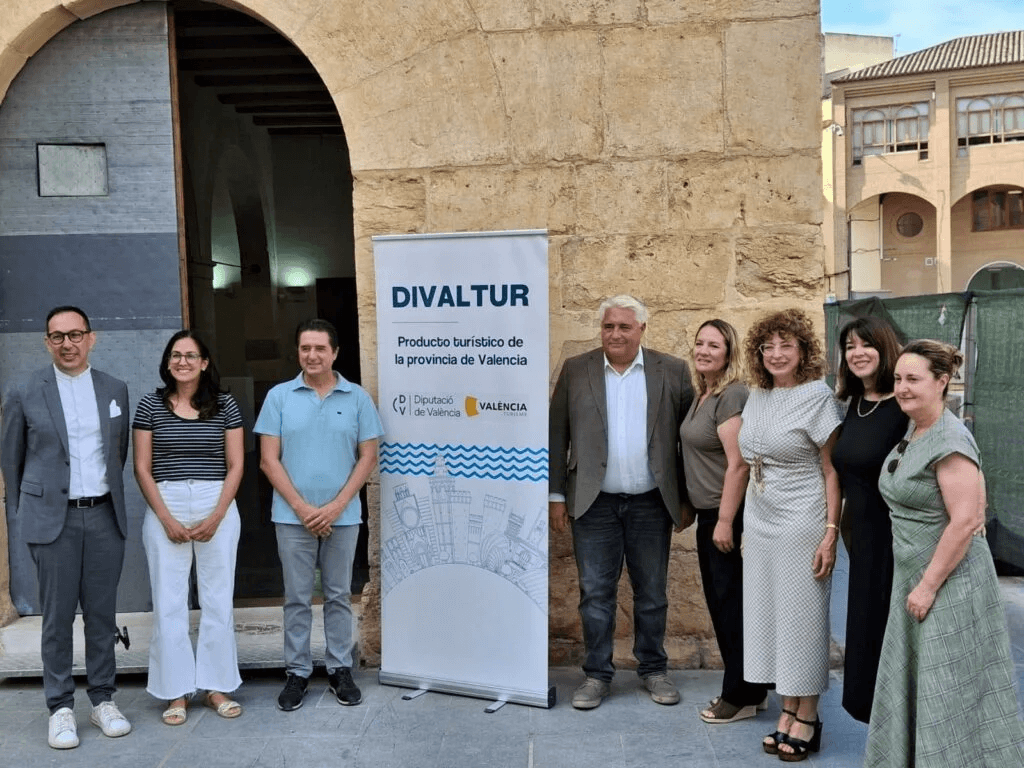
The topic was the focus of the Cruise Tourism Product Workshop, held on 2 July in Llíria and organised by the Provincial Council of Valencia together with Fundación Valenciaport and the Port Authority of Valencia, with the support of the Municipality of Llíria. The event brought together around 50 professionals from the tourism and cruise sectors to explore opportunities for developing new tourism experiences across the Province of Valencia. The objective was clear: to offer cruise passengers authentic, sustainable experiences that are deeply rooted in the identity of local destinations, expanding the tourism offer beyond the region's best-known urban attractions. In doing so, cruise tourism can become not only a sector to be managed, but also a catalyst for promoting lesser-known destinations and creating new economic and employment opportunities at the local level.
The challenge, therefore, is to transform the cruise passenger's stay into a broader experience that embraces historic towns, cultural attractions, local businesses, regional products, and activities showcasing the area's rich heritage. Achieving this requires close collaboration between public institutions and private stakeholders. The workshop in Llíria provided exactly this opportunity, bringing together public authorities, ports, destinations, and tourism businesses in recognition that developing new tourism products requires diverse expertise and perspectives.
The workshop was opened by Pedro Cuesta, Councillor for Tourism, who highlighted the importance of public-private cooperation in creating new opportunities and developing authentic tourism products tailored to the needs of cruise passengers. During the event, Francesca Antonelli, from the Port Authority of Valencia, outlined the key challenges facing the cruise sector in the Valencia destination. Carolina Navarro Correcher, from Fundación Valenciaport, presented PortCREW – Interreg Euro-MED, the European project supporting the initiative.
A valuable contribution also came from Lorenzo Vera, who shared the experience of the Port of Motril. There, the development of a cruise tourism offer extending across the entire province has enabled the destination to provide passengers with a diverse range of experiences that go well beyond the port city itself. Destinations such as Riba-roja de Túria also contributed to the discussion, demonstrating how local communities can play an active role in designing new itineraries and tourism products for the cruise market.
Diversification is particularly important at a time when many Mediterranean destinations face the challenge of concentrated visitor flows in major cities and the region's most popular attractions. PortCREW offers a different perspective: using cruise tourism as a lever to distribute visitor flows more evenly across the territory by creating stronger connections between ports and a wider network of destinations. This is not simply about offering new shore excursions, but about developing tourism products that reflect local identity while strengthening collaboration between ports, tourism authorities, municipalities, businesses, and local communities.
The workshop in Llíria forms part of a broader programme of stakeholder engagement activities involving both public and private actors from cruise destinations across the Mediterranean. Bringing these stakeholders together is considered essential to identifying tourism products that meet the expectations of cruise passengers while delivering lasting value to local communities.
The direction outlined by PortCREW reflects a broader transformation taking place across Mediterranean cruise tourism. Sustainability is no longer viewed solely through an environmental lens; it also means building a more balanced tourism model in which the benefits of growth are shared across a wider range of destinations and local communities.
For Fundación Valenciaport and the Port Authority of Valencia, the project represents an opportunity to promote destinations that are more sustainable, authentic, and closely connected to their surrounding territories. The vision is of a cruise industry that goes beyond simply bringing visitors to a city, positioning the port instead as a gateway to a broader and more diverse destination. In this model, the port is no longer the end point of the visitor experience, but the starting point for discovering the region's unique identity, cultural heritage, and attractions.
It is precisely this ability to create meaningful connections—between ports and destinations, cruise passengers and local communities, and public and private stakeholders—that PortCREW identifies as one of the key drivers for building a more sustainable, authentic, and balanced model of cruise tourism in the Mediterranean.
Gabriele Bassi