
More than a simple trade show presence, MedCruise’s participation at Seatrade Cruise Med 2026 offered a concrete demonstration of how networking continues to be one of the invisible, yet decisive, infrastructures of the cruise industry. In Las Palmas de Gran Canaria, the Association of Mediterranean Cruise Ports concluded two intense days of meetings, discussion and business development, focusing not only on promoting its members, but above all on the need to build increasingly strong connections between ports, destinations, cruise lines and international stakeholders.
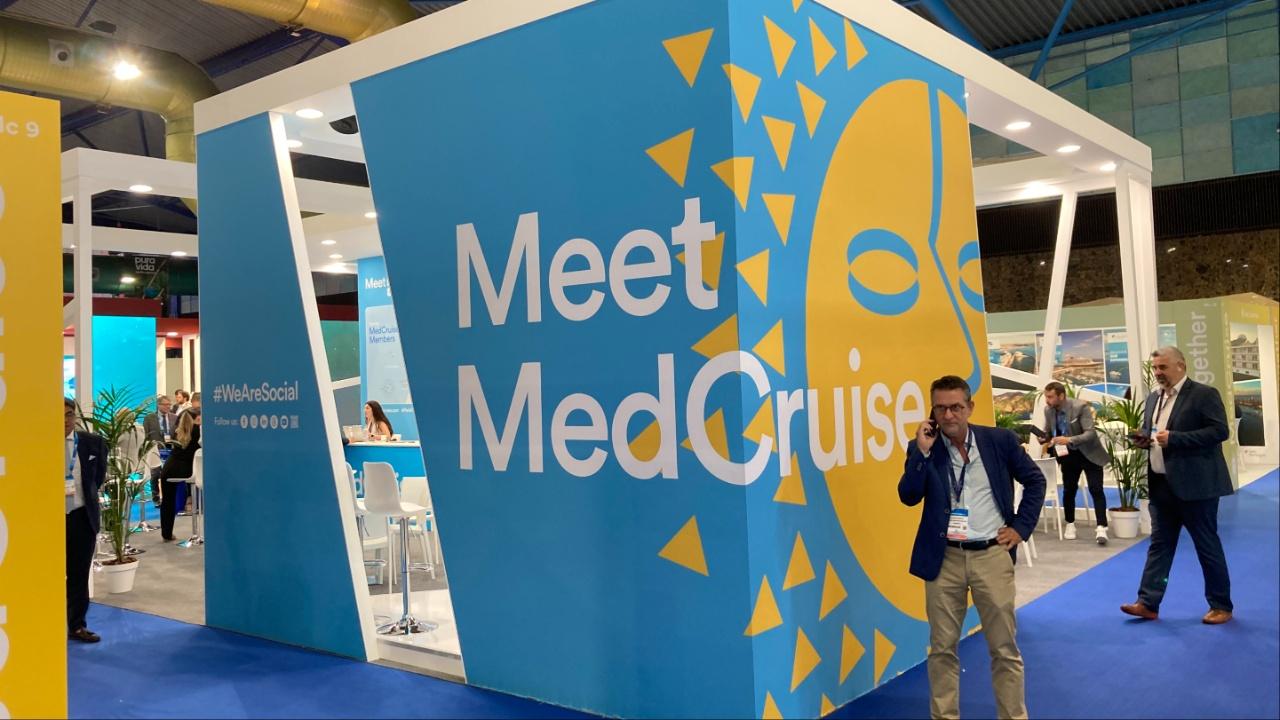
At the operational heart of MedCruise’s presence was a 360-square-metre pavilion, conceived as a true business hub rather than simply an exhibition space. Five members participated with individual booths, another 13 with dedicated tables, while those without their own stand or table were able to use bookable B2B meeting tables for appointments with cruise lines and other industry operators. It was a flexible formula, designed to accommodate different levels of commercial presence, and one that produced a very tangible result: more than 100 B2B meetings over the course of the two days.
And this is probably the most interesting figure from a business perspective. At a time when the industry is constantly discussing new ships, capacity, infrastructure and destination development, MedCruise brought the focus back to the value of direct relationships. For a port or destination, attending an international event is not simply about displaying a brochure or presenting new terminals and itineraries: it means sitting at the table with those who plan cruise calls, understanding cruise lines’ priorities, identifying new opportunities and, above all, turning an initial contact into an ongoing relationship.
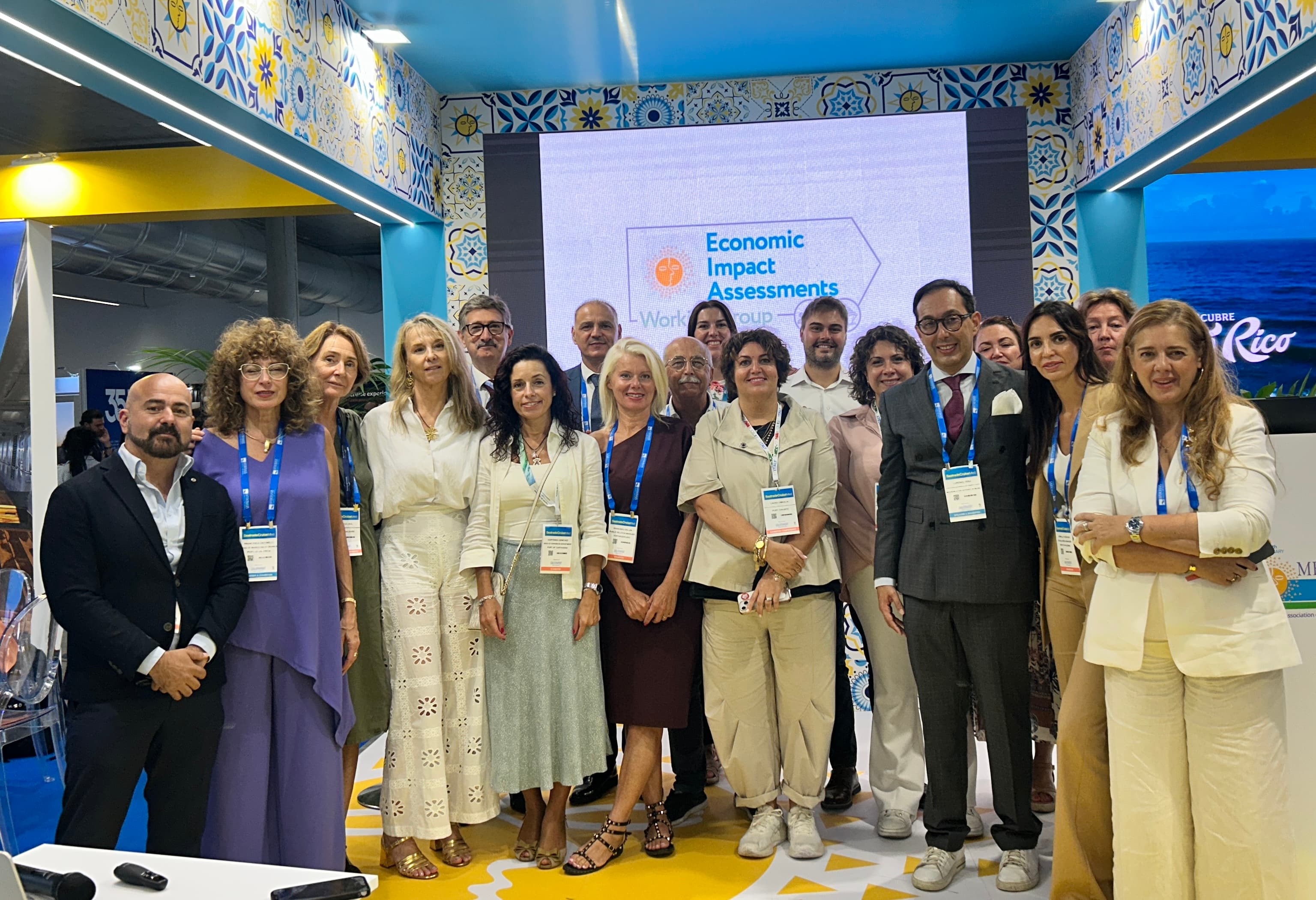
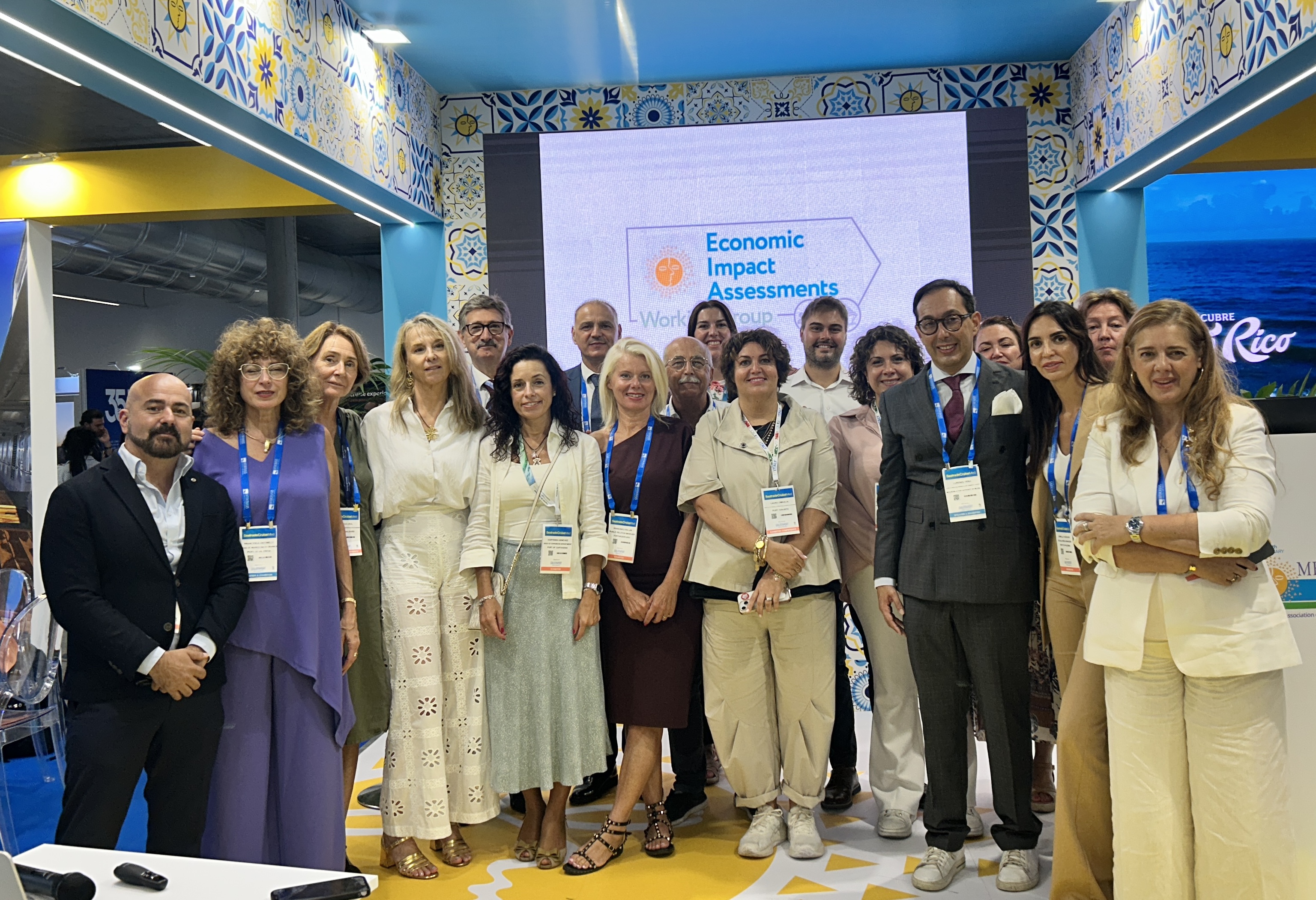
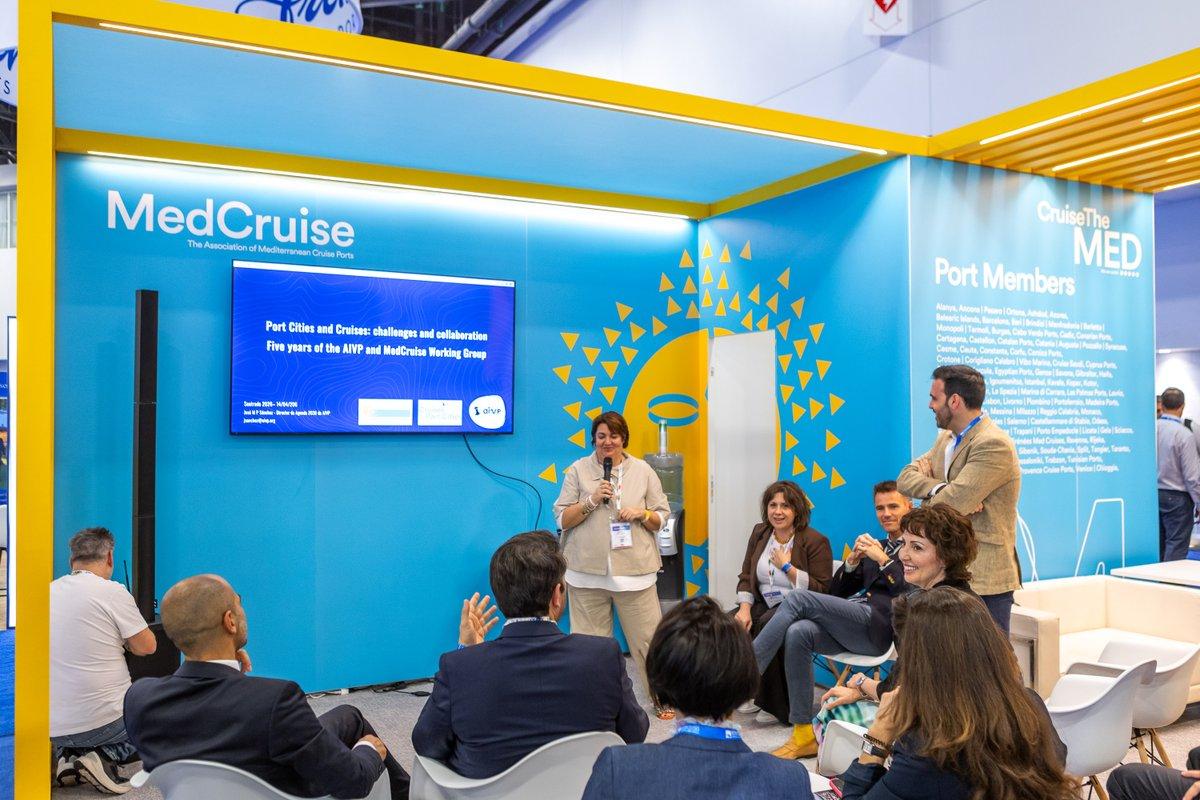
The commercial dimension was complemented by a strong focus on content. The MedCruise pavilion hosted the sixth Working Group Meeting dedicated to Economic Impact Assessments, with a panel focused on Spanish ports. The session, presented by Lorenzo Vera Franco with the participation of Verónica Verdesoto Gómez of Puertos del Estado, highlighted the need to use solid and comparable data to measure and communicate the direct, indirect and induced economic contribution generated by cruise activity for ports and destinations. This is far from a secondary issue. The ability to demonstrate the economic impact of cruising with reliable figures is becoming increasingly strategic in relations between ports, local authorities and communities. It is no longer enough to speak broadly about benefits: the industry needs metrics, shared methodologies and tools capable of explaining more precisely where and how the presence of cruise ships creates value.
MedCruise also played an important role in the Seatrade Cruise Med conference programme, with 19 members and representatives taking part as speakers. The topics addressed provide a clear picture of the priorities currently reshaping the agenda of Mediterranean ports: expedition cruising, artificial intelligence and technology, destination management, shoreside infrastructure, responsible tourism, visitor experience and the future of cruising in the region. The variety of sessions highlighted a point that is becoming increasingly clear: the port of the future cannot limit itself to the technical management of ship calls. It must simultaneously serve as infrastructure, a dialogue partner for the city, a tourism facilitator, an economic actor and, increasingly, a laboratory for innovation. Among the themes that received particular attention during the two days were sustainable cruise development, relations between ports, cities and communities, digitalisation and innovation, the economic value generated by the sector and the need to manage destinations more responsibly, while at the same time creating meaningful experiences for passengers and tangible benefits for local communities. These issues can no longer be treated separately: competitiveness, sustainability and the quality of the guest experience must necessarily move forward together.
The context takes on even greater significance in the year in which MedCruise celebrates its 30th anniversary. Founded in Rome in 1996 through an agreement between 16 ports in seven countries, the Association today represents 171 cruise ports and more than 67 associate members across 22 countries in Europe, Asia and Africa. These figures reflect the organisation’s growth, but also how complex its role has become: bringing together organisations that differ significantly in size, market position and priorities, while at the same time working to build a common voice for the Mediterranean and its adjoining seas. Las Palmas therefore offered MedCruise something more than a showcase. It represented an opportunity to measure the value of the network, strengthen commercial relationships and discuss challenges that no port can fully address alone anymore. After 30 years, the challenge is no longer simply to keep expanding the network, but to turn that network into an increasingly effective tool for strengthening members’ competitiveness and supporting cruise development capable of keeping pace with a rapidly evolving market.
Gabriele Bassi