
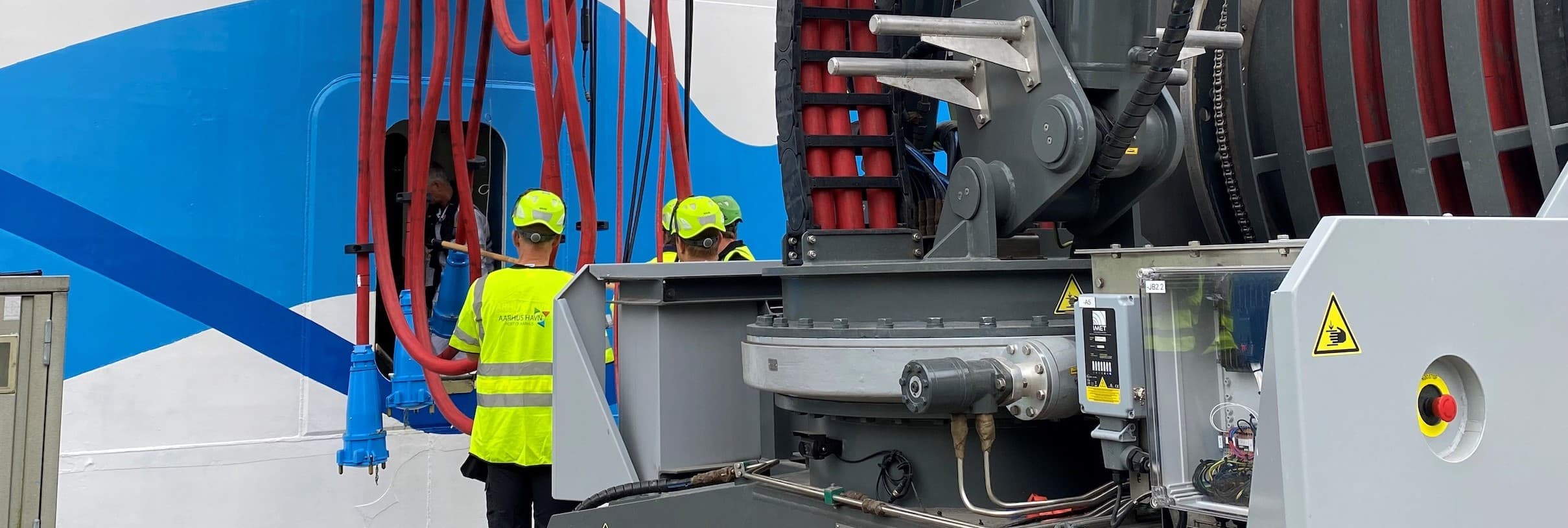
Cruise Baltic is taking an increasingly central role in the development of shore power infrastructure across Northern Europe, as several member ports move ahead with new installations, capacity upgrades and terminal projects during 2026. The association’s work is helping to connect individual port investments into a broader regional strategy, giving cruise lines a clearer picture of where onshore power is available, where it is being expanded and how quickly the Baltic is moving towards a more coordinated model of lower-emission cruise operations.
Shore power allows compatible cruise ships to switch off their engines while alongside and connect directly to the local electricity grid, reducing emissions and noise during port calls. For the Baltic, where many cruise terminals are located close to urban areas, the technology is becoming one of the most practical tools for improving the relationship between cruise activity and local communities. Cruise Baltic has supported this transition for several years, providing technical information to cruise lines and promoting greater alignment between destinations so that shore power can function as part of an integrated regional network rather than as a series of isolated port projects.
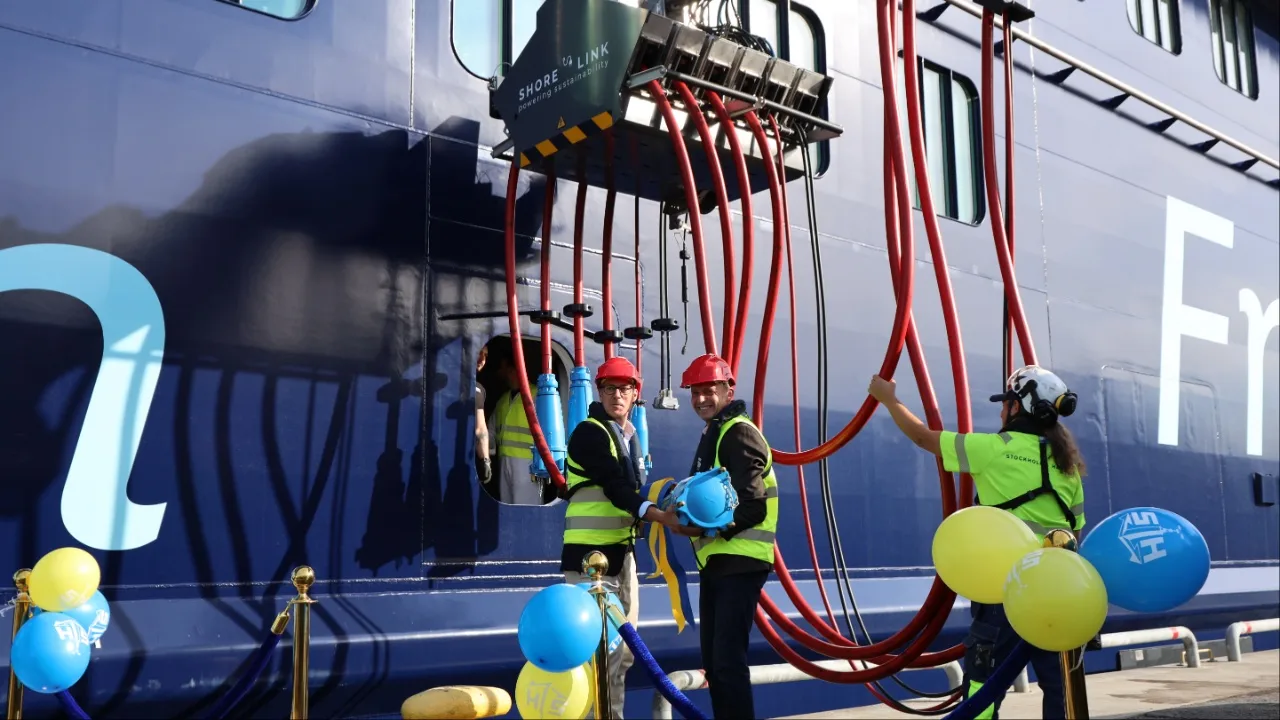
Several Cruise Baltic members are now advancing important projects in 2026. Tallinn is preparing the construction of a new substation dedicated to supplying shore power to cruise vessels, with work scheduled to begin in the second half of the year. The system will serve cruise piers 26 and 27, with full operations expected no later than 2030. Klaipėda is also progressing with its new Cruise Terminal 2, which includes onshore power infrastructure and represents a significant step in the Lithuanian port’s long-term cruise development. Kristiansand already operates a 15 MW shore power system at cruise berth 10 and is carrying out berth extension works during 2026 to increase the number of vessels able to use the installation. Copenhagen is further ahead, with shore power already available at Ocean Quay and Langelinie. Current capacity stands at 20 MVA and is set to increase to 48 MVA by 2028, when up to five cruise ships should be able to connect simultaneously.
For Cruise Baltic, the significance of these projects lies not only in the progress of individual ports, but in the creation of a more consistent regional infrastructure network. Cruise itineraries typically include several destinations in different countries, and shore power becomes considerably more effective when ships can connect repeatedly throughout the same voyage. By maintaining a dedicated overview of existing and planned installations, Cruise Baltic helps operators understand where compatible infrastructure is available and supports more efficient deployment and itinerary planning. The association’s latest Sustainability Report provides useful context for this development. It showed that 46% of member ports that do not yet offer shore power already have concrete plans to introduce it before 2032. In 2026, several of those plans are moving into a more tangible phase, with construction work, berth adaptations and terminal projects now progressing across the region. This shift from planning to implementation is one of the clearest signs that shore power is becoming a structural element of Baltic cruise development.
Cruise Baltic’s broader sustainability strategy extends beyond energy infrastructure. The association works with destinations on issues including visitor distribution, congestion management, environmental performance and long-term destination planning. Its Itinerary Planner, developed in cooperation with Cruise Norway, allows cruise lines to check port availability and helps avoid excessive concentration of vessels in individual destinations, linking operational planning with wider sustainability objectives. This regional coordination is particularly important as European ports face increasingly stringent environmental requirements and cruise lines place greater emphasis on the sustainability performance of destinations. Shore power does not address every challenge associated with cruise activity, but it offers an immediate and measurable way to reduce local emissions while ships are in port. For cities where cruise terminals are closely integrated into urban areas, this can have a direct impact on air quality, noise and public perception.
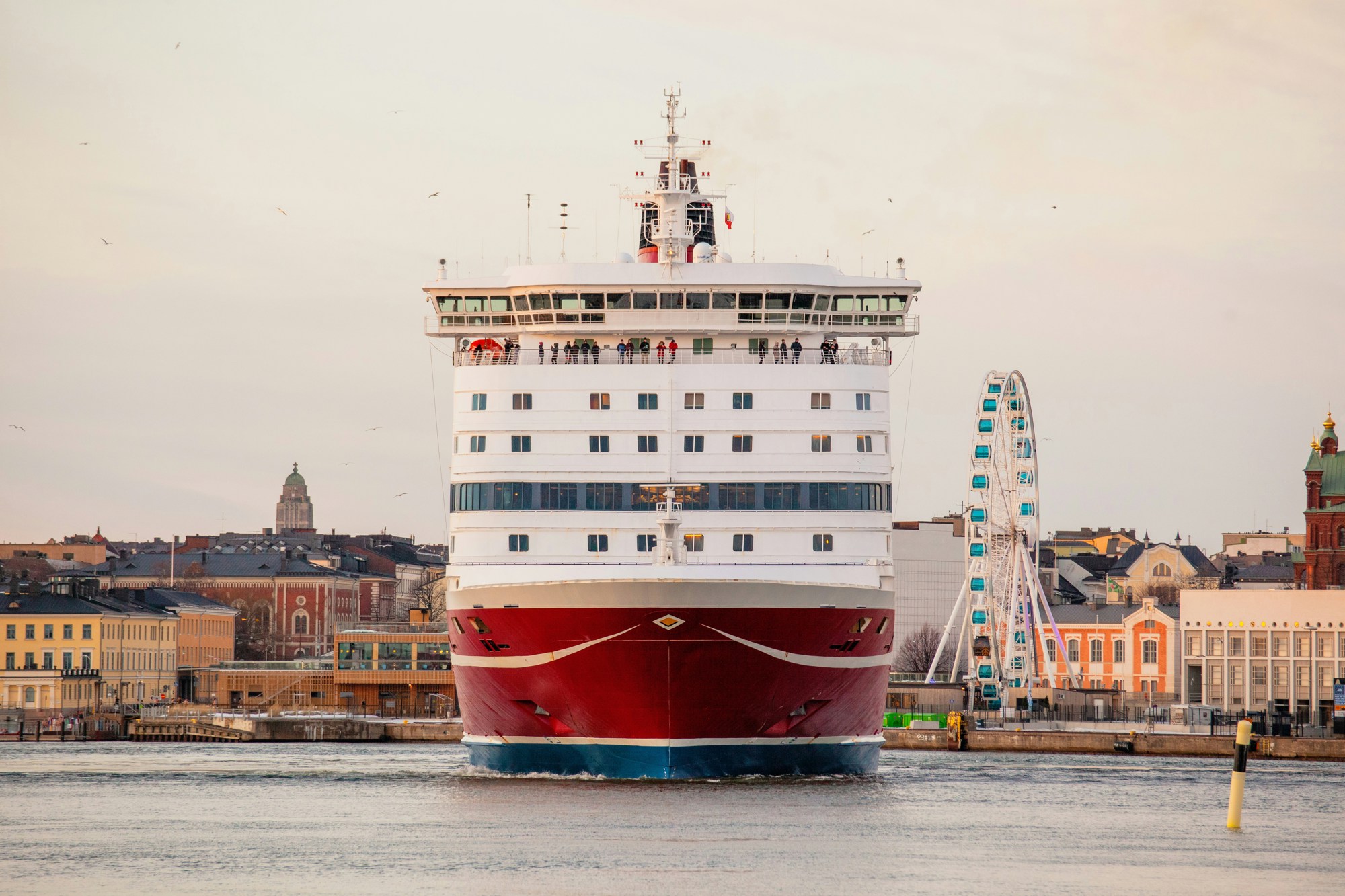
Cruise Baltic’s role therefore goes beyond promoting the Baltic as a cruise region. The association is increasingly acting as a platform through which ports can coordinate infrastructure development, share technical knowledge and present a more unified sustainability strategy to cruise operators. This collective approach is especially valuable in a geographically interconnected market where the competitiveness of one destination is often linked to the performance of the wider itinerary. The projects advancing in Tallinn, Klaipėda, Kristiansand and Copenhagen during 2026 show how this strategy is gradually taking shape. While ports are progressing at different speeds, they are moving in a broadly common direction, supported by a regional framework that encourages compatibility and long-term planning.
If current developments continue as expected, Cruise Baltic could help position the region as one of Europe’s most advanced shore power networks for cruise ships by the end of the decade. For the association, this would represent more than an environmental achievement: it would reinforce its role as a key coordinator in shaping a more sustainable, efficient and future-ready cruise market across Northern Europe.
Gabriele Bassi